How to become a poultry farmer — from decision to first flock
A poultry farmer does not start by buying chicks, but with a decision: which species, what scale and what for. We walk through the whole path step by step — from choosing a direction, through registering with ARiMR and obtaining a veterinary number, to preparing the facility and the first placement. We also explain what formalities, costs and risks await you at the start.
verifiedFrom the team that has organised work on poultry farms for years.
Who is a poultry farmer and where to start
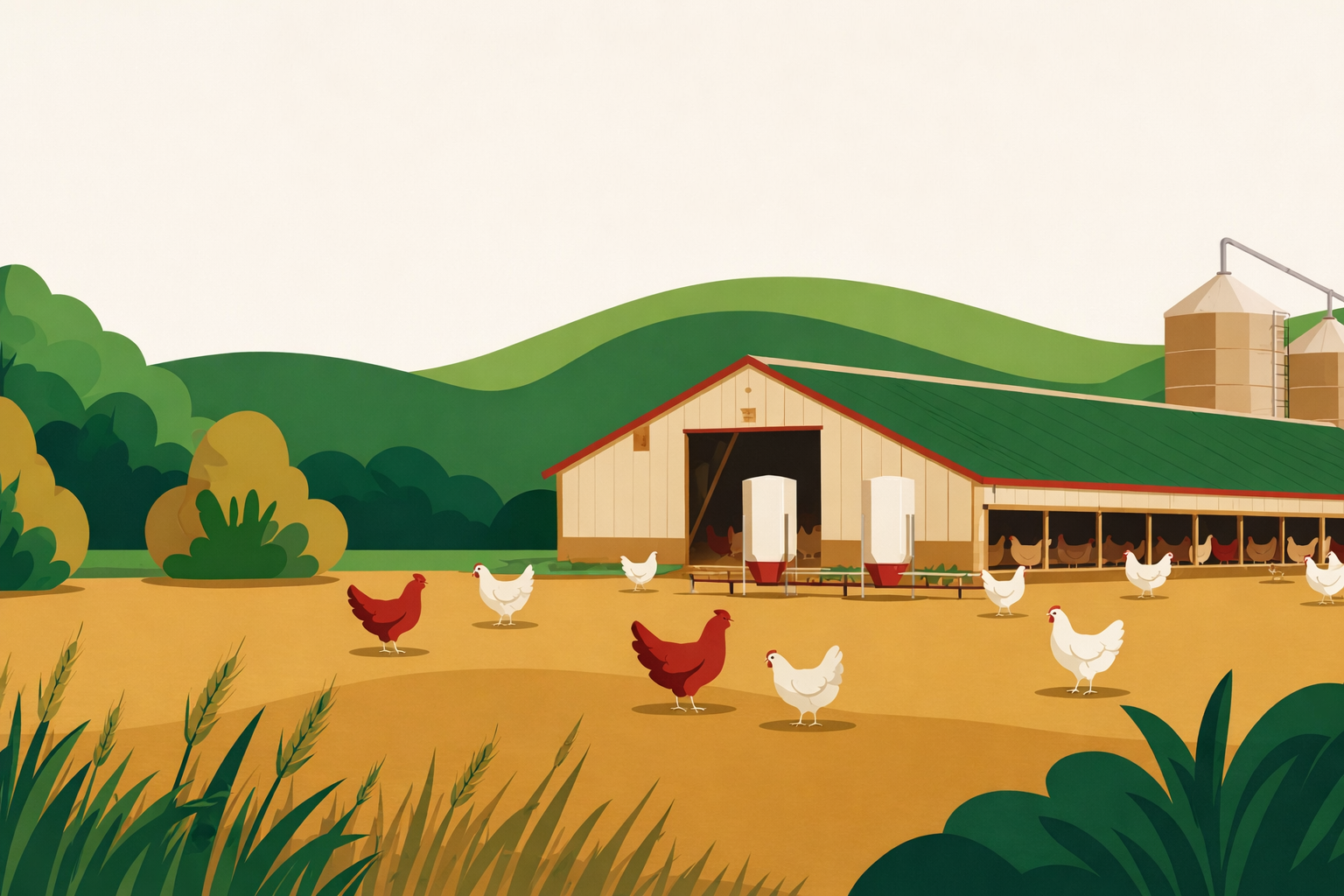
A poultry farmer is someone who keeps birds — hens, broilers, turkeys, ducks, geese or guinea fowl — in an organised way and in line with the regulations. This is not a backyard hobby but an activity that has to be reported, recorded and run sensibly. Before you buy your first chicks, it is worth going through a few decisions and formalities in the right order. A good starting point is the guide on poultry farming step by step and the article on what the poultry farmer’s profession looks like and how to start it.
First the choice of species and production direction
The first decision is the species and the goal: meat or eggs, for your own needs or for sale. Broiler farming (fast fattening of meat chickens) is run differently from layer-hen farming focused on eggs, and turkeys, ducks or geese are different again. The species determines the facility requirements, feed costs, cycle length and welfare rules. If you are just starting out, check poultry farming for beginners and compare the directions before you invest.
Scale — from backyard to a commercial farm
The second decision is scale. A small flock for your own needs is a different world from a commercial farm for sale — they differ in duties, costs and risk. At the start many farmers choose backyard poultry farming or keeping for their own needs to learn how to handle a flock without a big investment. You scale up once you know your costs and can keep the birds healthy. The threshold at which the number of formalities grows is well described in the article poultry farming without a permit.
Formalities: registration, IRZplus and the veterinary number
Poultry farming has to be reported. Depending on the scale you register the flock holding with ARiMR, keep flock records in IRZplus, and for production for the market you obtain a farm veterinary number. We gather the whole reporting process in the guide on poultry farm registration. This is the basis of a legal start — without it you will not sell live birds or eggs on the market.
Everything under control with DlaFerm.pl
A farmer’s start means dozens of small tasks and deadlines — it is easy to miss something. DlaFerm.pl brings them together in one place: you keep a digital Flock Card, have treatment and drug withdrawal records and flock records in IRZplus at hand. Logging in to the IRZplus portal and rewriting data by hand can be a nuisance, so DlaFerm.pl can send the flock status-change reports — placements and removals — to IRZplus for you, automatically and optionally. You decide: let us send them, or report them yourself. So from the very first placement you are ready for an inspection and in control of your paperwork. You can create a farm account for free.
How to become a poultry farmer — six start-up stages
From the decision on a species to the first placement — order matters, because the formalities must come before buying the birds. Here are six stages every beginner farmer goes through.
Choose a species and production goal
Decide what you want to keep and what for: meat or eggs, for your own table or for sale. The facility, feed, cycle and rules all follow from this. Compare directions — broilers, layers, turkeys or ducks — in the guide on poultry farming for beginners.
Set the scale and calculate profitability
Decide on the number of birds and check whether the business adds up. Start with a scale you can handle financially and organisationally. Before you invest, look through how much you can earn from poultry farming and avoid the typical beginner farmer’s mistakes.
Register the farm and the flock holding
Report the flock holding to ARiMR and set up access to the system where you will keep your records. The whole process is described in the guide on poultry farm registration. This is a step that must come before buying the birds, not after.
Obtain a veterinary number (if for the market)
If you plan to sell live birds or eggs on the market, you need a farm veterinary number issued by the district veterinary officer. Selling small quantities from the farm can go under agricultural retail trade (RHD) — check which mode fits your scale.
Prepare the facility and biosecurity
Bring the house to a state ready for birds: ventilation, heating, watering, litter. Check the house requirements and, step by step, house preparation before placement. From day one poultry farm biosecurity applies — it is protection against avian influenza and other diseases.
Place the first flock and start records
Buy chicks from a reliable source and plan the first days of brooding — they decide the whole cycle. Start keeping a digital Flock Card and treatment and withdrawal records right away. A well-run first batch is the best lesson and the basis for the next flocks.
Formalities, costs and risks at the start
Beginners make the most mistakes in formalities and in underestimating costs. Here are six areas to think through before you place your first birds.
Registration before you buy birds
The most common mistake is the reversed order — chicks first, paperwork later. The flock holding is reported before placement, not after. The whole reporting mode is described in poultry farm registration, and you set up records in IRZplus. A failure to report is a risk of penalties and sales problems.
Start-up costs — easy to underestimate
The start consists of the facility, equipment (heating, watering, feeding), the first chicks and feed for the whole cycle. Feed is usually the largest running cost. Before you launch, calculate revenue and costs soberly — the article how much you can earn from poultry farming will help. A realistic budget protects you from losing liquidity after the first batch.
Sales: veterinary number vs RHD
Selling on the market requires a farm veterinary number, while small quantities from the farm can go under agricultural retail trade (RHD). These are two different paths with different thresholds and duties. Choosing the wrong mode is a risk of illegal sales — match it to your scale and buyers.
Welfare, neighbours and location
A farm must meet welfare standards and not clash with its surroundings. The rules on stocking density and keeping conditions are binding, and at a larger scale building law and distances matter too. Check poultry farming and neighbours — the rules and the threshold in poultry farming without a permit to avoid conflicts and costly changes.
Biosecurity and flock health
Diseases can ruin a whole cycle, and avian influenza means culling the flock. From day one poultry farm biosecurity applies: disinfection mats, entry control, clean and dirty zones. A good preventive programme means a lower risk of losses and more peace of mind at every placement.
Records from day one
A farmer keeps flock records and records of treatment and drug withdrawal — it is a duty and the basis for settlements and inspection readiness. It is most convenient to do it digitally: a digital Flock Card and treatment and withdrawal records in one place. Paper chaos is a risk of errors and problems during an inspection.
Frequently asked questions about how to become a poultry farmer
Where do I start to become a poultry farmer?add
Start with a decision on the species and production goal (meat or eggs, for your own needs or for sale), and then on the scale. Only once you know that do you move on to the formalities: registering the flock holding with ARiMR and records in IRZplus. Buying the birds should come after registration and preparing the facility, not before them.
Does poultry farming require registration?add
Yes. The flock holding is reported to ARiMR and the farm is run in IRZplus records. If you sell live birds or eggs on the market, you need a veterinary number issued by the district veterinary officer. Small quantities from the farm can go under agricultural retail trade (RHD). The scope of duties depends on the scale — check the details with the office and in the guide on registration.
How much does it cost to start poultry farming?add
Start-up costs consist of the facility, equipment (heating, watering, feeding), the first chicks and feed for the whole cycle, with feed usually being the largest running cost. The amount depends on the species and scale, so it is hard to give a single figure. Before starting, calculate revenue and costs soberly to have a realistic budget and a liquidity buffer for the first batch.
Can you keep poultry without a permit?add
A small flock for your own needs usually does not require building permits, but it is still subject to reporting the flock holding and to biosecurity rules. As the scale grows, so do the duties — building law, welfare standards and environmental rules come into play. The thresholds can be complicated, so a specific case is best confirmed with the office. Our guide on farming without a permit is a good starting point.
Which poultry species is best to start with?add
For beginners, chickens are often the easiest — both layers for eggs and broilers for meat — because knowledge and access to chicks are widely available. Turkeys, ducks, geese or guinea fowl have their own requirements and can be harder. The choice depends on the goal, budget and conditions you can provide. Compare the directions in the beginners’ guide before you decide.
How do I keep flock records at the start?add
From day one keep flock records in IRZplus and records of treatment and drug withdrawal — it is a duty and the basis for inspection readiness. It is most convenient to do it digitally, in one place, rather than on paper. DlaFerm.pl lets you keep a digital Flock Card and treatment records without chaos, and it can send the flock status-change reports to IRZplus for you if you wish — so an inspection at any time is not a problem.
Start poultry farming calmly with DlaFerm.pl
Want your formalities, records and flock documentation under control from day one? We will show you how DlaFerm.pl guides a beginner farmer through the Flock Card and records in IRZplus. Create a free farm account.
Phone
+48 796 258 151