Poultry trade fairs — calendar and guide
Fairs are the fastest way to see new equipment, talk to suppliers and catch up on knowledge all in one place. We’ve gathered the key poultry and livestock fairs in Poland and worldwide, and we show how to prepare for the trip so you come back with something concrete for your poultry farm.
verifiedFrom the team that has organised work on poultry farms for years.
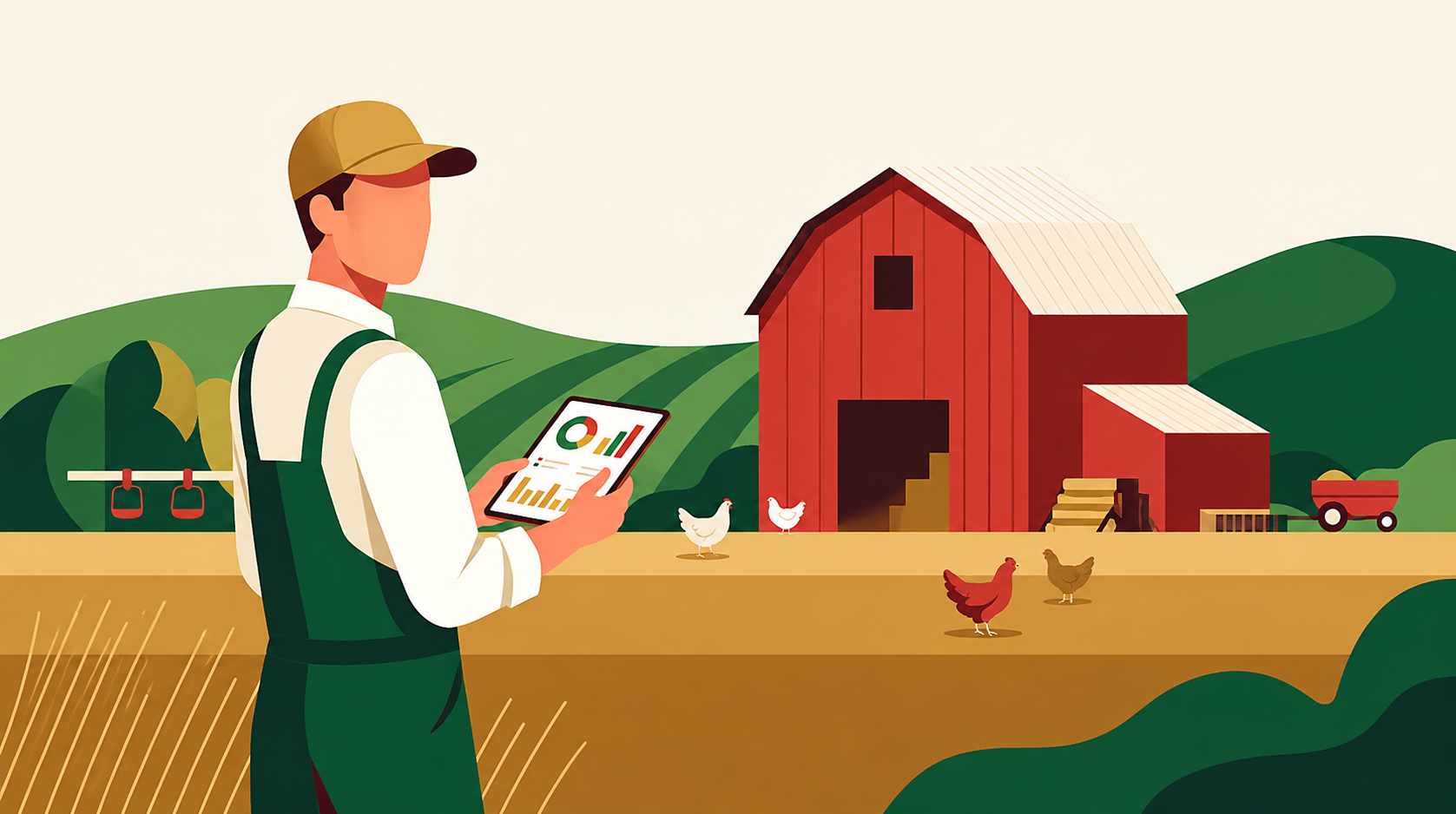
In a single day at a fair you see live what catalogues and websites never reveal: how a feeder works, how quietly a fan runs, what a new drinking line looks like. You meet suppliers from across the industry side by side, compare offers, ask the hard questions and come back with contacts and ideas that genuinely change the farm.
Why should a poultry farmer go to fairs?
Fairs bring four things together at once: technology, suppliers, knowledge and contacts. You see kit you won’t find in the first shop, you talk to manufacturers instead of middlemen, you listen to conferences on flock health and feeding, and along the way you meet other farmers. For a poultry farm it’s a shortcut to decisions that would otherwise take months of searching.
How to read the poultry fair calendar
Some events run every year, some every two years. Below are the key fairs in Poland and abroad, and what a poultry farmer will find at them.
Why go at all
A fair is technology, suppliers, knowledge and contacts in one place. You see kit live, compare offers without middlemen, listen to talks and meet people from the industry. For a poultry farmer it’s the fastest way to work out what’s really worth putting on the farm before you spend the money.
Fairs in Poland
The key domestic events for a poultry farmer are Targi FERMA in Łódź (cattle, pigs and poultry), Poultry Tech in Warsaw focused on poultry-production technology, Polagra in Poznań as a broad agri-food fair, and Agro Show in Bednary — the country’s largest farm-machinery show. Close by, in Polish and with no costly travel.
International fairs
If you want to see the world’s top tier, aim for EuroTier in Hanover (Europe’s largest livestock-production fair), VIV Europe in Utrecht and its editions VIV Asia in Bangkok and VIV MEA in Abu Dhabi. Purely poultry are IPPE in Atlanta and SPACE in Rennes, France. That’s a bigger budget and a longer trip, but also a look at solutions not yet seen in Poland.
What you’ll find for the poultry farm
At the bigger fairs you walk through the whole farm: poultry-house equipment, ventilation and climate control, feeding lines and feed silos, hatchery tech, genetics, veterinary and flock-management software. Even at a broad agricultural fair you can plan a route so you see only what concerns poultry.
Conferences and knowledge
Fairs are almost always paired with scientific-technical conferences. That’s where you learn about new recommendations in feeding, biosecurity, flock health or bird welfare. The lecture programme alone can be as valuable as the exhibition hall, because it gives knowledge you can apply to daily work on the farm right away.
How to read the cycle (yearly / every 2 years)
Some fairs run every year — like Targi FERMA in February or Agro Show in autumn. Others are on a two-year cycle, like EuroTier or VIV Europe, so they fall only in selected years. Before you plan a trip, check the current date on the organiser’s site, because dates and rhythm can change.
A fair trip step by step
- 1
Set the goal of the visit
Before you set off, decide why you’re going: replacing ventilation, a new drinking line, an idea to cut feed costs or a look at software. A clear goal keeps you from getting lost in the halls and brings you back with something concrete instead of a bag of leaflets nobody ever reads.
- 2
Make an exhibitor list
On the organiser’s site check the hall plan and the exhibitor list, then mark the companies that really interest you. Plan a route across the grounds so you don’t run in circles. At a big fair that’s the difference between covering what matters and wandering chaotically between stands with no plan.
- 3
Prepare questions for suppliers
Write down specific questions in advance: throughput, energy use, service, parts availability, delivery time, warranty terms. Good questions quickly separate a real offer from a pretty brochure and let you compare suppliers on the same basis rather than on the impression a stand made.
- 4
Set a budget and think CAPEX
Before a price comes up at a stand, have a frame in mind: how much you can spend and what the investment should return. Look at the cost over the whole cycle — purchase, installation, service, energy — not just the price tag. Fairs tempt you with novelties, so a firm budget guards against a rushed decision.
- 5
Take notes as you go
After a few stands everything blurs together, so note things down right away: company name, model, rough price, contact, your first impression. A photo of the rating plate or a business card with a scribble saves your memory. Without notes you won’t reconstruct who offered what and on what terms once you’re back.
- 6
Implement changes when you’re back
The most important part happens after the fair. Within a few days go through your notes, pick one or two ideas to act on and lay out concrete steps. What to order, who to follow up with, what to test on the farm. Without that, even the best trip ends in impressions instead of a real change.
Frequently asked questions about poultry fairs
Is it worth a small-farm owner going to a fair?add
Yes, because even one good idea — cheaper feed, more efficient ventilation, better drinking — can pay back the cost of the trip. For a small farm it’s best to start with fairs in Poland, like Targi FERMA in Łódź or Polagra in Poznań. They’re close, in Polish and without costly travel, and you’ll still see most of the equipment you’re interested in.
Which fairs are poultry-only and which are general agricultural?add
Purely poultry are Poultry Tech in Warsaw and, abroad, IPPE in Atlanta and SPACE in Rennes. Targi FERMA in Łódź covers cattle, pigs and poultry, while EuroTier and VIV are broad livestock production with a strong poultry section. Polagra and Agro Show are general agricultural events where poultry is one theme among many.
How often do these fairs take place?add
It depends on the event. Some run yearly — Targi FERMA usually falls in February, and Agro Show in autumn every year. Others run every two years, like EuroTier in Hanover or VIV Europe in Utrecht. Before you plan a trip, check the current date on the organiser’s site, because dates can change.
How do I not get lost at a big fair?add
Start with a plan: on the organiser’s site find the exhibitor list and the hall map, mark the companies you care about and lay out a route. As you go, note names, models and contacts, because after a few hours the stands blur together. With a plan and notes you’ll cover what matters instead of circling the halls aimlessly.
Come back from the fair and put the changes into DlaFerm.pl
In DlaFerm.pl you record what equipment you have on the farm and keep the flock card, so after a fair you note that new fan or drinking line right where you work day to day. Create a free account or write to us.
Phone
+48 796 258 151