Water meters — the earliest signal from a flock
Daily water intake tells you about flock health faster than anything else. A drop or a sudden spike usually precedes visible signs of disease by a day or two. We explain which water meters go into a poultry house, how to wire them to the controller and how to read the water:feed ratio.
verifiedFrom the team that has organised work on poultry farms for years.
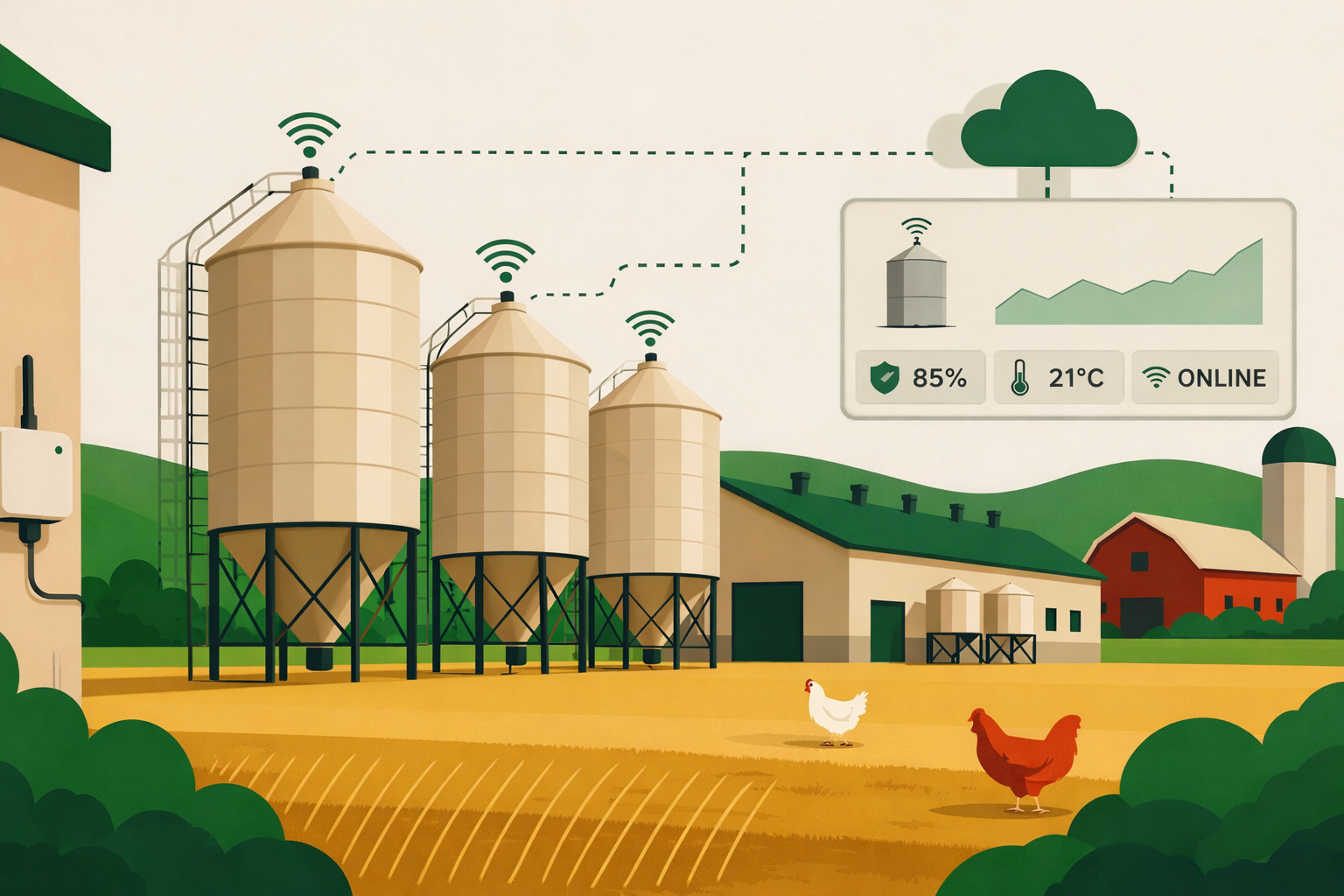
A water meter is not just a billing counter. In a poultry house it is one of the most sensitive tools for watching the flock. Healthy birds drink regularly, and their water intake rises smoothly with age. Any sudden deviation — a drop with disease or a spike with heat or a leak in the line — shows on the meter earlier than on the birds. That is why water intake is recorded and reviewed every day.
Why does water intake matter so much?
Water reacts first. A bird starting to fall ill usually drinks less before it eats less and looks worse. A fall in daily water intake can be visible a day or two before the symptoms, so it buys time to react. The second indicator is the water:feed ratio — how much water goes with each kilogram of feed eaten. In thermal comfort it sits roughly around 1.6–2.0:1 and rises in the heat. A water meter with a pulse output lets you record all of this automatically, without writing numbers down by hand.
How water intake is measured
The choice depends on the pressure and flow of the line, the water quality and whether you want to record intake automatically.
Jet (mechanical) water meters
The simplest and cheapest measurement. The water stream turns a rotor and a gear train counts the turns. Single-jet and multi-jet versions cope with typical poultry house flows. They need clean water — sand and sediment speed up wear of the mechanism.
Water meters with a pulse output
The same mechanical counter, but with an electrical output: for each portion of water (for example 1 or 10 litres) it sends a pulse. A controller or logger counts the pulses and keeps the intake curve itself. This is the basis of automatic water-use monitoring.
Ultrasonic flow meters
They measure flow with a sound wave, with no moving parts in the water. They don’t wear mechanically and handle a wide range of flows. More expensive than jet meters, but accurate and durable — a good fit where you want a precise, long-lasting measurement with a digital output.
Electromagnetic flow meters
They measure flow from a magnetic field, also with no moving parts. Very accurate and indifferent to contamination, but they need power and the water has to conduct electricity. They are used on larger installations and where the highest accuracy matters.
Water:feed measurement and the daily curve
The counter alone is only half the picture. The full view comes from putting water intake next to feed use and comparing with previous days. The daily curve shows whether the birds drink at a steady rhythm, while the water:feed ratio flags heat, a feed problem or the start of disease.
Mounting: after the filter, before the medicator
Where you mount it decides the quality of the reading. The meter goes after the filter and treatment (clean water protects the mechanism) and before the medicine and vitamin doser — so it counts the water the birds actually drank, not the solution with additives. A straight run of pipe before and after the meter is also needed.
Water measurement step by step
- 1
Size the meter to the installation
Check the pressure and flow range of your drinking line and the pipe diameter. The meter must cover both low intake (young chicks) and the peak use of an adult flock in the heat. Too large a meter will miss small flows; too small a one will throttle the line.
- 2
Mount it in the right place
Fit the meter after the filter and treatment, and before the medicine and vitamin doser. Keep a straight run of pipe before and after the meter, per the manual — turbulence makes the reading too low or too high. Mind the flow direction marked on the body.
- 3
Connect the pulse output
If the meter has a pulse transmitter, connect it to the climate controller or a separate logger. From then on the intake records itself, with no daily reading off the dial. That saves time and removes mistakes in the readings.
- 4
Set the pulse value (l/pulse)
In the controller enter how many litres one pulse represents (for example 1 l/pulse or 10 l/pulse) — the value is in the meter’s data sheet. Without the right factor the intake curve will be distorted. After wiring, check that the counted water agrees with the dial reading.
- 5
Read daily intake and compare
Each day look at the intake of the last 24 hours and set it against the previous days. A healthy flock drinks more and more as it grows, smoothly. A sudden drop or spike is a signal to check the birds, the line and the temperature — often before any other symptoms appear.
- 6
Track the water:feed ratio and react
Put water intake next to feed use. In thermal comfort the ratio sits roughly around 1.6–2.0:1. A clear rise points to heat or a feed problem, a fall — to disease or stopped drinking. React to deviations, not to single minor fluctuations.
Frequently asked questions about water meters in a poultry house
Why a separate water meter if I already have a controller?add
The controller runs the climate, but without a flow sensor it doesn’t know how much the birds actually drink. A water meter with a pulse output feeds it that number, so the controller records daily intake and the intake curve itself. Without it you would have to read the dial by hand every day — and you would miss sudden changes between readings.
What drop in water intake is alarming?add
There is no single magic number, because intake depends on the age of the birds and the weather. What matters is the trend: a healthy flock drinks more from day to day, smoothly. A clear drop versus the previous day, or the absence of the expected rise, is a warning sign — check the birds, the drinking line and the temperature then.
What should the water:feed ratio be?add
In thermal comfort it sits roughly around 1.6–2.0:1 — that is, about 1.6–2.0 litres of water per kilogram of feed. It rises in the heat, because the birds drink more to cool down. Exact values depend on the species, age and supplier guidance, so treat them as a reference point and watch how they change over time.
Mechanical, or ultrasonic or electromagnetic?add
A mechanical (jet) meter is cheap and enough for a typical poultry house, especially with a pulse output to the controller. Ultrasonic and electromagnetic meters have no moving parts, are more accurate and more durable, but more expensive — worth considering with poorer water quality, larger installations, or when you want the highest precision. The choice is best confirmed with your drinking-system supplier.
Describe your building’s equipment in DlaFerm.pl
In DlaFerm.pl, in the “Technical equipment of the building” step, you record which water meter and drinking system you have — all in one place. Create a free account or write to us.
Phone
+48 796 258 151