Laying hen farming — pullet rearing and lay
A layer is a hen kept for egg production. We explain in plain language how a laying flock lives — from pullet rearing, through peak lay, to the end of the cycle — and what really drives the number of eggs.
verifiedFrom the team that has organised work on poultry farms for years.
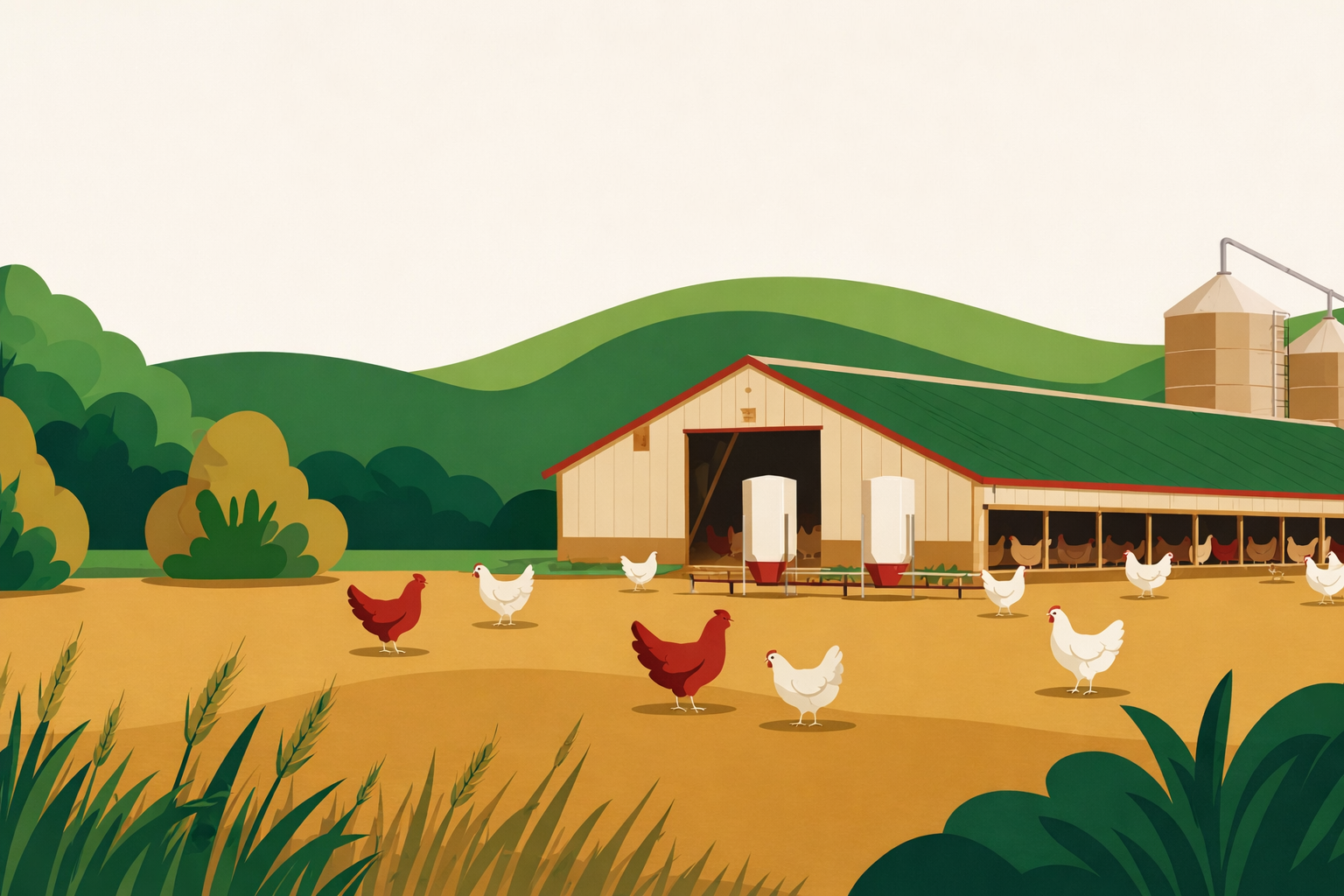
What a layer is and how many eggs it lays
A layer is a laying hen — kept to produce table eggs rather than meat. Production uses breeds and crosses selected for egg laying, including Leghorn, ISA Brown and Hy-Line. A good layer in production lays about 230–300 eggs a year, and a single egg usually weighs 55–65 g. The laying period itself lasts about 12–14 months — after that the flock ends its cycle. This is a completely different model from a broiler farm, where fast meat gain matters; we describe the differences in the guide on chicken farms — broilers and layers.
The flock’s life — rearing first, then production
A laying hen’s life splits into two main stages. The first is pullet rearing — the period from hatching (week 0) to about week 16–18. This is when the bird grows, matures and prepares for lay — feeding, body weight and the lighting programme are key here. The second stage is production: the hen comes into lay, reaches peak, and after around a dozen months lay declines and the flock is replaced. Well-managed rearing is the foundation of all later lay — mistakes from this period are hard to make up afterwards.
What really drives egg production
The number and quality of eggs depend on several things at once. The most important are feeding (in lay the feed must supply plenty of calcium for the shell), the lighting programme (day length controls lay), and flock health — including salmonella monitoring. On top of that come housing conditions and microclimate: stable temperature and humidity in the house and effective ventilation translate directly into results. Whatever the scale, every flock also requires documentation and records.
Housing systems and egg labelling
The way layers are kept determines egg labelling and price. Enriched cages, barn, free-range and organic systems are used — each with its own space and welfare requirements. The housing system is coded on every egg, so the choice is not only technical but also commercial. Good conditions are not only a duty but also real support — see the section on poultry welfare payments.
Duties and records for a laying flock
Every laying hen operation requires order in the paperwork. You report the flock and keep its records in IRZplus, implement poultry farm biosecurity, document treatments while observing drug withdrawal periods, and maintain hygiene — from cleaning and disinfecting the house to rodent control. DlaFerm.pl brings these duties together in one poultry farm management software. Industry terms are explained in the poultry glossary.
Stages of a laying flock’s life
From chick to end of the cycle — each stage has different needs and goals. See what happens at each one.
Pullet rearing (0–16/18 weeks)
From hatching to sexual maturity. The bird grows, builds body mass and skeleton, and matures for lay. Age-appropriate feeding, body-weight control and the lighting programme are key. Mistakes in rearing carry over into all later lay — this is the foundation of a good flock.
Peak lay
After coming into lay (around week 18–20) the hen quickly reaches peak and lays almost daily. This is the most important production period — stable feeding (plenty of calcium), a steady lighting programme and calm in the house matter most. Most of the year’s egg output is produced here.
End of the cycle
After about 12–14 months lay declines and shell quality deteriorates. The flock is usually replaced with new pullets — sometimes moulting is applied. This is the time to clean and disinfect the house and prepare before placing the next flock.
What drives egg production
Egg number and quality are the result of several factors. Take care of all of them — missing one can lower the results of the whole flock.
Feeding and calcium
Feed must match the life stage. In lay, calcium is key — the shell is made of it, which is why it makes up about 3% of the feed. Too little calcium means thin, brittle shells and a drop in lay. Protein, energy and constant access to water also matter.
Lighting programme
Day length controls lay. During rearing light is limited, and as the hen enters production it is gradually extended to stimulate lay. A stable, well-designed lighting programme sustains high production throughout the cycle. We cover the rules in the poultry house lighting programme.
Housing system
An enriched cage provides about 750 cm² per hen, barn housing is about 9 hens per m², and an aviary adds tiers to use the space. Each system has different requirements and a different egg label. The choice affects welfare, costs and the price you get per egg.
Health and salmonella
A healthy flock is the basis of lay. Salmonella monitoring has a special place — mandatory testing and a control programme protect the consumer and your sales. More in the guide on salmonella on a poultry farm.
Welfare and microclimate
Calm, access to feed and water, litter quality and a stable microclimate translate directly into lay. Stress, heat or poor ventilation can quickly lower production. Good conditions are also the route to welfare payments.
Records and IRZplus
A laying flock must be reported and kept in IRZplus records, and treatments documented while observing drug withdrawal. This is the basis for legal egg sales and peace of mind during inspections — and if you wish, DlaFerm.pl will file the reports to the cumbersome IRZplus portal for you.
Frequently asked questions about laying hen farming
How many eggs does a laying hen lay per year?add
A good layer in production lays about 230–300 eggs a year, depending on the breed or cross, feeding and housing conditions. The highest results come from lines selected for laying, including Leghorn, ISA Brown and Hy-Line. A single egg usually weighs 55–65 g. Egg numbers are driven mainly by feeding, the lighting programme and flock health.
When does a hen start laying?add
A laying hen usually comes into lay around week 18–20, after the pullet-rearing period (weeks 0 to 16/18). Once in production it quickly reaches peak lay and lays almost daily. When laying begins depends on the breed, body weight and a correctly run lighting programme during rearing.
How long is a layer used?add
The laying period usually lasts about 12–14 months. After that egg production declines and shell quality deteriorates, so the flock is most often replaced with new pullets. Sometimes moulting (forced moult) is applied, which refreshes lay for a while. At the end of the cycle the house is cleaned and disinfected before placing the next flock.
Cage or barn — how to keep layers?add
Enriched cages (about 750 cm² per hen), barn housing (about 9 hens per m²), free-range and organic systems are used. Each has its own space and welfare requirements, and the housing method is coded on every egg — which affects its price and sales options. The choice is at once a technical, welfare and commercial decision.
Why is calcium so important for layers?add
The eggshell is made mainly of calcium, and a hen lays an egg almost every day — so the calcium demand in lay is very high, reaching about 3% of the feed. Too little calcium means thin, brittle shells, more broken eggs and a drop in lay. That is why layer feed differs from broiler feed — it is geared towards egg production, not meat.
What is salmonella monitoring and why run it?add
Salmonella monitoring is mandatory testing and a programme to control Salmonella infection in the laying flock. It is about consumer safety — salmonella can spread through eggs. Detecting certain serotypes brings restrictions on sales, so monitoring protects both human health and your production. We cover the details in the guide on salmonella on a poultry farm.
Run your laying hen operation in one place with DlaFerm.pl
Rearing pullets or running a laying flock? We will show you how DlaFerm.pl simplifies records, biosecurity and health monitoring. Write to us.
Phone
+48 796 258 151