Automatic detection of dead birds
Picking up dead birds from the litter every day is hard work and a biosecurity risk. A new idea is a floor robot that drives through the house on its own and uses an AI camera to spot dead and weak birds among the healthy flock. We explain how it works, what the trials show and why it’s an add-on to the daily walk-through, not a replacement for it.
verifiedFrom the team that has organised work on poultry farms for years.
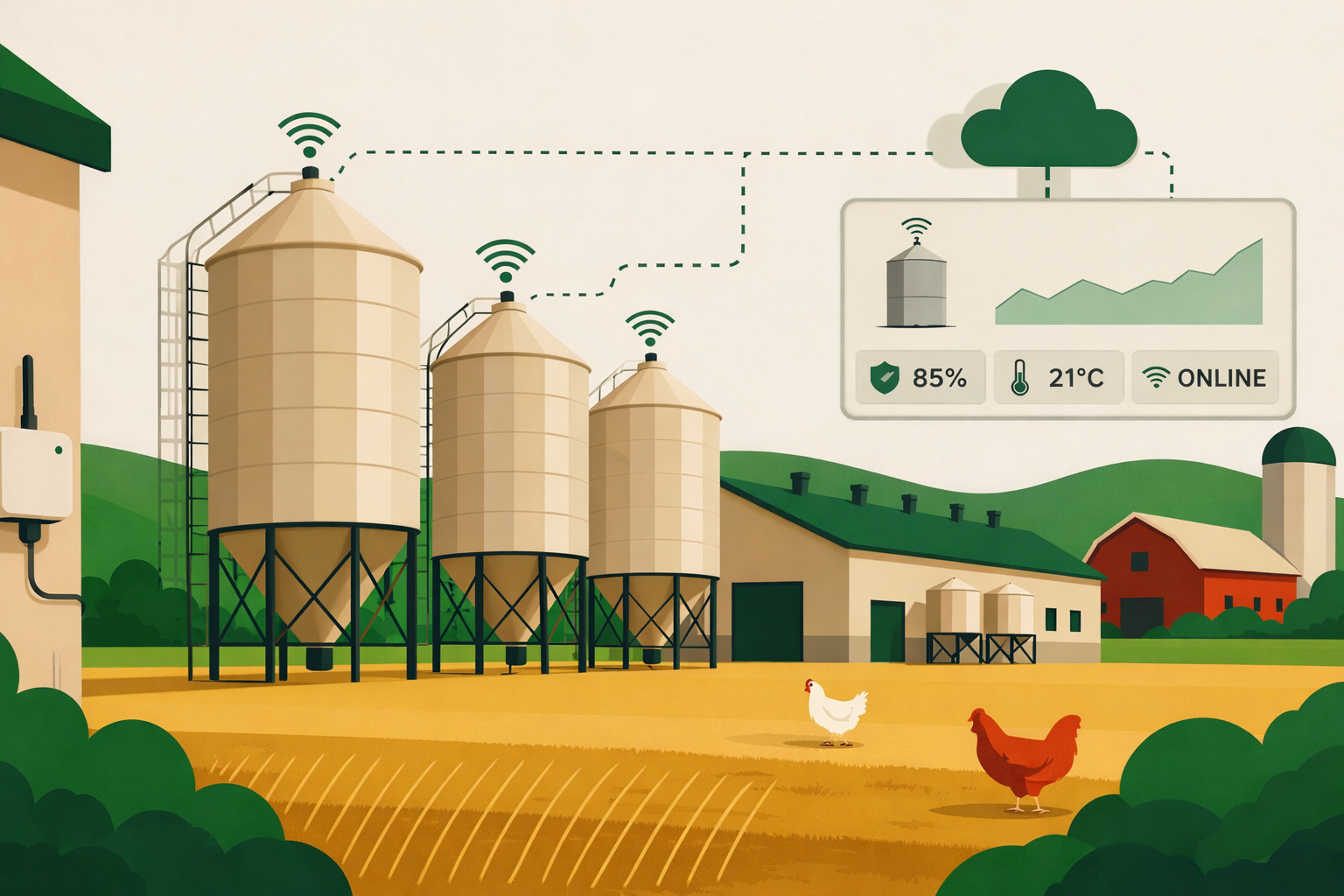
Automatic detection of dead birds is a fresh idea for a tedious chore: searching for and picking up dead birds in the house every day. A floor robot drives among the birds on its own along a set route, and an AI camera recognises dead, sick or immobile birds among the healthy flock. The robot logs their location and alerts the staff, and some solutions can even collect the carcass. It’s one of the newest ag-tech tools being trialled on poultry farms — intriguing, but still at the testing stage, so it’s worth looking at it soberly.
Why does this matter for the farm?
Dead birds left in the litter are a health and welfare problem: decaying carcasses encourage disease and raise ammonia, and every human entry into the house carries its own risk of bringing in an infection. On top of that, a sudden spike in mortality is one of the first signals that something is wrong in the flock. The sooner you spot a dead bird and the less often you have to go inside, the better for the flock and for biosecurity — and that’s exactly where a robot with an AI camera tries to help.
How a robot with an AI camera works and where its limits are
The robot spots dead and weak birds, but it won’t replace the stockman’s eye. It’s best treated as an extra pair of eyes in the house, added on top of the daily walk-through.
Why dead birds are a risk
Carcasses left in the litter encourage disease and raise the ammonia level in the house. The longer they lie there, the greater the risk to the rest of the flock. On top of that, a sudden rise in mortality is an early signal that something is wrong — disease, a problem with feed, water or the climate. That’s why finding and removing dead birds quickly lowers the risk and buys time to react.
How AI camera detection works
The robot has a camera and a deep-learning model that recognises objects in the image — here, dead, sick or immobile birds among the healthy flock. It’s an object-detection approach, known from YOLO-type models. A study published in 2022 in the MDPI journal “Agriculture” described such a dead-broiler inspection system for large-scale farms. The robot marks the detected bird and logs its location.
Autonomous driving through the house
The robot drives on its own along a planned route among the birds — the staff don’t have to steer it. It moves slowly so as not to startle the flock, and can patrol the house several times a day. Some robots also stir the litter and stimulate the birds to move, which is mentioned as a side benefit of the technology. The main task stays the same: to find dead and weak birds.
Alert and location logging
After detecting a dead bird the robot logs its location and tells the staff where to look. Some solutions can also collect the carcass, but many are still concepts that mainly locate and alert. Instead of combing the whole house, the staff go straight to the marked spot. A continuous stream of data also builds up on where and when mortality appears.
Fewer entries, better biosecurity
Every human entry into the house can bring in germs on boots or clothing. If the robot takes over some of the patrols and the search for dead birds, people go in less often, and that lowers the risk of bringing in disease. On top of that, early detection of mortality is an early signal of a health problem in the flock. These are among the main advantages its supporters point to.
Where the robot isn’t enough
Detection can be harder in dust and low light, and moving among live birds is itself a challenge. Add to that the cost of buying and maintaining the kit. The robot won’t judge the birds’ condition the way an experienced stockman does, won’t check the feed and water, and won’t replace veterinary checks. It’s a technology meant to support good husbandry and daily checks, not to replace them.
Controlling flock mortality step by step
- 1
Keep the daily walk-through as the basis
Start with what’s proven: a daily walk-through of the house, looking over the birds, picking up dead ones and recording mortality. That’s the foundation of flock welfare and health. No technology replaces it — a robot with an AI camera is there to support that walk-through, not to switch it off.
- 2
Record mortality every day
Note the number of dead birds each day in one place, ideally next to the flock card. That way you’ll see the trend and catch a sudden spike, which is an early signal of disease. The record itself needs no robot — it’s a habit that pays off regardless of the technology.
- 3
Identify the risk points in the house
Pay attention to where you most often find dead and weak birds — near the drinkers, in the corners, in poorly ventilated spots. These points are worth checking more often. If you ever reach for a robot, this knowledge will help you set its route where it makes the most sense.
- 4
Consider a robot as an extra pair of eyes
Only on that basis consider a floor robot with an AI camera as a supplement. Treat it as an extra pair of eyes that patrols the house more often than a person and points out spots to check. Remember it’s support for the walk-through and biosecurity, not a way to skip them.
- 5
Check the conditions in the house
Before you trust the camera’s results, think about the conditions: dust and low light make detection harder, and the kit has to cope with driving among the birds. Make sure a given solution fits your house and that you can maintain it. It’s better to clear this up in advance than to count on an unproven effect.
- 6
Watch the effectiveness and react to the trend
See whether dead birds are found faster and whether the mortality record matches what you see on the walk-through. The trend matters most: a sudden rise in mortality is a reason to look closely at the flock and call the vet. Note everything in one place — that way you’ll see what really helps at your place.
Frequently asked questions about dead-bird detection
Will a robot with an AI camera replace the daily walk-through?add
No, and it shouldn’t be treated that way. The robot spots dead and weak birds and points out where they are, which cuts the search time and lets you enter the house less often. But it won’t judge the flock’s condition like an experienced stockman, won’t check the feed and water, and won’t replace the vet. It’s an extra pair of eyes, not a replacement for the walk-through.
How does the camera recognise a dead bird?add
The robot has a camera and a deep-learning model that recognises objects in the image — here, dead, sick or immobile birds among the healthy flock. It’s an object-detection approach, known from YOLO-type models. Once it detects a bird, the robot marks it and logs its location so the staff can go straight to the spot.
Are such robots already running on farms?add
Yes, at the trial stage. Examples of floor robots for poultry houses are Octopus Robots and Tibot’s ChickenBoy — kit tested on poultry farms and covered by, among others, the trade outlet Poultry World. We give them as examples of this category of technology, with no endorsement. These are still emerging solutions, so it’s worth looking at them soberly and checking what they really deliver.
Will it work in any poultry house?add
Not necessarily. Detection can be harder in dust and low light, and the robot has to cope with driving among live birds. Add to that the cost of buying and maintaining it. Before you decide, check whether a given solution fits your house and how you’ll maintain it. It’s an emerging technology meant to support good husbandry, not to replace it.
Record mortality and keep a flock card in DlaFerm.pl
In DlaFerm.pl you note the number of dead birds each day, keep a flock card and see the mortality trend — all in one place. Create a free account or write to us.
Phone
+48 796 258 151