Bioacoustics — monitoring poultry health by sound
A flock makes sound all the time — and much of it means something. Bioacoustics is listening to the house with microphones and recognising sounds such as coughing or sneezing that foretell respiratory trouble long before visible symptoms. We explain how it works, what such a system can detect and where its limits lie. Simply, but properly.
verifiedFrom the team that has organised work on poultry farms for years.
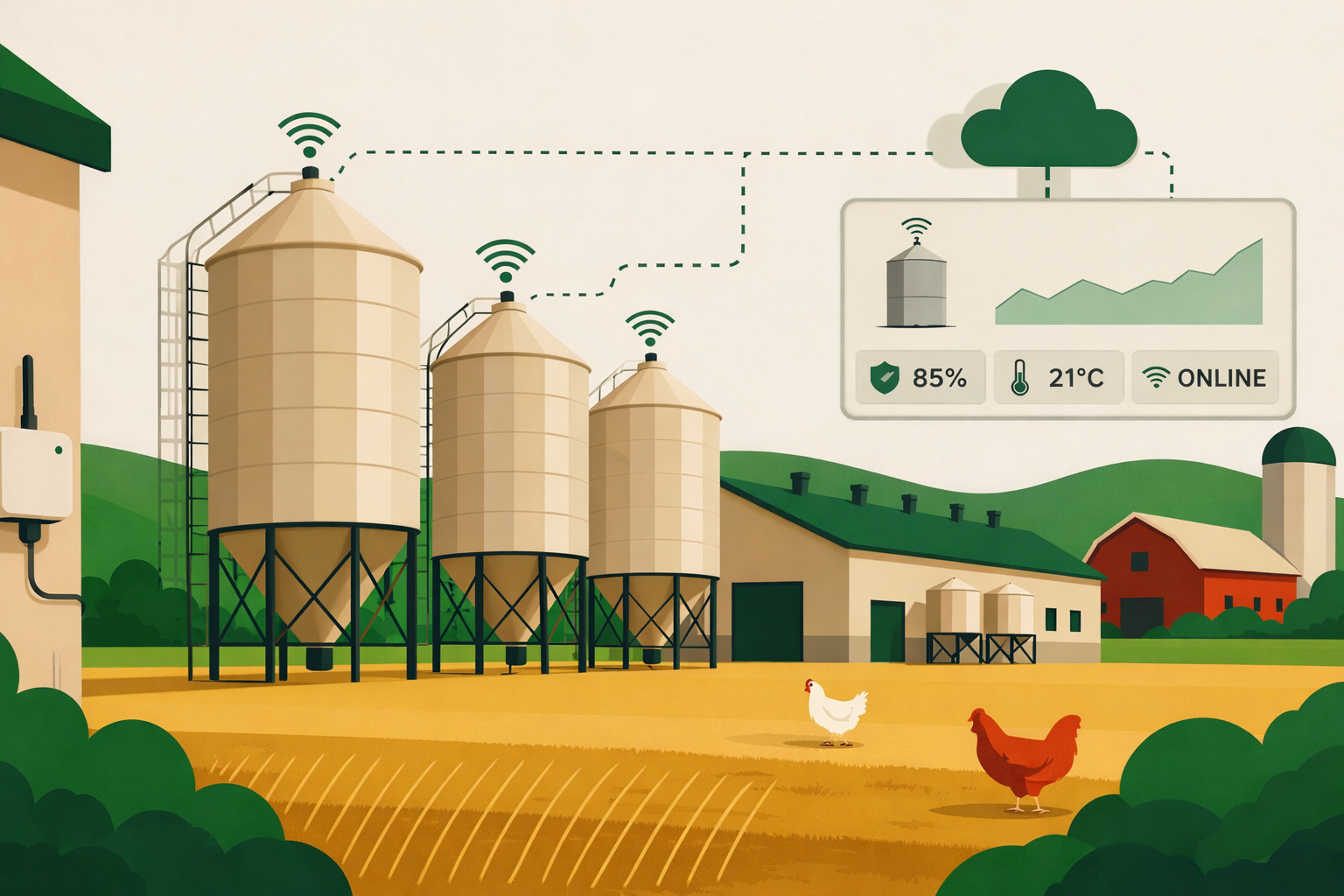
Bioacoustics in poultry farming means using sound as a signal about the flock’s state. Microphones are placed in the house to listen to the birds without a break, and software analyses what they hear. A healthy, calm flock sounds different from one where coughing or unease appears. A computer can catch these differences faster and more precisely than the human ear, especially at night and over the noise of ventilation. So the farmer gets a sign that it is worth looking at the birds before the problem becomes visible.
Why listen to the house?
There is one reason: time. Respiratory disease and stress show in sound earlier than in the birds’ appearance — coughing and sneezing can be heard before a listless flock can be seen. The sooner you react, the lower the cost: faster intervention, fewer sick birds and less blind medication. Listening also works when the farmer isn’t in the house — at night and between walk-throughs. It is still a young field, but combined with air sensors and cameras it becomes one of the most sensitive early-warning signals.
What bioacoustics can detect
Sound carries more information than it seems — from respiratory symptoms to the flock’s overall mood. Here is what the system pays attention to.
Coughing and sneezing
This is the best-recognised signal. Coughing in chickens has a characteristic sound, and its intensity can rise before the flock looks ill. The system counts how often coughing is heard and warns when the level crosses the usual norm. So respiratory trouble can be caught at an early stage.
Changes in vocalisation
Birds call all the time, and the way they do it changes with how they feel. A different tone, more squeaking or a sudden silence can herald stress, cold, hunger or crowding. The software compares the current sounds with how a calm flock sounds and flags the departures.
Signs of stress and unease
A sharp rise in noise or unusual sounds can signal that something frightened the flock or that conditions have worsened. Such changes are heard at once, so sound can be the fastest sign that something is wrong — faster than a walk-through.
Day and night rhythm
A calm flock has its own sound rhythm: it quietens in the dark phase and comes alive with the light. A disturbed rhythm — unease at night, no settling down — can be a sign that something is bothering the birds. Listening lets you notice this even when no one is in the house.
Combining with other measurements
Sound gives the most when set against air sensors and camera images. Coughing that appears together with a rise in ammonia or a drop in activity is a stronger signal than either measurement alone. Bioacoustics is part of wider precision farming, not a lone gadget.
What sound won’t tell you
Listening warns, but it doesn’t make a diagnosis. It will tell you something is happening and that it’s worth looking at the birds, but it won’t replace inspecting the flock or a vet’s decision. It is an early-signal tool that directs attention to the right place — the rest is done by a person.
Bioacoustics step by step
- 1
Microphones listen to the house
Microphones are placed so they cover the whole flock, not just one corner. They record without a break, day and night, whether or not anyone is inside. They are the ear of the whole system — how much can be heard depends on where they are placed.
- 2
Software recognises the sounds
The recorded sound goes to software that tells the meaningful sounds — such as coughing — apart from the background, that is the hum of ventilation and the ordinary din of the flock. This is the hardest part, because the house is loud. A well-trained system can still pick the signal out of the noise with high sensitivity.
- 3
The system compares with the norm
The sounds alone aren’t enough — what counts is whether their intensity departs from what is normal for this flock and the birds’ age. The software tracks how often coughing or unease is heard and builds a picture of what is usual for this flock. A departure from that norm is the real signal.
- 4
The alert reaches the farmer
When the level of coughing or unease crosses a threshold, the system lets you know — on a screen or a phone. The farmer doesn’t have to listen to the house in person; they get a signal when it really is worth going in to check the flock. That turns continuous listening into a concrete warning.
- 5
The farmer checks and reacts
After the signal comes the part a machine can’t do: looking at the birds, checking the air and drinkers, and contacting a vet if needed. Sound says “take a look”, but the decision is made by a person. The sooner, the smaller the problem.
- 6
Combine with sensors and keep notes
You gain the most from pairing listening with air measurement and imaging, and from noting what the signal meant and how it ended. After a few flocks you know how your house sounds in good and bad shape, and the system warns ever more accurately. Bioacoustics learns alongside you.
Frequently asked questions about bioacoustics
What is bioacoustics in poultry farming?add
It is using sound to assess the flock’s state. Microphones in the house listen to the birds without a break, and software recognises signals such as coughing, sneezing or a change in vocalisation. On that basis the system warns that something may be wrong with the flock — often earlier than it can be seen with the naked eye.
What exactly does sound listening detect?add
Coughing and sneezing — respiratory symptoms — are recognised best. Beyond that the system catches changes in vocalisation and rises in noise, which can mean stress, cold or unease in the flock. It doesn’t diagnose a disease — it shows that it’s worth looking at the birds and directs attention to the right place.
Won’t the system confuse a cough with ventilation noise?add
That is the biggest challenge of bioacoustics, because the house is loud. A well-trained system, however, tells a cough apart from the hum of ventilation and the ordinary din of the flock, and an alert is decided not by a single sound but by intensity above the norm. So the quality of the system and the right microphone placement matter.
Will bioacoustics replace the vet?add
No. Listening is an early-warning tool, not a diagnosis. It will tell you something is happening and that it’s worth reacting sooner, but inspecting the flock and the decision to treat are still made by a person — a vet if needed. Bioacoustics shortens reaction time; it doesn’t replace a professional’s knowledge.
Record your flock’s signals in DlaFerm.pl
In DlaFerm.pl, next to the flock card, you note observations and monitoring readings — what you heard, what you measured and how you reacted — and keep them in one place together with the flock’s history. Create a free account or write to us.
Phone
+48 796 258 151