Broiler water consumption — water-to-feed ratio
Broilers drink more than they eat. Daily water metering is the cheapest early-warning system on the farm: a sudden drop in drinking often appears before the first mortalities. We explain how much water broilers should drink week by week, what the water-to-feed ratio is, and how to respond to deviations.
verifiedFrom the team that has organised work on poultry farms for years.
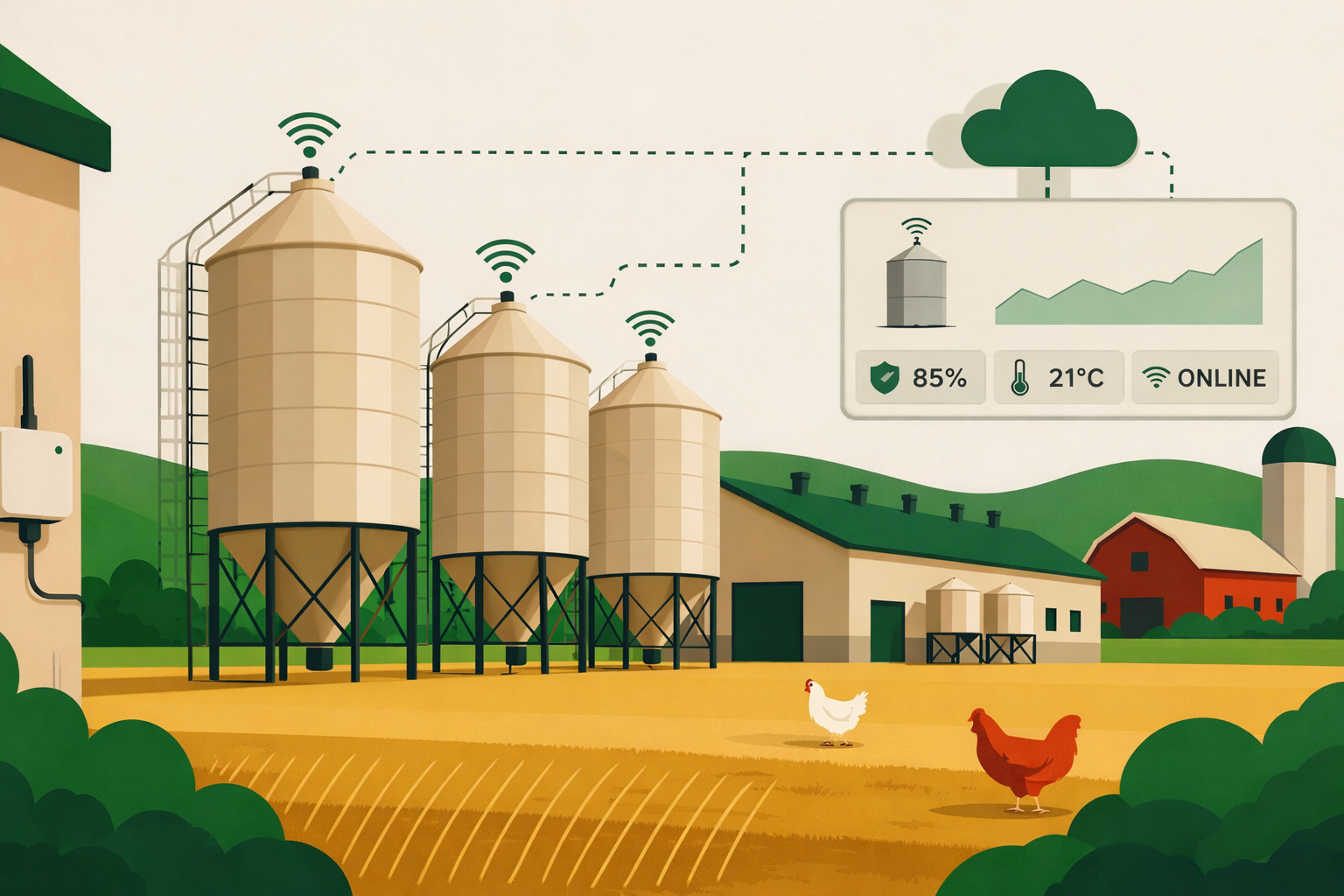
Water is the most important "ingredient" in broiler production — more important than feed. A broiler's body is about 60–70% water, and a bird feels the lack of water faster and more acutely than the lack of feed. This guide is part of the broiler cluster — the full picture of broiler production is in the guide on broiler farming.
Water-to-feed ratio — what does it mean?
The water-to-feed ratio is a simple number: how many litres of water per 1 kg of feed consumed. At comfortable house temperatures the ratio is approximately 1.6–1.8 litres of water per 1 kg of feed. In hot weather it rises — birds drink much more to cool down and eat less. If you know how much feed was used on a given day and how much water, you can immediately check whether the ratio is within the normal range.
Where do the numbers in this guide come from?
Indicative values (weekly norms, water-to-feed ratio) are based on the Ross 308 Broiler Management Guide (Aviagen) and poultry water guidelines by Dr Susan Watkins (Cooperative Extension, University of Arkansas). They may vary by genetic line, climate and drinker system — treat them as a reference, not a fixed norm. The week-by-week growth and feed consumption profile is covered in the guide on broiler chick rearing — the first week.
How to run daily water consumption monitoring for broilers
- 1
Read the water meter every day at the same time
Best done in the morning, before other work. Record the reading — in a notebook, spreadsheet or app. The point is to see the trend: water consumption should rise with the age and weight of the birds. As long as it rises along the expected curve, everything is fine. Reading at the same time each day gives comparable data from one day to the next.
- 2
Compare consumption with the previous day and with the norm for the same age
A single reading tells you little — only comparison with the norm or the flock's own history shows whether something is wrong. A sudden DROP in water consumption of 10–20% or more compared to the previous day or the expected norm for the birds' age is a warning signal — the birds may be sick, drinkers may be blocked, or pressure in the line may be too low. A sudden RISE may mean a leak in the system or heat stress.
- 3
Check drinkers and pressure in the drinking line
If consumption deviates from the norm, the first check is a physical inspection: are the nipples delivering water (check a few at random), what is the pressure in the line (too low = birds drink less because they have to press harder on the nipple), is the line blocked by sediment or biofilm. The correct nipple pressure is usually about 20–40 cm water column — check the drinker manufacturer's specifications.
- 4
Calculate the water-to-feed ratio
If you also measure feed consumption, divide the litres of water drunk by the kilograms of feed eaten. A result of about 1.6–1.8 at comfortable temperatures is normal. A result below 1.5 may indicate a water access problem or flock health issue. A result above 2.0 on normal days (no heat) suggests a leak or measurement error. On hot days (above about 25–28°C in the house) the ratio naturally rises — birds drink more to regulate body temperature.
- 5
Flush drinking lines regularly
Water standing in drinking lines quickly forms a biofilm — a layer of bacteria and deposits inside the pipes and nipples. Biofilm reduces water quality, can cause diarrhoea and weaken the flock. Flush lines: before each placement (with the line slightly pressurised), during the growing period according to the water hygiene programme, and always after administering medications or vitamins through the lines. Details of sensor integration with the drinking line are covered in the guide on integrations and automatic sensor monitoring.
- 6
Keep a weekly chart and react to trends
Compile daily readings into a weekly chart. You will see a rising curve that matches the birds' age — deviations from that curve are visible at a glance. This can be done in a simple notebook (x-axis: days of the growing period, y-axis: litres per day), but an app or spreadsheet makes it easy to compare with previous flocks and with the breed norm. More about feed silo monitoring as a complement to water metering is in the guide on feed silo monitoring.
Indicative water consumption norms for broilers week by week
Indicative values based on the Ross 308 Broiler Management Guide (Aviagen)*. Given as a reference point — actual consumption depends on temperature, genetic line and drinker system.
Week 1 (days 1–7)
About 20–40 ml of water per bird per day in the first days, rising to about 50–60 ml per day by the end of the first week. Check that chicks can reach the nipples — set the drinking line at the right height (the chick should tilt its head slightly upward, not stand on tiptoe). Key rule at the start: water must be clean, warm (about 15–25°C), and easily accessible.
Weeks 2–3
Consumption rises sharply: about 80–120 ml per bird per day by the end of week two, about 130–170 ml by the end of week three. The water-to-feed ratio should be about 1.6–1.8. This is a period of rapid growth — any deviation from the curve requires a quick response.
Weeks 4–5
About 180–240 ml per bird per day. Birds are large and generate a lot of heat — house temperature has a major influence on water consumption. In hot weather consumption can rise by 50% or more. The water-to-feed ratio on normal days remains about 1.6–2.0; on hot days it is naturally higher.
Water-to-feed ratio as a general indicator
About 1.6–1.8 l of water per 1 kg of feed at a comfortable temperature (about 18–22°C in the house). A rise to 2.0–2.5 in hot weather is normal. A consistently low ratio below 1.5 = problem with water access or flock health. A consistently high ratio above 2.5 without heat = suspected leak or measurement error.
The most common mistakes in broiler water monitoring
Most water problems can be detected early — if you measure. Below are the most common mistakes that make early detection harder.
No daily metering
If you check the water meter "now and then", you lose the main benefit of water monitoring — the early warning. A sudden 20% drop is visible immediately if you have yesterday's data. Without daily data, a problem only surfaces when mortalities or illness appear.
Incorrect pressure in the drinking line
Too low pressure = birds drink less because the nipple delivers water poorly. Too high pressure = water drips, litter becomes wet, leg problems and litter quality issues increase. Check the pressure requirements for your drinker system and fit a pressure regulator if you do not have one.
Neglected drinking line hygiene
Biofilm in drinking lines is an invisible problem — the water may look clean while bacteria multiply in the pipes and nipples. Birds avoid poor-quality water, which looks like a sudden drop in drinking. A flushing and disinfection programme for the lines is one of the cheapest preventive steps in a broiler house. Details of sensor integration with the drinking line are covered in the guide on integrations and sensors.
Ignoring early signs of illness — before mortalities appear
A sudden drop in water drinking precedes mortalities (dead birds) by 12–24 hours or more. Without water consumption data, the first deviation goes unnoticed and you diagnose the problem only when mortality rises. That is why water monitoring matters more than it might seem: it is the cheapest early-warning system you have at hand.
Frequently asked questions about broiler water consumption
How much water do broilers need per day?add
Consumption rises with age: from about 20–40 ml per bird per day in the first days to about 200–250 ml toward the end of the growing period. The indicative water-to-feed ratio is about 1.6–1.8 litres of water per 1 kg of feed at comfortable temperatures. In hot weather birds drink significantly more — up to 50% or more above the norm. Indicative values come from the Ross 308 Broiler Management Guide (Aviagen).
What is the water-to-feed ratio and how is it calculated?add
The water-to-feed ratio is the number of litres of water consumed divided by the kilograms of feed consumed in the same period. For example: if the flock drank 1,000 litres of water and ate 600 kg of feed, the ratio is 1,000 ÷ 600 ≈ 1.67. That is within the normal range at comfortable temperatures. A ratio below 1.5 or above 2.5 (without heat) needs investigation.
What does a sudden drop in broiler water consumption mean?add
A sudden drop in drinking of 10–20% or more compared to the previous day or the norm for the birds' age is an alarm signal. It may mean: flock illness (often the first sign before mortalities), blocked or broken drinkers, pressure in the drinking line too low, dirt or biofilm in the lines, or poor water quality. Immediately inspect the drinkers and lines — and if everything looks fine technically, call a vet.
What does a sudden rise in water consumption mean?add
A sudden rise may mean: heat stress in the house (birds drink more to cool down — normal on hot days), a leak in the drinking line or water system (the meter records water that is leaking, not being drunk), or a measurement error. Check the house temperature and visually inspect the drinking lines for leaks.
How often should drinking lines in a broiler house be flushed?add
At minimum: before each placement (mechanical cleaning and disinfection), and during the growing period regularly according to the water hygiene programme — especially after administering medications or vitamins through the lines, which quickly form deposits and biofilm. Biofilm in the pipes is an invisible cause of reduced water quality and can cause birds to drink less. Check the drinker manufacturer's recommended flushing programme for your system.
Does house temperature affect water consumption?add
Yes, very significantly. For every 1°C rise above the comfort zone birds drink about 2–5% more. On days with house temperatures above about 28°C, water consumption can rise by 50% or more. At the same time birds eat less — the water-to-feed ratio rises. This is normal and must be taken into account when assessing whether water consumption deviates from the norm. House temperature and humidity are covered in the guide on temperature and humidity in the poultry house.
Automatic water consumption monitoring — no manual logging
Want a water consumption chart for every day of the growing period and an SMS alert when consumption deviates from the norm? Check out the water meter integration in DlaFerm.pl or create a free farm account.
Phone
+48 796 258 151