Histomoniasis (blackhead) in turkeys — symptoms and prevention
Histomoniasis is one of the most dangerous turkey diseases. Most of a flock can be lost before you realise what is happening. We explain in plain language where it comes from, how to recognise it and — most importantly — how to prevent it.
verifiedFrom the team that has organised work on poultry farms for years.
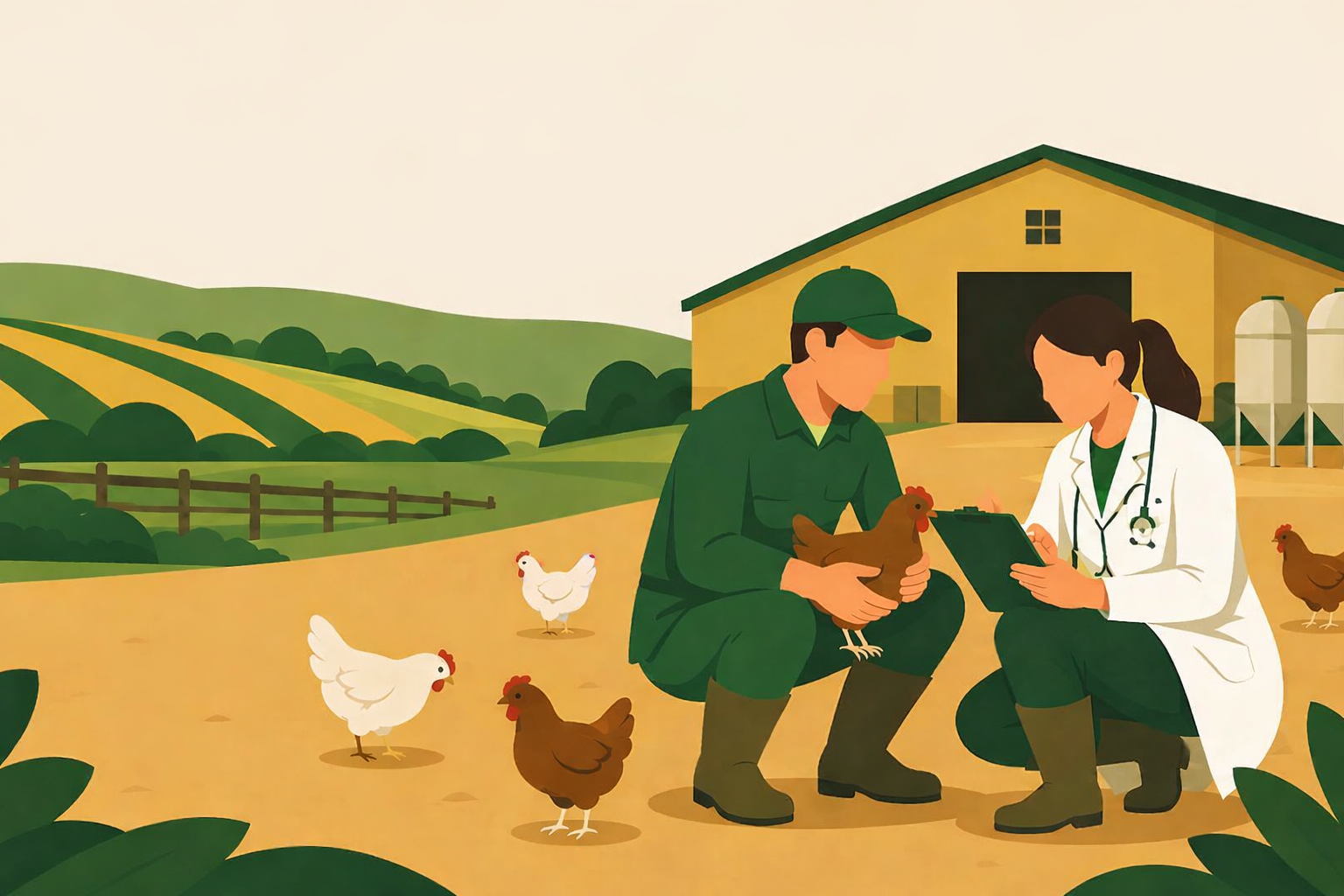
What is histomoniasis and why is it so dangerous for turkeys?
Histomoniasis is a disease caused by a protozoan (microscopic parasite) called Histomonas meleagridis. Turkeys are exceptionally susceptible — without adequate prevention, most of a flock can die in a short time. The disease is commonly called "blackhead", although the skin of the head does not always darken and that is not a reliable sign. For more on turkey farming see the guide on turkey farming.
How does the parasite reach a turkey?
The Histomonas protozoan is fragile on its own and dies quickly outside a bird. However, it travels hidden inside the eggs of a gut roundworm — a nematode (a worm that lives as a parasite in the intestine) called Heterakis gallinarum. The eggs of this roundworm are very hardy: they survive in soil and litter for many months, and birds swallow them with feed or water. Earthworms can ingest roundworm eggs and spread them further — contact between turkeys and earthworms on a range increases the risk. The parasite also spreads directly through the faeces of infected birds. Most importantly, chickens very often carry Heterakis and the Histomonas protozoan WITHOUT any signs of illness (they are carriers — birds that spread disease without becoming sick themselves) and infect turkeys. Therefore NEVER keep turkeys together with chickens or allow them on the same range without thorough cleaning.
No effective treatment in the EU — prevention is everything
The old drugs for histomoniasis have been withdrawn in the European Union. Today there is no registered, effective product for treating this disease in turkeys in the EU. If you suspect histomoniasis, contact a veterinarian as soon as possible — only a vet can assess the situation and prescribe appropriate action. Do not give any products without veterinary advice. Because treatment is practically unavailable, PREVENTION is the only effective strategy. Overview of poultry diseases: poultry diseases — symptom table.
How to recognise histomoniasis in turkeys
Symptoms can appear quickly and worsen day by day. Each of these signs should prompt immediate contact with a veterinarian.
Lethargy and ruffled feathers
Sick toms and hens look as if they are "huddled" — they stand with drooping heads and ruffled plumage, stop running around and lose interest in their surroundings. This is one of the first signals that something is wrong.
Loss of appetite and weight loss
Birds reduce eating and drinking. Obvious weight loss can be seen within just a few days. Breast muscle condition deteriorates rapidly.
Characteristic sulphur-yellow diarrhoea
The most distinctive sign: yellow or yellow-green, sulphurous droppings. This colour of diarrhoea in turkeys is a strong alarm signal and should immediately prompt a call to the veterinarian.
Darkened head skin (not always present)
This is where the name "blackhead" comes from: in some sick birds the skin of the head may take on a darker, bluish colour. However, this does NOT always occur — the absence of this sign does not rule out histomoniasis.
Lesions visible at post-mortem
A post-mortem (opening a dead bird to examine the internal changes) is the key to a definitive diagnosis. The vet will see: characteristic circular, depressed, necrotic spots on the liver and thickened, inflamed caeca (the two blind-ended sections of the intestine) filled with a cheesy content. These changes are typical of histomoniasis.
Sudden, high mortality
Histomoniasis can kill birds very quickly. Deaths can appear suddenly and escalate rapidly. When you see the first dead birds and yellow diarrhoea — do not wait, call the veterinarian the same day.
Preventing histomoniasis — what you can do on the farm
Since treatment is practically unavailable, prevention is the only effective weapon. Below are the most important actions.
Never mix turkeys with chickens
This is the most important rule. Chickens carry the Heterakis roundworm and the Histomonas protozoan without any signs of illness of their own. They infect turkeys. Do not keep turkeys in the same building as chickens, and do not allow them on the same range without thorough cleaning and disinfection. The rest period after chickens should be as long as possible.
Control roundworms (deworming)
The roundworm Heterakis gallinarum carries the Histomonas protozoan. Regular deworming of the flock — according to veterinary advice — reduces roundworm numbers and thereby the risk of histomoniasis. Never deworm without veterinary consultation: the vet selects the product and timing.
Dry, clean litter from day one
Heterakis roundworm eggs survive in damp litter for many months. Dry, regularly replaced litter limits egg survival and reduces infection risk. Ensure adequate ventilation and watertight drinkers. More on biosecurity: poultry farm biosecurity.
Limit contact with earthworms and contaminated ranges
Earthworms can ingest roundworm eggs and transfer them to turkeys. On ranges previously used by chickens or by turkeys with histomoniasis, roundworm eggs can remain in the soil for years. Restrict turkey access to such areas or observe a long rest period between flocks.
Cleaning and disinfection between flocks
After every flock, thoroughly clean and disinfect the house: remove all litter, wash floors and walls, carry out disinfection. Allow the house to "rest" before the next flock. Detailed guidelines — turkey gut health.
Restricted farm access — biosecurity
People, equipment and other animals can mechanically transfer roundworm eggs. Limit access of outsiders to the farm, use protective clothing and footwear, and disinfect equipment entering the house. Biosecurity guidelines are in the guide on poultry farm biosecurity.
Frequently asked questions about histomoniasis in turkeys
What is histomoniasis (blackhead) in turkeys?add
Histomoniasis is a disease caused by the protozoan (microscopic parasite) Histomonas meleagridis. It is exceptionally dangerous for turkeys — most of a flock can be lost. It causes yellow diarrhoea, lethargy, weight loss, and characteristic lesions in the liver and caeca (the two blind-ended sections of the intestine).
How do turkeys become infected with histomoniasis?add
The Histomonas protozoan travels hidden inside eggs of the roundworm (intestinal nematode) Heterakis gallinarum. Turkeys swallow the roundworm eggs with feed, water or from the ground on a range. Earthworms can also carry roundworm eggs and transfer them to turkeys. Chickens are often carriers (they spread the disease without showing any signs themselves) and infect turkeys — which is why the two species must never be kept together.
Is there a treatment for histomoniasis?add
In the European Union there is currently no registered, effective drug for treating histomoniasis in turkeys. Older products have been withdrawn. If you suspect histomoniasis, contact a veterinarian as soon as possible. Do not give any products without veterinary advice. This is precisely why prevention is so critical.
Why can turkeys never be kept with chickens?add
Chickens very often carry the Heterakis roundworm and the Histomonas protozoan in their intestines WITHOUT any signs of illness — they are carriers. They infect turkeys, which are exceptionally susceptible to this disease. Even healthy-looking chickens can transmit it. Mixing the two species or using the same range without a long rest period and disinfection is very risky.
What do post-mortem lesions look like in a turkey with histomoniasis?add
A post-mortem means opening a dead bird to examine the internal changes. In histomoniasis the vet will see: circular, depressed necrotic areas on the liver (they look like "craters" with a yellowish centre) and thickened, inflamed caeca filled with a cheesy content. These changes are very characteristic of this disease.
What are the symptoms of histomoniasis in turkeys?add
Main symptoms are: lethargy, ruffled feathers, loss of appetite, obvious weight loss and characteristic sulphur-yellow diarrhoea. Sometimes the head skin darkens to a bluish colour — hence the name "blackhead" — but this does not always happen. Mortality can escalate very quickly.
How can histomoniasis be prevented on a turkey farm?add
The most important rules: never mix turkeys with chickens, regularly deworm the flock under veterinary supervision, keep litter dry and clean, limit turkey contact with earthworms and old ranges previously used by chickens, and follow biosecurity rules. After every flock, thoroughly clean and disinfect the house.
How does DlaFerm.pl help with turkey disease prevention?add
DlaFerm.pl lets you log mortality, keep a health events diary and monitor flock condition. When you see rising mortality or yellow diarrhoea, you have a complete history in one place — this helps the veterinarian assess the situation more quickly. Data are always to hand during an inspection. More on turkey rearing: turkey farming and turkey rearing — the first days.
Monitor your turkey flock health with DlaFerm.pl
Want to log mortality and health events in one place? Create a free farm account or write to us.
Phone
+48 796 258 151