Air inlets and intake flaps — they rule the air
In negative-pressure ventilation it is not the fan that decides air quality, it is the inlets. They steer fresh air along the ceiling, where it warms and mixes before it settles onto the birds. We explain how to size the flaps and how to set static pressure to avoid draughts, wet litter and ammonia.
verifiedFrom the team that has organised work on poultry farms for years.
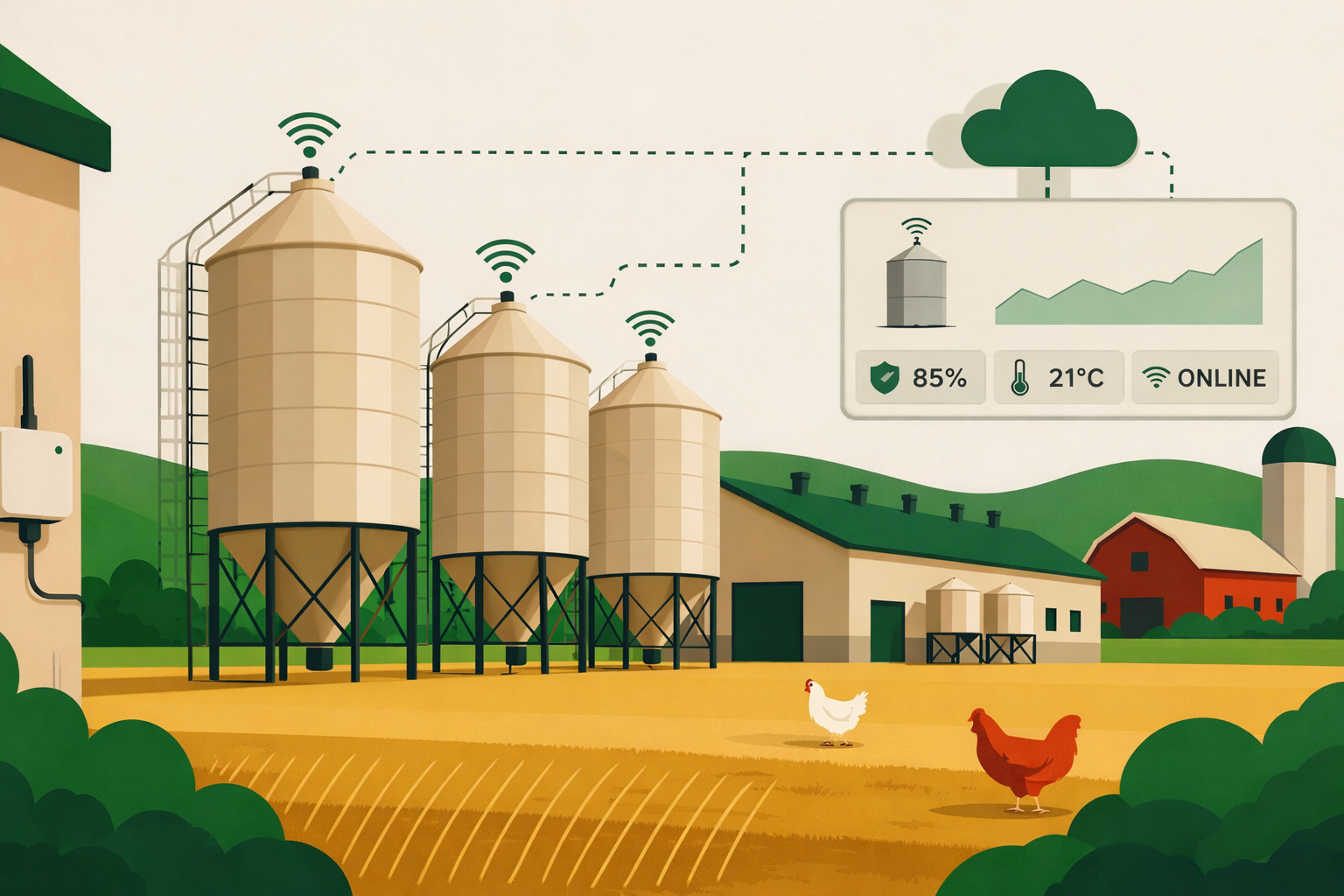
Negative-pressure ventilation works simply: the fans push air out of the hall, so a slight vacuum — a gentle “suction” — builds up inside. That vacuum draws fresh air in through the openings, the inlets. The whole trick is to make the air enter as a narrow, fast jet that runs along the ceiling rather than dropping straight onto the birds. That is decided not by the fan but by how the intake flaps open and are set.
Why do inlets, not fans, decide air quality?
The fan only sets how much air is exchanged in the hall. The inlet decides where that air goes. A well-set flap lets air in as a fast jet aimed along the ceiling — there the cold outside air warms and mixes with the warm air before it gently settles onto the birds. A badly set flap lets air in too slowly or at the wrong angle, so the cold jet drops straight onto the chicks. The result is draughts, wet litter and rising ammonia. That is why you set static pressure and inlets first, and only then the fan output.
What inlets and flaps go into a poultry house
The choice depends on the building’s construction, the climate and whether you run minimum, transitional or tunnel ventilation.
Wall inlets (side)
Flaps fitted in the side walls, the backbone of minimum and winter ventilation. They open narrowly and steer the air jet along the ceiling deep into the hall. They are most often what decides whether winter air runs along the ceiling or drops onto the birds.
Ceiling inlets
Openings in the ceiling through which air comes down from the space above the hall or the attic. The air has time to warm there before it reaches the birds. They give an even spread of fresh air and suit halls with an insulated ceiling.
Ridge inlets and slots
Openings running along the ridge, the top of the roof. They admit air as high as possible, so it has the most distance to warm and mix. Used to supplement wall inlets or in light gravity-assisted ventilation.
Gable flaps and dampers (tunnel)
Large flaps in the gable end opened in summer for tunnel ventilation. Air then flows the full length of the building at high speed, cooling the birds by air movement. This is a different mode from winter inlets — here throughput matters, not steering the jet along the ceiling.
Actuators and static pressure control
The flaps are opened and closed by an actuator (usually a cable and winch) driven by the climate controller. The controller measures pressure with a sensor (a differential gauge) and adjusts the flap opening to hold the set static pressure. That keeps the jet at a steady speed whatever the weather.
Jet deflectors and screens
Internal vanes and deflectors give the air the right angle, steering it toward the ceiling. Screens and guards keep wild birds and rodents out of the openings. A small part, yet often what decides whether the jet stays on the ceiling.
Air inlets step by step
- 1
Size the number and area of inlets
The total open inlet area must match the ventilation output — too little area gives excessive static pressure and noise, too much will not form a jet. Manufacturers give rough figures of inlet area per cubic metre of air. Treat them as a starting point and tune them to your hall.
- 2
Set the working static pressure (Pa)
Static pressure is the pressure difference between the hall and outside, measured in pascals. You set it so the jet from the inlet reaches the ridge and comes back mixed. Roughly a few to a dozen-or-so pascals — the exact value depends on the hall width and the control supplier’s guidance.
- 3
Let the flaps open automatically
The flap opening should be driven by the controller from a pressure sensor, not by hand. When the fans speed up, the flaps open wider to hold a constant static pressure; when they slow down, they close in. That keeps the jet speed even around the clock.
- 4
In winter, send air along the ceiling
In minimum ventilation (the smallest dose of fresh air in winter) the flaps open narrowly so the cold air shoots in as a fast jet along the ceiling. There it warms and mixes with the warm air before it gently settles. That is the key to dry litter and low ammonia in the cold.
- 5
In summer, switch to tunnel or gable flaps
When it gets hot, the winter inlets are no longer enough. You open the gable flaps and switch to tunnel ventilation, in which air flows the full length of the hall at high speed and cools the birds. That is a completely different inlet mode from winter.
- 6
Check the hall’s tightness and clean the flaps
A leaky hall (gaps in doors, curtains, ducts) breaks the static pressure, and air enters anywhere rather than through the inlets. Run a tightness test (static-pressure or smoke), seal the leaks and regularly clean dust and feathers off the flaps so they open evenly.
Frequently asked questions about inlets and static pressure
Why are inlets more important than fans for air quality?add
Because the fan only sets how much air is exchanged, while the inlet decides where it goes. The inlet steers fresh air along the ceiling, where it warms and mixes before it settles onto the birds. Even the best fan will not help if badly set flaps let a cold jet straight onto the chicks.
What is working static pressure and how much should it be?add
It is the pressure difference between the inside of the hall and outside, created by the fans, measured in pascals (Pa). You set it so the jet from the inlet reaches the ridge and comes back already mixed. Roughly a few to a dozen-or-so pascals, but the exact value depends on the hall width and the control supplier’s guidance.
Why does cold air drop straight onto the birds?add
Most often because the flaps are badly set or the static pressure is too low. The air then enters too slowly or at the wrong angle and, instead of running along the ceiling, drops straight onto the litter and birds. The result is draughts, wet litter and rising ammonia. Raising the static pressure, improving the jet angle and checking the hall’s tightness all help.
How do I check a poultry house’s tightness?add
You run a static-pressure test: close all inlets, switch on a set number of fans and check what static pressure the hall holds — a tight hall reaches a high static pressure with few fans. Leaks also show in a smoke test or simply by hand at doors, curtains and ducts. The more leaks, the worse the inlets work.
Describe your building’s equipment in DlaFerm.pl
In DlaFerm.pl, in the “Technical equipment of the building” step, you record what inlets, flaps and ventilation control you have — all in one place. Create a free account or write to us.
Phone
+48 796 258 151