Edible insect (mealworm) vaccines
What if a bird “ate” its vaccine along with the feed, with no needle? Researchers are studying mealworms that would carry an avian-flu H5N1 antigen — an idea for an oral vaccine given to a whole flock at once. We explain what it is, what stage it’s at and why it’s still the future, not a finished solution.
verifiedFrom the team that has organised work on poultry farms for years.
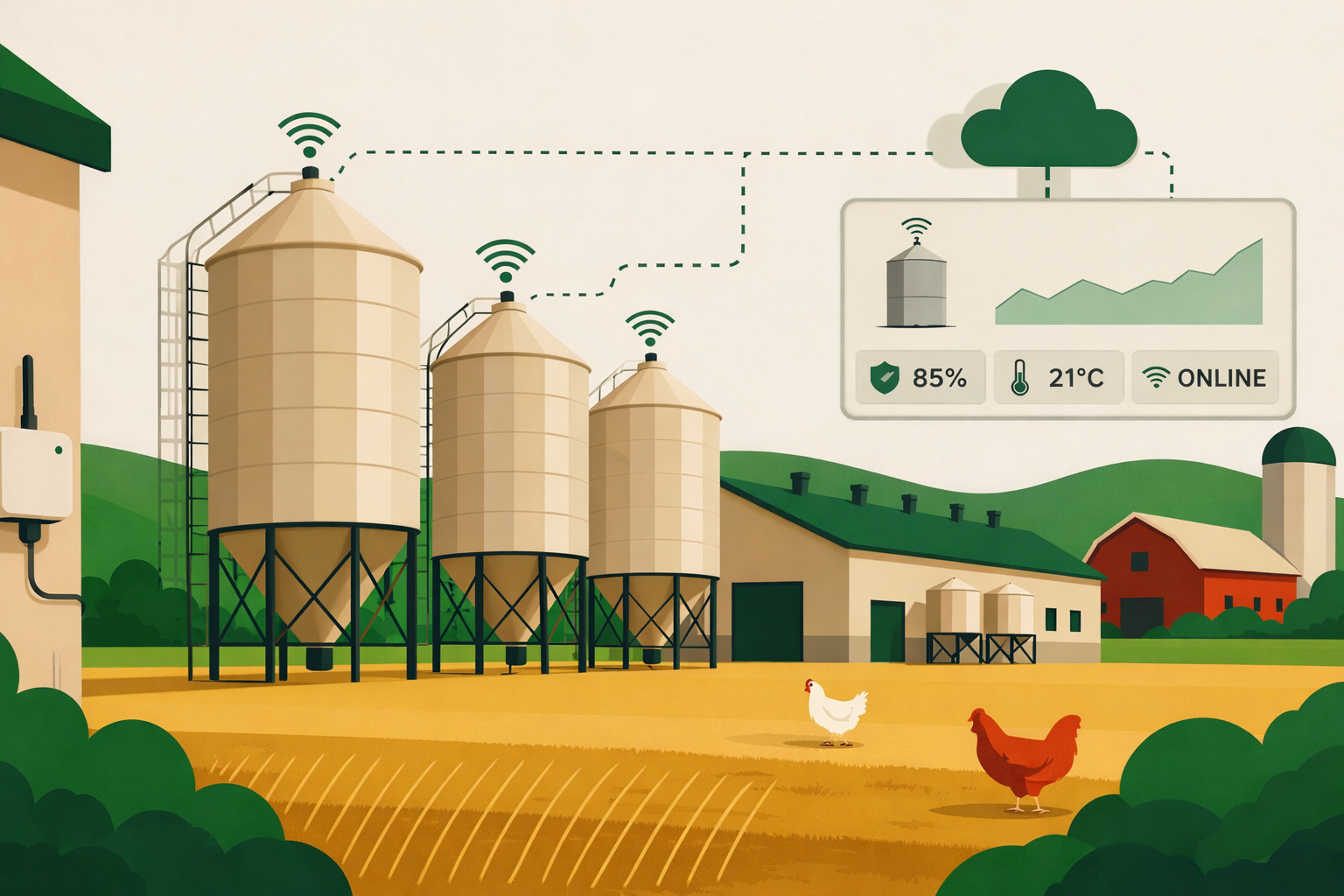
Vaccinating hundreds of thousands of birds one by one is a huge amount of work. Hence an idea that sounds like science fiction but is being built in labs: an edible vaccine given in the feed. Researchers are studying mealworms — beetle larvae — that would carry an antigen of the avian-flu H5N1 virus. The bird eats the insect and builds immunity, with no needle. It’s a promising but early direction, so it’s worth looking at it soberly.
Where does the insect idea come from?
Mealworms, the larvae of the beetle Tenebrio molitor, are already studied and used as a protein feed for poultry — birds know them from the menu. Researchers at Kansas State University (K-State) are working on making genetically engineered mealworms carry an H5N1 antigen. The advantage of this route is scale: instead of injecting birds one at a time, you could give the vaccine in the feed to a whole flock at once. It’s still research, but that’s exactly why the topic is interesting.
How an edible insect vaccine would work
The idea is to deliver the antigen in the feed instead of by injection. It’s an early research stage — it does not replace today’s biosecurity or approved vaccines.
The problem: vaccinating huge flocks
A classic injectable vaccine means handling every bird separately. With flocks of hundreds of thousands, that’s a huge amount of work, time and stress for the birds. That’s why researchers look for ways to give immunity to a whole flock at once — and that’s where the in-feed vaccine idea comes in.
The idea: an antigen in a mealworm
Researchers at K-State are studying genetically engineered mealworms — Tenebrio molitor larvae — that would carry an antigen of the H5N1 virus. The bird eats the insect with its feed, and the immune system learns to recognise the virus. It’s an oral vaccine: no needle, no handling each bird.
Why insects in particular
Mealworms are already studied and used as a protein feed for poultry, so an insect carrier is something birds know from the menu. It’s a natural route of delivery and potentially cheap at scale. The idea combines a familiar feed with a vaccine function — hence the strong interest in this direction.
The stage: it’s still research
The key caveat: an edible insect vaccine is at an early stage of scientific work, not a product you can buy. We don’t yet know its effectiveness under farm conditions, its dosing or its path to approval. Treat it as a promising direction for the future, not a solution for this season.
It doesn’t replace today’s tools
An edible insect vaccine does not replace biosecurity or already-approved vaccines. Today, injectable vaccines are used against avian flu (e.g. in ducks in France), and the foundation is still keeping the virus off the farm. Insects are an add-on to that puzzle, studied for the future.
What will need confirming
Before such a vaccine reaches farms, its effectiveness, safety, the stability of the antigen in the feed and even dosing across the flock will all need confirming, plus a path through approval. That’s a lot of open questions — which is why we speak about edible vaccines in the future tense and cautiously.
Edible insect vaccines step by step
- 1
Understand the problem they solve
The starting point is scale: how to vaccinate a huge flock without injecting every bird. An edible in-feed vaccine is meant to answer exactly that. Once you know the goal, it’s easier to judge whether a given idea really delivers it.
- 2
Separate the idea from a finished product
Mealworms with an H5N1 antigen are research in progress, not kit to order. When reading the news, tell apart “researchers are studying” from “you can buy”. That difference decides what you can expect today versus what is a plan for the future.
- 3
Don’t put off biosecurity
Whatever new vaccines appear, the foundation is keeping the virus off the farm: netting, mats, wild-bird control, order in the hygiene lock. No vaccine — injectable or oral — exempts you from biosecurity. It’s the foundation that already works now.
- 4
Follow approved vaccines
If you care about vaccinating against avian flu today, look at vaccines that are already approved and at the decisions of the veterinary services. They — not experimental insects — set what may be used this season.
- 5
Read the sources, not the headlines
The edible-vaccine topic is easy to hype. Go to the study descriptions and the research teams’ statements rather than the catchy titles alone. That way you won’t mistake a promising direction for a finished solution.
- 6
Record vaccinations and flock health
Whatever the technology, it pays to keep your records in order: what was vaccinated, when and with what, and how the flock reacts. Such a record next to the flock card is always useful — both today and when new vaccines appear.
Frequently asked questions about edible insect vaccines
Can I already buy an edible mealworm vaccine?add
No. It’s at an early stage of scientific research — including by a team at Kansas State University — not a product on the market. We don’t yet know its effectiveness under farm conditions, its dosing or its path to approval. It’s a promising direction for the future, not a solution for this season.
How would an in-feed vaccine work?add
The idea is that genetically engineered mealworms carry an antigen of the H5N1 virus. The bird eats the insect along with its feed, and its immune system learns to recognise the virus — with no needle and no handling each bird. That way the vaccine could be given to a whole flock at once.
Why mealworms specifically?add
Mealworms, the larvae of Tenebrio molitor, are already studied and used as a protein feed for poultry, so an insect carrier is something birds know from the menu. It’s a natural and potentially cheap route of delivery at scale. The idea combines a familiar feed with a vaccine function.
Will it replace today’s vaccines and biosecurity?add
No. An edible insect vaccine is an add-on studied for the future, not a replacement. Today, injectable vaccines are used against avian flu, and the foundation is still keeping the virus off the farm. Biosecurity works regardless of how new vaccines develop.
Keep a vaccination log in DlaFerm.pl
In DlaFerm.pl you record vaccinations, treatments and flock health next to the flock card — whatever technology you use. Create a free account or write to us.
Phone
+48 796 258 151