Goose farming — pasture, oat-fattening, slaughter
The goose is a grazing bird — it can find a large part of its food on fresh grass. Poland has a long tradition of goose farming, and on 11 November — Saint Martin's Day — Poles eat oat-fattened goose, fed on oats for the last few weeks. We explain in plain language how goose farming works from goslings to slaughter.
verifiedFrom the team that has organised work on poultry farms for years.
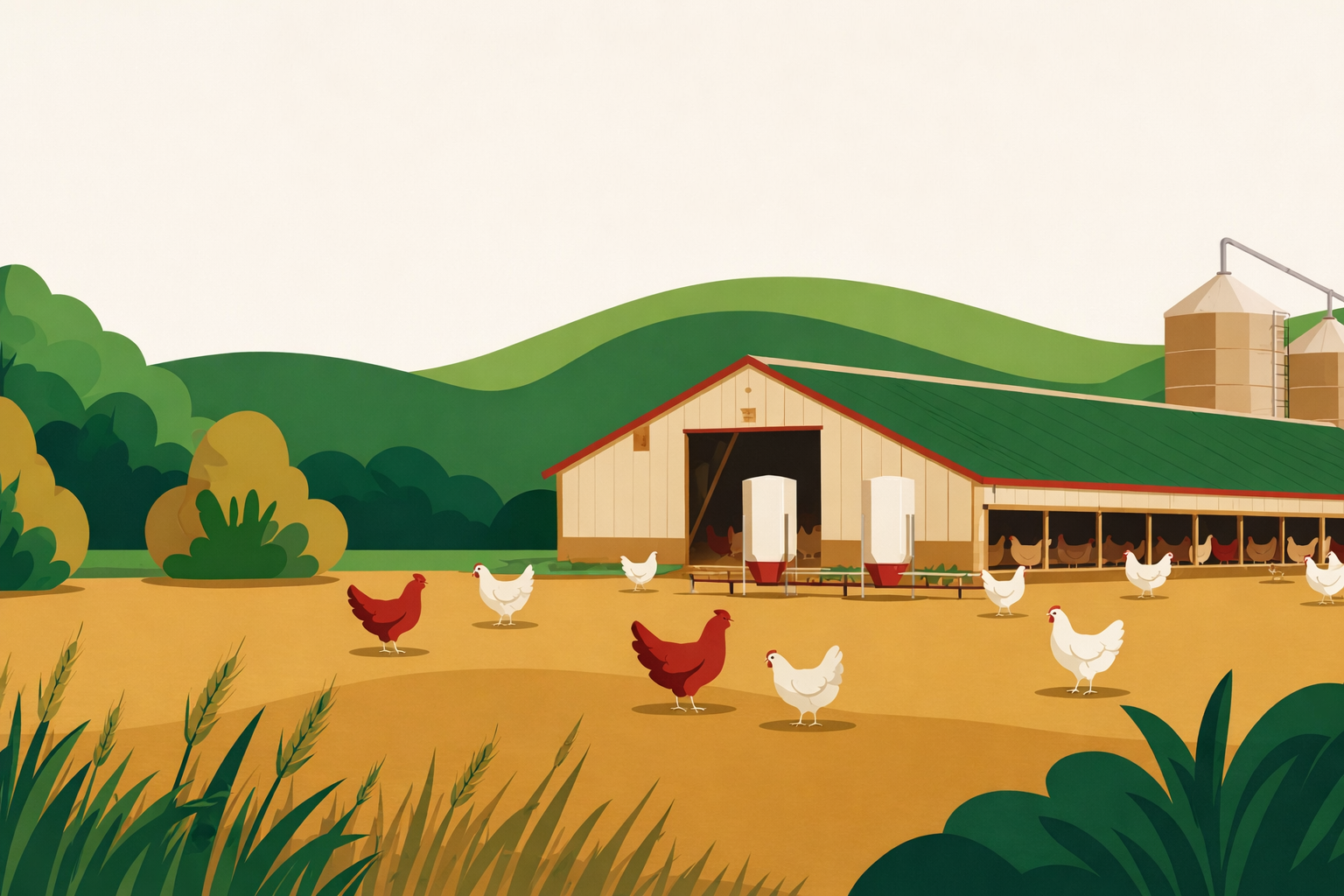
Goose — a grazing bird
Geese make excellent use of pasture (fresh, young grass), so pasture-based farming can be much cheaper than confined rearing. Geese can meet a large part of their diet by grazing all day. They also need grain and feed mixes, but the role of pasture in their diet sets them apart from chicken broilers or turkeys, which cannot be grazed. Geese are therefore particularly attractive for farms with meadows or grassland.
Polish tradition — Biała Kołudzka and the oat-fattened goose
Poland is a major producer and exporter of geese. One of the most important Polish breeds is Biała Kołudzka (line W31), developed by the National Research Institute of Animal Production (IZ-PIB) in Kołuda Wielka. It is well adapted to Polish conditions and valued for good meat and down. The oat-fattened goose is a traditional product: for the last approximately 3 weeks before slaughter, geese are fed mainly oats. This makes the meat fattier, softer and distinctively flavoured. These geese are eaten on 11 November, Saint Martin's Day — hence the term "St Martin's goose".
Laying geese — few eggs, but in their season
If you want to hatch your own goslings, bear in mind that geese are seasonal layers — they lay eggs mainly in spring and not nearly as many as a hen. A goose lays approximately 30–50 eggs per year (according to IZ-PIB 2018 data and farming practice), which is modest compared to a laying hen. Feed for laying geese should contain approximately 14–15% crude protein. Goose eggs are large and ideal for incubation — more on this in the guide on poultry egg incubation.
Goose farm duties — the same as for any poultry
Goose farming is not just caring for birds — it also comes with formal duties identical to those for chickens or turkeys. You need a farm veterinary number, flock record-keeping, documentation of treatments with withdrawal periods observed, and compliance with poultry transport rules when birds go to slaughter. DlaFerm.pl brings all these duties together in one place — it works the same for geese as for any other poultry.
From gosling to slaughter — step by step
Goose farming has distinct stages. Each requires different care, different feeding and different flock management.
Gosling rearing (start)
Young goslings are sensitive to cold in the first days of life. They need a warm spot under a heating canopy, with temperatures of about 30–32°C in the heating zone at the start, gradually lowered over the following weeks. Easy access to water and a high-protein starter feed is essential. After a few weeks, once the birds have grown their feathers, they can go outside — provided the weather is mild. Water shortage is one of the biggest mistakes in gosling rearing, so clean water must be topped up regularly.
Grazing and growth
Geese enjoy going out on grass from an early age. Fresh pasture can make up a large part of their diet during the growing season. Geese graze slowly and thoroughly, selecting the softest plant parts. The pasture must be fenced and safe — geese can wander, and the area should be free from chemicals. With a high stocking density, pasture degrades quickly, so rotating which field the birds graze is worth doing. Grain and feed mixes are given as a supplement, especially when grass is scarce.
Oat-fattening before slaughter
Oat-fattening is the traditional method of finishing geese before slaughter: for approximately the last 3 weeks, geese are fed mainly oats (whole grain or steamed). Oats are rich in fats and carbohydrates, so geese gain weight quickly and lay down the characteristic fat that gives the meat its special flavour. Oat-fattened goose commands a premium on the market. Water must be available at all times — geese drink a lot, especially on a dry-grain diet.
Slaughter and products
Indicative fattening takes about 14–16 weeks, with the finished goose weighing approximately 5–7 kg (according to IZ-PIB 2018 data and farming practice). Slaughter can be carried out on-farm for personal use (following animal welfare regulations) or the flock can be sent to an abattoir. Transport to slaughter is subject to animal welfare rules. After slaughter the goose yields meat, fat (goose lard), feathers and down (valuable raw materials) and liver.
What a goose gives — not just meat
The goose is exceptional among poultry because it yields many valuable products. This is worth factoring in when planning a goose farm.
Goose meat
Goose meat is darker and fattier than chicken or turkey. It is particularly prized in the autumn and winter season. Oat-fattened goose commands higher prices due to its distinctive flavour and texture. Polish meat geese go to both the domestic market and export — mainly to Germany and Asian countries.
Fat — goose lard
Goose lard (fat rendered from the goose) is a valuable culinary product and a traditional ingredient of Polish cuisine. It is rich in unsaturated fatty acids and has a long history of culinary use. In commercial farming, fat is a separate by-product of slaughter.
Feathers and down
Goose down is one of the most valuable natural insulating materials — used to make duvets, pillows and winter jackets. Feathers and down are collected at slaughter or (less commonly today) by plucking live geese. Polish geese with good plumage, including the Biała Kołudzka breed, enjoy a good reputation on the down market.
Goose liver
Goose liver is a delicate and prized raw material. With intensive fattening, an enlarged liver — the famous foie gras — can be obtained. In Poland, traditional rearing is not aimed at foie gras, but liver from an oat-fattened goose is tasty and worth noting.
Goose eggs
Goose eggs are large (much larger than hen eggs) and nutritionally valuable. A laying goose lays eggs mainly in spring — seasonal laying is a natural feature of the species. Eggs are used for incubator hatching, with any surplus sold or consumed. More on hatching: poultry egg incubation.
Natural manure
Geese fertilise pasture intensively. Goose droppings are rich in nutrients and can improve meadow fertility when rotation is properly managed. This is an added ecological benefit of pasture-based rearing.
Frequently asked questions about goose farming
How long does fattening geese take?add
Indicatively, fattening geese to slaughter takes about 14–16 weeks from placement of goslings. The finished goose weighs approximately 5–7 kg (according to IZ-PIB 2018 data and farming practice). The last approximately 3 weeks before slaughter can be spent on oat-fattening — feeding oats — which improves the flavour and value of the meat. Fattening time depends on the breed, feeding and purpose — geese kept for down or breeding are kept longer.
What is oat-fattening?add
Oat-fattening is the traditional method of finishing geese before slaughter, consisting of feeding geese mainly oats (whole or steamed grain) for approximately the last 3 weeks before slaughter. Oats are rich in fats and carbohydrates, so geese gain weight quickly and lay down the characteristic fat that gives the meat its special flavour and tenderness. This is how the oat-fattened goose is prepared — traditionally served on 11 November, Saint Martin's Day.
What is Biała Kołudzka?add
Biała Kołudzka (line W31) is a Polish goose breed developed by the National Research Institute of Animal Production (IZ-PIB) in Kołuda Wielka. It is well adapted to Polish climatic conditions and valued for good meat, down and hardiness. Poland is a major producer and exporter of geese, and Biała Kołudzka is one of the recognised Polish breeding lines.
How many eggs does a goose lay per year?add
A goose has seasonal laying — it lays eggs mainly in spring. Approximately 30–50 eggs per year (according to IZ-PIB 2018 data and farming practice), which is far fewer than a laying hen. Goose eggs are large and valuable for hatching. If you want to hatch your own goslings, it is worth understanding incubation — described in the guide on poultry egg incubation.
Do geese need water for bathing?add
Geese naturally enjoy water and like to bathe — it benefits them and improves feather and down quality. However, bathing is not essential for correct rearing. The most important thing is clean drinking water, of which geese need a lot — especially on a dry-grain diet. Puddles and water features on the run can be beneficial but require keeping clean, as geese foul them.
How does a goose differ from a duck in farming?add
Both are waterfowl and enjoy pasture, but have different requirements. The goose is larger, grows more slowly and is better adapted to foraging on grass. The duck grows faster (fattening about 7–8 weeks), is more intensive in rearing and yields different meat. A comparison of species and their nutritional requirements is covered in the guides on duck farming and feeding geese and ducks — standards.
How much pasture do geese need?add
Geese need a lot of space for grazing — too small an area leads to rapid degradation of the pasture and poorer bird health. The exact standard depends on the farming system and regulations, but in practice more is always better. With rotation — changing which paddock the birds use — the grass has time to regrow, maintaining grazing quality throughout the season.
Run your goose farm in one place with DlaFerm.pl
Raising oat-fattened geese, Biała Kołudzka or another breed? We will show you how DlaFerm.pl simplifies flock records, treatment documentation and goose farm management. Write to us.
Phone
+48 796 258 151