Goose welfare — range, water, plumage and ethics
A goose is a waterfowl and grazing bird — to feel well it needs a grassy range to graze, access to clean water and a place to care for its feathers. In plain language we explain how to give geese good welfare under Directive 98/58/EC and Council of Europe recommendations, and we say plainly where the ethics stand: live plucking is banned, and force-feeding is not practised.
verifiedFrom the team that has organised work on poultry farms for years.
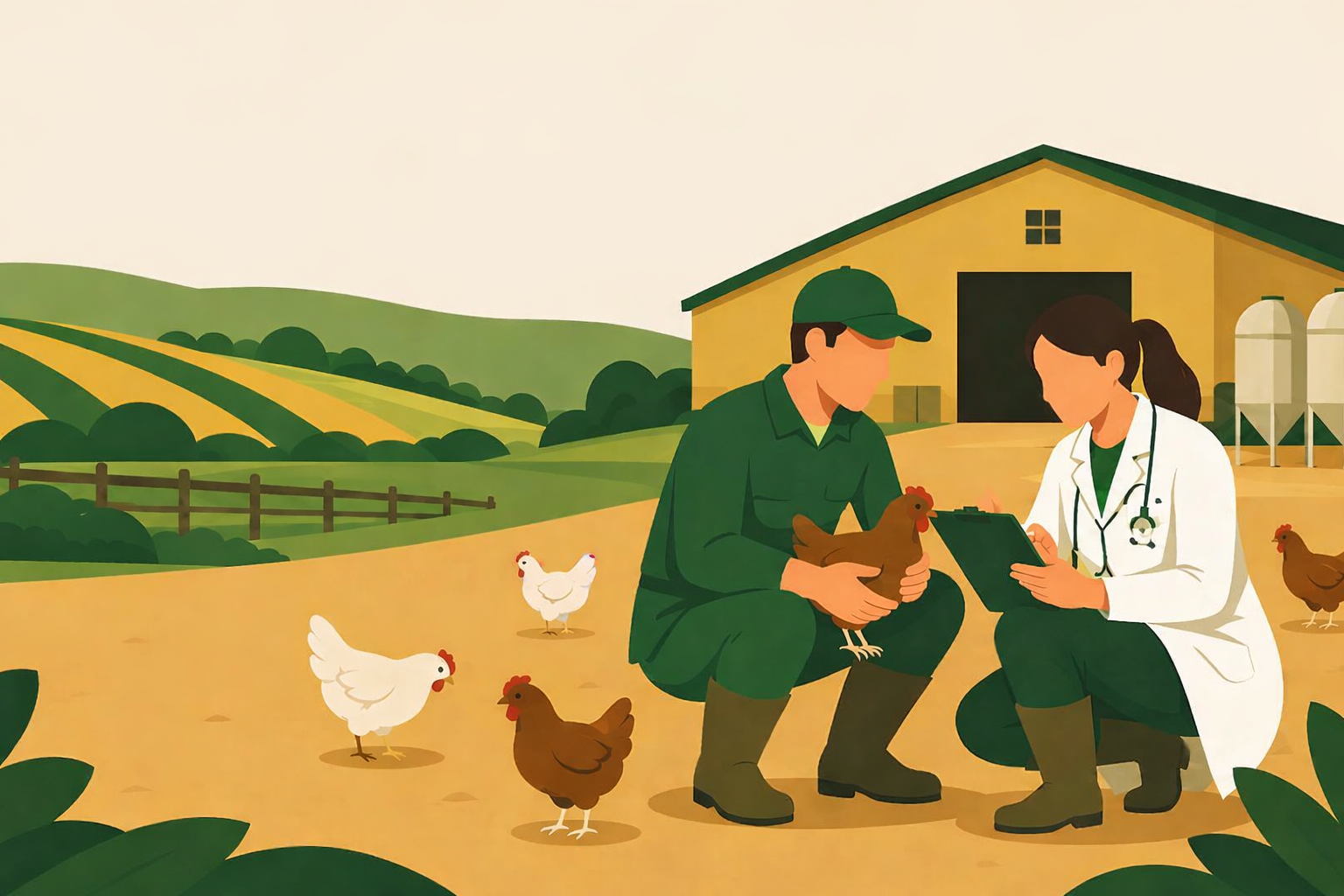
Goose welfare is simply the conditions in which a bird can live, eat, drink, move and rest normally, without pain or excessive stress. It is the classic ’five freedoms’ translated into goose keeping: freedom from hunger and thirst, from discomfort (dry litter, summer shade), from pain and disease, from fear, and freedom to behave normally — which for a goose means above all grazing grass on the range and preening its feathers near water. Birds in good condition grow evenly and fall ill less often. The whole production cycle is covered in the guide on goose farming; here we focus narrowly on welfare itself.
Where do goose welfare rules come from?
Geese have no separate species directive like broilers or layers — the general Council Directive 98/58/EC on the protection of farm animals applies, implemented in Poland by the relevant ministerial regulation. It covers meeting the needs of the species, access to feed and water, and protection from suffering. More detailed guidance specifically for domestic geese comes from the Council of Europe in its recommendations on keeping ducks and geese. General indicators for all poultry are in the guide on poultry welfare indicators.
How does a goose differ from a hen for welfare?
A goose is a waterfowl and a herbivore — it can take most of its food from good pasture, and for good welfare it needs water not only to drink but to dip its head and care for its plumage. Without range and water a goose quickly loses feather condition and becomes restless. So in geese welfare shows up most in access to grass, clean water and the state of the plumage. These are different needs from the meat chicken in the guide on broiler welfare, but similar to those of duck farming — the other waterfowl.
How to manage goose welfare in practice
- 1
Provide a grassy range to graze
A goose is built for pasture — grazing grass is its core natural behaviour and an important feed source. The range should be covered with green sward, with shade on hot days and no muddy standing water. Good grazing lowers feed costs and keeps geese moving, which helps the legs and condition. How to convert range area into a bird count is in the guide on goose stocking density, and the building itself is in the guide on goose house requirements.
- 2
Give constant access to clean water — for drinking and feathers
For a goose, water plays two roles: it quenches thirst and serves plumage care. A goose must be able at least to dip its head and bill to clean its nostrils and eyes and oil its feathers — this is a condition for healthy, waterproof plumage. Drinking water must be clean and non-freezing in winter, and around troughs or shallow pools you must keep the water from turning the litter into mud. Clean water for feather care is one of the most important parts of this bird’s welfare.
- 3
Keep litter dry and stocking right
Geese drink and splash a lot of water, so litter in the building easily gets damp. Wet, capped litter means dirty feathers, a higher risk of leg disease and poorer welfare. Check the litter by hand every day, top up dry material and react to wet patches near drinkers. Overstocking speeds up wet litter and limits movement. Litter management is covered in the guide on litter management in the house, and stocking limits in the guide on goose stocking density.
- 4
Care for plumage humanely
Healthy, clean and dry plumage is a visible sign of goose welfare. Feathers and down may be obtained only from slaughtered birds or collected during natural moult, when the feathers fall out on their own. Live plucking of geese (pulling feathers from a live bird) is a cruel and unacceptable practice — it causes pain and wounds, so it has no place in humane farming. If you harvest feathers, do it only from slaughtered birds or during natural moult.
- 5
Observe the birds and react to signs of stress
Welfare is not judged by eye once in a while — geese must be observed every day. Watch feed and water intake, plumage cleanliness and condition, soundness of gait and the calm of the flock. Restlessness, ruffled dirty feathers, lameness or loss of appetite are signs that something in the environment is failing — most often missing water for preening, wet litter or overstocking. Record losses and observations; they are the basis of documentation and a fast response. Formal requirements are gathered in the guide on legal rules for goose keeping.
Goose welfare indicators and requirements
Four areas used to measure goose welfare. Indicative values* — exact requirements depend on the programme, the buyer and national rules implementing Directive 98/58/EC.
Range and natural behaviour
The most important goose welfare indicator is the ability to graze grass, walk the range and move freely. It is good when birds have access to green sward and shade, and the range is not trodden into mud. A goose calmly grazing and preening its feathers is a goose in good welfare. No range and restricted natural behaviour are the first sign that conditions need improving.
Water and plumage condition
Access to clean water — for drinking and at least to dip the head — translates directly into healthy, clean and waterproof feathers. Assess plumage visually: it should be dry, smooth and clean, with no dirty, matted or plucked patches. Dirty or damaged feathers signal a lack of water for preening, wet litter or feather pecking in the flock. Plumage condition is one of the clearest welfare indicators in geese.
Stocking, litter and microclimate
On-bird indicators go hand in hand with the environment. Geese need a lower stocking density than a hen — they are larger and produce a lot of wet manure. Litter should be dry and friable, and the building needs sound ventilation, fresh-air access and summer shade. Overstocking quickly ruins litter and plumage. Area conversions: the goose stocking density guide.
Health, legs and flock calm
Hard indicators are mortality, soundness of gait and the overall calm of the birds. Geese are heavy birds, so healthy legs and good flooring matter; lameness signals poor welfare. A calm, uniform flock with no excessive pecking shows the right stocking and environment. A sudden rise in losses or restlessness flags a problem faster than the total alone — react at once and record observations.
Mistakes that lower goose welfare
A few errors come up repeatedly in goose keeping — some are a matter of ethics and law, not just results.
Plucking feathers from live birds
This is the most serious ethical error in goose keeping. Pulling feathers from a live bird causes pain and wounds; it is cruel and unacceptable. Feathers and down may be obtained only from slaughtered geese or collected during natural moult, when the feathers fall out on their own. Humane farming leaves no room for compromise here.
Keeping geese with no water for plumage care
Drinking water alone is not enough — a goose must be able at least to dip its head to clean its nostrils and eyes and oil its feathers. Without it the plumage quickly gets dirty and loses its waterproofing, and the birds become restless. A lack of water for feather care is one of the most common gaps lowering the welfare of this waterfowl.
No range and no grazing
A goose shut in with no access to grass cannot perform its core behaviour — grazing the sward. This worsens welfare, raises stress and boredom in the flock, and pushes up feed costs because you give up a cheap, natural source of greens. A range with green sward and shade is a foundation of goose keeping, not an extra.
Neglecting wet litter and stocking
Geese spill a lot of water, so litter easily turns to mud, especially with too high a density. Wet flooring means dirty feathers, leg disease and poorer welfare. Keep the litter dry, ventilation sound and stocking lower than for a hen. The diagnosis of wet-litter causes is in litter management in the house.
Frequently asked questions about goose welfare
What does goose welfare mean in practice?add
It is the conditions in which a goose can eat, drink, move and rest normally, without pain or excessive stress — the ’five freedoms’ translated into keeping this waterfowl. In practice the most important things are: access to a grassy range to graze, clean water for drinking and plumage care, dry litter, a lower stocking density than for a hen, and healthy, clean feathers. The legal basis is Directive 98/58/EC and Council of Europe recommendations for geese.
Is live plucking of geese allowed?add
No. Live plucking of geese — pulling feathers from a live bird — is a cruel and unacceptable practice that causes pain and wounds. Feathers and down may be obtained only from slaughtered birds or collected during natural moult, when the feathers fall out on their own. Humane goose keeping rules out live plucking.
Do geese have to be force-fed?add
No. Force-feeding (for fatty livers, that is foie gras) means force-administering feed and is not practised in Poland. Standard goose keeping is based on grazing and ordinary feeding, with no force-feeding. Goose welfare is built through range, water and natural behaviour, not through accelerated, excessive fattening.
How much water, and of what kind, does a goose need?add
A goose needs constant access to clean water for drinking and for plumage care. It should be able at least to dip its head and bill to clean its nostrils and eyes and oil its feathers — a condition for healthy, waterproof plumage. The water must be clean and non-freezing in winter, and around drinkers you must keep it from turning the litter into mud.
What stocking density gives geese good welfare?add
Geese are large birds producing a lot of wet manure, so they need a lower stocking density than hens — both in the building and on the range. Overstocking speeds up wet litter, soils the plumage and limits movement, directly lowering welfare. Exact values depend on bird age and the programme; area conversions to a goose count are shown in the goose stocking density guide.
Which rules govern goose welfare?add
Geese have no separate species directive. The general Council Directive 98/58/EC on the protection of farm animals applies, implemented in Poland by the relevant ministerial regulation, and more detailed guidance comes from the Council of Europe in its recommendations for ducks and geese. The formal requirements for the farmer are gathered in a separate guide on the legal rules for goose keeping.
Sources & resources
- linkCouncil Directive 98/58/EC concerning the protection of animals kept for farming purposes (eur-lex.europa.eu)
- linkCouncil of Europe — recommendations on the keeping of domestic ducks and geese (coe.int)
- linkEFSA — welfare of farm animals, including waterfowl (efsa.europa.eu)
- linkPolish implementing regulation on minimum conditions for keeping farm animals — poultry (isap.sejm.gov.pl)
Keep your goose flock records in DlaFerm.pl
Want a digital goose flock record, a mortality log and welfare observations in one place — ready for inspection? Create a free farm account or write to us.
Phone
+48 796 258 151