Climate computer and alarms in a poultry house — how it works
The climate controller is the "brain" of the poultry house — it automatically maintains the right temperature and fresh air around the clock, without the farmer having to manually switch fans on and off. We explain what it controls, what it measures, and why the alarm system can mean the difference between life and death for the flock.
verifiedFrom the team that has organised work on poultry farms for years.
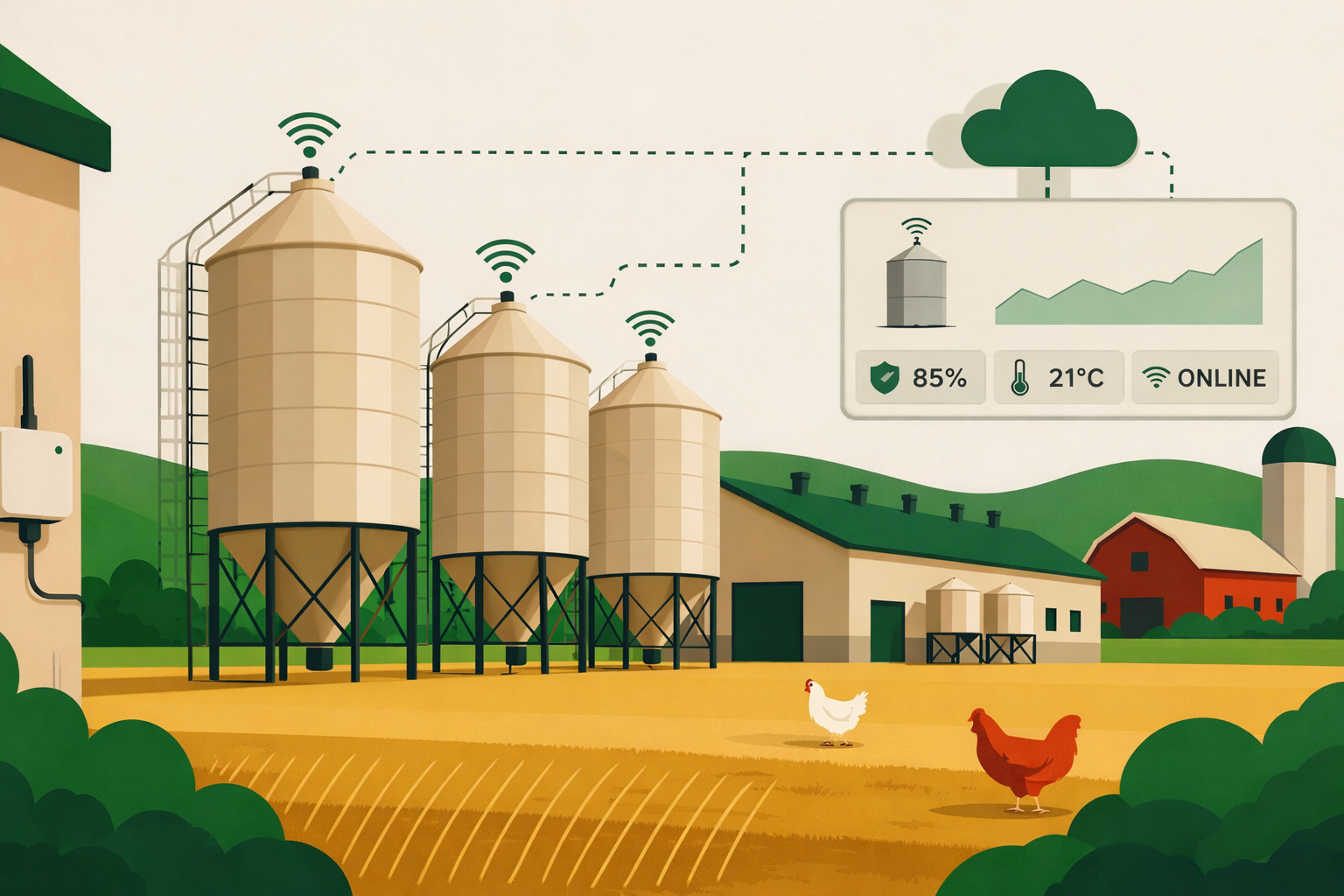
In a modern poultry house the farmer does not manually switch fans or heaters on — the climate controller does it, checking conditions in the house every few seconds and making decisions automatically. This gives birds constant access to fresh air and a temperature suited to their age, which directly translates into better growth, lower mortality and lower energy use.
What is a temperature curve?
The temperature curve is a programme stored in the controller — it specifies the target temperature for each day of the rearing cycle. Chicks need a lot of heat at the start (about 30–33 °C in the first week), and the target temperature is gradually reduced as they age. The controller follows this curve automatically. More on temperature needs in the guide on temperature and humidity in the poultry house.
Why are alarms so important?
A ventilation failure on a hot day can kill an entire flock in minutes — a house without airflow heats up extremely fast. That is why the climate controller has a built-in alarm system that immediately notifies the farmer and activates safety measures. This is not an optional extra — it is essential.
What the climate computer controls in the poultry house
The controller is connected to all climate equipment in the house and switches devices on or off according to the set programme.
Ventilation — fans and inlets
The controller switches fans on and off, adjusts their speed, and opens air inlet flaps. In minimum ventilation mode (winter) it runs slowly — just enough to remove moisture and carbon dioxide. In tunnel mode (summer) it opens all inlets and fans to full capacity to create a strong cooling airflow. Technical details in the guide on broiler house ventilation.
Heating — heaters
When the house temperature drops below the target curve, the controller switches on the heater (gas, oil or electric). This happens automatically around the clock — especially important in the first days when chicks need high ambient temperature.
Cooling — evaporative pads and fogging
On hot days the controller activates evaporative cooling pads (water evaporates and cools incoming air) or an in-house fogging system. This is especially important in the last week of rearing when large birds generate a lot of body heat. More in the guide on evaporative cooling pads.
Sensors — what the climate computer measures
The controller makes decisions based on data from sensors placed at various points throughout the house.
Temperature — multiple measurement points
A typical house has several temperature sensors at different heights and locations. The controller analyses the average and reacts when any single point deviates from the norm. This matters because a house can have cooler or warmer spots invisible to the naked eye.
Air humidity
Too high humidity promotes respiratory disease and ammonia build-up; too low irritates birds's mucous membranes and dries the litter. The humidity sensor lets the controller adjust ventilation to keep the correct range — typically 50–70%.
Carbon dioxide and ammonia
Carbon dioxide (CO₂) rises when there is too little fresh air — a sign that ventilation is insufficient. Ammonia (NH₃) from the litter is harmful at low concentrations, irritating the birds' airways and eyes. The controller increases ventilation when levels exceed the safe threshold. Sensor integration with farm management is described in the guide on integrations and sensors in DlaFerm.pl.
Static pressure in the house
In negative-pressure ventilation systems the controller measures the pressure difference between inside and outside. Static pressure determines how fast air flows through the inlets and how many fans are needed to maintain the correct airflow.
Outdoor temperature
An outdoor sensor lets the controller adapt its ventilation strategy to current weather. When it is cold outside, ventilation is reduced to a minimum to avoid chilling the house. When it is hot, the controller switches to intensive cooling mode.
Bird weight and feed and water consumption
More advanced systems connected to automatic scales and feed/water meters track actual consumption in real time. These data allow the farmer to verify whether climate conditions are not suppressing feeding activity. Feed silo monitoring is described in the guide on feed silo monitoring.
Alarms and safeguards — the most important function of the controller
A reliable alarm system is the difference between losing a few hours and losing the entire flock. The controller must notify the farmer and act immediately.
Temperature alarm — too high and too low
When the house temperature exceeds a set threshold (too hot or too cold), the controller activates an audible alarm (siren) and a visual alarm (lamp), and sends an SMS or automatic phone call to the farmer. Both directions are dangerous: heat kills within minutes, cold more slowly but just as surely.
Power failure alarm
When the power goes out, the controller immediately notifies the farmer. At the same time the generator (if connected) starts automatically — powering the fans first, as they are the most critical. Without power, ventilation stops, temperature rises, and the flock can perish within an hour in high outdoor temperatures.
Safety flaps — emergency opening
In the event of a power failure, safety flaps open automatically — by gravity or spring — without any power supply. Even without fans, free airflow through open flaps reduces the risk of overheating. This is mandatory protection in every modern poultry house.
Fan failure alarm
The controller monitors every fan. When one stops working (burned motor, broken belt), the system detects it and triggers an alarm immediately. A single fan failure is not catastrophic, but on hot days it reduces cooling capacity — fast action is needed.
High CO₂ or ammonia alarm
When a sensor detects dangerous concentrations of carbon dioxide or ammonia, the controller automatically maximises ventilation and triggers an alarm. High ammonia also indicates a litter problem that requires investigation — not just ventilation adjustment.
SMS notifications and remote monitoring
Modern controllers send SMS alarms or call multiple phone numbers automatically. Some systems also allow real-time monitoring of house conditions via phone or computer, with a full event history. Connecting the controller to the farm management system is described in the guide on integrations and sensors in DlaFerm.pl.
The most common mistakes in climate control
A few situations in which even a good controller may fail to protect the flock.
No generator or an untested generator
A generator is useless if nobody checks that it starts automatically on power failure. A monthly test start with actual load verification — not just idling — is the minimum required.
Outdated temperature curve
The farmer changed the placement date or the bird species but forgot to update the temperature curve in the controller. The controller follows the old programme — birds are too cold or too hot, and the farmer does not know why.
Silenced alarm or blocked SMS notifications
An audible alarm silenced "because it is too loud" or SMS notifications turned off "because they keep ringing" is the most dangerous mistake. The alarm is meant to be urgent — it signals a real threat. If it triggers too often, adjust the thresholds — do not disable the alarm.
Dirty sensors or damaged flaps
A sensor covered in dust may show incorrect humidity or temperature. A flap stuck by dirt or a broken spring will not open in an emergency. Inspecting sensors and flaps before each cycle is essential.
Frequently asked questions about poultry house climate controllers
What is a climate controller in a poultry house?add
A climate controller (also called a climate computer) is an electronic device that automatically manages ventilation, heating and cooling in the house. It measures temperature, humidity, carbon dioxide and other parameters, then switches equipment on or off to match the birds' needs for that day of rearing. The farmer does not need to adjust fans manually — the controller does it around the clock.
What is a temperature curve and why is it programmed?add
The temperature curve is a programme in the controller that specifies the target house temperature for each day of the rearing cycle. At the start chicks need about 30–33 °C; the target temperature is gradually lowered each week until about 18–20 °C at the end of the cycle. The controller follows this curve automatically.
Why is a ventilation alarm so critical?add
A ventilation failure on a hot day can kill an entire flock in minutes — a house without airflow heats up extremely fast and birds die from overheating and lack of oxygen. That is why the alarm must trigger immediately and reach the farmer at any hour. A silenced alarm or missing generator means catastrophic risk.
What are safety flaps and are they compulsory?add
Safety flaps are openings in the house walls that open automatically on power failure — without any power, by gravity or spring. Even without fans, open flaps provide some natural airflow and reduce the risk of overheating. In a modern poultry house they are standard equipment and in practice obligatory.
What sensors should a poultry house have?add
The minimum is: temperature (multiple points inside the house), humidity and outdoor temperature. More demanding operations add carbon dioxide and ammonia sensors, and static pressure. Advanced systems integrate automatic scales and feed/water consumption meters for a complete real-time picture.
Can the climate controller be connected to a farm management system?add
Yes — most modern controllers have digital outputs or communication protocols (e.g. Modbus) that allow data to be sent to the farm management system. The farmer then has temperature, humidity and alarm history in one place, and the system can generate reports and warn of deviations. Integration details in the guide on integrations and sensors in DlaFerm.pl.
Monitor your house climate with DlaFerm.pl
Want to view temperature, alarms and house conditions in one place? Create a free farm account or write to us.
Phone
+48 796 258 151