Poultry house air disinfection — UV and photocatalysis
The avian flu virus can enter the house through the air — on dust, feathers and fine droplets pulled in through the inlets. UV-C and TiO₂ photocatalysis are a way to inactivate some of the pathogens in the air before they reach the flock. We explain how it works and why it’s an add-on to biosecurity, not a replacement.
verifiedFrom the team that has organised work on poultry farms for years.
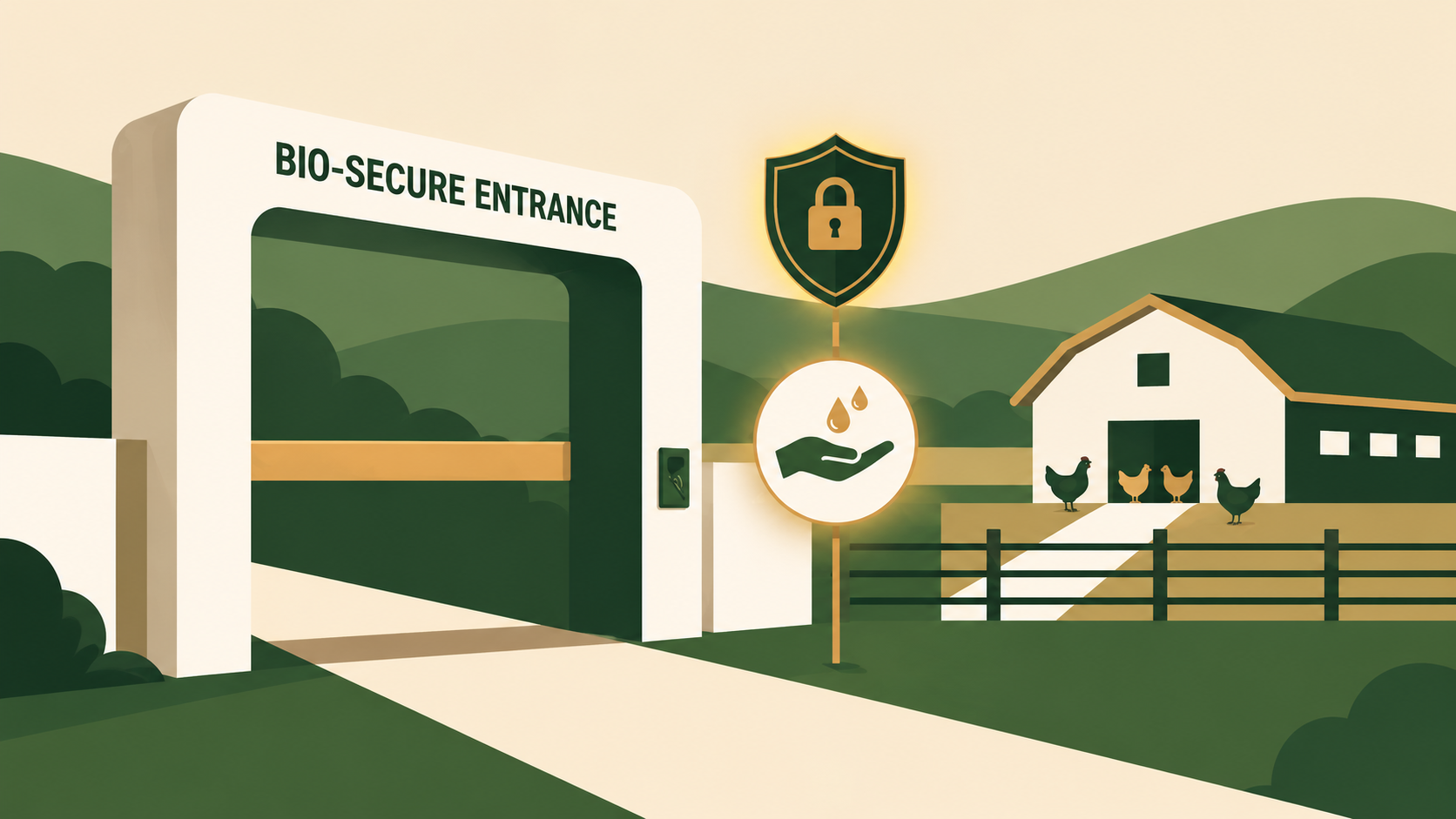
We usually think about biosecurity in terms of mats, hygiene locks and netting on the openings. But the avian flu virus can also enter the house through the air — carried on dust, feather particles and droplets that the ventilation pulls in through the inlets. Disinfecting the air with UV-C light and TiO₂ photocatalysis tries to close that gap: inactivate some of the pathogens in the air stream before they reach the birds. It’s a new, supporting tool, so it’s worth looking at it soberly.
Why is air a route of infection?
Highly pathogenic avian influenza (HPAI) spreads not only by contact but also through the air — on dust and aerosols that carry virus particles. The ventilation that supplies fresh air to the flock can also pull in contaminated dust from the surroundings. That’s why cleaning the air at the inlets is sometimes treated as an extra barrier in a high-pressure season — especially where there are many wild birds nearby.
How UV-C and photocatalysis work in a poultry house
UV-C and photocatalysis inactivate some pathogens in the air, but they won’t seal the building or replace cleaning and disinfection. They’re best treated as one layer of defence.
Air as an entry route for the virus
The HPAI virus can travel on dust, feather particles and droplets in the air. The air stream pulled in through the ventilation inlets can carry these particles inside. That’s why cleaning the air at the inlets lowers one of the risks — but only when the rest of biosecurity works too. It’s a starting point, not a standalone solution.
TiO₂ photocatalysis — how it works
A surface coated with titanium dioxide (TiO₂) lit by UV light generates reactive oxygen species (hydroxyl radicals) that damage virus particles and break down some odours and ammonia. In a 2026 laboratory study (MDPI “Catalysts”), a TiO₂ photocatalyst inactivated the highly pathogenic avian influenza virus and seasonal H1N1 flu. Those are lab results — promising, but they need checking under farm conditions.
UV-C and Far-UVC (222 nm)
UV-C light inactivates viruses and bacteria. Conventional UV-C is 254 nm; “Far-UVC” at 222 nm acts on pathogens while being gentler on skin and eyes. Lamps are fitted in ducts on the inlets or in air purifiers, to treat incoming and circulating air in the house. Effectiveness depends on how long the light is in contact with the air.
Side benefit: less odour and ammonia
Photocatalysis also breaks down some of the compounds behind odours and can lower ammonia levels. That helps the climate and welfare, though it won’t replace good ventilation or dry litter. Treat it as an add-on to air management, not the main way to deal with ammonia in the house.
What effectiveness depends on
UV-C and photocatalysis depend on contact time (how fast the air flows), light intensity, lamp and surface cleanliness, and the amount of dust. A dusty lamp shines weaker, and too fast a flow shortens the contact. That’s why inspections, cleaning and lamp replacement to schedule are key — without servicing the effect drops quickly.
Where UV isn’t enough
Cleaning the air won’t close leaks, replace the disinfection mats or stand in for washing and disinfecting the house between flocks. Without netting on the openings, wild-bird and pest control and order in the hygiene lock, UV alone won’t protect the flock. It’s one layer you add on top of solid biosecurity.
Air disinfection step by step
- 1
First close out classic biosecurity
Before reaching for UV, seal the basics: netting on the vent openings, working disinfection mats, wild-bird and pest control, thorough washing and disinfection between flocks. That’s the foundation — without it, cleaning the air will change little.
- 2
Assess where the air comes in
Check where the inlets are and how air flows through the house. The inlets are where cleaning makes the most sense, because that’s where outside air enters. Mark the spots where dust and outside air most easily get inside.
- 3
Match the solution to the airflow
UV-C and photocatalysis work better the longer the light is in contact with the air. Size the modules to the ventilation capacity, so you’re not counting on an effect at too fast a flow. Here it pays to use the supplier’s knowledge and study data rather than promises.
- 4
Plan lamp servicing and cleaning
Dusty lamps and surfaces lose effectiveness. Set a schedule for cleaning and replacing lamps to the maker’s recommendations and stick to it. Without that, even good kit stops making a difference over time.
- 5
Keep work safe
Conventional UV-C (254 nm) is harmful to eyes and skin, which is why it’s fitted in ducts or housings where people and birds aren’t exposed to direct light. Check the safety requirements and the equipment manual before you switch anything on near staff working in the house.
- 6
Watch the effect and note it down
Look at what you can measure: virus pressure in the season, flock health, odours and ammonia, plus the costs and servicing. Note what you run and when, to judge whether the air layer really helps at your place. That’s your farm’s result, not a guarantee from a leaflet.
Frequently asked questions about poultry house air disinfection
Will UV-C in the house stop avian flu?add
Not on its own. UV-C and photocatalysis inactivate some pathogens in the air, which lowers one of the risks, but it’s only one layer of biosecurity. Without netting on the openings, disinfection mats, wild-bird control and proper house washing, cleaning the air won’t protect the flock. It’s an add-on, not a replacement.
How does photocatalysis differ from plain UV?add
Plain UV-C inactivates pathogens with the light alone. Photocatalysis is TiO₂ lit by UV light — this generates reactive oxygen species that damage the virus and break down some odours and ammonia. In a lab study a TiO₂ photocatalyst inactivated the HPAI and H1N1 viruses, but that’s a result from the lab, not the house.
Is “Far-UVC” 222 nm safer?add
Far-UVC at 222 nm acts on pathogens while being gentler on skin and eyes than conventional 254 nm. Even so, with any UV you must follow safety rules and the equipment manual. Conventional UV-C is fitted in ducts or housings so people and birds aren’t exposed to direct light.
What decides whether it works?add
Contact time between the light and the air, intensity, lamp cleanliness and the amount of dust. Too fast a flow shortens the contact, and a dusty lamp shines weaker. That’s why sizing the modules to the ventilation capacity and regular servicing — cleaning and replacing lamps to schedule — matter.
Record biosecurity and climate in DlaFerm.pl
In DlaFerm.pl you note the house’s protections and air parameters next to the flock card — from mats and netting to how you clean the air. Create a free account or write to us.
Phone
+48 796 258 151