Broiler colibacillosis: E. coli, symptoms and how to prevent it
Colibacillosis is one of the most common bacterial causes of losses on poultry farms. Learn what triggers it, how to recognise it, and why house climate control is central to prevention.
verifiedFrom the team that has organised work on poultry farms for years.
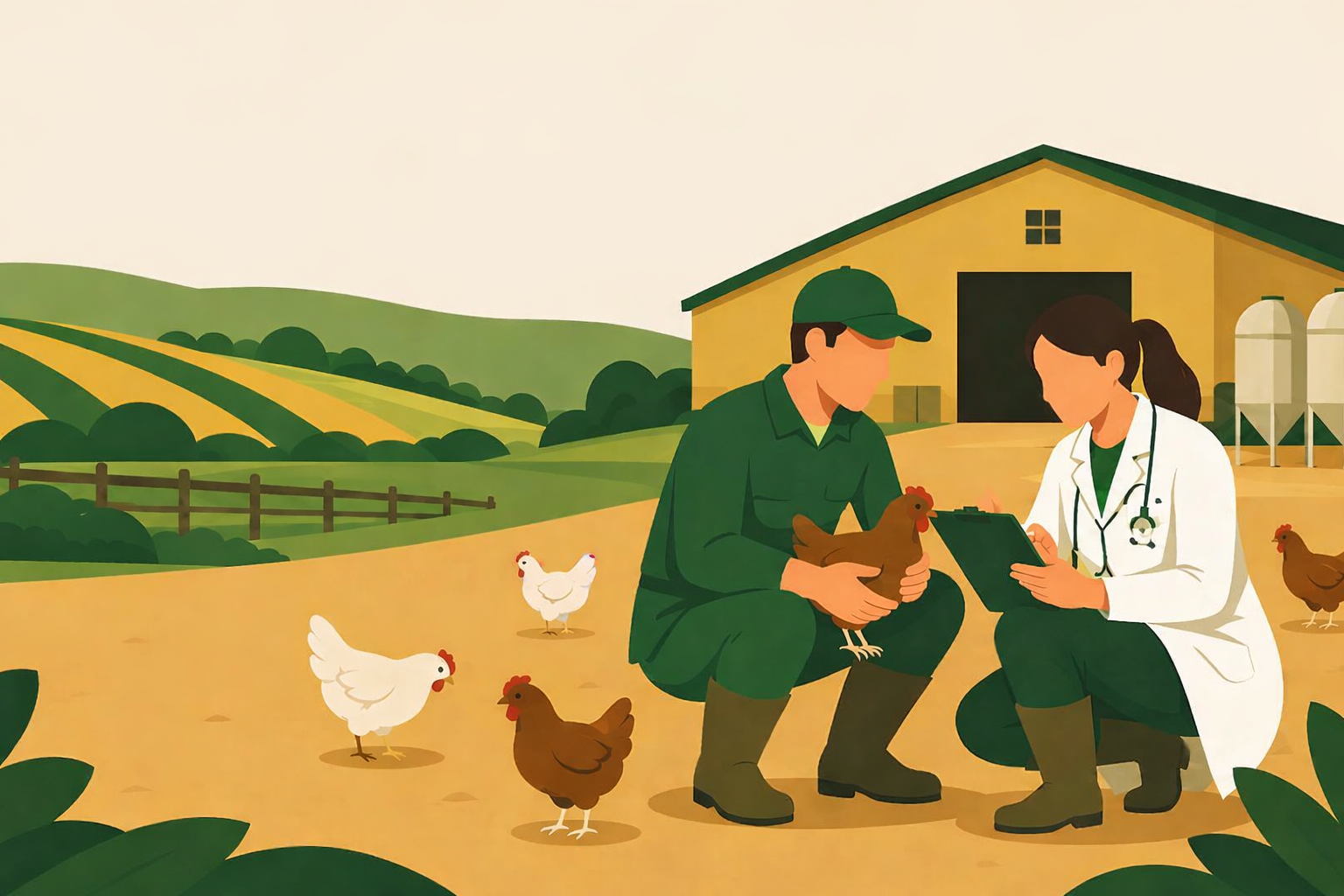
What is poultry colibacillosis?
Colibacillosis is caused by avian pathogenic strains of Escherichia coli — known as APEC (Avian Pathogenic E. coli). The bacterium is ubiquitous in the poultry house environment, and in most cases the disease is secondary or opportunistic: E. coli attacks birds weakened by another infection (e.g. mycoplasmosis, infectious bronchitis), poor environmental conditions or stress. This is precisely why colibacillosis signals that something more than a simple bacterial infection is going on at the farm.
What symptoms does E. coli cause in broilers?
The disease can be acute (septicaemia, sudden deaths) or chronic (poor weight gain, haemorrhages, slaughterhouse condemnations). The most common post-mortem findings are: airsacculitis (turbid air sacs with fibrinous exudate), pericarditis and peritonitis, and haemorrhages in internal organs. In laying hens, APEC is a common cause of salpingo-peritonitis (egg yolk peritonitis).
Why is colibacillosis so common in broiler houses?
Birds inhale E. coli with dust and ammonia from the litter. Ammonia levels above 20 ppm damage the respiratory epithelium and allow the bacteria to colonise the air sacs. Litter quality is equally important — wet, compacted or overstocked litter ferments and produces excess ammonia and pathogens. Other risk factors include primary viral infections (IB, MG), wild bird intrusion near ventilation inlets, contaminated drinking water and transport stress at placement.
Treatment and withdrawal — the role of the vet
Colibacillosis must be treated under veterinary supervision following susceptibility testing — administering antibiotics without a prescription is ineffective and illegal. Antimicrobial resistance in APEC is an increasing problem in Poland and across Europe (see EFSA/ECDC reports). After treatment, the withdrawal period before slaughter must be observed — it varies by product and route of administration. Records — drug, dose, treatment duration and withdrawal end date — must be entered in the treatment log. DlaFerm.pl supports electronic treatment records and sends reminders before the withdrawal period expires. More: Treatment records & withdrawal periods.
Link to ventilation and house microclimate
Good ventilation is the most fundamental and cost-effective form of colibacillosis prevention. Keeping ammonia below 20 ppm, relative humidity between 60–70% and temperature matched to flock age dramatically reduces mucous membrane damage and secondary E. coli infections. DlaFerm.pl integrates with IoT sensors that monitor ammonia, CO₂ and humidity in real time. More: Broiler house ventilation.
How to recognise colibacillosis in broilers — signs and lesions
Most lesions appear at post-mortem or on the slaughter line. In the flock, look for sudden deaths, lethargy and poor weight gain.
Airsacculitis
Air sacs filled with turbid, yellowish fibrinous exudate — one of the most frequent and characteristic findings in broiler colibacillosis. The lesion is visible at post-mortem or on the slaughter line.
Septicaemia
Acute form: birds die without prior obvious clinical signs. E. coli is isolated from blood and organs. Requires immediate veterinary diagnosis and treatment.
Pericarditis and peritonitis
Excess fibrinous exudate around the heart (pericarditis) and in the abdominal cavity (peritonitis). In laying hens, the classic form is salpingo-peritonitis (egg yolk peritonitis).
Poor weight gain and feed conversion
Chronic subclinical E. coli infections reduce feeding efficiency, worsen FCR and increase slaughterhouse condemnation rates — often without obvious clinical signs in the flock.
Haemorrhages and organ lesions
Haemorrhages and sometimes necrotic foci visible on the liver and heart. Enlarged liver. These changes are confirmed by post-mortem examination and bacteriological testing.
Slaughterhouse condemnations
Birds with active colibacillosis lesions are condemned on the slaughter line (air sacs, pericardium, peritoneum). A high condemnation rate signals a need to review environmental conditions and carry out diagnostics.
How to prevent colibacillosis on a poultry farm — climate, hygiene and biosecurity
Because E. coli is an opportunistic bacterium, prevention focuses primarily on eliminating predisposing factors, not just controlling the pathogen itself.
Monitor ventilation and air quality
Keep ammonia below 20 ppm, CO₂ below 3,000 ppm, relative humidity 60–70%. Check ventilation controllers at least once a day. IoT sensors with phone alerts eliminate the risk of missing a deterioration in microclimate — DlaFerm.pl supports such integrations.
Maintain litter quality
Dry, friable litter reduces ammonia production and pathogen load. Remove wet spots around drinkers promptly. Between production cycles, disinfect the house after litter removal.
Ensure clean drinking water
E. coli spreads through water. Flush and disinfect drinking lines regularly. Have water tested microbiologically at least once a year. Check pH and free chlorine levels (optimal free chlorine for poultry: 0.5–1 ppm).
Control primary infections
Colibacillosis most often appears secondary to mycoplasmosis (MG/MS), infectious bronchitis (IB) or avian influenza. Regular IBV and MG vaccination programmes, agreed with your vet, reduce the risk of secondary E. coli infections.
Apply biosecurity at placement
Transport stress weakens birds and promotes E. coli infection shortly after placement. Minimise transport time, maintain correct temperature during transit and ensure immediate access to water in the house. More: Poultry farm biosecurity.
Keep treatment and withdrawal records
Every antibiotic treatment must be documented: drug, dose, number of birds, start date and withdrawal end date. DlaFerm.pl sends reminders before the withdrawal period expires and generates a printout for the veterinarian. More: Poultry diseases — symptom table.
Frequently asked questions about poultry colibacillosis
Is colibacillosis contagious between farms?add
E. coli is common in the environment and spreads mainly via contaminated water, dust, equipment and clothing — it is not a notifiable disease, but rapid diagnosis and veterinary treatment are essential. Biosecurity at entry points and equipment disinfection reduce the risk of introducing virulent APEC strains to the farm.
How do you distinguish colibacillosis from other poultry respiratory diseases?add
Diagnosis is made by a veterinarian on the basis of post-mortem examination and bacteriological testing. Airsacculitis with fibrinous exudate points to E. coli, but identical findings can accompany mycoplasmosis or infectious bronchitis. A susceptibility test is essential before starting treatment.
How does high ammonia damage birds and promote colibacillosis?add
Ammonia at concentrations above 20 ppm damages the ciliated respiratory epithelium, impairs the mucociliary clearance mechanism and allows E. coli to invade the air sacs. Prolonged exposure above 25 ppm causes eye watering, conjunctivitis and permanent respiratory tract damage.
Are vaccines against E. coli available for poultry?add
Vaccines against selected APEC serotypes are available in Poland, mainly used in laying hens. In broilers — given the short production cycle — environmental prevention and control of primary infections are more important. The decision on vaccination is made by the veterinarian after assessing the farm situation.
How long is the withdrawal period after antibiotics used for colibacillosis?add
The withdrawal period depends on the specific product and route of administration — it can range from a few to more than ten days. This information is in the product leaflet and confirmed by the veterinarian. DlaFerm.pl lets you enter the withdrawal end date and automatically reminds you before the planned slaughter date.
What should I do if mortality rises and I suspect E. coli?add
Call your veterinarian immediately to carry out a post-mortem and collect samples for bacteriological testing. At the same time, check ammonia and humidity levels in the house, litter condition and the cleanliness of the drinking lines — eliminating predisposing factors is just as important as antibiotic treatment.
Sources & resources
- linkNational Veterinary Research Institute (PIWet-PIB, Puławy) — poultry diseases
- linkEFSA — antimicrobial resistance (APEC/E. coli) in poultry production
- linkECDC/EFSA — EU One Health AMR joint report on zoonoses and antimicrobial resistance
- linkChief Veterinary Inspectorate (GIW) — antibiotic use and withdrawal regulations
- linkKRD-IG — Polish Poultry Council Industry Chamber
Manage treatments and withdrawal periods in DlaFerm.pl
Want to see how DlaFerm.pl helps you keep treatment records and monitor house microclimate? Write to us.
Phone
+48 796 258 151