Live poultry transport: the regulations you need to know
Moving live poultry is governed by strict EU and national rules — from the transporter authorisation to vehicle wash records. Find out what is required before every loading.
verifiedFrom the team that has organised work on poultry farms for years.
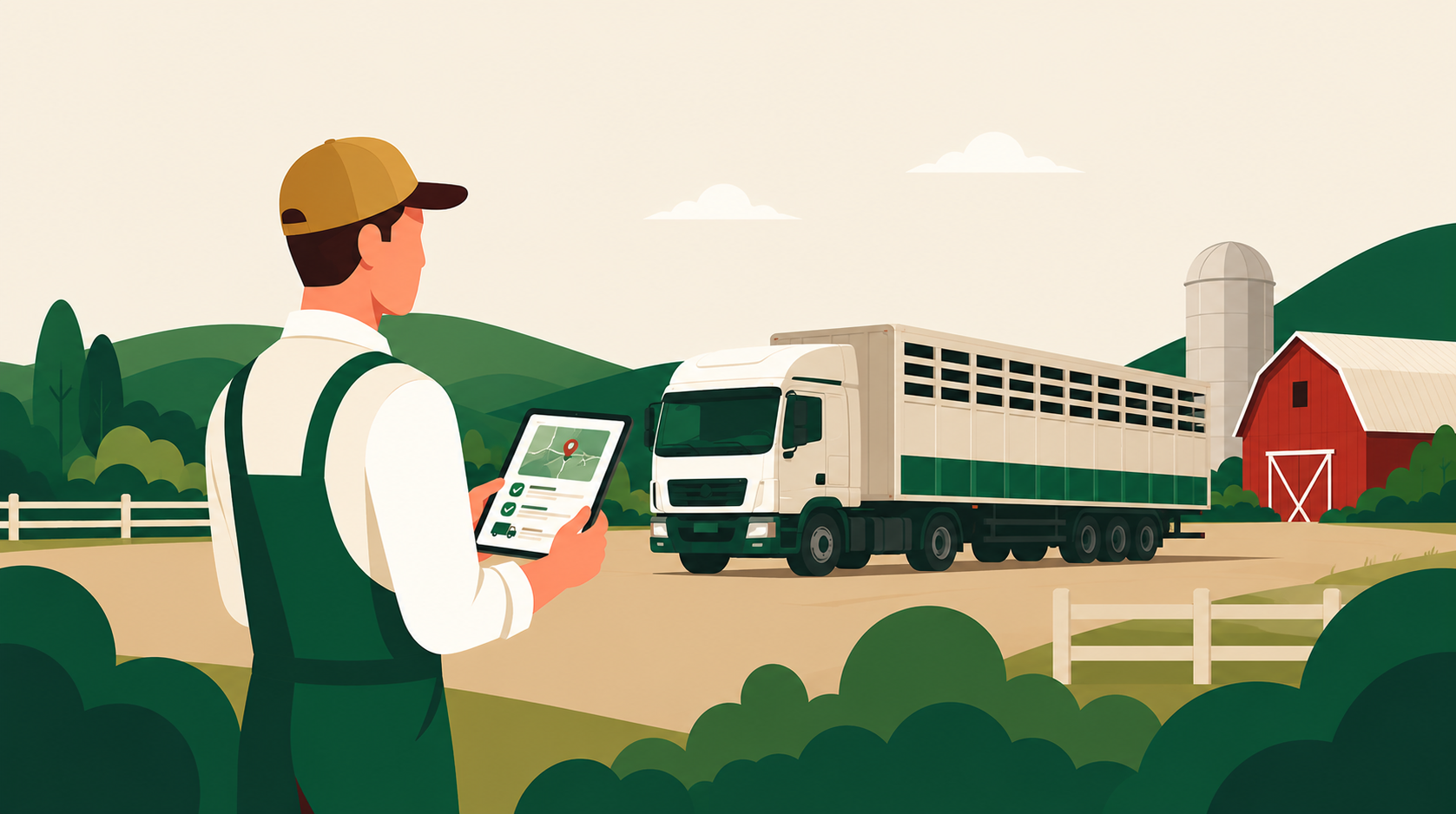
Which regulations govern live poultry transport?
The primary legislation is Council Regulation (EC) No 1/2005 of 22 December 2004 on the protection of animals during transport and related operations. It applies directly in all EU member states, including Poland, and covers every commercial transport of live animals — both domestic and cross-border. It is complemented by national implementing regulations and guidelines from the Chief Veterinary Inspectorate (GIW).
Who do the animal transport rules apply to?
The rules cover any entity transporting live animals for commercial purposes — the transporter, vehicle owner and transport organiser. On short journeys (up to 65 km from the place of departure) requirements are simplified, but even then animal welfare, appropriate containers and transport documentation remain mandatory. Longer journeys trigger additional certification and planning requirements.
How does DlaFerm.pl support transport documentation?
DlaFerm.pl makes it possible to record flock movements within the ecosystem — the farmer, transport crew and slaughterhouse all share one platform. The live bird collection order, loading date and time, destination and vehicle biosecurity documents can all be stored and shared in one place. Related guides: Live bird collection — broilers and Pre-slaughter feed withdrawal.
What are the penalties for breaking transport rules?
The Veterinary Inspection can stop a transport, order it to be halted and impose administrative penalties. In cases of serious animal welfare violations, the transporter’s authorisation may be revoked. Consequences can affect both the haulage company and the farmer as the transport organiser. Compliance protects not only the animals but also the reputation of the entire supply chain.
Vehicle biosecurity — washing and disinfection
The vehicle and containers used for poultry transport must be cleaned and disinfected before every loading and after every unloading. This applies to the floor, walls and hatches of the loading area as well as the crates and containers themselves. Transporters must keep washing and disinfection records — date, product used and person who carried out the work. The records must be available on request from the Veterinary Inspection. See also: Poultry farm biosecurity.
Formal requirements: authorisation, certificates and documents
Before any commercial transport of live poultry, specific documentation requirements must be met.
Transporter authorisation
Any entity transporting live animals for commercial purposes must hold a transporter authorisation issued by the competent veterinary authority. The authorisation is issued for short journeys (type 1) or long journeys (type 2) and must be current on the day of transport.
Driver and attendant competency certificate
On journeys longer than 65 km, the driver and attendant must hold a competency certificate issued by an approved training body. It certifies knowledge of animal welfare regulations, first aid and the handling of animals during loading and unloading.
Transport document
Every transport must be accompanied by a transport document stating: sender and recipient details, species and number of animals, place and time of loading, and the estimated journey duration. For long journeys, a journey log is also required.
Approved containers and crates
Containers and crates used for poultry transport must comply with EC Regulation 1/2005 — adequate ventilation, material that does not cause injury, and ability to inspect and water the animals. The equipment supplier should confirm compliance with the standard.
Animal health certificate
When transporting poultry for slaughter, a health certificate issued by an official or authorised veterinarian (in accordance with applicable national rules) is required. The document confirms that the birds were fit for transport at the time of loading.
Vehicle washing and disinfection log
The transporter keeps a record of every vehicle disinfection: date, disinfectant, concentration and the person who carried out the treatment. The log must be available to the Veterinary Inspection for at least 3 years.
Stocking density, microclimate and loading obligations
Bird welfare during transport depends on complying with density, temperature and journey duration standards.
Stocking density standards (space per bird)
EC Regulation 1/2005 sets minimum floor areas for different species and weight categories. For broilers weighing 1.6–3 kg, the space is approximately 160–180 cm² per kg of live weight. Exceeding stocking density is a breach of animal welfare legislation.
Maximum transport duration
For poultry destined for slaughter, the maximum journey time is in principle 12 hours, although the regulation permits a long journey (over 8 hours) where additional requirements on vehicle specification, watering and rest are met. Shorter journeys are less stressful for birds and are preferred.
In-vehicle microclimate
The vehicle must provide adequate ventilation and temperature. The recommended internal temperature range is 5–30 °C. On hot days, active cooling is needed, or journeys should be planned for night-time or early morning hours.
Fitness for transport assessment
Before loading, the attendant or an authorised veterinarian must assess whether each animal is fit to travel. Injured, sick, too weak or heavily pregnant birds must not be loaded. The decision should be documented.
Loading and unloading obligations
Loading and unloading of poultry must be carried out without unnecessary haste and without the use of force. Ramps and inclines must be stable and non-slip. Lighting must allow inspection of the birds’ health. Personnel must be trained in animal welfare.
Watering and rest stops on long journeys
On long journeys (over 8 hours), poultry must have access to water. Vehicles intended for long journeys must be equipped with watering systems. Rest stops are mandatory in accordance with the schedule set out in the journey log.
Frequently asked questions about live poultry transport
What authorisation is needed to transport live poultry?add
The transporter must hold an authorisation issued by the Veterinary Inspection. For short journeys (up to 65 km) a type 1 authorisation is required; for longer journeys, type 2. The authorisation confirms that the vehicle and operator meet the requirements of EC Regulation 1/2005 on the protection of animals during transport.
Does the driver of a poultry truck need special qualifications?add
Yes — on journeys over 65 km, the driver and attendant must hold a competency certificate issued by an approved training body. On short journeys (up to 65 km) the certificate is not required, but knowledge of animal welfare principles remains every transporter’s obligation.
How long can poultry be transported without a break?add
The standard limit for poultry destined for slaughter is 12 hours. On long journeys (over 8 hours), where additional requirements on vehicle specification and watering are met, the time may be extended. The shorter the transport, the less stress for the birds and the lower the slaughter losses.
Must the poultry transport vehicle be disinfected after every trip?add
Yes. EC Regulation 1/2005 and biosecurity rules require cleaning and disinfection of the vehicle and containers after every unloading and before the next loading. Records (date, product, person) must be kept for at least 3 years.
What must the transport document for poultry contain?add
The transport document must include: sender and recipient details, species and number of birds, loading date and time, loading and unloading locations, and the estimated journey duration. For long journeys, a journey log with a detailed schedule of stops and watering is required.
How does stocking density affect poultry welfare during transport?add
Excessive stocking density leads to overheating, injuries and high mortality. EC Regulation 1/2005 sets minimum floor areas for each weight category. Complying with density standards is a legal requirement and also directly reduces losses and improves meat quality after slaughter.
Sources & resources
Manage transport with DlaFerm.pl
Want to see how DlaFerm.pl connects the farmer, transport crew and slaughterhouse in one ecosystem? Write to us.
Phone
+48 796 258 151