Early disease detection in poultry — signs and technology
The earlier you notice something is wrong in the flock, the cheaper and more effective your response can be. Fewer losses, fewer medicines, shorter recovery. We explain what to look for, what to listen to, and what to measure — before disease becomes visible to the naked eye.
verifiedFrom the team that has organised work on poultry farms for years.
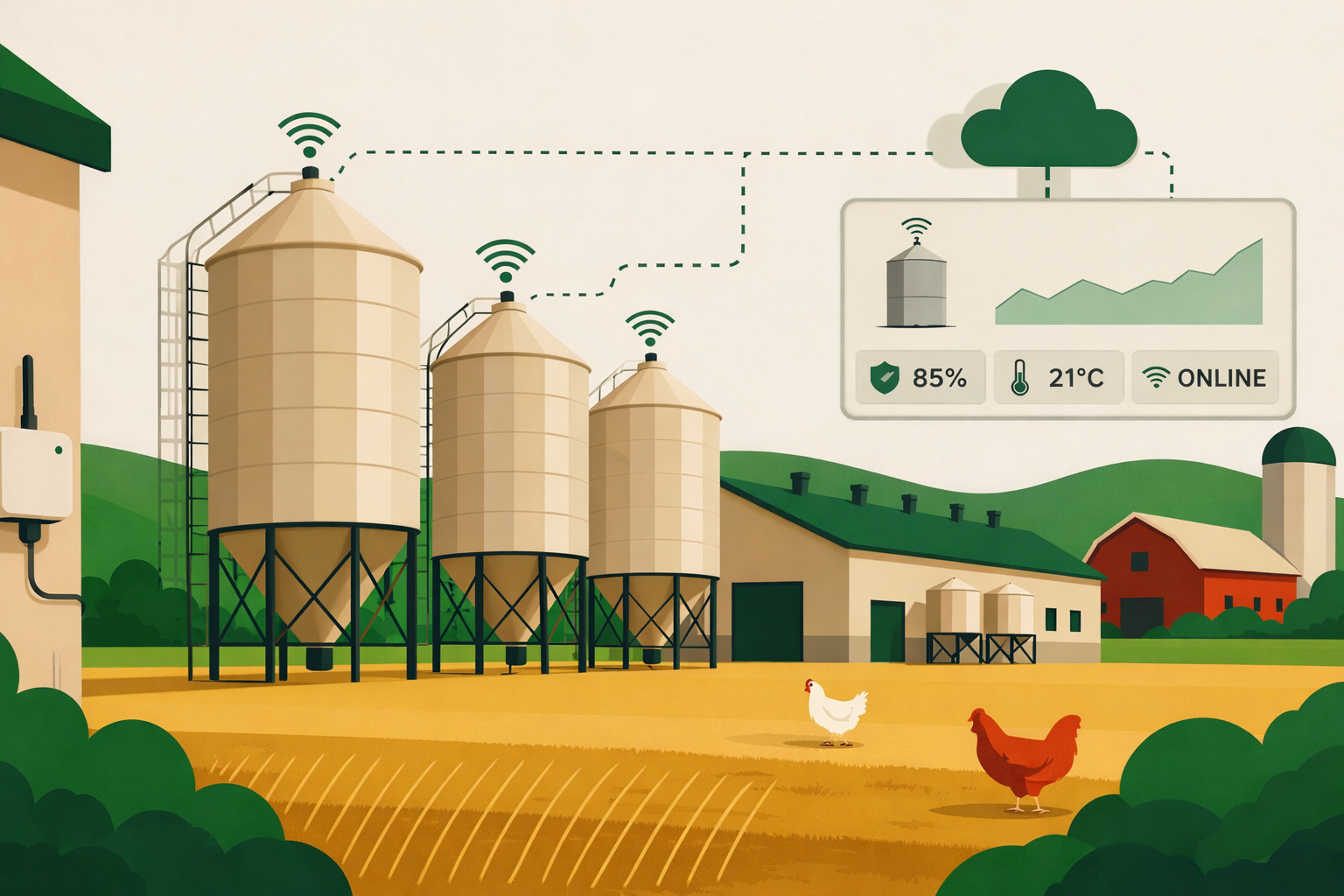
A sick bird rarely collapses suddenly — before you see clear symptoms, the flock has been sending subtle signals for hours, sometimes days. A farmer who notices them and acts quickly loses far less than one who waits for things to sort themselves out. Early response means fewer losses, lower medicine use and lower overall production costs.
Why is water consumption the most important indicator?
When poultry fall ill they reduce drinking before eating — and they do so faster than any clinical signs appear. That is why measuring water consumption daily is the most sensitive and cheapest early-detection tool. If the flock drinks noticeably less than the previous day at the same house temperature, that is a reason to investigate. More about measurements in the guide on water consumption in broilers.
Honest note: technology supports but does not replace the farmer's eye
Sensors, cameras and computers can help detect trends earlier and record data automatically. But no algorithm replaces a daily walk through the house and a careful look at the flock. Technology and the human eye together give the best results — each alone has its blind spots. A detailed overview of available solutions is in the guide on poultry flock sensors and monitoring.
What you will notice before disease becomes obvious
The following signs can appear hours or even days before the first clear clinical symptoms. None of them alone proves disease — but together or repeating daily they are a reason to act.
Sudden drop in water consumption
This is the most sensitive and earliest sign — poultry reduce drinking before other symptoms appear. If the flock drinks noticeably less than in previous days at the same house temperature, check conditions and the flock immediately. Even a 10–15% drop is worth attention.
Change in flock sounds
A healthy flock has its own characteristic hum — steady and even. Sudden silence (less active birds), coughing, rattling or louder-than-usual vocalisations signal a change. Enter the house and listen carefully — especially just after entry, before the birds have noticed you.
Reduced activity and movement
Ruffled, huddled birds reluctant to move — different from a healthy flock. Compare with previous days. This can also be caused by heat or draughts, so check temperature and ventilation before drawing conclusions about disease.
Diarrhoea and wet litter
Looser or discoloured droppings, wet and sticky litter under the birds — a common early sign of infection, especially intestinal and viral. Wet litter also complicates water consumption assessment, as some water may be absorbed by litter rather than drunk.
Drop in egg production in layers
In laying hens a sudden, unexplained drop in daily egg production is one of the first signs of health problems or stress. Compare with previous days and the expected production curve for the breed. Even a few percent below target is worth recording and monitoring.
Gradual rise in daily losses
Dead birds are counted every morning. If losses are higher than usual for several consecutive days or above the expected norm for the current production week, that is a signal to act. Do not wait until they reach alarm levels — every day of delay increases cost.
Technologies supporting early disease detection
The tools below can help identify abnormalities faster than the farmer's eye alone — especially in large flocks or when time spent in the house is limited. But each has its limitations and requires calibration to the conditions of the specific farm.
Water and feed consumption sensors with deviation alarms
Water flow meters or feeder scales connected to a recording system allow daily and hourly consumption to be tracked. An alarm set to trigger on deviation from the previous-days' average can send a notification before the farmer even enters the house. This is the cheapest and most practical early-detection tool. More in the guide on poultry flock sensors and monitoring.
Sound analysis — the computer hears coughing
Microphones installed in the house and sound-analysis software can detect an increase in coughing frequency or a change in flock noise patterns. These systems are commercially available, though they require calibration and can generate false alarms near loud fans. More on algorithms used on poultry farms in the guide on artificial intelligence on the poultry farm.
Cameras and image analysis — movement, distribution, lameness
Cameras allow observation of bird distribution in the house, their activity and how they move. Image-analysis software can detect bird clusters (a sign of disease or poor microclimate), an increase in lameness or a change in daily activity rhythm. Particularly useful in large farms where a physical inspection of every sector is difficult.
Bird weighing — the trend matters more than a single reading
Automatic scales or weekly weighing of a sample flock show whether birds are growing in line with the breed curve. A slowdown in weight gain — before any other symptoms appear — can indicate subclinical infection. One measurement tells you little; what matters is the trend over several weeks.
Daily flock inspection and data recording — the essential foundation
No technology replaces a daily physical walk through the house. The key is to record observations — losses, water, feed, flock behaviour — because only when you compare multiple days does a trend become visible. Paper or digital records are the foundation without which no alarm system works effectively. More on prevention planning in the guide on poultry farm prevention programme.
Disease symptom table as a reference point
Once you have spotted a sign, you need a quick comparison — what could this be? A table of typical symptoms mapped to specific poultry diseases shortens the time to contacting your vet and helps you describe the problem precisely. An overview of the most common diseases and their symptoms is in the guide on poultry diseases — symptoms and table.
How to respond when you notice an abnormality
Early response is only effective if it is fast and considered. Below is the sequence of actions after spotting a warning sign.
Thorough flock inspection — hands-on and attentive
Enter the house and walk through the entire section. Observe bird behaviour, movement and distribution. Collect dead birds and examine them carefully. Looking through a window or checking cameras is not enough — physical presence gives information that no sensor can replace.
Measure microclimate conditions
Before concluding it is disease, check temperature, humidity and ventilation. Many symptoms — bird clustering, apathy, a drop in water consumption — can have a cause in excessive heat or poor air exchange rather than infection. Only after ruling out environmental problems should you assess the health risk.
Contact your vet — do not wait
If signs persist or you have doubts, call your vet immediately. Describe clearly: when it started, what you observe, how many losses, how much the flock is drinking and eating. The more precise the description, the faster the vet can judge whether a visit and diagnostic tests are needed. The vet may also request post-mortem examination of dead birds to confirm or rule out a specific disease.
Remove dead birds and isolate suspected sick birds
Dead birds should be removed from the house as quickly as possible and kept in a cool place until post-mortem or disposal. If possible, isolate birds that appear sick in a separate section or cage. This limits spread of infection and makes observation easier.
Record in the log — every sign, every action
Write down what you noticed, when it started, what you did and the results of subsequent observations. This record is essential in conversation with the vet, in any report to the veterinary inspectorate and when analysing results after the production cycle. The more data you have, the easier it is to avoid similar situations in future.
Do not wait for it to pass on its own
Poultry diseases rarely resolve spontaneously without harm to the flock. Every hour of delay means more losses and poorer condition in the remaining birds. Even if the situation seems to be improving after a few hours — continue observation for at least 24–48 hours and do not give up on vet contact if you had doubts.
The most common mistakes in early disease detection
These mistakes cause disease to be detected too late or lead to reacting to signals that are not actually signs of disease.
Not recording daily water consumption
A single measurement tells you nothing — what matters is the trend. If you do not record water consumption daily, you have no reference point and a 15% drop may seem normal. Even a simple sheet with a daily meter reading is better than no record.
Explaining away signs without verification
It is easy to tell yourself that "birds are calmer because it is cooler" or "they are drinking less because it was hot yesterday". Always first check whether microclimate conditions have actually changed. If they have not — take the sign seriously.
Delaying the decision to contact the vet
Many poultry diseases progress very fast — a few hours' delay can matter a lot. Contacting the vet is cheap and safe — if nothing serious is happening, you lose nothing. If something is happening — you gain time.
Relying on technology alone
Sensors can break down, have blind spots or generate false alarms. A system without regular human inspection is incomplete. Use technology as an aid, not as a replacement for daily observation.
Frequently asked questions about early disease detection in poultry
How can I detect disease in poultry as early as possible?add
The earliest and most sensitive sign is a sudden drop in water consumption — poultry reduce drinking before any visible clinical signs appear. That is why daily measurement and recording of water consumption is the core early-detection tool. Other early signs include a change in flock sounds (coughing, silence or louder noise than usual), reduced bird activity and diarrhoea.
How much can water consumption drop before I should react?add
There is no single number for every flock, because water consumption depends on temperature, production stage and breed. The key is to compare with previous days under similar conditions. A drop of 10–15% at the same temperature is a signal worth attention — not panic, but investigation of the flock and conditions. More on consumption norms in the guide on water consumption in broilers.
Can sensors replace the daily walk through the house?add
No. Sensors can detect trends earlier and record data automatically, but they have blind spots, can fail and do not see everything a farmer sees during a physical inspection. The best strategy is combining both: sensors as an early alarm plus a daily human inspection. Either tool used alone is less effective.
What is sound analysis on a poultry farm?add
It is a system of microphones installed in the house and software that analyses flock sounds in real time. The computer can detect an increase in coughing frequency or a change in the character of sounds and send an alert before the farmer enters the house. The technology is commercially available but requires calibration and can give false alarms near loud fans. More in the guide on artificial intelligence on the poultry farm.
When should I call the vet immediately?add
Call immediately when you see several signs at once (water drop, coughing, apathy, rising losses), when losses increase above the expected norm for several consecutive days of the production week, or when you see anything you cannot explain by environmental conditions. Early contact with the vet is always cheaper than treating advanced disease.
How does a prevention programme help with early detection?add
A well-planned prevention programme is not only vaccinations and medicines — it also includes a schedule of regular observations, clinical checks and result recording. Regular vet contact within the programme means the farmer has someone to call quickly with a question, someone who knows the flock history. Details in the guide on poultry farm prevention programme.
Record water consumption and losses in DlaFerm.pl
Want to record daily water consumption, losses and flock observations in one place so you can spot a trend faster? Create a free farm account or write to us.
Phone
+48 796 258 151