Laser drones — scaring wild birds away
Wild birds carry the avian flu virus onto the farm. A new idea from Japan is an autonomous drone that flashes a laser and scares wild birds away from around the house — before they land near the feed and water. We explain how it works, what the first trials show and why it’s an add-on to biosecurity, not a magic bullet.
verifiedFrom the team that has organised work on poultry farms for years.
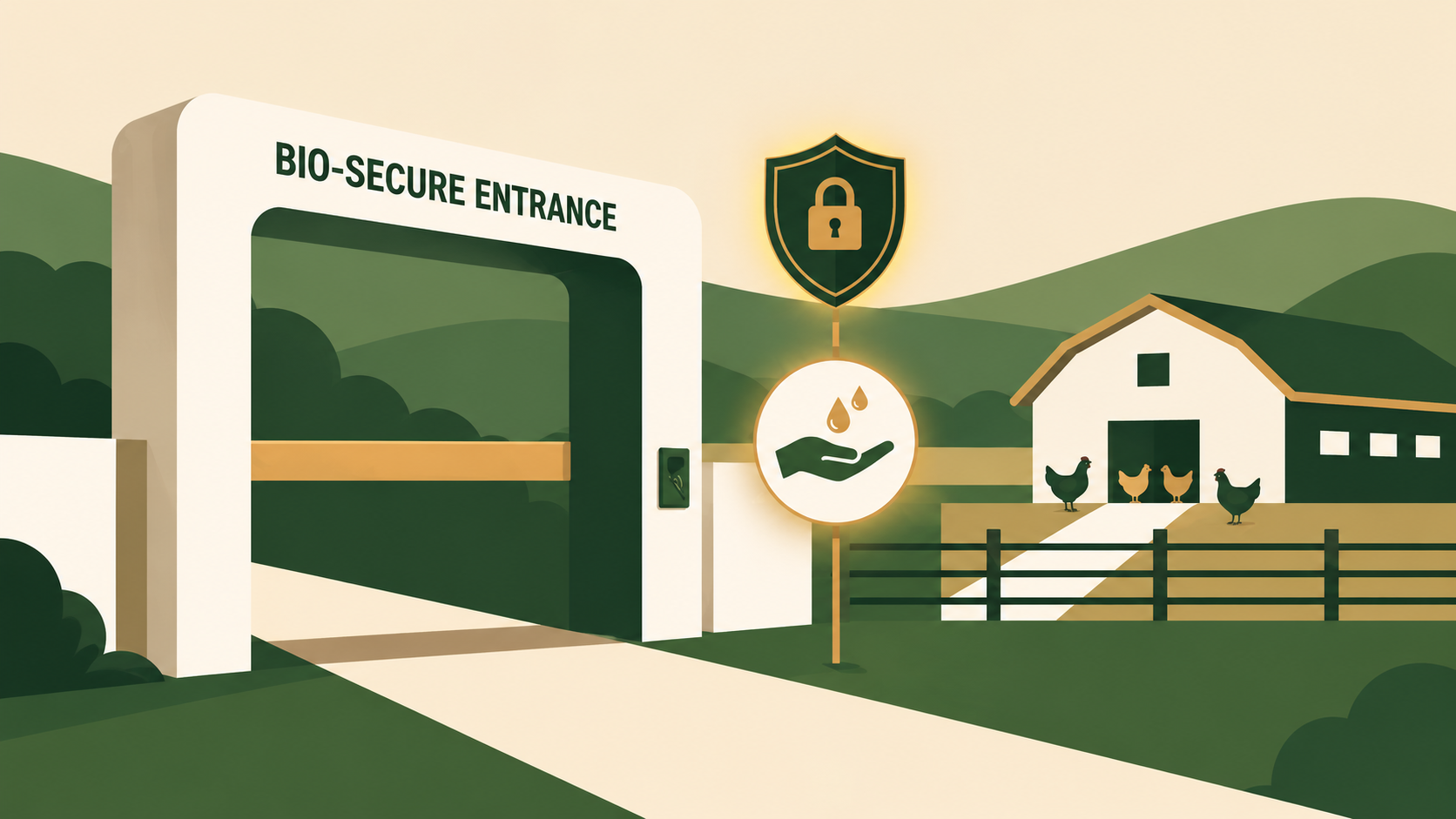
Laser drones are a fresh idea for an old problem: how to keep wild birds away from the poultry house. The drone flies on its own along a set route and flashes laser beams that scare wild birds off before they land near the feed, the water or on the roof. It’s one of the newest ag-tech tools being trialled against avian flu — intriguing, but still at the testing stage, so it’s worth looking at it soberly.
Why does this matter for avian flu?
Wild birds — especially wild ducks and geese, but also crows and pigeons — are the main vector of the HPAI virus, that is highly pathogenic avian influenza. They spread it directly and through droppings that contaminate feed, water and litter. The less often wild birds land around the house, the lower the risk that the virus reaches the flock. Scaring them off is exactly a layer of biosecurity — and a laser drone is one possible way to drive them away without noise or chemicals.
How a laser drone works and where its limits are
A laser scares wild birds off the surroundings, but it won’t seal anything on its own. It’s best treated as one layer of defence, added on top of classic biosecurity.
Why wild birds are an HPAI risk
Wild ducks, geese, crows and pigeons carry the avian flu virus and leave it in their droppings. When they land near the feed, water or on the house roof, they can contaminate what later reaches the flock. That’s why keeping wild birds away from the farm lowers the infection risk — it’s the starting point for any deterrence idea.
How a laser drone works
The drone emits laser beams — red and green — that birds read as a threat and fly away from. In the Japanese example, NTT e-Drone Technology used the BB102 model with a deterrent device. The beams flash in a varying, irregular rhythm, which makes it harder for birds to get used to them. All of it without shots, noise or chemicals.
Autonomous flight and a varying pattern
The drone flies on its own along a programmed route — the operator doesn’t need to know how to pilot. The route can be adjusted to the changing paths the wild birds fly in on. The varying flash pattern is key here: if the laser always behaved the same way, the birds would soon get used to it and stop reacting.
No noise or chemicals
Unlike gas cannons or chemical agents, the laser works quietly and leaves no residue. For the neighbourhood and the flock itself that means less noise stress, and for the environment — nothing to spray. That’s one of the main advantages its supporters point to, though it has to be weighed against the cost and the rules.
Where a laser isn’t enough
The drone scares birds off the surroundings, but it won’t close the vent openings, secure the feed or replace the disinfection mats. Without netting on the openings, sealed silos and pest control, a laser alone won’t protect the flock. Treat it as an extra layer you add on top of solid biosecurity, not a replacement for it.
Rules and limits
In Poland and the EU, drone (UAV) flights are subject to aviation safety rules, and the use of lasers and scaring of wild birds — to species protection regulations. Before you reach for such kit, check the local rules and the permits you need. The technology is new and mostly being trialled, so it’s worth asking at the source what’s allowed in your area.
Scaring off wild birds step by step
- 1
Map the landing spots and risk points
Start by watching: where wild birds land, which way they fly in and what draws them. Most often it’s spilled feed, open water, puddles and roofs. Mark these points, because that’s where the virus can get in most easily — and where deterrence makes the most sense.
- 2
Strengthen classic biosecurity
First seal what can be sealed: netting on the vent openings, closed and tight feed silos, clean water with no outside access, working disinfection mats at the entrances. That’s the foundation — without it, no deterrence will protect the flock from avian flu.
- 3
Consider active deterrence as an add-on
Only on that basis add active deterrence: a laser drone or stationary deterrents. Treat them as a supplementary layer that cuts the pressure from wild birds at the critical points. Remember it’s support for biosecurity, not a way to skip it.
- 4
Check the rules on drones and lasers
Before using drones and lasers, check the rules on UAV flights, aviation safety and species protection of birds. Make sure which permits you need in your area and whether a given piece of kit may be used there. It’s better to clear this up in advance than to run into trouble.
- 5
Set a varying schedule
If you use deterrence, vary its timing and the pattern of action. Birds quickly get used to a constant stimulus and stop reacting, so irregularity is an advantage here. In the Japanese trial the laser was run on selected days of the month, and regular but varying flights helped sustain the effect.
- 6
Watch the effectiveness and note bird pressure
See whether wild birds really thin out in the area and how long the effect lasts. In one trial a flock of crows dispersed for about a month, but that’s a pilot result, not a hard guarantee. Note the wild bird pressure and how well the measures work — that way you’ll see what really helps at your place.
Frequently asked questions about laser drones and avian flu
Does a laser drone solve the avian flu problem?add
No, and it shouldn’t be treated that way. A laser scares wild birds off the area around the house, which lowers the risk that the virus reaches the flock, but it’s only one layer of biosecurity. Without netting on the openings, secured feed and water, disinfection mats and pest control, a drone alone won’t protect the farm. It’s an add-on, not a replacement.
How does a laser scare birds without noise?add
The drone emits laser beams — red and green — that birds read as a threat and fly away from. The flashes come in a varying, irregular rhythm, so the birds find it harder to get used to them. Unlike gas cannons, the laser works quietly and needs no chemical agents.
Is the deterrent effect lasting?add
Trials suggest it holds for a while but needs repeating. In a Japanese pilot in Kanagawa Prefecture the laser was emitted on 8 days a month and dispersed a flock of about 80 crows; according to a company representative the effect held for about a month, and regular flights helped sustain it. That’s a trial result, not a guarantee — birds can get used to it, which is why a varying schedule matters.
Can I scare off wild birds like this in Poland?add
Before you reach for a drone or a laser, check the local rules. In Poland and the EU, drone (UAV) flights are subject to aviation safety rules, and scaring wild birds and using lasers — to species protection regulations. Make sure which permits are required in your area and whether a given piece of kit may be used there, because the technology is new and still mostly at the trial stage.
Record your biosecurity measures in DlaFerm.pl
In DlaFerm.pl you note what protections you have on the farm — netting, disinfection mats, ways of scaring off wild birds — all next to the flock card. Create a free account or write to us.
Phone
+48 796 258 151