Robots in the house — what they can already do
In more than one house today, autonomous robots already drive around doing the job a person used to do with a rake and a notebook. They aerate the litter, nudge the birds to move, count and measure, and some watch for dead birds. We explain what such a robot really does, why bird movement and dry litter matter so much, and which features are everyday reality versus only just emerging.
verifiedFrom the team that has organised work on poultry farms for years.
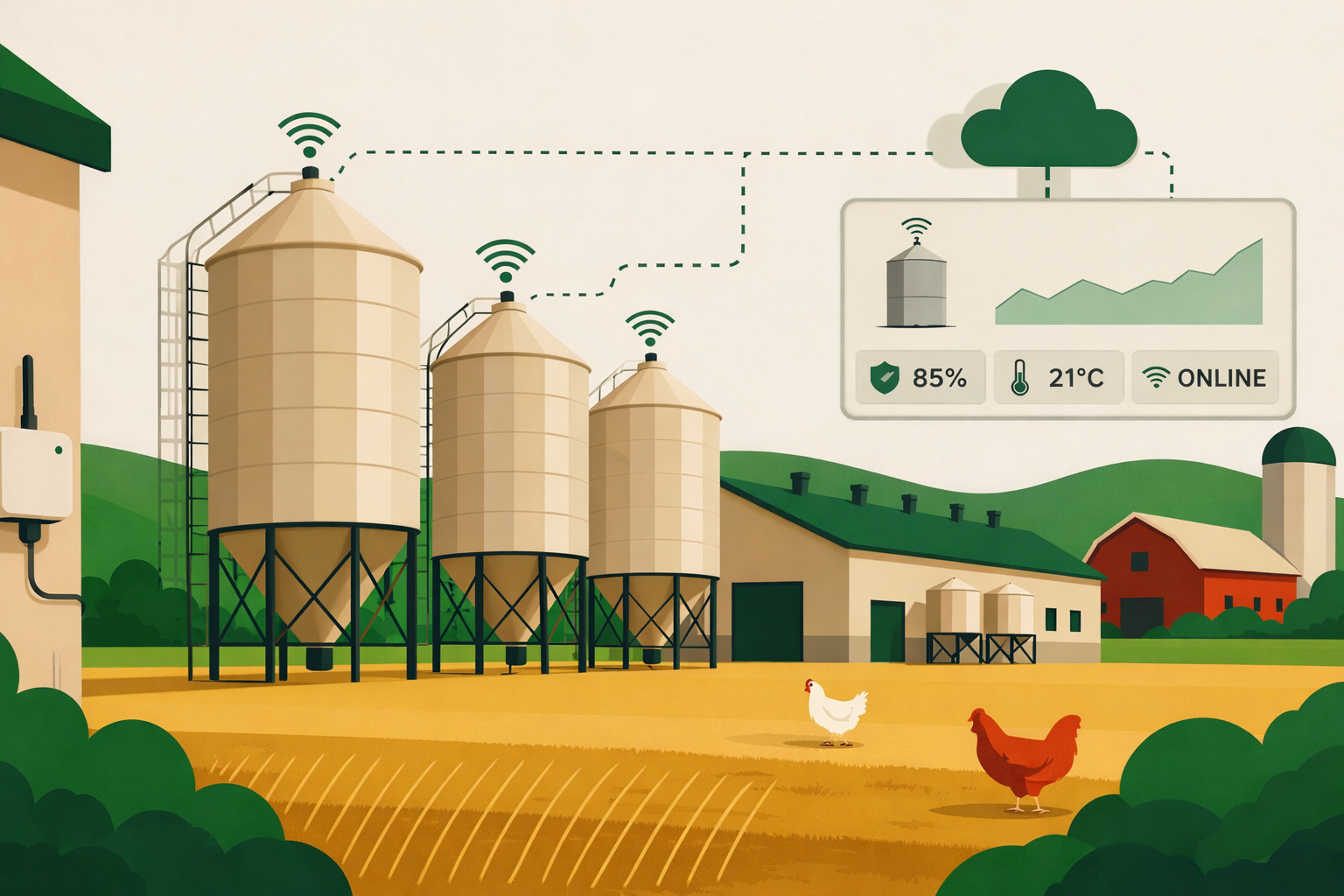
A house robot is a low, self-driving machine that travels among the birds and carries out repetitive tasks with no human involved. Most often it aerates and turns the litter, gently encourages the birds to move and gathers flock data along the way. It doesn’t replace the farmer, it takes off his hands the work no one enjoys anyway: constantly walking the house, turning the litter and looking for birds that have stopped moving. It isn’t a trade-show gadget — it’s equipment already at work in real poultry houses.
Why a robot in the house?
Two reasons matter most: leg health and less manual work. When a robot regularly aerates the litter, it cakes up into wet pads less often — and those pads are what cause footpad dermatitis (pododermatitis) and hock burns. By nudging the birds to move, the robot makes them get up and walk more often, which strengthens legs and improves flock uniformity. On top of that comes data: a pass through the house is a chance to count the birds, measure conditions and pick out birds lying somewhere idle. The farmer gets a ready picture of the house instead of walking it blind.
What a robot really does in the house
A single robot usually combines several tasks at once: it works the litter, moves the birds and gathers data on the way. Some features are standard today, some are only just arriving.
Aerating and turning the litter
This is the most common job of litter robots. Driving through the house, the robot breaks up caked pads and aerates the top layer, so the litter dries faster. Dry, loose litter means fewer footpad lesions and hock burns — healthier legs and better carcass quality. It does this many times a day, which no one could keep up with by hand.
Nudging the birds to move
The robot’s passage alone gently prompts the birds to get up and walk. Getting up and walking more often strengthens legs, cuts apathy and helps the whole house be used evenly — including the feeders and drinkers in the far corners. The robot moves slowly and calmly, so the birds move without panic or crowding.
Spotting dead birds
Some robots can recognise a bird that has stopped moving and lies in one place. A signal about a possible dead bird reaches the farmer, who checks and removes it faster, before it becomes a source of infection. Catching mortality early also helps notice early that something is starting to go wrong with the flock.
Gathering data on conditions
As it drives, the robot measures what is happening right next to the birds: temperature, humidity, sometimes ammonia or light level. Readings from litter level can differ from a sensor under the ceiling, so they give a truer picture of what the birds actually breathe. From these readings a map of the house is built — where it is too damp, too warm or too stuffy.
Counting and assessing flock spread
A robot with a camera can roughly count the birds and check how they spread across the house. Clusters in one corner or empty patches are a signal that somewhere there is a draught, it is too cold, too hot, or access to feed or water is missing. Such a picture helps you react before the problem shows up in the whole flock’s results.
Fewer human entries into the house
Since the robot makes its own rounds, the farmer has to walk in among the birds less often just to turn the litter or check the house. That means less stress for the flock and a lower risk of carrying germs in from outside, since every human entry is a potential infection route. Robots are also easy to keep within the biosecurity regime, because they stay in the house.
A house robot step by step
- 1
Name the problem it should solve
Start with what bothers you most: caked litter and sore legs, too little bird movement, or catching mortality too late. A robot pays off when it answers a concrete pain, not when you buy it “because it’s modern”. Write down what you do by hand today and how much time it costs you.
- 2
Check what the robot really does
Features differ between models: some only aerate the litter, others also count birds, measure conditions or spot dead birds. Ask the maker what runs on its own and what needs handling, and ask for examples from houses similar to yours. Separate proven features from those only being announced.
- 3
Match the robot to your house
What counts is the litter type, floor evenness, feed and drinker line spacing and stocking density. The robot needs room to drive and must not get stuck on equipment, and its route should cover the whole house, including the corners. Check how it charges and where its base is, so it doesn’t get in the way during daily handling.
- 4
Introduce it gradually and watch the birds
At first run the robot briefly and watch how the flock reacts — the birds should move calmly, without panic or crowding into corners. Over time you extend its work as the birds get used to the slow vehicle. A young flock gets used to the robot faster, so it’s worth starting early in the cycle.
- 5
Read the data and act
A robot only makes sense if someone looks at what it gathered. Check the humidity maps, dead-bird signals and flock spread, and draw conclusions from them: where to improve ventilation, where to dry the litter, where the birds avoid a spot. Data alone changes nothing if it doesn’t lead to decisions.
- 6
Keep up hygiene and servicing
A robot works in dust and damp, so it has to be cleaned and disinfected like any equipment in contact with the flock. Take care of cleaning between cycles, check the wheels, sensors and cameras, and stick to the maker’s service guidance. A neglected robot not only works worse but can itself become a route for spreading germs around the house.
Frequently asked questions about house robots
Are house robots reality already, or the future?add
They are reality already, though still developing. Robots that aerate the litter and encourage birds to move work in real broiler houses in Europe. Features such as counting birds, measuring conditions at litter level or spotting dead birds are refined to varying degrees — some work solidly, some are still maturing. So when buying, it’s worth separating what is proven from what is only being announced.
Does the robot stress the birds?add
A well-run robot moves slowly and calmly, so the birds treat it as part of the house and move without panic. That gentle movement is the whole point — birds get up and walk more often, which strengthens legs. The key is introducing the robot gradually, ideally from a young flock, so the birds get used to the vehicle. Driving too fast or abruptly could startle them, which is why the pace and route must be matched to the house.
Will the robot replace the farmer?add
No, a robot takes load off the farmer but doesn’t replace him. It takes over the repetitive work — turning litter, rounds, gathering data — leaving the human what needs an eye and a decision: assessing the flock, reacting to signals, care and biosecurity. In return the robot gives a fuller picture of the house, because it drives more often and more thoroughly than a person can manage to walk. It works best as a tool in the farmer’s hands, not as his substitute.
How does the robot help leg health?add
In two ways. First, it aerates and turns the litter, so wet, caked pads form less often — and those pads cause footpad dermatitis (pododermatitis) and hock burns. Second, it nudges the birds to move, and walking strengthens legs and improves flock condition. Together this means healthier feet and better carcass quality. The condition, though, is dry litter and a working, clean robot, because neglected equipment delivers no benefit.
Record your house equipment in DlaFerm.pl
In DlaFerm.pl, in the “Technical equipment of the building” step, you note which robots, sensors and monitoring systems you have in the house — all next to the flock card. Create a free account or write to us.
Phone
+48 796 258 151