Precision poultry farming (PLF) — what it is and how to start
Precision poultry farming is a way of running a flock in which sensors, cameras and microphones gather data about the birds all the time, on their own. The system measures temperature, humidity, ammonia, weight and flock activity, and when something drifts off normal it warns you earlier than a person would notice. We explain what PLF is, how it ties together the ideas of IoT and artificial intelligence, and how to roll it out step by step. No jargon, just the point.
verifiedFrom the team that has organised work on poultry farms for years.
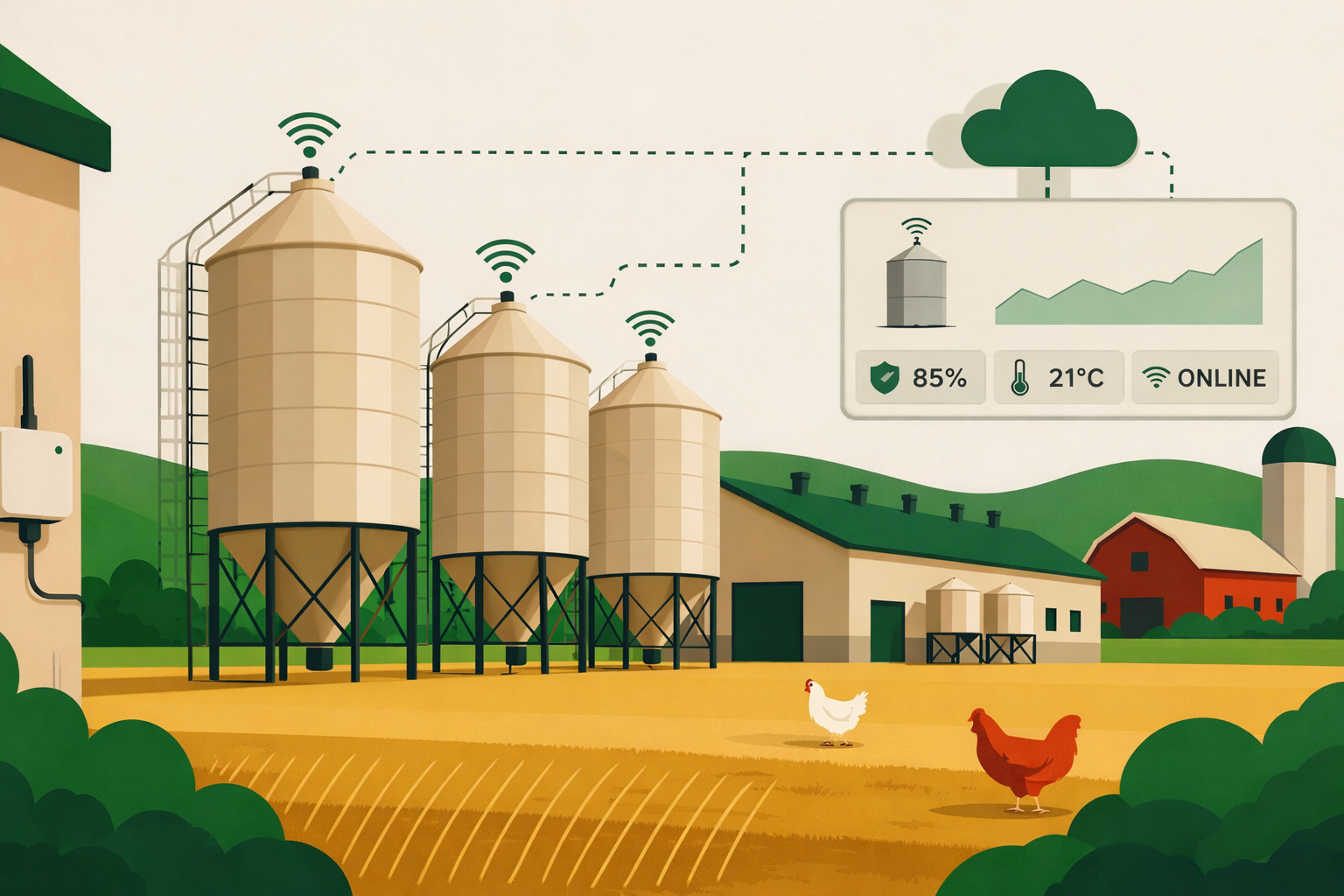
Precision poultry farming, known in full as Precision Livestock Farming (PLF), means running a flock on continuous, automatic measurement. Instead of relying only on what the farmer sees during a walk-through, devices in the house measure the conditions and the birds’ behaviour without a break — day and night. Sensors check the air and flock weight, cameras watch how the birds are spread out and moving, and microphones listen to the sounds. From this data the system builds a picture of what is happening in the house and lets you know when something starts to go wrong.
What PLF ties together: IoT, artificial intelligence and monitoring
PLF is the umbrella idea that pulls together several things you usually hear about separately. IoT (the internet of things) is simply the sensors and devices in the house that send their readings on their own. Farm artificial intelligence is software that spots patterns in those readings — for example noticing that the birds start behaving oddly or that weight is rising more slowly. Monitoring is the live view of all of it in one place, with alerts. Together they give one result: a problem is seen early, and decisions are based on numbers rather than a hunch.
What precision poultry farming is made of
PLF is a set of parts that work together — some measure the conditions in the house, others watch the birds themselves, and a live view with alerts ties it all together.
Environment sensors
They measure temperature, humidity and harmful gases such as ammonia (NH3) and carbon dioxide (CO2). This is the basis, because air and microclimate affect how the birds feel the fastest. The sensors send readings without a break, so a jump in humidity or ammonia shows up at once, not only at the next walk-through.
Flock weight measurement
Platform scales and automatic weighing show how the birds’ weight is rising and whether gains are even. A slower gain can be the first sign that something is off — with feed, water or health. Continuous measurement shows a trend, not a single number from a scale read now and then.
Cameras and imaging
Cameras watch how the birds are spread out and how they move. Bunching in one spot, avoiding part of the house or lower activity are signals that show up early on the image. The software reads the flock’s distribution and flags anything that drifts from the usual picture.
Microphones and sound
Microphones listen to the flock. Coughing, sneezing or a change in the birds’ sounds can foretell respiratory trouble or stress long before visible symptoms. This is still a young but promising part of PLF — it is called bioacoustics.
Control and automation
Ventilation, heating and drinkers are often already controlled automatically from the readings. PLF goes a step further: it brings this data together and lets you react deliberately rather than blindly. Some responses can be automated, some left to the farmer’s decision — but always based on real measurement.
Live view and alerts
All the readings land in one place, where you see them live and as history. When a value crosses a set threshold, the system sends an alert — to a screen or a phone. This layer is what turns raw numbers into something useful: instead of trawling data, you get a sign that it is time to act.
Precision farming step by step
- 1
Start with one measurement
You don’t have to put in cameras, microphones and scales all at once. Pick what bothers you most — usually temperature, humidity and ammonia, since those wreck welfare the fastest. One sensor that works well gives more than an expensive kit no one can handle.
- 2
Set thresholds and alerts
Measurement alone isn’t enough — you have to tell the system when to call you. Set the limits for temperature, humidity and gases at which you want a warning. Well-chosen thresholds make the alert speak up when it really is worth reacting, not at every little thing.
- 3
Gather data and watch the trends
The real value of PLF comes from history. Look not only at the current number but at how it changes over time — whether humidity is creeping up day by day, whether gains are slowing. A trend warns earlier than a single reading, because it shows the direction the flock is heading.
- 4
React early and note what helped
When an alert comes or a trend starts to slip, act at once — fix the ventilation, check the drinkers, look in on the birds. Write down what you did and whether it worked. After a few flocks you have your own list of proven responses, tuned to your house.
- 5
Expand the kit gradually
Once the first measurement becomes a habit, add another part — a scale, cameras or sound listening. Build the system out piece by piece, so you always keep up with what you already have. Gradual rollout is cheaper and less stressful than one big revolution at once.
- 6
Tie the data into one picture
You gain the most from looking at everything together: air, weight, image and sound in one place. A single reading says little, but when several signals point the same way the decision is surer. That is the whole point of precision farming — not one gadget, but a coherent picture of the flock.
Frequently asked questions about precision poultry farming
What exactly is PLF?add
PLF, or precision poultry farming (Precision Livestock Farming), means running a flock on continuous, automatic measurement. Sensors, cameras and microphones gather data about conditions and the birds’ behaviour without a break, and the system helps read it and warns of problems. It is the umbrella idea that ties IoT, artificial intelligence and monitoring into one way of working.
Is PLF only for big farms?add
No. It’s true the most elaborate systems are found on large farms, but you can start with a single sensor for temperature, humidity and ammonia. That step is cheap, simple and works in any house. Precision farming is an approach, not a particular farm size — you add as much measurement as you need.
Do you need artificial intelligence for PLF?add
Not at the start. The simplest precision farming is just measurement and alerts when thresholds are crossed — that is already a real help. Artificial intelligence comes later, when you need to catch subtler patterns in the data, for instance in camera images or in sound. You can use PLF without it and add it when the need arises.
What does PLF give the farmer in practice?add
Above all, an earlier warning. A problem with air, feed or health shows up in the data before it becomes visible to the naked eye, so you react sooner and at a lower cost. On top of that comes calmer work and decisions based on numbers rather than a hunch. The result is often better welfare and a more even flock.
Record your flock’s readings in DlaFerm.pl
In DlaFerm.pl, next to the flock card, you note the readings from monitoring and sensors — temperature, humidity or weight — and keep them in one place together with the flock’s history. Create a free account or write to us.
Phone
+48 796 258 151