The poultry house of the future — automation, AI and sensors
A poultry house looks less and less like just a shed with feed and water, and more and more like a system in which sensors, cameras, microphones, robots and artificial intelligence look at the flock together. Each of these tools already works on its own today; the future is that they start talking to each other. We explain how it all comes together into one picture of the flock, what is real today versus only coming — and how a farmer can adopt it calmly, step by step.
verifiedFrom the team that has organised work on poultry farms for years.
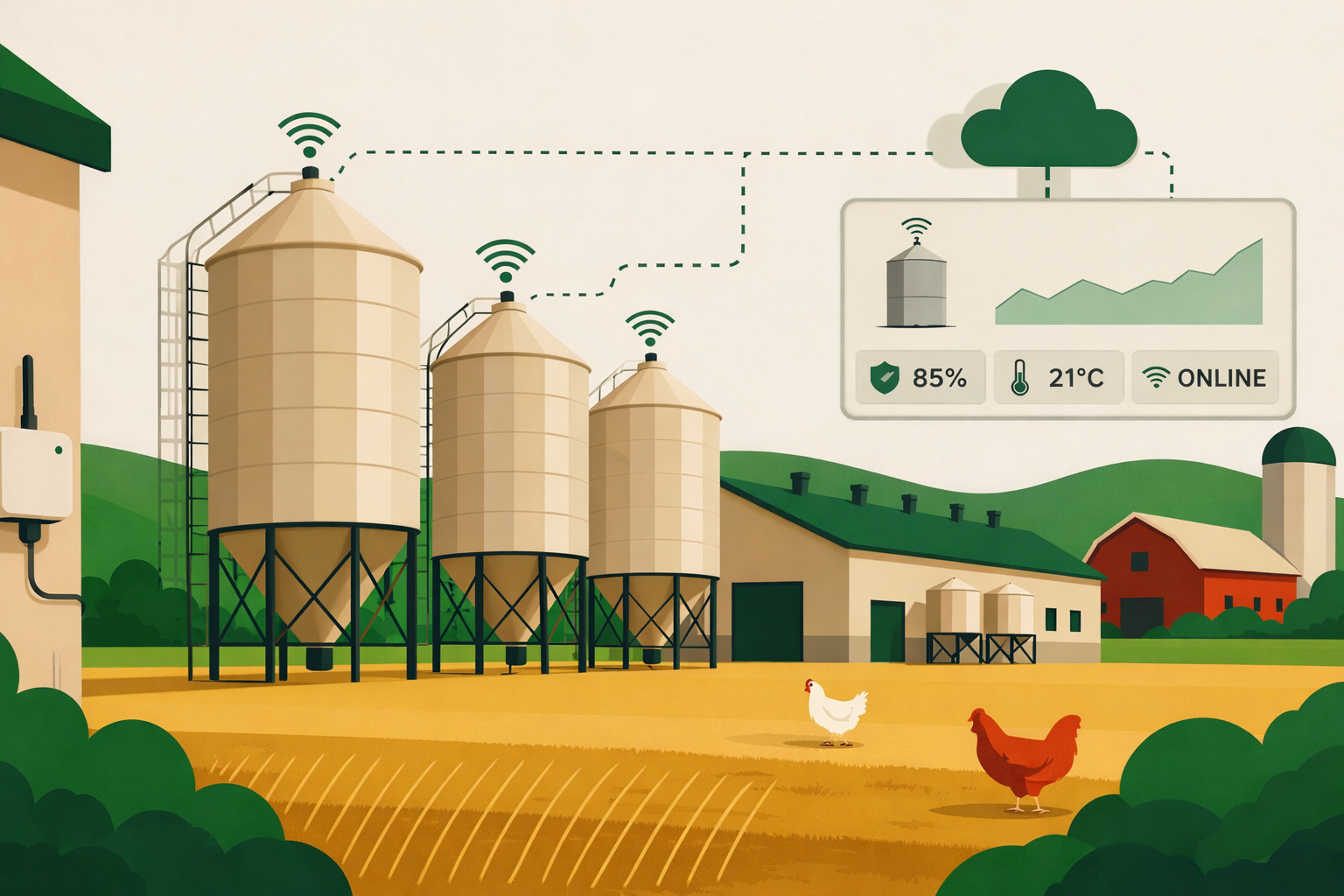
The house of the future isn’t a single device, but the way tools we already know come together. Sensors measure conditions, cameras watch the birds, microphones listen to the flock, robots work the litter, and artificial intelligence binds these signals into one picture: how the flock grows, how it behaves and whether something is starting to go wrong. This direction is called precision poultry farming (PLF). The point isn’t a gadget but that the farmer gets a fuller, earlier picture of the house than he could ever walk out on foot.
What does the “house of the future” actually mean?
It means a shift from single devices to a system that looks at the flock as a whole and warns early. Today a sensor measures temperature, a camera estimates weight and a robot aerates the litter — each on its own. The future is binding these signals: a drop in activity heard by a microphone, a flattening of the camera’s growth curve and a rise in humidity from a sensor together say more than any one alone. Most importantly, it isn’t all-or-nothing — you can start with one tool and add more as you see the benefit.
What comes together in the house of the future
No element replaces the others — the strength comes from them looking at the flock from different angles and together giving a picture no single tool can.
Sensors for house conditions
Temperature, humidity, ammonia and carbon dioxide levels, pressure — this is the base on which everything else stands. Sensors make sure the birds breathe good air and neither chill nor overheat. Conditions are the foundation; without them even the best feed and genetics won’t deliver.
Cameras and image analysis
A camera above the flock estimates bird weight, tracks the growth curve and uniformity, and shows how the birds spread across the house. Clusters, empty patches or a slowdown in growth are signals the eye won’t always catch in time. The image gives a daily, continuous insight without stressing the birds.
Microphones and sound analysis
A flock “talks” all the time — the birds’ sounds carry information about how they feel. Sound analysis can pick up changes, for example coughing or a drop in vocal activity, before they become visible to the naked eye. It is one of the more sensitive, early signals that something is starting to happen with the flock’s health.
Robots in the house
Autonomous robots aerate the litter, encourage the birds to move and gather data from floor level along the way. Thanks to them the litter is drier, legs healthier, and the farmer has to enter the house less often just to walk it. A robot is a moving pair of eyes and hands working in the house non-stop.
The AI that binds it together
AI takes the signals from sensors, cameras and microphones and looks for patterns in them — binding them into one picture and pointing out what departs from the norm. Instead of watching ten separate charts, the farmer gets a signal: “something’s happening here, check it”. It is this binding of data, not a single sensor, that is the essence of the house of the future.
Control and actuating automation
A picture of the flock has value when you can act on it: close an inlet, increase ventilation, change the light or deliver feed. More and more often part of the response happens automatically, by conditions, with the farmer supervising and correcting. This closes the loop: measure, conclude, act — and measure again.
The house of the future step by step
- 1
Start with the most nagging problem
Don’t introduce everything at once. Pick the one pain that bothers you most: wet litter, catching disease too late, uneven flock growth. The first tool should answer exactly that problem, because then you’ll see fastest whether it works. The rest can wait.
- 2
Build on solid foundations
First make sure of a reliable measurement of conditions — temperature, humidity, ammonia — because it is the foundation on which everything else rests. Cameras, microphones and AI only make sense once the basic house conditions are under control. A good start is reliable, well-placed sensors.
- 3
Add tools as you see the benefit
The house of the future isn’t an all-or-nothing purchase but a path. Once the first tool proves itself and you learn to read its data, add the next — a camera for weight, sound for health, a robot for litter. Each step should follow a real need, not a fashion for novelties.
- 4
Learn to read data, not just gather it
The best system is useless if no one looks at what it shows. Spend the time to understand the curves, maps and warnings, and tie them to what you see in the house. Value comes from conclusions and decisions, not from the mere fact that data is being saved somewhere.
- 5
Make sure the tools work together
Signals gain power when you look at them together: a drop in activity from a microphone, a flattening of the curve from a camera and a rise in humidity from a sensor may describe one problem. Choose solutions that can be brought together in one place, so you don’t jump between ten apps. A coherent picture is worth more than separate charts.
- 6
Don’t forget the human and biosecurity
Automation takes load off but doesn’t excuse you from thinking — it is the farmer who makes decisions, assesses the flock and keeps up hygiene. Every device in the house has contact with the flock, so it has to be cleaned, disinfected and serviced. Technology should support a good keeper, not replace him or lull his vigilance.
Frequently asked questions about the house of the future
Is the house of the future reality already, or a distant vision?add
Partly both. Individual tools — condition sensors, weight-estimating cameras, sound analysis, litter robots — already work in real poultry houses today. What is still maturing is binding them fully into one system that draws its own conclusions. So it’s best seen as a path: some of it is real right away, some will come with time, and you can adopt it gradually.
Do I have to buy everything at once to start?add
No. This is one of the most important misunderstandings around the topic. The house of the future is built step by step: you start with the tool that solves your most nagging problem, learn to read its data, and add the next only when you see a real benefit from it. This approach is cheaper, less risky and lets you get used to each element before the next arrives.
Will automation and AI replace the farmer?add
No. The tools take load off the farmer and give him a fuller, earlier picture of the house, but it is the human who makes decisions, assesses the flock and answers for hygiene and biosecurity. AI binds the signals and points out where it’s worth looking, but the conclusion and the action still belong to the keeper. The best results come from combining technology with human experience, not replacing one with the other.
Where is it best to start?add
With a solid measurement of house conditions — temperature, humidity and ammonia — because it is the foundation on which everything else rests. Only once the basic conditions are firmly under control does adding cameras, sound analysis or robots make sense. Start too from the problem that bothers you most, because then you’ll find out fastest whether a given tool really helps you.
Gather your flock data in DlaFerm.pl
In DlaFerm.pl, next to the flock card, you note the house equipment — sensors, cameras, robots and monitoring systems — and the course of rearing in one place. Create a free account or write to us.
Phone
+48 796 258 151