Camera weighing of poultry — an automatic growth curve
Body weight is one of the most important measures in broiler rearing, but weighing birds on a scale can be stressful and labour-intensive. A camera with image analysis can estimate the weight of the whole flock without catching the birds — daily, stress-free and without interrupting the house. We explain how it works, what the growth curve gives you and how such a camera differs from a classic platform scale.
verifiedFrom the team that has organised work on poultry farms for years.
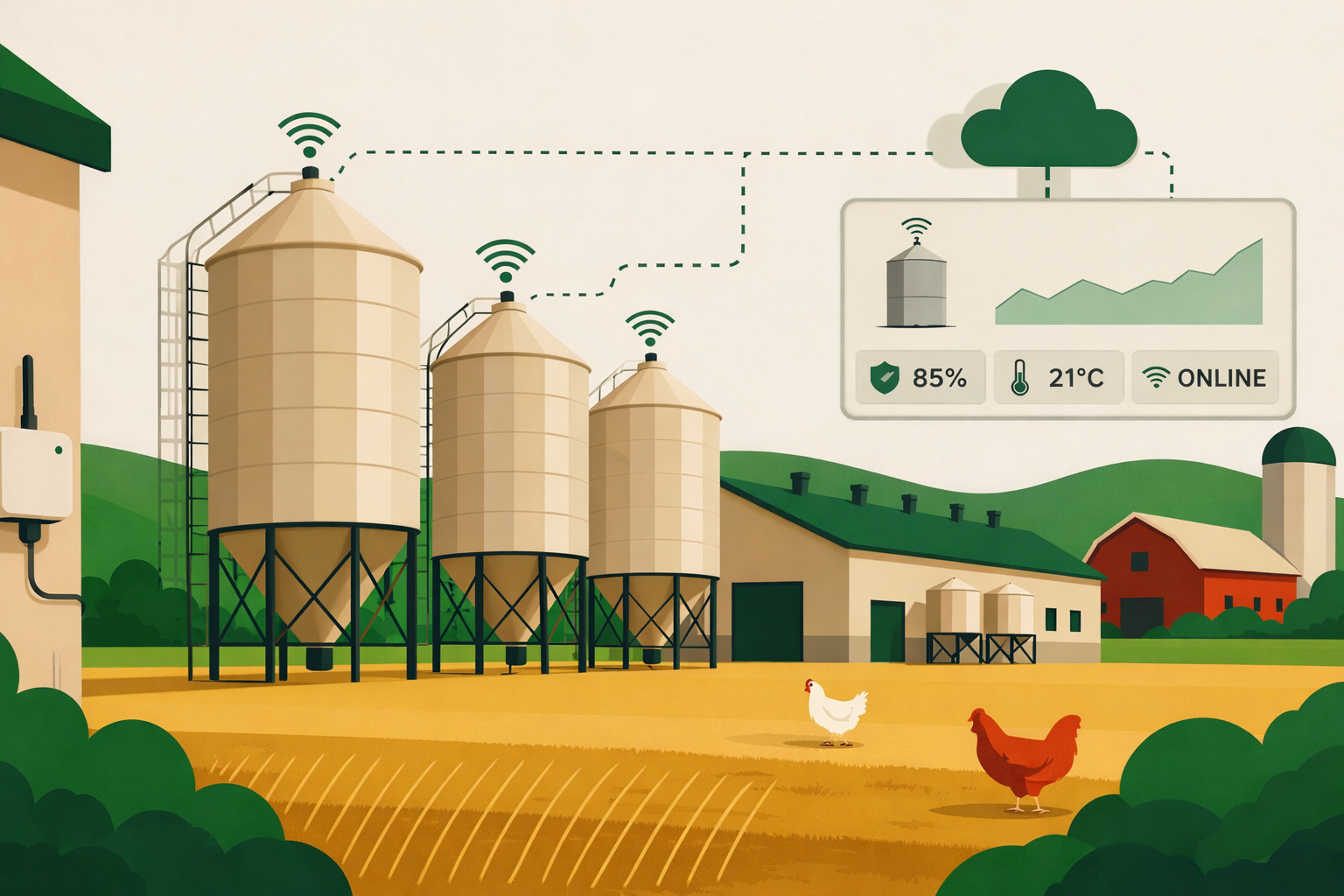
Camera weighing means that a camera placed above the flock watches the birds, and image-analysis software estimates their weight from the size and shape of the silhouette. The birds don’t have to be caught or driven onto a scale — the measurement happens by itself, in the background, while the birds walk the house as normal. From many observations through the day, an average flock weight and a picture of its uniformity are built. It is a precision-farming tool that shows daily how the flock is growing.
Why weigh poultry with a camera?
The reason is simple: you want to know how the flock is growing without stressing the birds or losing time on it. Classic weighing of a sample on a platform scale gives a point-in-time picture and can be biased, because the bolder, heavier birds tend to step onto the scale. A camera watches many birds continuously, so it gives a daily growth curve and shows uniformity better — that is, whether the birds grow evenly or some fall behind. An early deviation from the expected weight is a signal that something is happening with feed, water, health or house conditions.
What the camera really shows about the flock
A camera is not just an “average weight”. From continuous observation it draws a picture of growth rate, uniformity and early signals that something is going wrong.
Weight estimation without a platform scale
The software judges a bird’s weight from the size and shape of its silhouette seen from above. There’s no need to catch the bird or drive it onto a platform — the measurement happens as the bird walks the litter normally. This removes the stress of catching and the manual work of weighing a sample.
A daily growth curve
From measurements day after day, a curve is built showing how the flock gains weight. It’s easy to see on it whether the birds keep the expected pace or there has been a slowdown somewhere. Such continuity is more valuable than a single weighing, because it shows a trend, not one point.
Flock uniformity
The camera watches many birds, so it shows not just the average but the spread of weights. The more uniform the flock, the better — large differences mean some birds are falling behind. Uniformity is an important measure of rearing quality and of the flock’s fitness for slaughter on a single date.
No sample bias
Bolder, heavier birds are more willing to step onto a classic scale, so the sample can be overstated. The camera watches the birds wherever they happen to be, so it also covers the calmer, lighter ones. This gives a picture closer to the whole flock, not just its most active part.
Early detection of deviations
When the growth curve suddenly flattens or the weight departs from what was expected, it is a warning signal. It may mean a problem with feed or water, a disease, or poor house conditions. The earlier you notice it, the more time you have to react before it affects the whole cycle.
Measurement without interrupting the house
The camera measures in the background, independent of human presence, so there’s no need to enter the house just to weigh the birds. Fewer entries mean less stress for the flock and a lower risk of carrying germs in. The measurement happens continuously, even when no one is in the building.
Camera weighing step by step
- 1
Set what you expect from the measurement
Start with what you need body weight for: keeping an eye on growth rate, planning the slaughter date or catching problems early. A camera makes sense when you actually use this data in decisions. Write down how you weigh birds today and what you’re missing in that measurement.
- 2
Check how the system is calibrated
Estimating weight from an image relies on models fitted to the species, line and age of the birds. Ask the supplier which birds the system is set up for and how it copes in different rearing phases. It helps if it can be referred to periodic control weighing, so you’re sure the readings stay true to reality.
- 3
Match the camera mounting to the house
What counts is whether the camera covers a representative part of the house and has good, even lighting. Shaded corners, a smeared lens or the wrong height worsen the reading quality. Plan the mounting so the camera “sees” a typical area of the flock, not just one untypical spot.
- 4
Read the curve, not a single reading
The camera’s strength is continuity, so look at the trend day after day, not at one point. Compare the actual curve with the expected one for the given line and age and react to deviations, not to a single fluctuation. It is the trend that tells the truth about how the flock grows.
- 5
Combine weight with other observations
Weight alone won’t point to the cause of a problem — only set against feed, water, temperature and observation of the birds does it form a picture. When the curve flattens, check feed and water intake and house conditions. Weight is the most sensitive indicator, but you’ll draw the conclusion only together with the rest of the data.
- 6
Use the data for decisions and records
Daily weight is useful not only in the moment but for planning the slaughter date and for rearing records. Note the course of the curve and deviations, so after the cycle you can compare cycles with each other and draw conclusions. Data has value when you come back to it with the next flock.
Frequently asked questions about camera weighing of poultry
Is a camera more accurate than a platform scale?add
Accurate in a different way. A platform scale gives a precise measurement of the birds that stepped onto it, but the sample can be biased — bolder, heavier birds tend to step on. A camera watches many birds continuously, so it reflects the whole flock and its uniformity better, although a single reading is an estimate, not a weighing to the gram. In practice the two approaches complement each other well, and periodic control weighing helps make sure the camera’s readings stay true to reality.
Does camera weighing stress the birds?add
No, and that is one of its main advantages. The measurement happens as the birds walk the litter normally — they don’t have to be caught or driven onto a platform. The camera works in the background, independent of human presence, so the house needs to be entered less often just to weigh the flock. Fewer entries mean less stress for the birds and a lower risk of carrying germs in from outside.
Why do I need a daily growth curve?add
Because it shows a trend, not a single point. When you see weight day after day, it’s easy to notice whether the flock keeps the expected pace or there has been a slowdown somewhere. A flattening of the curve or a departure from the expected weight is an early signal that something is happening with feed, water, health or house conditions. The earlier you catch it, the more time you have to react before it affects the whole cycle.
Will a camera replace traditional weighing?add
It’s best treated as a complement, not a full replacement. A camera gives a daily, continuous picture of the flock’s growth and uniformity without stress, which manual sample weighing won’t provide. Periodic control weighing can still be useful to refer the camera’s readings to actual weight and be sure the system is well calibrated. Together they give a fuller, more reliable picture than either does alone.
Record weight measurements in DlaFerm.pl
In DlaFerm.pl, next to the flock card, you note body weight, the course of rearing and house equipment, including cameras and sensors — all in one place. Create a free account or write to us.
Phone
+48 796 258 151