Evaporative cooling and fogging in poultry houses — how it works and when to use it
On hot days poultry overheat — birds have no sweat glands and cool themselves mainly by panting, which has limits. We explain how evaporative cooling works, how cooling pads differ from fogging, and how to use both systems to lower house temperature without wetting the litter.
verifiedFrom the team that has organised work on poultry farms for years.
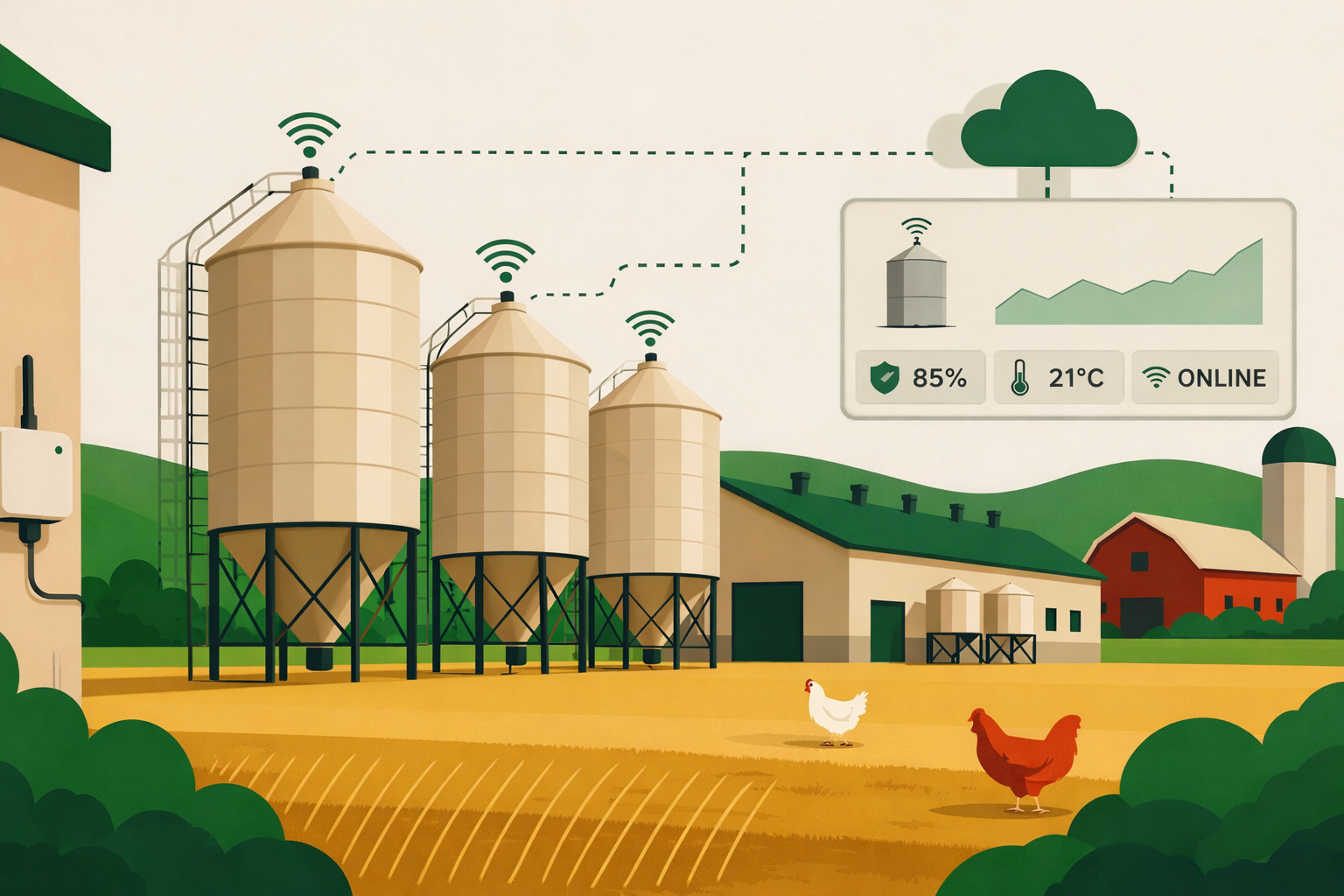
When outside temperatures exceed 25–28°C, house temperature can climb significantly higher. Birds start panting, eat less, grow more slowly and laying performance drops. In extreme heat, when house temperature stays above 35°C for extended periods, mass mortality can occur — particularly in heavy broilers in the final phase of rearing, which produce a lot of metabolic heat. That is why evaporative cooling is now standard practice on modern poultry farms.
Why do birds cope so poorly with heat?
Humans cool down by sweating — water evaporates from the skin and carries heat away. Birds have no sweat glands. The only effective way for them to shed excess heat is accelerated breathing — panting with an open beak. This has limits: intensive panting is energy-costly and can cause acid-base imbalances in the blood. Lowering house air temperature therefore directly protects the flock and production performance. For more on how birds respond to temperature see the guide on temperature and humidity in the poultry house.
How evaporative cooling works — a brief explanation
When water evaporates, it absorbs heat from its surroundings. This is the same principle that makes sweat cool skin — evaporating water carries away thermal energy. In evaporative cooling, this property is used to cool the air entering the house: hot air passes through a wet element (a pad or mist) and exits cooler. The key condition: the drier the incoming air, the more efficiently evaporation works. In high-humidity conditions water evaporates poorly and the cooling effect is reduced.
How evaporative cooling works — three elements of the system
Effective evaporative cooling combines a wet cooling element, ventilation that drives air through it, and a controller that prevents humidity from going too high.
Evaporating water removes heat from the air
This is the basic physical principle: evaporation absorbs thermal energy. Hot, dry air passing through a wet pad or mist gives up some of its heat to evaporate the water — and exits on the other side cooler. The effect is greater the drier the incoming air. In dry, hot air (typical of a hot summer) temperatures can drop by 5–10°C or more. In already humid air the difference is smaller because water evaporates less readily. This is why these systems work well in continental climates and less effectively in coastal ones.
Tunnel ventilation draws air through the pad
Evaporative cooling pads are installed at one end of the house (air inlet) and exhaust fans are placed at the other end (air outlet). The fans create negative pressure that draws air along the full length of the house — this is tunnel ventilation. As a result, outside air must pass through the wet pads before it reaches the birds' zone. For more on ventilation itself see the guide on poultry house ventilation — broilers.
The climate controller monitors temperature and humidity
The controller monitors temperature and humidity in the house. When temperature exceeds a set threshold (e.g. 28°C), it activates the pump that wets the pads or runs the foggers. When humidity approaches the upper limit (e.g. 70–75%), the controller reduces or switches off wetting to prevent litter from getting wet. This ensures cooling operates only when it actually helps — and does not lead to condensation or wet litter. Details in the guide on climate controllers in poultry houses.
Cooling pads versus fogging — the differences
These are two different approaches to cooling air through water evaporation. They have different installation locations, different applications, and different ventilation requirements.
Evaporative cooling pads
Porous pads made of cellulose or plastic (typically 10–15 cm thick) are installed in the air inlet openings of the house. A pump continuously wets the pads with water from the top, which flows down through the porous structure. Hot outside air passes through the wet pad — water evaporates, the air cools, and it enters the house several degrees cooler. Pads work in conjunction with tunnel ventilation: the faster the airflow through the pad, the better the cooling effect. If airflow is too slow the pad may not transfer enough heat. They require regular cleaning to remove scale and algae.
Fogging — high-pressure nozzles
Nozzles are installed inside the house (under the ceiling or along the walls). A high-pressure pump (typically 40–70 bar) atomises water into very fine droplets — so small that they evaporate before reaching the litter or birds. Evaporation absorbs heat from the air and cools it. Fogging can be used even in houses without tunnel ventilation, but it requires high water quality and fine nozzles to avoid wetting the litter. With too-coarse droplets, water falls onto the litter instead of evaporating.
Which system to choose?
Cooling pads work better in new tunnel-ventilated houses — they deliver a predictable, uniform cooling effect without the risk of wetting. Fogging is easier to retrofit in older houses without tunnel ventilation and can supplement pads in extreme heat. Both systems can work together. The key limitation is the same for both: at high external humidity the cooling effect diminishes and wet litter risk increases — so the controller should always monitor humidity. More on heating costs in the guide on poultry house heating — costs.
When to switch on cooling and how to avoid too much water
Evaporative cooling works best under specific conditions. Three key rules for safe use — to cool the house without wetting the litter.
Switch on cooling when temperatures are high and humidity is low
Optimal conditions for evaporative cooling are high temperature and low outdoor humidity — water evaporates easily and the effect is large. In practice the climate controller activates cooling when house temperature exceeds a set threshold (e.g. 28–30°C) and reduces or stops it when humidity approaches the limit (e.g. 70%). Do not leave the system in manual mode all day — at night the air is often cooler and more humid, reducing the need for cooling and increasing wet litter risk.
Monitor water quality and keep the system clean
Limescale blocks fogging nozzles and clogs pad pores — efficiency drops, and a blocked nozzle produces large droplets instead of fine mist, which fall onto the litter. Evaporative pads need regular flushing and periodic algae removal (algae grow on wet pads exposed to light). A water treatment station or pre-filtration protects nozzles and pads and extends their service life. Servicing frequency depends on local water hardness.
Watch the litter and birds — they are the best indicators
Wet litter is a sign that the system is adding too much water for the current humidity and temperature. It can also indicate nozzle droplets that are too coarse (fogging) or insufficient airflow (too little ventilation through the pads). Birds crowded near the fans and panting indicate that cooling is not keeping up — check whether the pads are uniformly wet, whether nozzles are blocked and whether ventilation is running at full capacity. More on wet litter consequences in the guide on wet litter — causes and effects.
The most common mistakes with evaporative cooling
Situations where cooling instead of helping can harm the flock or cause litter problems.
Switching on cooling when humidity is already high
When house humidity is above 70–75% water evaporates poorly — the cooling effect is negligible and wet litter risk is high. The controller should automatically reduce wetting when humidity is already high. In manual mode a farmer can inadvertently pump water into the house instead of cooling the air.
Neglecting pad and nozzle cleaning
Blocked fogging nozzles produce coarse drops instead of fine mist, which fall onto the litter. Clogged pad pores reduce airflow and cooling effect. Algae growing on the pads can also cause odours and deteriorate air quality. Cleaning once per season — and more often in areas with hard water — is essential.
Not synchronising with ventilation
Evaporative pads without sufficient tunnel ventilation simply do not work — air must be drawn through the pad for any cooling effect to appear. If exhaust fans run below capacity or some curtains are open (air enters from the sides instead of through the pad), the system loses efficiency. Always check that ventilation is fully operational before assessing pad performance. More in the guide on poultry house ventilation — broilers.
Ignoring night-time conditions
At night temperatures drop and humidity rises. Cooling left on automatically overnight may not cool but instead humidify the house. A good climate controller should respond to actual temperature and humidity rather than just time of day. If the controller lacks this function, consider switching the system off at night or setting appropriate schedules. Details in the guide on climate controllers in poultry houses.
Frequently asked questions about evaporative cooling
What is evaporative cooling and how does it work?add
Evaporative cooling is a method of cooling air through water evaporation. When water evaporates it absorbs heat from its surroundings — the same way sweat cools skin. In a poultry house, hot outside air passes through a wet cooling pad or water mist, gives up heat to evaporate the water, and enters the house cooler. The effect is greater when the air is drier — at low humidity temperatures can drop by several degrees.
What is the difference between cooling pads and fogging?add
Cooling pads are porous panels installed at the air inlet — air is drawn through the wet pad by tunnel ventilation. Fogging uses nozzles mounted inside the house that spray a very fine water mist; the mist evaporates in the air and cools it. Pads are generally more predictable and efficient with good tunnel ventilation. Fogging is easier to retrofit in older houses and can be used as a supplement.
When does evaporative cooling not work well?add
At high air humidity (above 70–75%) water evaporates poorly and the cooling effect is small. Under these conditions the system may humidify the house and litter instead of cooling. The climate controller should monitor humidity and limit wetting when it is already high. Evaporative cooling works best on hot, dry days.
Can evaporative cooling cause wet litter?add
Yes — if the system is incorrectly set or activated when humidity is already high. In fogging, droplets that are too coarse fall onto the litter instead of evaporating. With pads, incorrect ventilation configuration may not keep the litter dry. Monitoring humidity with the controller and regularly checking litter condition are essential. See the guide on wet litter — causes and effects.
By how many degrees can house temperature be reduced?add
Under favourable conditions (dry, hot outside air) effective evaporative cooling can reduce air temperature by 5–10°C or more. In practice this depends on outdoor humidity, the condition of the pads or nozzles, and ventilation capacity. In the Polish climate a typical summer reduction is around 3–8°C compared to outside temperature.
How often should cooling pads be cleaned?add
At minimum once per season, before the hot weather period begins. In areas with hard water more often, to remove scale that blocks pad pores. Algae should be removed mechanically or with products approved for use in poultry houses. A good practice is also cleaning the pads after each production cycle, during the break between flocks.
Monitor temperature and humidity in your house with DlaFerm.pl
Want to record temperature, humidity and cooling system operation in one place? Create a free farm account or write to us.
Phone
+48 796 258 151