Aviary system for laying hens — how it works
An aviary is a laying hen house with multiple tiers — perches, platforms and nest boxes stacked above the floor — so hens have much more space to live within the same building footprint. We explain how it works, what you gain and what to watch out for.
verifiedFrom the team that has organised work on poultry farms for years.
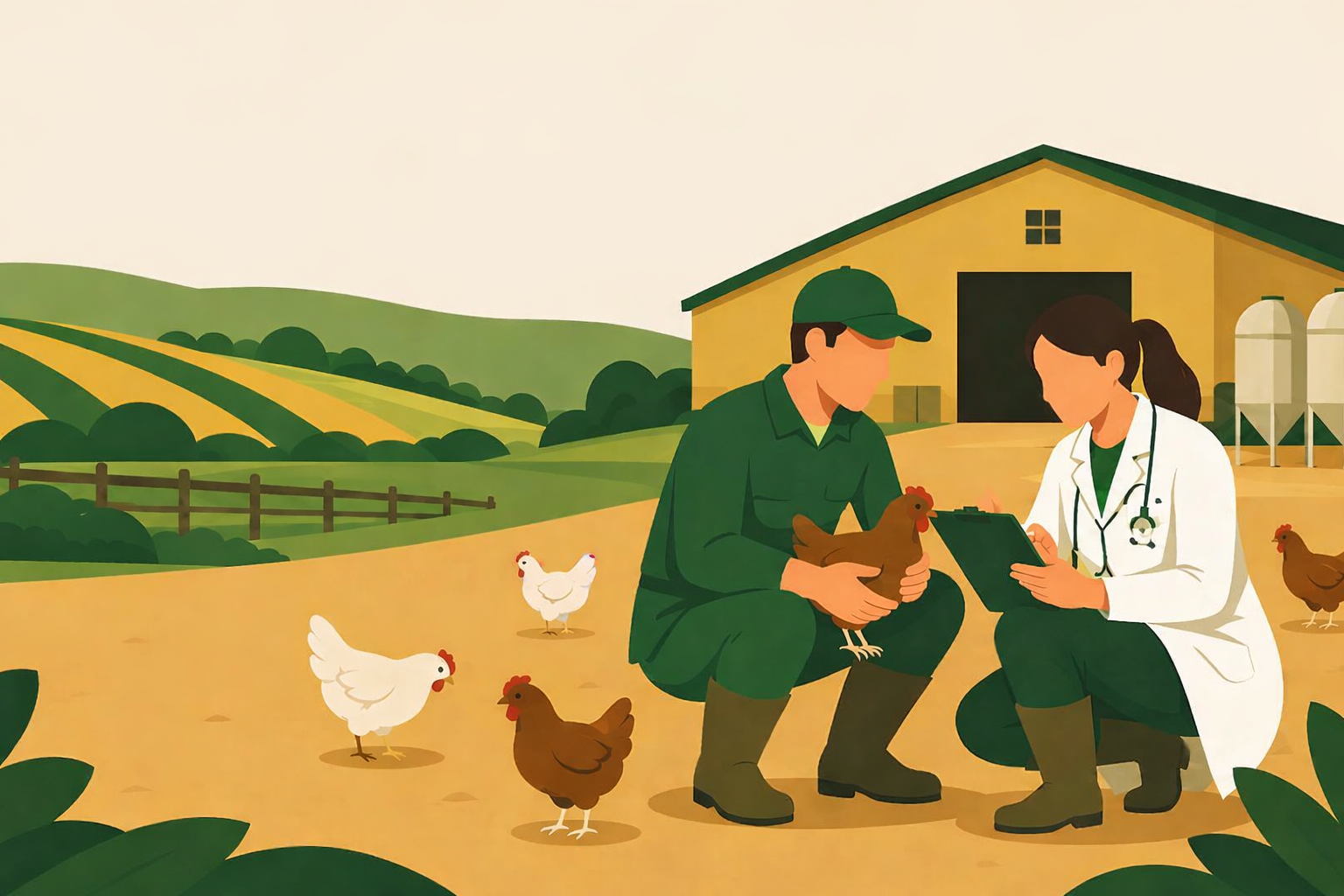
The way a laying hen is kept — the space available, access to litter and perches, the ability to walk and jump — directly affects her health, production performance and compliance with animal welfare regulations. The aviary system is today one of the most widespread ways to house laying hens in closed buildings, sitting between the old battery cage and free-range production.
How does an aviary differ from floor housing?
In floor housing hens live only at floor level. In an aviary the house has multiple tiers — platforms stacked one above another — that hens can walk, jump up to and climb down from freely. This means the same floor area can accommodate far more hens, while each hen has access to more space for natural behaviours. A comparison of housing systems is in the guide on cage, floor and aviary housing — differences.
Where do the numbers in this guide come from?
Stocking density figures (indicatively up to about 9 hens per square metre of usable area) are based on EU welfare legislation (Council Directive 1999/74/EC and national implementing rules). The number of tiers and aviary layout depend on the equipment manufacturer and house type — we give typical values that may differ between systems. Treat them as reference points, not fixed rules.
What an aviary is made of — three zones
Every aviary has three distinct zones corresponding to the natural needs of laying hens: feeding and rest at height, nest boxes for egg laying, and litter on the floor for scratching.
Upper tiers — feeders, drinkers, perches and nests
On the platforms stacked one above another (typically two to four tiers, depending on the system) you find feeders, drinkers and perches — bars on which hens sit and sleep. Nest boxes are also here: darkened compartments fitted with a belt conveyor that transports eggs automatically to the grading room. Nest darkening matters — a hen is far more likely to lay in a dark, quiet nest, which reduces floor eggs. More on mechanical egg collection in the guide on egg collection systems in laying hen production.
Transitions between tiers — ramps and mesh floors
Hens do not fly straight up — they move via ramps (inclined walkways) or through openings in the mesh that forms the tier floors. Ramps must be wide enough and have a non-slip surface so hens can go up and down safely. Critically: hens need to learn to use the tiers before entering the production house — pullets reared on a flat floor may not know they can jump up. Rearing in aviary conditions from day one is the best solution.
Litter zone — the house floor beneath the aviary
The floor beneath the aviary structure is covered with litter (straw, wood shavings or similar material). This is where hens scratch, dust-bathe and perform species-typical behaviours. Good litter is dry, friable and a few centimetres deep — wet or compacted litter increases disease risk and floor egg rates. The litter area in an aviary is smaller than in full floor housing, making litter quality management especially important.
What you gain by choosing an aviary for laying hens
The aviary system combines higher stocking density than floor-only housing with better welfare than a traditional battery cage.
More hens in the same building footprint
In an aviary, what counts is not just the house floor area but the total usable area across all tiers — platforms, ramps and nest boxes together. EU regulations allow indicatively up to about 9 hens per square metre of this total usable area. This means a given house can hold significantly more hens than floor housing while still meeting welfare requirements, improving the economics of production at the same fixed costs.
Clean eggs collected mechanically
Aviary nest boxes are darkened and fitted with belt conveyors that move eggs as soon as they are laid — before another hen enters and soils them. Floor eggs (laid on the litter) are dirty, often cracked, and harder to sell. An aviary significantly reduces floor egg rates compared with floor housing, provided the lighting programme and nest design are correct.
Natural behaviours and better welfare
Hens in an aviary can do what they are built to do: scratch in litter, dust-bathe, sit on perches and move between levels. This reduces stress, aggression and feather pecking — problems that were severe in traditional battery cages. EU legislation has banned battery cages since 2012; the aviary is one of the compliant alternatives. Learn more in the guide on poultry welfare and welfare payments.
What to watch out for in an aviary system
An aviary has specific challenges that require active management — especially at the start when hens are learning the new environment.
Floor eggs — hens laying on the litter
The main operational challenge in an aviary is floor eggs — eggs laid on the litter rather than in nests. They are dirty and must be collected by hand. Their rate depends on lighting (hens go to nests early in the morning, so light must rise gradually), nest darkening, the number of nests per hen and whether hens have been reared in aviary conditions. More on egg collection in the guide on egg collection systems.
Hens must know how to use the tiers — rearing matters
A hen reared on a flat floor does not instinctively know she can jump to an upper tier. That is why pullet rearing should take place in aviary conditions or at least with perches and ramps, so birds learn to jump before they enter the production house. Placing floor-reared pullets into an aviary typically increases floor egg rates and injury risk. More on pullet rearing in the guide on laying hen management.
Dust, ammonia and ventilation
Aviaries generate more dust than cages — hens scratch in litter, jump between tiers and shed feathers. Higher dust levels mean higher ammonia and pathogen concentrations in the air, which can affect both hen health and worker safety. Good ventilation (with the right airflow rate and temperature) is an absolute priority. Poor ventilation can negate all the welfare benefits of the aviary system.
The most common mistakes in aviary housing
A few things that prevent an aviary from working as well as it should.
Placing floor-reared pullets into an aviary production house
If pullets grew up on a flat floor without perches or tiers, they will be disoriented in the aviary — more stress, more floor eggs, more injuries from jumping. Rearing should always match the production system. If aviary rearing is not possible, provide at least perches and ramps in the rearing pen.
Poor lighting programme and nest design
Hens lay early in the morning. If the house is too bright at dawn before nests are sufficiently dark, hens will lay on the litter. The lighting programme must be carefully set: a slow ramp-up of light intensity, adequate nest darkening around the clock, and enough nest spaces per hen (indicatively one nest per about 6–8 hens, depending on the system manufacturer). Insufficient nest darkening is one of the most common causes of high floor egg rates.
Frequently asked questions about the aviary system for laying hens
What is an aviary system for laying hens?add
An aviary system is a way of housing laying hens in a building with multiple tiers — platforms, ramps and nest boxes stacked above the floor. Hens can move freely between tiers, scratch in the litter below and sit on perches. Multiple tiers allow the same house to hold more hens while meeting welfare requirements.
How many hens can be kept per square metre in an aviary?add
In an aviary what matters is the total usable area across all tiers — platforms, nests and ramps — not just the house floor area. EU regulations allow indicatively up to about 9 hens per square metre of that total usable area. The exact figure depends on the system design and applicable national legislation.
How does an aviary differ from floor housing?add
In floor housing hens live only at floor level. In an aviary the house has multiple tiers that hens can walk and jump between freely. An aviary can hold more hens in the same building footprint and provides access to perches and nest boxes that simple floor housing typically lacks.
What are floor eggs and how can they be reduced?add
Floor eggs are eggs laid on the litter instead of in nests. They are dirty and harder to sell. They can be reduced by: properly darkened nests, a well-designed lighting programme (slow morning ramp-up), enough nests per hen, and pullets reared in aviary conditions so they know how to use the tiers and where to find nests.
Does an aviary meet EU welfare requirements?add
Yes. An aviary meets the requirements of the EU Laying Hens Directive (1999/74/EC), which banned traditional battery cages from 2012. Hens in an aviary have access to litter, perches and nest boxes — the three elements required by welfare legislation. More on payments and requirements in the guide on poultry welfare and welfare payments.
Why does pullet rearing matter for an aviary?add
Hens reared on a flat floor do not know instinctively how to use the tiers of an aviary — they may be disoriented, lay more eggs on the litter and suffer more injuries. Rearing should take place in conditions that match the production system: with perches, ramps and tiers. A pullet that has learned to jump as a young bird will adapt much better to the aviary production house.
Track your laying flock in DlaFerm.pl
Want to record production results, flock health and floor egg rates in one place? Create a free farm account or write to us.
Phone
+48 796 258 151