Poultry diseases: symptoms you can't afford to miss
Recognising symptoms early is the difference between containing a problem and losing an entire flock. This guide covers the most common poultry diseases, their key warning signs, and tells you when to call the vet immediately.
verifiedFrom the team that has organised work on poultry farms for years.
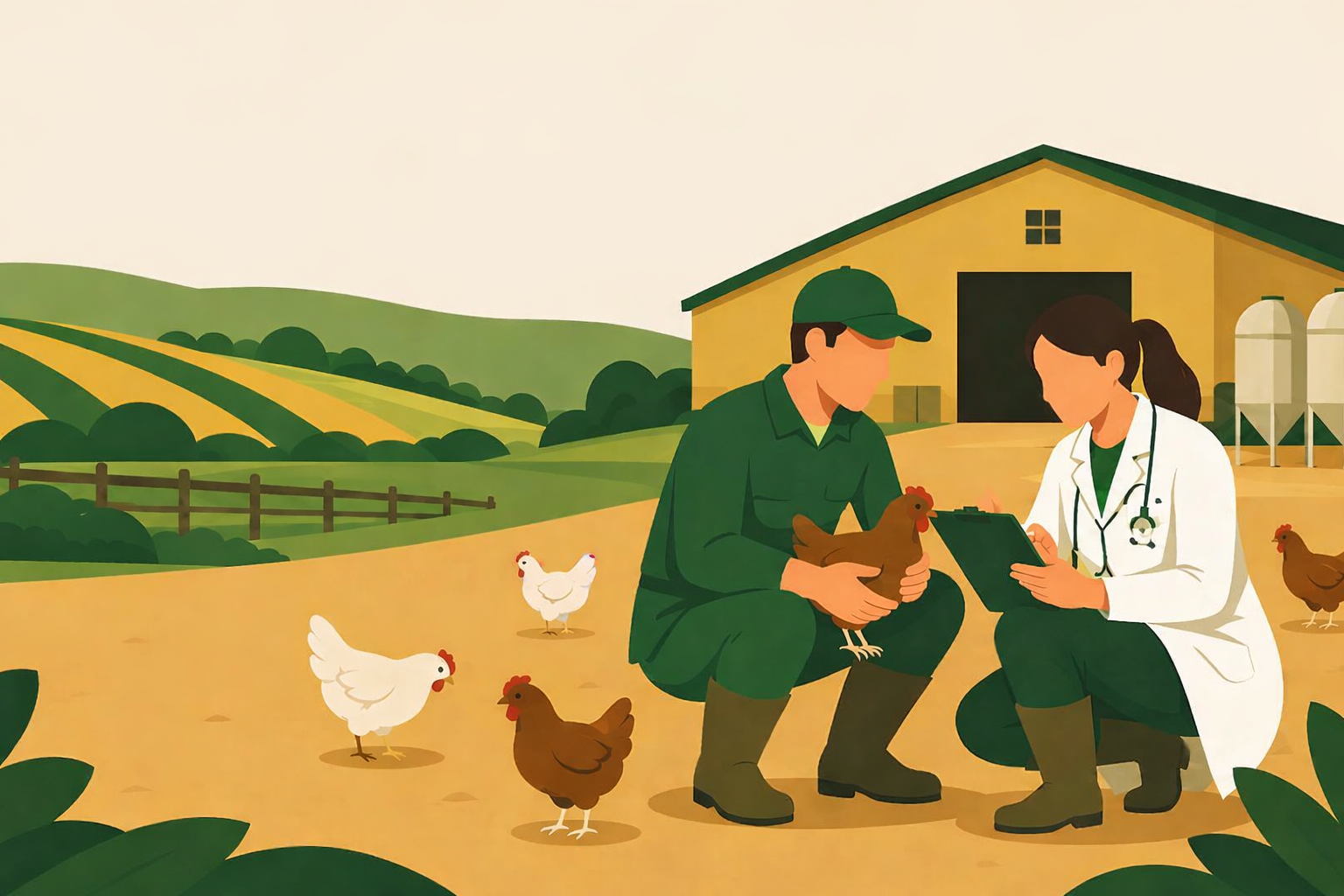
Why knowing poultry disease symptoms matters so much
Poultry hide illness — birds can look perfectly normal until a disease is well advanced. A farmer who observes their flock every day and knows the typical signs of the most dangerous diseases has a real chance of acting within hours rather than days. Time is critical: with infectious diseases such as avian influenza (HPAI) or Newcastle disease (ND), every hour of delay can mean the virus spreads to more buildings.
Notifiable diseases — mandatory reporting
Some poultry diseases in Poland are subject to compulsory notification to the Veterinary Inspection service. These include, above all, highly pathogenic avian influenza (HPAI) and Newcastle disease (ND). A farmer who notices symptoms suggesting either disease must contact the district veterinary officer immediately — before any diagnosis is confirmed. Delay can result in criminal and civil liability. Do not self-diagnose: the symptoms described below are a guide, but the final diagnosis must come from a veterinary surgeon.
How to monitor your flock — and when to call the vet
Daily flock observation is best done according to a fixed routine: bird activity, feed and water consumption, appearance of droppings, feather condition, presence of dead birds. Any sudden change — a sharp rise in mortality, refusal to eat, disorientation, cyanosis of the comb, bloody diarrhoea — is a red flag. Call the vet the same day; don't wait until morning. If you suspect HPAI or ND, call immediately and halt all movement on the farm.
Links to detailed guides
This article is an index — a brief overview of each disease. Detailed guides can be found at: Coccidiosis in broilers, Salmonella on a poultry farm, CRD / Mycoplasmosis in poultry, Colibacillosis in poultry (E. coli), Avian influenza (HPAI), Newcastle disease — symptoms (ND).
The most common poultry diseases and their key symptom
Each card describes one disease and the alarm sign that should prompt the farmer to act immediately.
Avian influenza — HPAI (notifiable)
Sudden, mass mortality — often tens of percent of the flock within 24 hours. Cyanosis and swelling of the head, comb and wattles, haemorrhages on the skin of the legs, dramatic drop in egg production. Key symptom: deaths in apparently healthy birds with no prior signs. Mandatory notification to the Veterinary Inspection service. Details: Avian influenza (HPAI).
Newcastle disease — ND (notifiable)
Neurological signs: head twisting (torticollis), circling, wing and leg paralysis. Accompanied by a sharp drop in egg production, green watery diarrhoea, and laboured breathing. Key symptom: sudden deaths with neurological signs. Mandatory notification. Details: Newcastle disease (ND).
Coccidiosis
Bloody or chocolate-brown diarrhoea in chicks aged 3–6 weeks. Birds are lethargic, huddled, stop eating and drinking, feathers ruffled. Key symptom: visible blood in faeces with mass weakness across the flock. Details: Coccidiosis in broilers.
Salmonellosis
Poultry may show no clinical signs (asymptomatic carriage), which makes this disease particularly dangerous for consumers. In active infection: diarrhoea, increased thirst, weakness, elevated mortality. Key symptom: no visible clinical changes despite a positive test result. Details: Salmonella on a poultry farm.
CRD / Mycoplasmosis (Mycoplasma gallisepticum)
Chronic respiratory disease: coughing, rattling, sneezing, nasal and ocular discharge (foam eye), laboured breathing. Symptoms worsen in cold temperatures and poor ventilation. Key symptom: widespread rattling audible the moment you enter the poultry house. Details: CRD / Mycoplasmosis in poultry.
Colibacillosis (E. coli)
E. coli is ubiquitous, but when immunity is compromised it causes yolk sac infection in chicks, pericarditis and airsacculitis in older birds, and salpingitis in laying hens. Key symptom: elevated chick mortality in the first week of life with a swollen, unabsorbed yolk sac. Details: Colibacillosis in poultry.
Gumboro disease (IBD)
The Gumboro virus primarily attacks birds between 3 and 6 weeks of age and damages the Bursa of Fabricius — the central immune organ. Symptoms: sudden weakness, whitish diarrhoea, dirty feathers around the cloaca, muscle tremors. Key symptom: dehydration and sudden mortality in chicks of that age group, followed by secondary infections due to suppressed immunity.
Marek's disease
A herpesvirus disease causing peripheral nerve paralysis and tumours (lymphomas) in internal organs. Signs include paralysis of one or both legs (the "splits" posture) or a wing, and graying of the pupil (blindness). Key symptom: asymmetric limb paralysis in birds 6–20 weeks of age. The main protection is vaccination of chicks at the hatchery.
What increases the risk of disease outbreaks on a poultry farm?
Knowing the risk factors lets you prevent problems before treatment becomes necessary.
Poor biosecurity
The absence of clean/dirty zones, neglected disinfection mats, and uncontrolled access are the most common routes for introducing a pathogen. Every new person and every vehicle can carry a virus or bacterium. The DlaFerm.pl QR entry log helps control farm access.
Stress and overcrowding
Excessive stocking density, sudden temperature changes, poor watering and inadequate ventilation weaken the birds' immune system and open the door to opportunistic infections such as CRD and colibacillosis.
Wild birds and rodents
Wild birds — especially migratory waterfowl — are the main reservoir of the HPAI virus. Rodents carry salmonella and other bacteria. Securing ventilation openings with mesh, regular rodent control, and removing water bodies near poultry houses are essential.
Absent or ineffective vaccination
Marek's disease, Gumboro, ND and many other diseases are effectively controlled through vaccination. Skipping the vaccination programme or executing it incorrectly (e.g., improper vaccine storage) almost guarantees an outbreak on first contact with the pathogen.
Introducing new birds without quarantine
New birds can carry pathogens while appearing healthy. A quarantine of at least 21 days in a separate building, with clinical observation and optional laboratory testing, significantly reduces this risk.
Neglected records and veterinary care
Without regular veterinary visits and records of daily mortality, it is impossible to detect a trend early. DlaFerm.pl enables digital flock cards with mortality logs, treatment records and withdrawal periods — available to the vet remotely at any time.
Frequently asked questions about poultry diseases
How do I tell HPAI apart from Newcastle disease (ND)?add
Both cause high mortality and respiratory signs, but ND more often produces clear neurological signs (torticollis, circling, paralysis), while HPAI is characterised by haemorrhages on unpigmented skin of the legs and extremely rapid, mass deaths. A definitive distinction is only possible through laboratory tests by the Veterinary Inspection service. In both cases, immediate notification is mandatory.
Am I required to report every poultry disease?add
Not every disease, but notifiable diseases — in Poland primarily HPAI and ND — must be reported to the district veterinary officer without delay, even if the suspicion has not been confirmed. The list of notifiable diseases is set out in national and EU legislation.
What should I do if I suspect HPAI or ND?add
Call the district veterinary officer immediately. Stop all movement of people and vehicles to and from the farm. Do not remove dead birds or transport live birds. Isolate the flock and wait for the Veterinary Inspection to arrive. The time of notification is recorded and may matter for any compensation claims.
How does DlaFerm.pl help with flock health documentation?add
DlaFerm.pl offers a digital flock card with daily mortality logs, treatment records, withdrawal period tracking, and a QR entry log. This gives the farmer a complete flock history in the app, and the vet can review the data remotely before a visit or during an Inspection audit.
Can coccidiosis break through even with coccidiostats in the feed?add
Yes. Resistance of coccidia to coccidiostats is well documented. Moreover, stress, poor watering, or excessive stocking density can overcome chemoprophylaxis. In such cases, treatment with toltrazuril or similar drugs under veterinary supervision is necessary. Rotation of coccidiostats across successive production cycles reduces the risk of resistance.
Is vaccination against Marek's disease enough?add
The vaccine protects against clinical signs and tumours but does not prevent infection with the virus. A vaccinated bird can still carry and shed the virus. It is therefore critical that ALL chicks are vaccinated at the hatchery — a single unvaccinated source can infect the entire flock.
Sources & resources
- linkNational Veterinary Research Institute (PIWet) Puławy — poultry diseases
- linkChief Veterinary Inspectorate (GIW) — infectious poultry diseases
- linkEFSA — risk assessment and monitoring of poultry diseases in the EU
- linkWOAH (OIE) — codes and definitions of notifiable poultry diseases
- linkKRD-IG — Polish Poultry Council Industry Chamber
- linkEuropean Commission — Regulation EU 2016/429 (Animal Health Law)
Monitor flock health with DlaFerm.pl
Want to see the digital flock card in action or have a question about the app? Write to us.
Phone
+48 796 258 151