Sensors and flock monitoring — what and how to measure
Monitoring means continuously measuring house conditions and flock behaviour to catch problems early — before you can see them with the naked eye. We explain what to measure, how it works in practice, and where to start without overspending.
verifiedFrom the team that has organised work on poultry farms for years.
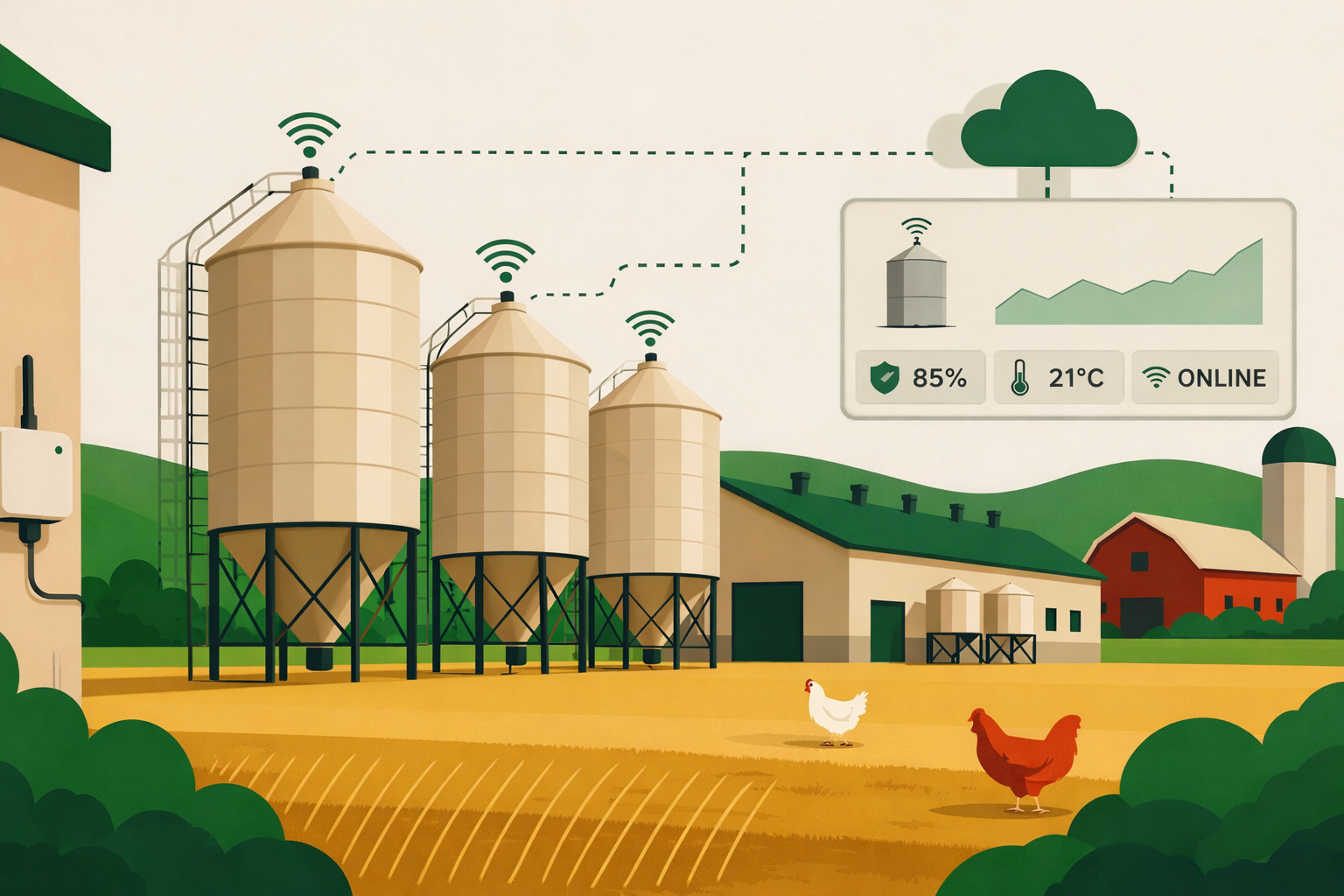
A farmer who visits the house once a day sees only what is visible to the naked eye. Birds that have been sick for hours, temperatures too high overnight, a sharp drop in water consumption — all of this happens between visits, and by the time you notice, it is often too late. Sensors and a monitoring system change this: they measure continuously, record history, and wake you with an alert before flocks start to suffer.
Is it complicated and expensive?
You do not need a full system from day one. The climate controller you already have in the house often measures temperature and humidity — that is already monitoring. Dedicated gas sensors (CO2, ammonia) and modules for measuring water consumption or feed silo levels are the next step. Start with the most important parameters for your species and build up over time. More on integrating sensors with the farm management system in the guide on IrZPLUS sensor integrations.
Where do the figures in this guide come from?
Environmental parameters (temperature, humidity, CO2, ammonia) are based on breed-line recommendations from Aviagen and Hendrix Genetics and on welfare standards (Directive 2007/43/EC). Water consumption as a health indicator is well established in veterinary literature — a sudden drop of 20–25% within 24 hours is a recognised warning signal. Figures are indicative and may vary by species, age, and farm conditions.
What is worth measuring in the poultry house
Not every parameter is equally important. Below are eight things a monitoring system can track — from the most important to useful additions as you expand.
Air temperature
Measured at several points along the house (along the axis and in the corners), because differences can reach several degrees — which matters a lot for chicks. A single sensor reading can be misleading. Optimal temperature changes with bird age and differs between species — details in the guides on broiler chick rearing and climate controllers in the poultry house.
Air humidity
Humidity that is too high promotes ammonia build-up, respiratory disease, and wet litter. Too low — it dries out litter and irritates airways. The recommended range is generally 50–70% — but always check the current guidelines for your species and bird age.
Carbon dioxide and ammonia (air quality)
Carbon dioxide (CO2) above approximately 3,000 ppm indicates poor ventilation. Ammonia (NH3) above 10–20 ppm irritates airways and lowers performance. These gases have no detectable smell at levels harmful to birds — a nose cannot replace a sensor. More on ventilation in the guide on climate controllers in the poultry house.
Water consumption
One of the most sensitive health indicators. A sudden drop in water consumption of 20–25% within 24 hours is often the first sign of disease — visible before birds look visibly ill. The system measures flow on the drinking lines and compares it with the norm for the age and number of birds. More in the guide on water consumption in broilers.
Feed silo level
A level sensor (load cell or ultrasonic) in the silo shows how much feed remains and allows deliveries to be planned in advance. A sudden spike in consumption or a halt in feed intake is a signal — a conveyor fault or a change in flock behaviour. Details in the guide on feed silo monitoring.
Feed consumption
Measured by a scale or a conveyor-speed counter. Allows daily intake to be tracked in real time and compared with the norm curve for the species and age. A deviation up or down without an obvious reason is worth investigating.
Bird weight
Automatic scales (platforms or in-line weighing points built into the feeding line) weigh birds without catching them. Comparison with the growth curve for the line allows early detection of slowing gains — before it affects final results. AI-driven growth analysis is described in the guide on AI on the poultry farm.
Light intensity
Too low an intensity in the first days inhibits chick feeding. A light sensor (lux meter) confirms that the lighting programme is running to plan — bulbs can lose output gradually, which is invisible to the naked eye.
From sensor to alert — how monitoring works in practice
Three links: the sensor collects data, the system processes and displays it, the alert informs you when a reading deviates from the norm.
The sensor measures and transmits data
A sensor (temperature, humidity, gas, flow meter) measures the chosen parameter and sends the reading to a climate controller or a separate farm management system. The connection can be wired (RS-485, 0–10 V) or wireless (Wi-Fi, LoRaWAN — particularly useful for silos located some distance from the house). Sensors need periodic calibration and cleaning — dust, ammonia, and moisture affect reading accuracy.
The system displays and records history
The climate controller or farm management platform shows current values and records history — often every few minutes throughout the whole cycle. History lets you check what happened overnight, compare cycles, and share data with a vet or adviser. In DlaFerm.pl you can view sensor and silo data in one place — more in the guide on IrZPLUS sensor integrations.
The alert acts before you do
When a value crosses a set threshold (e.g. temperature too high, water consumption too low), the system sends an alert — a siren in the house, an SMS to your phone, or a push notification. Alerts work at night and at weekends. This is the core value of monitoring: you do not have to stand watch at a control panel — the system does it for you and calls only when something genuinely deviates from normal.
Why monitoring — concrete benefits for the farmer
Monitoring is an investment. Below are the benefits farmers mention most often.
Early detection of disease or equipment failure
A drop in water consumption, rising ammonia, a temperature deviation — these signals appear hours before you can see a problem with the naked eye. Earlier response means lower losses, less antibiotic use, and better final flock results.
Feed and energy savings
Accurate records of feed use and temperature allow feeding and ventilation programmes to be optimised. A conveyor fault or large overnight temperature swings show up in the data — you can act before the costs mount.
Better welfare and flock performance
Birds kept in stable, controlled conditions grow more uniformly, have lower mortality, and achieve better meat yields. Monitoring supports compliance with welfare requirements (Directive 2007/43/EC) and makes audits easier.
Documentation and a digital audit trail
A measurement history is proof that housing conditions met the standards — useful for retail chain, veterinary, or insurance audits. Sensor data can also be compared across cycles to find patterns that improve results.
Peace of mind and fewer night visits
An SMS alert fires if something goes wrong at 3 a.m. Without monitoring, many farmers get up to check the house out of worry. With monitoring — you sleep, and the phone rings only when action is genuinely needed.
Feed delivery planning without surprises
A silo level sensor shows how much feed remains and when to order the next delivery. No more guessing, no expensive rush orders, and no flock waiting without feed.
The most common mistakes when setting up monitoring
A few things that stop a sensor investment from delivering the expected results.
Too few temperature sensors
A single sensor in the middle of the house can show a completely different value from one near the side wall or the air inlet. Larger houses need at least several sensors to get a real picture of temperature distribution. A standard climate controller often has one or two readings — in wider houses it is worth checking.
No calibration or cleaning
A gas sensor (CO2, ammonia) coated in dust or deposits can under-read or over-read. Calibration once a season (or as recommended by the manufacturer) and regular cleaning are fundamental to data reliability. Without this, the system sends false alarms or — worse — fails to send them when it should.
Alert thresholds set too loosely
An alert that fires only at 35 °C instead of 30 °C leaves too little time to react. Thresholds should be matched to species, bird age, and season. Too many false alarms cause farmers to start ignoring them — which cancels the whole value of the system.
Collecting data without analysing it
A monitoring system that collects data nobody ever looks at after a cycle is a wasted investment. Comparing water consumption, temperature, and weight results across cycles reveals patterns — what worked well, what could be improved. Data has value only when someone actually looks at it.
Frequently asked questions about poultry house monitoring
Which sensors should I start with in a poultry house?add
If you have no system yet, start with temperature (several points in the house) and water consumption. These two parameters give the fastest signal of a problem. You most likely already have a temperature sensor built into the climate controller — check whether the data is being recorded. A water flow meter is a relatively low-cost investment, and a sudden drop in water consumption is often the first sign of disease, visible before birds look visibly ill.
Why is water consumption such an important indicator?add
Birds drink regularly and in large amounts — a healthy flock has a predictable water intake pattern that increases with age. A sudden drop of 20–25% within 24 hours is a recognised warning sign: disease, a drinker line fault, poor water quality, or excessive heat. Water consumption reacts faster than bird behaviour that is visible to the naked eye. More on consumption norms in the guide on water consumption in broilers.
What is the difference between a climate controller and a monitoring system?add
A climate controller drives ventilation, heating, and curtains — it reacts automatically to maintain set parameters and, as a by-product, measures temperature and humidity. A monitoring system (farm management platform) collects data from the controller and other sensors, records history, sends alerts, and allows data to be compared across cycles. Both can work together. More in the guide on climate controllers in the poultry house.
How often do sensors need to be calibrated?add
It depends on the sensor type and working environment. Gas sensors (CO2, ammonia) in a poultry environment are best calibrated every 6–12 months or as recommended by the manufacturer. Temperature and humidity sensors need it less often, but it is worth checking readings after each house washdown and disinfection. The sensor manufacturer will give exact recommendations.
Does monitoring need permanent internet in the poultry house?add
The climate controller works locally — it does not need internet to control ventilation. Remote viewing and SMS alerts do require a network connection (GSM or Wi-Fi). LoRaWAN sensors (e.g. on silos some distance from the building) operate on a separate radio network with a range of up to several kilometres, without needing Wi-Fi. Details on integration options in the guide on IrZPLUS sensor integrations.
Will monitoring replace visits to the poultry house?add
No — and that is an honest answer. Sensors measure environmental parameters and flock behaviour metrics, but they do not replace the farmer who walks between the birds, assesses litter, listens to the flock, and spots subtle signs. Monitoring is a support tool — it catches deviations faster than a person and watches over the house at night and weekends, but a daily visit still makes sense.
Track flock monitoring and silo levels in DlaFerm.pl
Want sensor data, water consumption, feed levels, and alert history in one place? Create a free farm account or write to us.
Phone
+48 796 258 151