Medicators and water treatment — a clean drinker line
Water is the main route for giving medicines, vitamins, vaccines and acidifiers. Its quality feeds straight into the flock’s health and growth, and sediment in the drinker lines quickly becomes a nest for bacteria. We explain how a medicator doses a product in proportion to flow and how to treat the water before it reaches the birds.
verifiedFrom the team that has organised work on poultry farms for years.
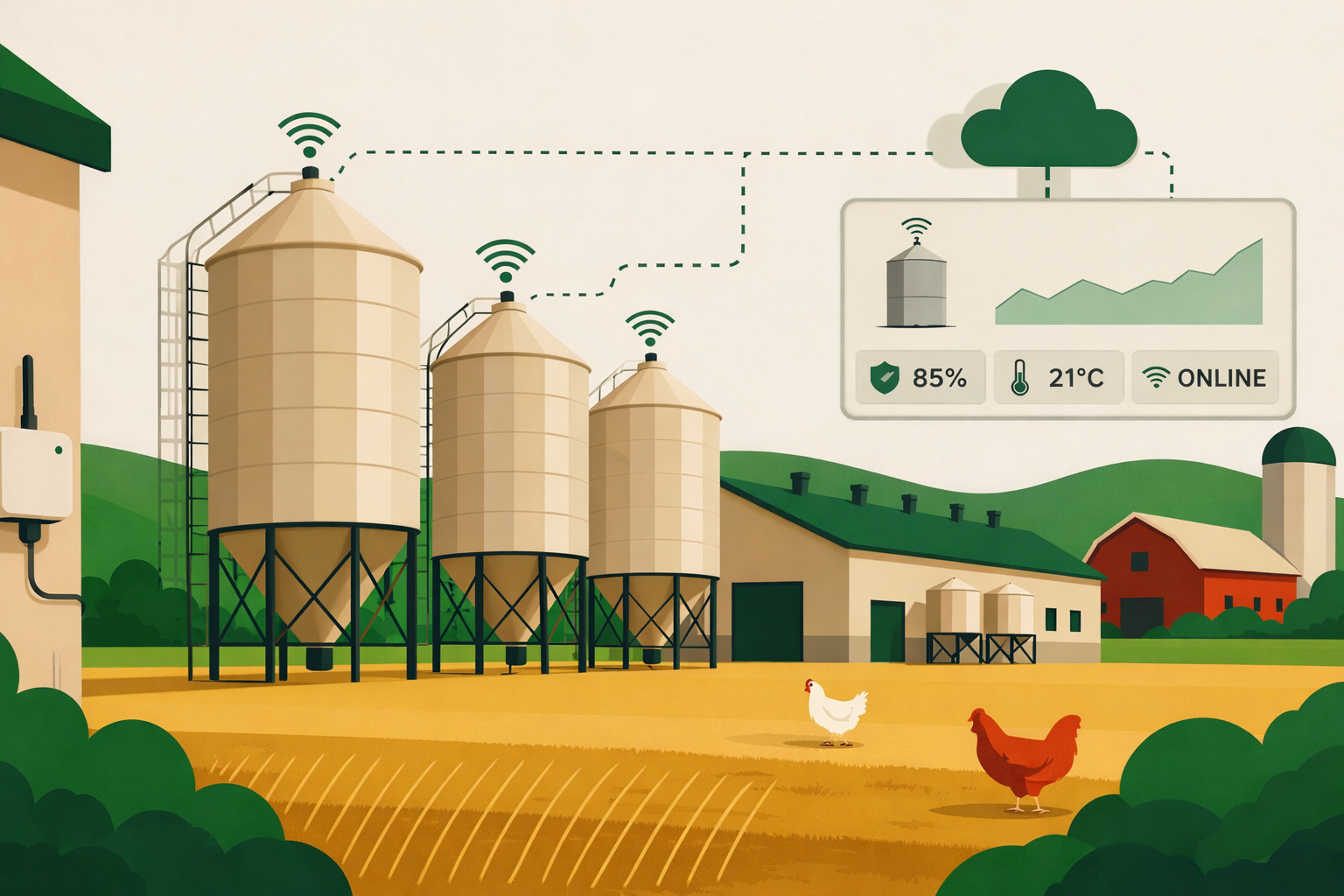
A medicator is a dosing pump that injects a precisely measured portion of a product — medicine, vitamins, electrolytes or an acidifier — into the drinking water. The best units dose in proportion to flow: no matter how much the birds drink, the concentration in the drinker line stays the same. That way the whole hall gets an even dose, rather than one that is sometimes too strong and sometimes too weak.
Medicator versus water treatment — what is what?
These are two different jobs that often go together. Treatment improves the water itself: it removes sediment, iron and manganese, kills bacteria (chlorination, UV) and sets the pH (acidification). A medicator does not clean the water — it adds whatever you want to give the flock on a given day. The order is fixed: treat the water first, and only downstream of the treatment station do you connect the medicator, so products don’t react with chlorine or sediment.
How water is dosed and treated
The choice depends on the quality of water from the well or mains and on what you give the birds and how often.
Proportional medicators
A pump driven by the water flow that injects the product at a fixed percentage — for example a 1% solution per litre of water passing through. The concentration in the line doesn’t depend on how much the birds drink, so the dose is even all day. It is the surest way to give medicines and vitamins to a whole flock.
Stock tanks and gravity dosing
A simpler solution: the medicine is dissolved in a tank from which water flows by gravity to the drinker line. Cheap and reliable, but the concentration falls as the tank empties and the dose has to be worked out by hand. It suits smaller buildings.
Chlorination and water disinfection
Dosing hypochlorite or another oxidising agent kills bacteria in the water and limits biofilm regrowth in the lines. The disinfection level has to be checked — too little does nothing, too much puts the birds off drinking. Disinfection is paused while live vaccines are given.
Water acidification (lowering pH)
Dosing organic acids lowers the water pH, which slows bacterial growth and improves gut hygiene in the birds. Slightly acidic water is often better accepted too and supports some disinfectants. The pH is set with a sensor or strips and the dose adjusted accordingly.
UV lamps
Ultraviolet light kills bacteria and viruses without adding chemicals to the water. It only works on clear, clean water, so a UV lamp is always fitted downstream of filtration — sediment and turbidity shield microbes from the light. The bulb is replaced periodically as its output fades.
Mechanical filtration
Filters trap sand, sediment and iron and manganese compounds that block the nipples and build up in the lines. It is the first stage of treatment — without it the later stages (UV, dosing) work less well. Cartridges and media are replaced or backwashed as the supplier advises.
Drinking water step by step
- 1
Test the water before choosing equipment
Start with a test: microbiology (bacteria) and chemistry (hardness, iron, manganese, nitrates, pH). Without a result you are buying equipment blind. The test shows whether you even have a problem and what kind of treatment is needed.
- 2
Match treatment to the problem
Fit the solution to the result: a lot of iron and sediment — filtration and iron removal; bacteria — chlorination or UV; high pH and gut hygiene — acidification. Don’t buy everything at once “just in case” — solve the real problems from the water analysis.
- 3
Fit the medicator downstream of treatment
The order on the installation is fixed: filter and treatment station first, and only after them the medicator. Connected earlier, the dosed products would react with chlorine or settle on sediment. The medicator always works on water that is already clean.
- 4
Set the dosing ratio per the leaflet
The dose is set strictly according to the product leaflet and the flock size — this is no place for guesswork. Check that the actual concentration in the line matches the intended one. After giving a medicine, flush the medicator with clean water so it doesn’t dry out.
- 5
Flush and disinfect lines between batches
Between batches the drinker lines have to be thoroughly flushed and disinfected to remove biofilm — the slippery bacterial layer that regrows inside the pipes and nipples. An empty house is the only moment to do it properly. Neglected biofilm undermines the effect of medicines and vaccinations.
- 6
Monitor pH and the disinfection level
Regularly check the water pH and the chlorine or other disinfectant level — with strips, a sensor or a tester. Settings dialled in once can drift as the well water quality changes. The check takes a few minutes and guards against a quiet decline in conditions.
Frequently asked questions about medicators and water
Why a medicator if I can just pour medicine into a tank?add
Because in a tank the concentration is not steady — as the water is used up the dose rises or falls, and the birds get an uneven portion of medicine. A proportional medicator keeps the same concentration in the line no matter how much the flock drinks. That means a more reliable dose of medicine or vaccine and fewer dosing mistakes.
Should I chlorinate the water while giving a vaccine?add
No. Chlorine and other disinfectants inactivate live vaccines — vaccination through the water simply won’t work. While the vaccine is given, disinfection is stopped, and a stabiliser is often added to neutralise chlorine residues in the lines. Once vaccination is finished, normal treatment is resumed.
How do I fight biofilm in the drinker lines?add
Biofilm is a slippery bacterial layer that builds up inside the pipes and nipples; once formed, it keeps renewing itself. It is removed most effectively between batches, when the house is empty: the lines are flushed under pressure and disinfected with a strong agent, then thoroughly rinsed. Ongoing acidification and disinfection during the batch limit its regrowth.
Why acidify the drinking water?add
A slightly acidic pH slows bacterial growth in the water and in the birds’ gut, which supports hygiene and feed use. Acidification also limits biofilm regrowth and can help water acceptance. The pH is set from the water analysis and the product supplier’s guidance, and checked regularly.
Describe your building’s equipment in DlaFerm.pl
In DlaFerm.pl, in the “Technical equipment of the building” step, you record how you dose medicines and how you treat the water — all in one place. Create a free account or write to us.
Phone
+48 796 258 151