Goose rearing — from goslings to finishing and breeding
Goose rearing is longer and more seasonal than a broiler. It starts with a warm gosling start (brooding), through fast early growth, moving onto green feed and grazing, to feathering and a long grow-out — for the Biała Kołudzka breed finished with oats before the holidays. A goose is a grazing bird: it eats grass, needs a range and constant access to water. We walk you through the whole cycle stage by stage. Indicative figures*.
verifiedFrom the team that has organised work on poultry farms for years.
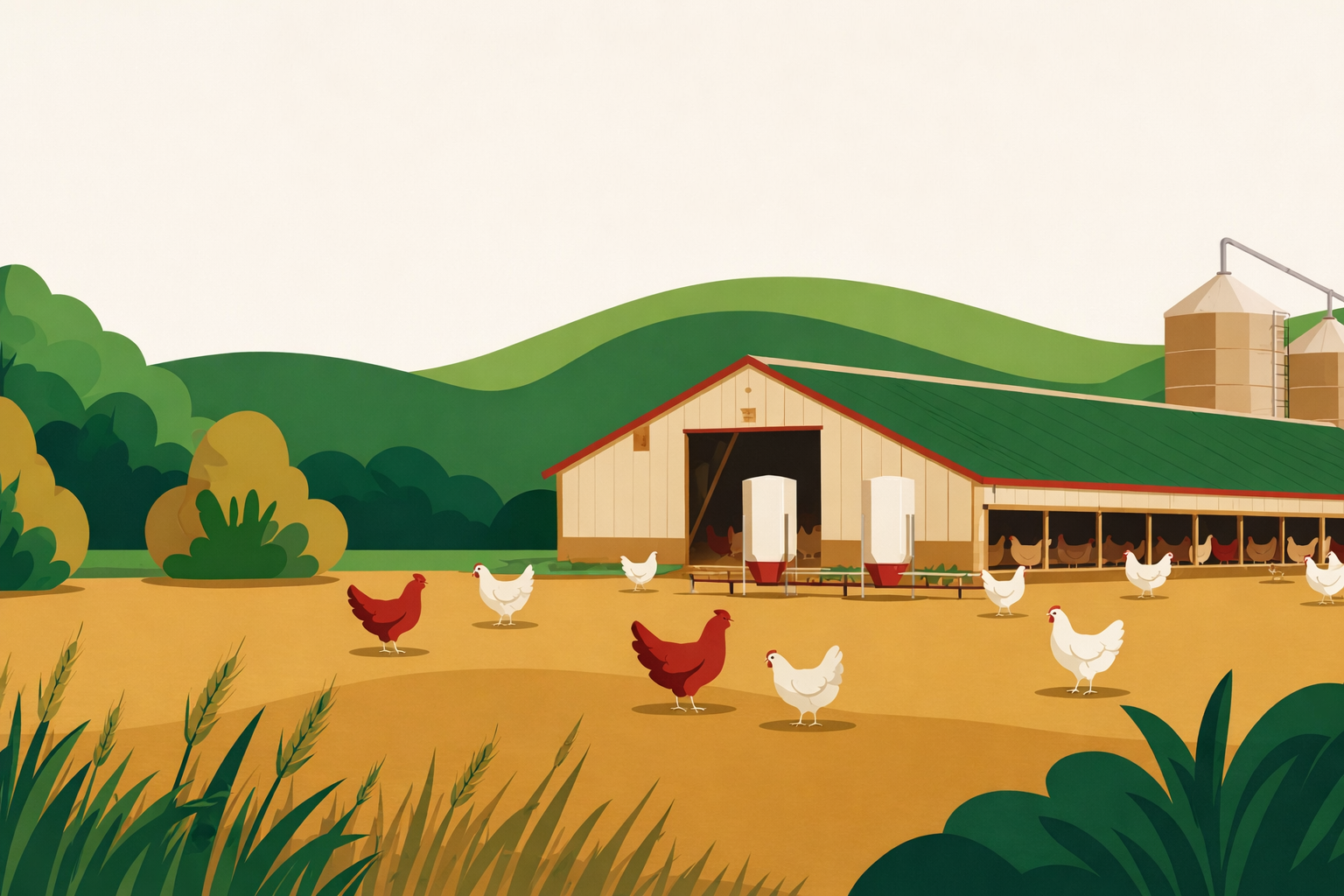
A goose grows differently from a broiler: the cycle is longer, the birds take part of their feed from pasture, and demand for carcasses builds up in autumn and before the holidays. That is why goose rearing combines a warm, intensive gosling start with a long grazing period on green feed and a final finishing. This guide brings the whole cycle into one place — from a heated nest for goslings to a bird ready for collection. The broader picture is in the hub on goose farming, and individual topics are developed in separate guides we link to along the way.
How does a goose differ from a meat chicken?
A goose is a waterfowl and a grazing bird. Unlike a broiler, which spends its whole life in a house on concentrate feed, a goose makes good use of grass and green feed, needs a range and access to clean water. Its rearing takes much longer — from a dozen or so weeks upward, depending on the production type and direction (carcass finishing, oat finishing, breeding). This calls for different feed, land and calendar planning than the fast, few-week chicken cycle.
Where do the numbers in this guide come from?
Start temperatures, the pace of lowering, grazing dates and indicative weights are given as a guide* based on goose management guides, including work by the centre in Kołuda Wielka (IZ-PIB) on the Biała Kołudzka breed. Exact values depend on the breed, pasture quality, weather and farm equipment. Treat them as a starting point and always watch the birds themselves — it is the goslings, not the table, that show whether they are warm and grazing well. Staying with waterfowl, it is worth comparing the approach with duck farming.
Goose rearing step by step — the whole cycle
- 1
1. House preparation and a warm gosling start (brooding)
Goslings are sensitive to cold at the start, so the first days are spent in a heated, dry room on thick, clean litter. The zone under the heat source should be around ~30–32°C*, with a cooler spot the goslings can move to. Dry litter and no draughts matter — bedding management is covered by litter management in the house, and the microclimate by temperature and humidity in the house. Geese drink a lot and splash, so set drinkers so they do not soak the litter.
- 2
2. The first days — water, feed and watching the goslings
After placement the goslings must quickly find water and starter feed. Geese have a strong appetite and fast early growth, so keep feeders and drinkers full and clean at all times. Bird behaviour is the best sensor: evenly spread and active = fine; huddled under the heat source = too cold; scattered and panting = too warm. Goose and duck feeding norms are gathered in the guide on goose and duck feeding norms.
- 3
3. Lowering the temperature and hardening to cold
Goslings feather quickly and each week tolerate lower temperatures better. Heating is reduced gradually — by around ~3°C per week* — until the birds no longer need it. This is the hardening stage: over time the goslings are let out briefly onto the range on warmer days to get used to outdoor conditions. Make sure they have somewhere to warm up and dry off on return. How to calculate floor area per bird is explained by goose stocking density.
- 4
4. Going out to graze — the goose as a grazing bird
Once the goslings are feathered and the weather allows, the main, long grow-out stage on the range and pasture begins. A goose makes good use of young, juicy grass and green feed, which lowers concentrate feed use. A grassed range, shade and constant access to clean water are needed. Concentrate feed still supplements the diet, especially when the pasture is poor. Building and range requirements are covered by housing requirements for geese, and welfare on the range by goose welfare.
- 5
5. Feathering and the long grow-out
During rearing geese go through the moult and growth of feathers — a natural but sensitive stage where stress and feed deficiencies are best avoided. The birds grow more slowly than at the start but steadily put on weight from a mix of pasture and feed. This is a long period in which you watch flock health, range quality and water supply. The most common goose diseases and prevention are gathered by goose diseases.
- 6
6. Final finishing (oats) and preparation for collection
For the Biała Kołudzka type, the classic finish is oat fattening — known as the oat finish — in the last weeks before collection, which shapes the fat cover and carcass quality for holiday (Q4) demand. During this time movement is restricted and the share of energy feed is increased. Before collection, withdrawal recommendations and transport preparation are observed. The economics of such a cycle — with the cost of feed, oats and the seasonal carcass price — are set out by goose farming profitability.
Goose rearing parameters — temperature, water and feed, grazing, feathering
Indicative values* for the whole cycle — always adjust to the breed, pasture, weather and the birds’ response.
Start temperature
The zone under the heat source for goslings is around ~30–32°C* at the start, then lowering by ~3°C per week until the birds no longer need heating. What matters is the temperature at gosling level and dry, warm litter, not just the thermometer reading. Bird behaviour is the best comfort sensor.
Water and feed
Geese drink and splash a lot — constant access to clean water is key, and drinkers are set so they do not soak the litter. Starter feed at the beginning, then a growing share of green feed and pasture, supplemented with concentrate. At the finish, oats (the oat finish) appear for the fattening goose.
Grazing and range
A goose is a grazing bird: it makes good use of grass and green feed, which lowers feed cost. It needs a grassed range, shade and water. Grazing starts after feathering and in suitable weather and is the main, longest stage of rearing.
Feathering and growth
After fast early growth the rate of gain drops, but the birds steadily put on weight from pasture and feed. The moult and growth of feathers is a sensitive stage — avoid stress and deficiencies. The whole cycle is long and seasonal, with collection concentrated in autumn and before the holidays.
The most common goose rearing mistakes
These mistakes come up repeatedly on goose farms — worth knowing before you place goslings.
A cold or wet gosling start
Goslings are sensitive to cold and damp at the start. A room that is too cold, draughts or wet litter mean birds huddled in piles, poorer eating and higher mortality. Provide a warm zone of ~30–32°C*, dry, thick litter and drinkers set so they do not soak the bedding. The microclimate is covered by temperature and humidity in the house.
No clean water or soaked litter
Geese drink a lot and splash, so badly set drinkers quickly turn the litter into mud, which favours disease. On the other hand, a water shortage holds back growth. You have to reconcile constant access to clean water with dry litter — suitable drinkers, stands and bedding management. See litter management in the house.
Poor pasture or grazing too early
Letting unfeathered goslings out into cold and rain, or grazing on a poor, overgrazed pasture is a common mistake. A goose needs a grassed range, shade and water, and grazing only starts after feathering and in good weather. Land requirements are gathered by housing requirements for geese, and stocking norms by goose stocking density.
Ignoring seasonality and the finishing calendar
Goose rearing is long and seasonal — demand for carcasses builds up in autumn and before the holidays (Q4). Poor planning of placement and oat finishing dates means the birds will miss the selling season or fail to reach the desired condition. It pays to calculate the calendar and costs in advance — see goose farming profitability and legal norms for keeping geese.
Frequently asked questions about goose rearing
What temperature at the start of gosling rearing?add
Indicatively* the zone under the heat source is around ~30–32°C at the start, with a cooler spot the goslings can move to. Each week it is lowered by about ~3°C until the birds no longer need heating, because they feather quickly. The best sensor is the goslings themselves: evenly spread = comfort, huddled in piles = cold, scattered and panting = too warm. Dry litter is as important as temperature — see temperature and humidity in the house.
Do geese really graze on grass?add
Yes. A goose is a grazing bird that makes good use of young, juicy grass and green feed — which lowers the use of more expensive concentrate feed. After feathering and in good weather, grazing becomes the main, longest stage of rearing. A grassed range, shade and constant access to clean water are needed. Concentrate feed still supplements the diet, especially when the pasture is poor. The norms are gathered by goose and duck feeding norms.
What is the oat finish and when is it used?add
The oat finish is the traditional final fattening of geese with oats in the last weeks before collection, characteristic of the Biała Kołudzka breed. It increases the share of energy feed and restricts the birds’ movement, which shapes the fat cover and carcass quality for holiday (Q4) demand. It is the finishing stage of a long, seasonal rearing — the cost of oats is part of the calculation set out by goose farming profitability.
How long does goose rearing take?add
Much longer than a meat chicken — from a dozen or so weeks upward, depending on the breed and production direction (carcass finishing, oat finishing, breeding). It is a long, seasonal cycle with a warm gosling start, long grazing and a final finishing. Because of holiday demand, placement and finishing dates are planned to hit the selling season — see legal norms for keeping geese.
Where do goslings come from and can you hatch them yourself?add
Goslings are bought from a hatchery or hatched from setting eggs on your own. Goose eggs have a long incubation period and their own needs for humidity and turning — the basics are covered by the guide on poultry egg incubation. Whatever the source, a warm, dry gosling start and quick access to water and feed in the first days are key.
What water access do geese need?add
Geese drink a lot and like to splash, so they need constant access to clean water throughout the cycle. Drinkers are set so goslings and adult birds can drink easily but do not soak the litter — wet bedding favours disease. This is one of the key elements of goose flock welfare and health, gathered by goose welfare.
Run goose rearing in DlaFerm.pl
Want a digital goose flock record, weight control and grazing notes in one place? Create a free farm account or write to us.
Phone
+48 796 258 151