Goose housing and range requirements
A goose is a hardy, grazing bird — unlike a broiler it does not need a complex house with full climate control. It does need dry shelter for the night and bad weather, a large grassy range, clean water for drinking and feather care, and good protection from predators and wild birds. We have gathered everything in one place, with links to detailed guides for the specifics.
verifiedFrom the team that has organised work on poultry farms for years.
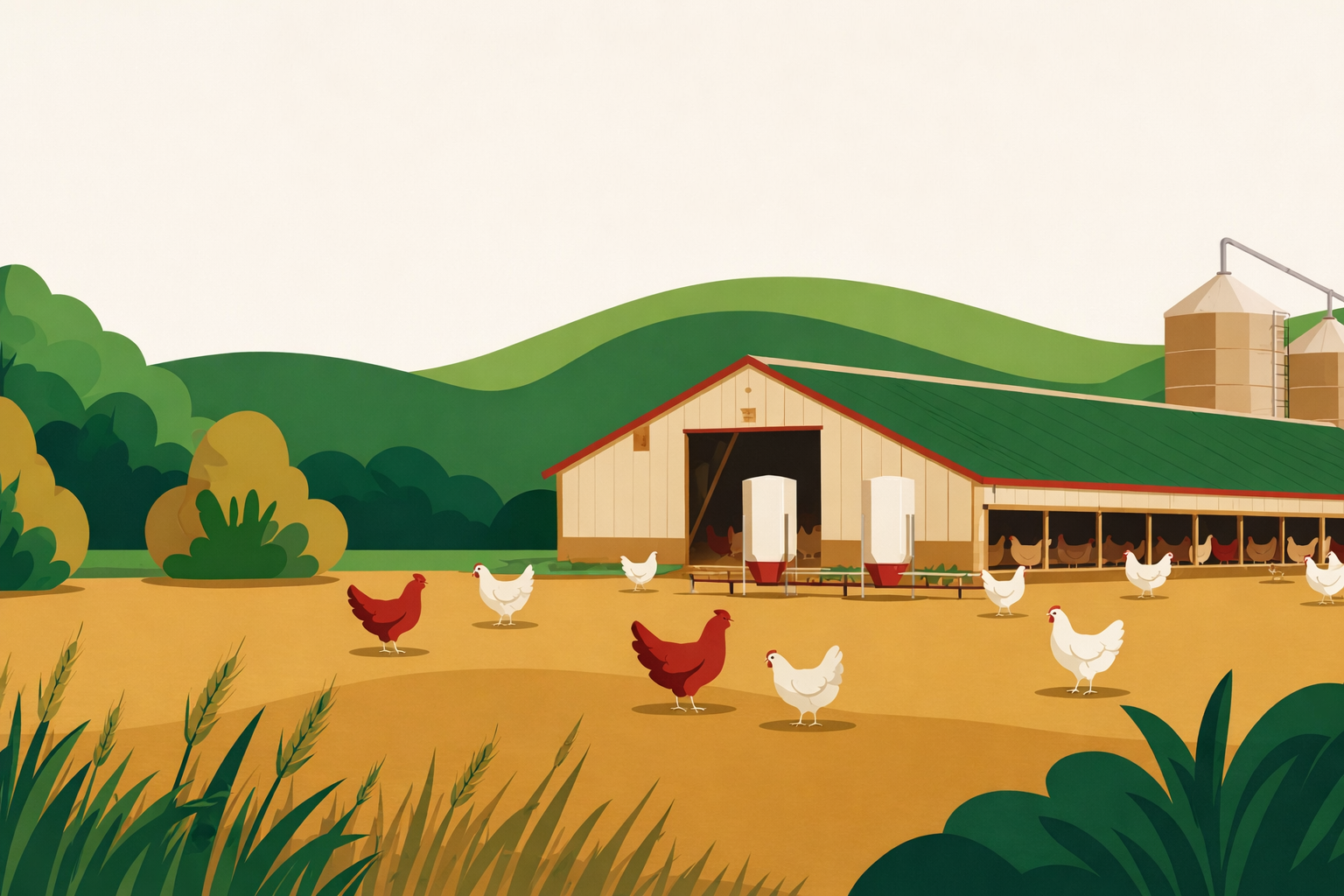
A goose is a hardy bird that copes well with cold but is sensitive to damp and constant standing in mud. Adult geese spend most of the day on the range nibbling grass and return to the building at night and in bad weather. That is why housing requirements are far lower than for broilers — what matters is a simple, dry, airy building and, above all, a large, well-fenced range. The whole rearing process is covered in the guide on goose farming.
How does goose keeping differ from broilers?
A broiler spends its whole life in a house with precisely controlled climate. A goose is the opposite: a grazing bird that can take much of its feed from the range and treats the building as shelter. So two things matter most: first, dry litter, because geese drink a lot and spill water, so the floor gets wet fast; second, a safe range, because geese in the open are an easy target for a fox, dog or birds of prey. We cover bird welfare in the guide on goose welfare.
Where do the numbers in this guide come from?
Indicative values (area in the building and on the range, gosling start temperature, water access) follow the Council of Europe recommendations on ducks and geese and breeding guides and IZ-PIB studies. These are indicative values* — a starting point, not a fixed norm. Actual needs depend on the breed, the production purpose (meat, down, grazing) and the season. This page is an overview of the whole; the details of each area are in separate guides linked in the text.
What to prepare when planning goose keeping
- 1
Building or shelter — dry and airy
Geese only need a simple, dry, airy building or open shed that protects from wind, rain and night cold and gives shelter from predators at night. There is no need for full climate control as with broilers — what matters is no draughts at bird level, a tight roof and a floor on which you can keep litter dry. As a rough guide plan about 2–3 geese per 1 m²* of building, but this is a bird that spends most of the day outside anyway. The whole rearing: goose rearing.
- 2
Range and access to grazing
This is the most important part of goose keeping. The goose is a grazing bird — a large grassy range is its natural feed, exercise and better health. Range area is planned generously, usually several to a dozen-plus m² per bird*, and the turf must be changed or rotated, because geese eat it out and trample it fast. The range should have some shade (trees, cover) for hot days and not turn into mud after rain. On recommended area and stocking: goose stocking.
- 3
Water — for drinking and feather care
Geese drink a lot and — importantly — need water deep enough to dip their head and clean their nostrils and eyes, and ideally also to wet and oil their feathers. Clean drinking water must be available at all times, and drinking points are best placed so spilled water does not wet the building litter (e.g. over a slatted area or outdoors). We cover drinking lines and points in the guide on drinking lines in the house.
- 4
Dry litter — because geese spill water
Geese take in a lot of water and splash plenty of it, so litter in the building gets wet faster than with other birds. Dry, deep litter (straw, shavings) is the basis of health — a wet floor means dirty feathers, ammonia and a higher risk of leg problems. It must be topped up and turned regularly, and drinkers set so water does not run straight onto the litter. Litter management is covered in the guide on litter in the house — management.
- 5
Heating and rearing goslings
An adult goose is hardy, but small goslings do not yet regulate body temperature for the first few weeks and need start-up heating (brooding). At the start, about 30–32°C* is held under the heater and lowered gradually each week until goslings are feathered and ready for cold and the range. Ventilation in the building also matters, to remove moisture and ammonia without chilling the birds. On ventilation in general: house ventilation. The whole start: goose rearing.
- 6
Range fencing and protection from predators
Geese on an open range are an easy target for a fox, dog, marten or birds of prey. The range must be solidly fenced (mesh dug into the ground so a predator cannot dig under) and birds are best shut in the building at night. A separate topic is protection from wild birds that carry avian influenza (HPAI) — part of biosecurity. More: pest and wild bird control and poultry farm biosecurity.
Indicative parameters in goose keeping
Four groups of values worth providing for geese. Indicative figures* from Council of Europe recommendations and breeding guides.
Area: building and range
In the building, roughly about 2–3 geese per 1 m²*, but the range is the key thing — usually several to a dozen-plus m² per bird*. The more green range, the less concentrate feed and the better health. Related: goose stocking.
Gosling temperature
Start under the heater at about 30–32°C* in the first days, then lowering by about 2–3°C per week. Once feathered, geese are hardy and cope well with cold. As with all poultry — watch behaviour: huddled under the heat source = too cold; spread to the walls = too warm.
Water for drinking and care
Constant access to clean drinking water, ideally deep enough for a goose to dip its head and clean nostrils and eyes. Set drinking points so spilled water does not wet the litter. More: drinking lines in the house.
Dry litter
Deep, dry litter (straw, shavings) topped up regularly — geese spill water, so the floor gets wet fast. Wet litter means dirty feathers, ammonia and leg problems. Related: litter in the house — management.
The most common mistakes in goose keeping
These mistakes regularly spoil flock health — worth ruling out at the holding planning stage.
Too small or muddy a range
A goose without enough range quickly eats out and tramples the turf, and after rain the range turns to mud. The result: dirty feathers, leg problems and more concentrate feed. Plan the range with spare area and rotate the turf. Related: goose stocking.
Wet litter in the building
Geese spill water, so litter gets wet faster than with other birds. Neglected, wet litter means ammonia, dirty feathers and leg problems. Set drinkers so they do not run onto the litter, and top it up regularly. More: litter in the house — management.
No protection from predators
Weak fencing or leaving geese on the range overnight ends in losses to a fox, dog or marten. Solid fencing (mesh dug in) and shutting birds in at night are the basis. A separate risk is wild birds carrying avian influenza: pest and wild bird control.
Weak biosecurity and contact with wild birds
Geese on the range come into contact with wild birds that can carry avian influenza (HPAI). A lack of biosecurity (covering water bodies, a disinfection mat, limiting outside access) raises the risk of bringing in disease. The rules: poultry farm biosecurity and goose diseases.
Frequently asked questions about goose housing and range
What building do geese need?add
Geese only need a simple, dry, airy building or shed that protects from wind, rain, night cold and predators. There is no need for full climate control as with broilers — what matters is no draughts, a tight roof and dry litter. As a rough guide about 2–3 geese per 1 m²* in the building, but this is a bird that spends most of the day on the range. The whole rearing: goose farming.
How much range does a goose need?add
A goose is a grazing bird and needs a large grassy range — roughly several to a dozen-plus m² per bird*. The more green range, the more natural feed, exercise and better health. The turf must be rotated, because geese eat it out and trample it fast, and the range should not turn into mud. More on area and stocking: goose stocking.
Do geese need bathing water?add
Geese must have constant access to clean drinking water, deep enough to dip their head and clean their nostrils and eyes. Access to larger water (a pool or pond) lets them wet and oil their feathers, which helps plumage, though it is not always essential. It is important to set drinking points so spilled water does not wet the litter — we cover drinking in the guide on drinking lines in the house.
How do you keep litter dry with geese?add
Geese drink a lot and spill water, so litter gets wet faster than with other birds. The basis is deep, dry litter (straw, shavings), topped up and turned regularly, and drinkers set so water does not run straight onto the litter (e.g. over a slatted area or outdoors). Wet litter means dirty feathers, ammonia and leg problems. Details: litter in the house — management.
What temperature do goslings need?add
An adult goose is hardy, but small goslings do not yet regulate body temperature for the first few weeks. At the start, about 30–32°C* is held under the heater and lowered by about 2–3°C per week until goslings are feathered and ready for cold and the range. Watch behaviour: huddled under the heat = too cold. The whole start is in the guide on goose rearing.
How do you protect geese from predators and avian influenza?add
The range should be solidly fenced (mesh dug into the ground so a predator cannot dig under) and geese are best shut in the building at night. Against avian influenza (HPAI), biosecurity protects: limiting contact with wild birds, covering water bodies, a disinfection mat and access control. More: pest and wild bird control, poultry farm biosecurity and legal rules for goose keeping.
Sources & resources
- linkCouncil of Europe — recommendations on the welfare of domestic ducks and geese (coe.int)
- linkNational Research Institute of Animal Production (IZ-PIB) — goose keeping and breeding (izoo.krakow.pl)
- linkPolish Chief Veterinary Inspectorate — biosecurity guidance against avian influenza (HPAI) (wetgiw.gov.pl)
Run your goose farm in DlaFerm.pl
Want flock records, dates and events for your geese in one place? DlaFerm.pl helps you run the rearing, plan procedures and keep an eye on bird welfare. Create a free farm account or write to us.
Phone
+48 796 258 151