Insect protein and alternative protein sources in feed
Most of the protein in poultry feed today comes from imported soybean meal. Rising prices, a long supply chain and questions about GMO push farmers to look for alternatives: insect meal, home-grown legumes, rapeseed, fermentation protein and by-products. We explain where these sources really work and where they have real limits.
verifiedFrom the team that has organised work on poultry farms for years.
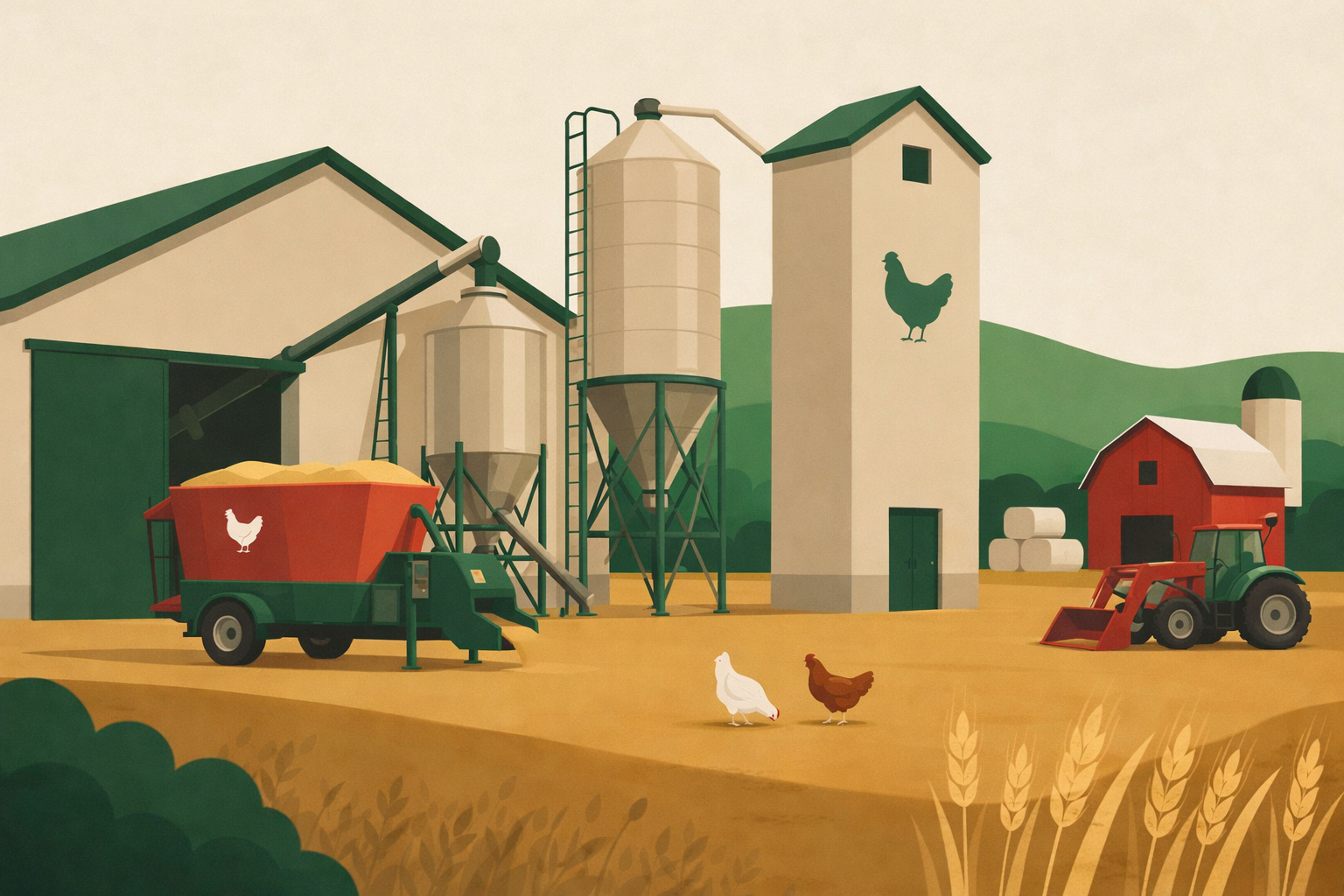
Protein is the most expensive and most demanding ingredient in poultry feed. For decades its main source has been meal from soybeans — largely imported from outside Europe, often from GMO crops. It works well nutritionally, but it ties the farm to a long, costly supply chain and to swings in world prices. That is why the question keeps coming back: what can partly replace soy without hurting rearing results?
Why look for alternatives to soy?
There are several reasons and they are worth separating. The first is economics — the price of soy can swing hard, and shipping it across the ocean adds cost and environmental footprint. The second is independence: protein from local crops or from insects reared nearby shortens the supply chain. The third is the environment — less transport and less pressure to clear land for soy. None of the alternatives replaces soy in full overnight; the real picture is partial substitution wherever a given source makes nutritional and economic sense.
What can partly replace soy
Each source has a different amino-acid profile, price, availability and legal status — which is why in practice they are combined, not picked one at a time.
Insect meal (Hermetia illucens, mealworm)
The larva of the black soldier fly (Hermetia illucens) and the yellow mealworm give a meal rich in complete protein and fat. Insects can be reared on by-products, on a small footprint and close to the farm. Since 2021, processed insect protein has been allowed in the EU in poultry feed. The limits are still price and the limited scale of production.
Home-grown legumes (field beans, lupin, peas)
Field beans, lupin and peas are native protein sources that can be grown in a Polish climate. They shorten the supply chain and support crop rotation. But they have a lower protein content than soy and contain anti-nutritional substances, so their share in a poultry mix is limited, and some varieties need processing or careful matching to the species and age of the birds.
Rapeseed meal and cake
Rapeseed is widely grown in Poland, and the products of pressing it for oil — meal and cake — are a locally available protein source. It works as a supplement, but it has lower digestibility and a less favourable amino-acid profile than soy, and it contains components that limit its share in feed for younger birds. It is most often used as part of a recipe, not its base.
Fermentation protein
Biomass of yeast, bacteria or fungi grown in controlled fermentation gives protein independent of the field and the weather. It is a promising direction environmentally, because the process can run on by-products. In practice for poultry it remains niche for now — cost, scale of production and the approval status of individual products for feed use all decide this.
By-products of the agri-food industry
Distillers’ grains (DDGS), bran, extraction meals and residues from processing grain or oils are protein that already exists as a by-product. Using it closes the loop and lowers cost, but quality can vary and protein content is lower. They need a trusted supplier and a share matched to the species and the rearing phase.
Combining sources and the amino-acid balance
For poultry it is not the amount of protein that matters but the amino-acid profile — especially methionine and lysine. No single alternative matches soy in everything, which is why the practice is to mix several sources and top up with synthetic amino acids. A recipe is always built to cover the birds’ needs, not just to lower the share of soy on paper.
Introducing alternatives step by step
- 1
Decide what you want to change and why
First name the goal: lower feed cost, a shorter supply chain, a smaller footprint or independence from imports. The goal decides which source makes sense. You will pick different ingredients when you care about price than when you care about the protein being local.
- 2
Check availability and legal status
Make sure the source is allowed in poultry feed and available from a trusted supplier. Processed insect protein has been allowed in the EU for poultry since 2021, but individual fermentation products or unusual raw materials may have their own requirements. There is no room for guessing here — confirm it with your feed supplier.
- 3
Consult the recipe with a nutrition specialist
Changing the protein source is a job for a nutritionist or a feed company. They will calculate the amino-acid profile, digestibility and anti-nutritional substances, and set the maximum share of a given ingredient for the species and age of the birds. Swapping things by eye risks worse rearing results.
- 4
Introduce it gradually and on part of the flock
Bring in the new feed slowly, ideally starting with part of the building or a single batch. Poultry reacts to feed changes, so an abrupt switch can show up in feed intake and results. A gradual roll-out lets you catch a problem before it reaches the whole flock.
- 5
Watch results and cost together
After the change look not only at the price per tonne of feed but at the end result: feed intake, weight gain, feed conversion and the condition of the birds. A cheaper ingredient that worsens gains raises the cost of production overall. What counts is the total bill, not a single line in the recipe.
- 6
Record what you fed and when
Keep a record of feed changes: which protein source, at what share and from when. That trail lets you tie a recipe change to rearing results and go back to what worked. Without a record it is hard to say whether a worse or better batch came from the feed or from something else.
Frequently asked questions about alternative protein in poultry feed
Is insect protein allowed in poultry feed?add
Yes. Since 2021, processed insect protein (insect PAP) has been allowed in the European Union for use in poultry feed. Before that it was permitted in fish feed, among others. The approval covers specific insect species and processed forms; always confirm the details and the actual product with your feed supplier.
Can alternatives fully replace soy?add
Realistically no — at least not overnight and not with a single ingredient. Soy has a favourable amino-acid profile and high digestibility that no alternative matches in everything at once. The practice is partial substitution and combining several sources to cover the birds’ needs. Fully eliminating soy is possible only with a carefully built recipe and acceptance of a higher cost or other trade-offs.
Is alternative protein cheaper than soy?add
Not necessarily. Home-grown legumes and by-products can be cheaper or comparable, but they have a lower protein content, so you need more of them. Insect meal and fermentation protein are usually more expensive than soy today because of the limited scale of production. The benefit of alternatives is more often a shorter supply chain and a smaller footprint than a simple saving on price.
Can I change the feed recipe myself on the farm?add
Changing the protein source is best done with a nutritionist or a feed company. It is about the amino-acid profile, digestibility and anti-nutritional substances, which have to be calculated for the species and age of the birds. Swapping things by eye risks lower feed intake and worse gains. It is best to introduce changes gradually and watch the results, not just the price of the ingredient.
Keep a feeding record for your flock in DlaFerm.pl
In DlaFerm.pl you record what you feed the flock and how the feed mix changes — all in one place, tied to rearing results. Create a free account or write to us.
Phone
+48 796 258 151