Laying hen welfare — system, behaviour, indicators
Hen welfare is more than the number of eggs. It is a housing system in which the hen can scratch, dust-bathe, perch and lay an egg in a quiet nest — without feather pecking and cannibalism, with healthy plumage and an undamaged keel bone. We explain in plain language how the different systems (enriched cages, barn, aviary, free range, organic) affect the bird and how to measure welfare under Directive 1999/74/EC and the EFSA opinion.
verifiedFrom the team that has organised work on poultry farms for years.
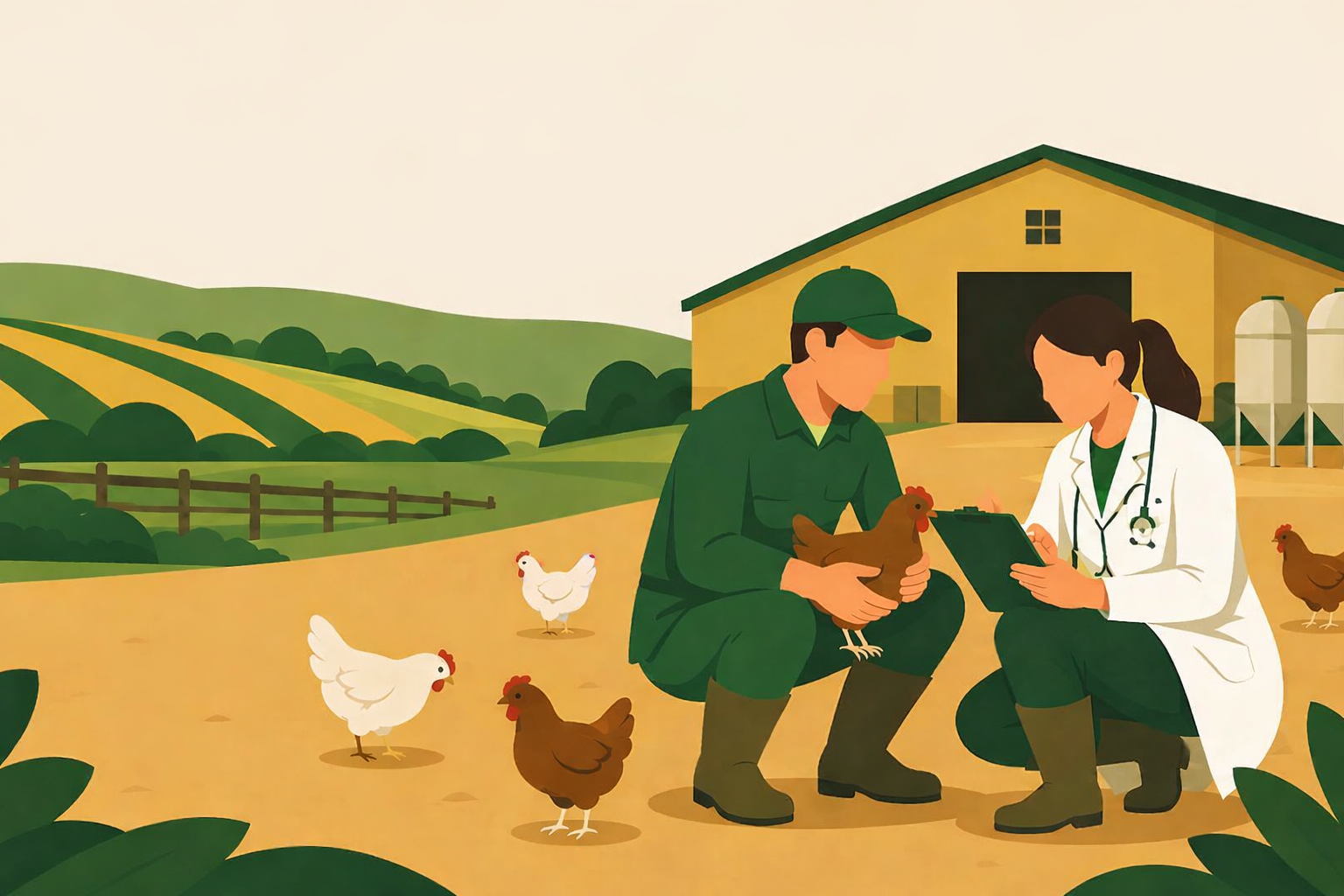
Laying hen welfare is the conditions in which a bird can live normally and perform its natural behaviours: scratching, pecking, dust-bathing in loose litter, perching and laying an egg in a sheltered nest. It is the classic 'five freedoms' translated into the layer house: freedom from hunger and thirst, from discomfort, from pain and disease, from fear, and freedom to behave normally. Unlike a broiler, a hen lives in the flock for many months and has a rich behavioural repertoire — which is why a well-chosen housing system matters so much. The whole production cycle is covered in the guide on laying hen farming.
Where do laying hen welfare rules and indicators come from?
The legal basis is Council Directive 1999/74/EC laying down minimum standards for the protection of laying hens, implemented in Poland by the relevant ministerial regulation. It banned conventional battery cages and set requirements for enriched cages (perch, nest, scratching area) and alternative systems. The scientific side — which indicators best describe a hen's state — is organised by the European Food Safety Authority (EFSA) and the Welfare Quality protocol. General indicators for all poultry are in the guide on poultry welfare indicators.
Why does the housing system decide hen welfare?
Each system balances natural behaviour against hygiene and economics differently. Enriched cages give hygiene and control but limit movement and scratching. Barn and aviary systems allow the full behavioural repertoire (scratching, dust bathing, perching) but demand better litter and air management. Free range adds outdoor access, and organic farming adds even stricter standards. The system also shows on the egg: code 0 (organic), 1 (free range), 2 (barn/aviary) and 3 (enriched cages). A comparison of barn, cage and aviary systems is in the guide on cage, barn and aviary housing.
How to manage laying hen welfare in practice
- 1
Match the housing system to the goal and the buyer
Choosing the system is the first and most important welfare decision. Enriched cages (egg code 3) give hygiene and low parasite risk but little movement. The barn and aviary system (code 2) allows scratching, dust bathing and perching. Free range (code 1) adds outdoor access, and organic farming (code 0) the strictest standards. The market and retailers increasingly expect cage-free systems. The aviary system is detailed in the guide on aviary system for layers.
- 2
Provide perches, nests and a scratching area
These are the three pillars of hen behaviour. Perches let hens rest and sleep raised above the floor (a deeply rooted behaviour), nests give a quiet, sheltered place to lay eggs, and floor litter allows scratching and foraging. For alternative systems Directive 1999/74/EC requires, among other things, an adequate length of perch per hen and enough nests. Too few nests means floor-laid eggs (dirtier, lower quality) and stressed birds.
- 3
Allow dust bathing and plumage care
Dust bathing is not a whim but a need — the hen rubs loose material into its feathers to remove excess oil and external parasites. Dry, loose litter or a dedicated scratching area meets this need and helps keep plumage in good condition. Without the chance to dust-bathe, hens get frustrated, plumage suffers and substitute behaviours such as feather pecking appear. Litter management is covered in the guide on litter management in the house.
- 4
Set light and stocking for a calm flock
Light that is too bright or harsh and overstocking increase nervousness, feather pecking and cannibalism. Subdued, even lighting with no 'hot' spots and the right stocking density calm the flock. Lighting basics are in the guide on the house lighting programme (the principles carry over to layers) and the right density in the guide on laying hen stocking density. Provide access to fibrous feed too, which occupies beaks and reduces pecking.
- 5
Prevent feather pecking and cannibalism
Feather pecking and cannibalism are the most serious behavioural problems in layers. The causes are multifactorial: light too bright, stocking too high, no litter or pecking material, feeding errors (shortage of protein, amino acids, fibre), boredom. Prevention means acting on the causes: subdued light, access to scratching and dust bathing, pecking material (e.g. bales, ropes, lucerne), a balanced diet and calm handling. Better to prevent than to trim beaks.
- 6
Monitor plumage, keel bone and indicators, and record results
Welfare is not judged by eye — it has to be counted and recorded. Regularly score plumage condition (on a sample of birds), check keel bone damage, record mortality, lay rate, floor-laid eggs and signs of pecking. A worsening indicator signals that something in the system, light, feed or stocking needs correcting. Records are also the basis of audits and welfare programmes — see poultry welfare — subsidies.
Measurable laying hen welfare indicators
Four groups of indicators used to measure laying hen welfare. Indicative values* — exact ones depend on the system, the programme, the buyer and national rules.
Plumage condition (feather cover)
Feather condition is a mirror of hen welfare. It is scored on a sample of birds, usually on a simple scale (from full cover to large bald patches), across several body parts: neck, back, tail, vent. Bald spots and broken feathers most often result from feather pecking, but also from rubbing against equipment. Good plumage condition means a calm flock and the right light, stocking and access to scratching.
Keel bone
The keel bone (breastbone) is often damaged in systems with perches and aviaries — through falls, collisions and pressure. Damage (fractures, deformities) is painful and lowers welfare and lay rate. It is assessed by palpation on a sample of birds. Good placement of perches, platforms and ramps and adequate mineral nutrition (calcium, vitamin D3) reduce the risk. It is one of the key new laying hen welfare indicators per EFSA.
Behaviour and pecking
Welfare shows in behaviour: whether hens scratch, dust-bathe, use perches and nests, and stay calm during handling. A warning indicator is increased feather pecking and cannibalism — their frequency and severity matter. A rising share of floor-laid eggs (outside the nest) also signals that something in the nests or lighting is off. These observations are worth recording as carefully as the lay rate.
Environment: system, stocking, light, litter
On-bird indicators go hand in hand with environmental requirements. System: enriched cages with a perch, nest and scratching area, or alternative systems (barn, aviary, free range, organic). Stocking in line with the system and the rules. Subdued light with a night break. Litter dry, loose, allowing scratching and dust bathing. Together they decide whether the hen can express its behaviour without frustration.
Mistakes that lower laying hen welfare
A few errors come up repeatedly — worth knowing before they show in plumage, the keel bone and the lay rate.
Light too bright and stocking too high
Harsh, bright light and overstocking are the classic recipe for a nervous flock, feather pecking and cannibalism. Overstimulated and crowded, hens start pecking each other. The cure is subdued, even lighting and the right density — see laying hen stocking density. Beak trimming treats the symptom, not the cause.
No litter for scratching and dust bathing
Without loose litter a hen cannot meet its need to scratch and dust-bathe, which leads to frustration, poorer plumage and substitute behaviours (feather pecking). This is a common fault where litter becomes capped or fouled. Dry, available litter is the foundation — see litter management in the house.
Too few nests or badly placed perches
Too few nests means floor-laid eggs: dirtier, lower quality and more stressed birds. Badly placed perches and platforms raise the risk of falls and keel bone damage. Directive 1999/74/EC sets minimum requirements for perches and nests in alternative systems — treat them as a floor, not a ceiling.
Judging welfare by eye without records
Without numbers you cannot tell whether plumage and the keel bone are deteriorating, and the auditor has nothing to check. You must score feathers and the breastbone on a sample, and record mortality, lay rate and signs of pecking. Missing documentation is not only an inspection risk — it also means losing the basis to join welfare programmes. The legal requirements are gathered in the guide on legal standards for laying hen farming.
Frequently asked questions about laying hen welfare
What are the laying hen housing systems and what does the code on the egg mean?add
The four main systems are: enriched cages (with a perch, nest and scratching area), barn/aviary, free range and organic. The system shows on the eggshell: code 0 is organic, 1 is free range, 2 is barn/aviary (cage-free indoors) and 3 is enriched cages. The lower the digit, the broader the access to natural behaviour and (usually) the higher the welfare requirements.
What are feather pecking and cannibalism in laying hens?add
Feather pecking is the pulling and eating of feathers from other hens, which in a severe form turns into cannibalism (wounds, skin pecking). The causes are multifactorial: light too bright, stocking too high, no litter or pecking material, feeding errors and boredom. The best defence is prevention: subdued light, access to scratching and dust bathing, pecking material and a balanced diet — not beak trimming alone.
Why do hens need perches, nests and dust bathing?add
These are three deeply rooted needs of the hen. Perches let it rest and sleep raised above the floor, nests give a quiet, sheltered place to lay eggs (fewer floor-laid eggs, less stress), and dust bathing in loose litter serves feather care and the removal of external parasites. Lacking these leads to frustration, poorer plumage and substitute behaviours. Directive 1999/74/EC requires them in alternative systems.
What is the keel bone and why does it matter?add
The keel bone is the hen's breastbone — the protruding bone on the chest. In systems with perches and aviaries it is often damaged by falls, collisions and pressure, and the damage (fractures, deformities) is painful and lowers welfare and the lay rate. It is one of the key new laying hen welfare indicators per EFSA. The risk is reduced by good placement of perches, platforms and ramps and proper mineral nutrition (calcium, vitamin D3).
Which housing system is best for hen welfare?add
There is no single answer — each system balances behaviour, hygiene and economics differently. Cage-free systems (barn, aviary, free range, organic) allow fuller behaviour: scratching, dust bathing, free movement, but demand better litter, air and pecking-risk management. Enriched cages give hygiene and control at the cost of movement. The market is shifting strongly towards cage-free; the choice is best matched to the buyer and the farm's capabilities.
How is this page different from the welfare subsidies page?add
This page explains what laying hen welfare is and how to measure it: housing systems, behaviour (perches, nests, dust bathing), indicators (plumage, keel bone) and preventing feather pecking under Directive 1999/74/EC and the EFSA opinion. The money side — welfare payments and how to qualify — is in a separate guide on poultry welfare subsidies, and the profitability of the whole cycle in the guide on laying hen farming profitability.
Sources & resources
Keep welfare records in DlaFerm.pl
Want a digital laying-flock record, a log of mortality, lay rate and welfare indicator results in one place — ready for the audit? Create a free farm account or write to us.
Phone
+48 796 258 151