Poultry farming as a profession — how to start
Poultry farming can be not just an add-on to a farm but a full-time profession and a main source of income. We explain the trade from the money and organisation side: which business model to choose, how much capital and land you need, what knowledge to gain, and how to grow from a small farm to a commercial scale.
verifiedFrom the team that has organised work on poultry farms for years.
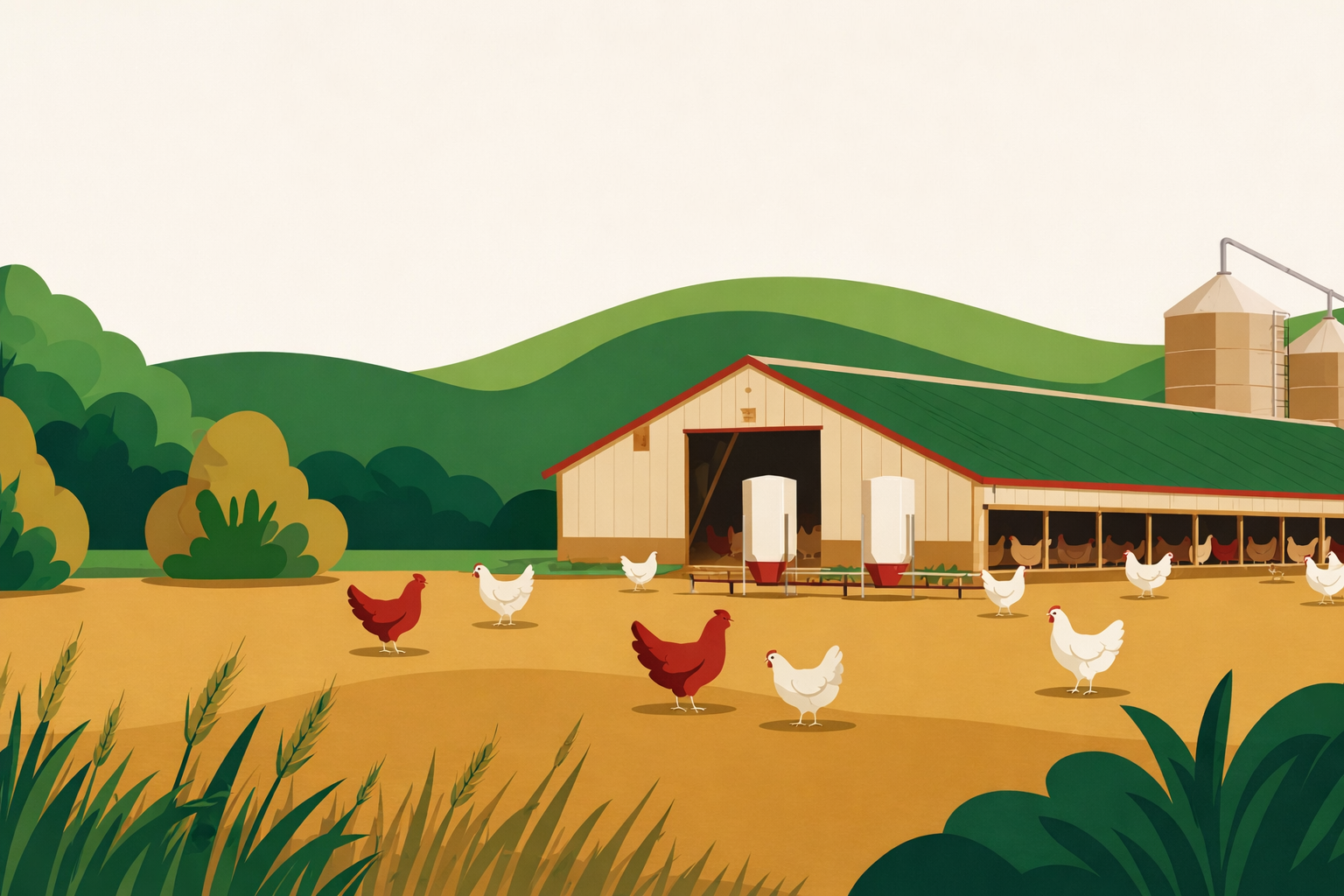
Poultry farmer — a profession, not just a hobby
A poultry farmer today is a full-fledged profession in which the farm is the workplace and the main source of the family’s income. It means daily flock care, record-keeping, settlements and watching the figures — closer to running a small business than to a rural hobby. Before you stake your whole living on it, though, it is worth breaking the trade down into its parts: money, time, risk and knowledge. If you are just starting out, first go through the guide on how to become a poultry farmer, then come back here for the business side.
Two models: integration or independence
At the start you choose one of two basic models. In the integration model you enter a contract with a company (an integrator) that supplies chicks and feed, collects the live birds and gives you steady sales — you provide the building, the work and the flock management, while the integrator takes on the price risk. In the independent model you buy the chicks and feed yourself and find your own buyer, which gives you a bigger margin but puts the whole market risk on your side. The first model is calmer and simpler to start with, the second offers higher potential earnings with greater volatility. We show what actually stays in your pocket in both cases in the article on how much you can earn from poultry farming.
Capital, land and permits
A commercial farm is an investment: the poultry house building, the equipment (heating, ventilation, feed and drinking lines), utility connections and site preparation. You need agricultural land with access to utilities and a road, and a larger scale means building and environmental permits and stocking limits calculated in livestock units. The starting scale must match your capital — a backyard poultry operation for your own needs looks very different from a farm for sale. The bigger the facility, the more formalities, which is why many people start at a smaller scale and expand step by step.
Knowledge, qualifications and the bottom line
A good farmer is not only a keeper but also an analyst of their own results. You need to understand feeding, microclimate, flock health and biosecurity, and on top of that be able to calculate feed costs, FCR (feed used per kg of gain) and the margin per cycle. Formally you do not need a degree to raise poultry, but practical knowledge and solid records decide whether the farm makes money. Courses at agricultural advisory centres, integrator training and reading trusted sources shorten the path to good results.
Everything under control with DlaFerm.pl
Running the farm as a business means dozens of data points: placements, losses, weighings, medicines and withdrawal periods, costs and settlements. DlaFerm.pl brings them together in one poultry farm management software: you keep a digital Flock Card, have flock records in IRZplus and treatment and withdrawal records at hand, and you also see the financial result of the cycle. You can have DlaFerm.pl file your flock-change reports to the often cumbersome IRZplus — we send them to ARiMR for you, if you want, instead of re-typing the data in the portal. It is the tool that turns a craftsman-farmer into an entrepreneur-farmer.
How to build a career as a poultry farmer
From the idea and the cost calculation to reaching commercial scale — here are six stages on the way to farming you can actually live off.
Do the maths and pick a model
Start with the figures: how much capital, how much land and how much time you can give. On that basis choose a model — the safer integration or the more profitable but riskier independence. The breakdowns in the article on how much you can earn from poultry farming will help.
Gain knowledge and choose a species
Learn the basics of feeding, microclimate and flock health, and decide what you raise — e.g. the fast cycle of broiler farming or the steady output of a layer farm. Each species has a different work rhythm, a different income and a different seasonality.
Secure land, a building and permits
Secure a plot with utilities and a road, plan the building and complete the building and environmental formalities at a larger scale. Also check relations with your surroundings — we cover this in the guide on poultry farming and neighbours.
Register the farm and get a number
Commercial farming requires registration with the district veterinary officer and a veterinary number, and you report the flock in IRZplus. The guides on registering a poultry farm and the farm veterinary number walk you through it step by step.
Place your first flock and track results
Prepare the house, place the chicks and, from day one, record losses, weighings, feed and water use and medicines given. It is from this data that you calculate FCR, feed cost per kg of live weight and the margin — without it you do not know whether you are earning.
Grow to commercial scale
Once you master one house, reinvest the profit in further placements, better equipment or a second building. Scaling up gradually — described in the article on large-scale poultry farming — lets you learn at lower risk before the farm becomes your main source of income.
Capital, risks and a farmer’s duties
Before you stake your whole living on farming, count not only the profit but also the costs, risks and duties — here are six areas that most often decide success.
Capital and liquidity
The start is not just the building — it is also the first placements, feed and a buffer for a harder period. Money comes back only after the live birds are sold, so you need a reserve to cover costs between cycles. Underestimating working capital is one of the most common beginner mistakes.
Market and health risks
Income is affected by feed and live-bird prices, which in the independent model you do not control, and by flock health — especially the threat of avian influenza, which can mean shutting down production in a zone. Integration takes on some of these risks but lowers the margin. It is a deliberate choice between peace of mind and higher earnings.
Insurance and social security
As a farmer you usually fall under the agricultural social insurance scheme rather than the general one, with different contributions and rules. It is worth considering voluntary insurance of the animals and farm assets against accidents. Always confirm the details with the social insurance fund and your insurer, as they depend on the scale and form of activity.
Working time and seasonality
Poultry require daily presence — including weekends and holidays — and most of the work falls at placement and collection. Income can be uneven: it arrives in bursts after a sale rather than monthly. You need to plan cover in case of illness and arrange the household budget around irregular inflows.
Records and inspections
Professional farming means keeping flock records in IRZplus, treatment and withdrawal documentation, and readiness for a veterinary inspection at any time. Gaps in the paperwork risk penalties and trouble with sales. The digital Flock Card in the poultry farm management software keeps it all in one place.
Development and constant learning
Genetics, welfare standards and regulations change, so a good farmer keeps learning — through advisory centres, integrator training and trusted sources. Development also means investing in better ventilation, climate control or automation, which improve results. A farm that stands still eventually stops being profitable.
Frequently asked questions about the poultry farmer profession
Can you support a family from poultry farming?add
Yes, at the right scale and with a well-run farm, poultry farming can be a family’s main source of income. The key factors are the size of the facility, the choice of model (integration or independence) and watching results such as FCR and feed cost. A smaller farm is usually an income top-up, while only a commercial scale provides a full living.
Do you need special qualifications to become a poultry farmer?add
Formally you do not need a specific degree to raise poultry, but practical knowledge is essential. You need to understand feeding, microclimate, flock health and biosecurity, and be able to keep records. You can gain this knowledge through advisory-centre courses, integrator training and reliable sources, and best of all through practice with an experienced farmer.
Is it better to join integration or farm independently?add
Integration gives steady sales and shifts part of the price risk onto the company, but lowers the margin — it is safer to start with. The independent model offers higher potential earnings, but you take on the whole market and sales risk. Many beginners start with integration to learn the trade at lower risk, then consider greater independence later.
How much capital do you need to start a poultry farm?add
It depends directly on scale — a small backyard operation looks very different from building a commercial house with full equipment. Beyond the building you must account for the first placements, feed and a financial buffer for the period between cycles. Work out the specific figures for your own project based on current prices of materials and equipment.
Does a poultry farmer pay general or agricultural social security?add
Farmers running a holding usually fall under the agricultural social insurance scheme rather than the general one, with different contributions and rules than non-agricultural activity. The situation depends on the form and scale of activity, so always confirm it directly with the social insurance fund. It is an important part of the calculation, as it affects the farm’s fixed costs.
How do you grow from a small to a commercial scale?add
The safest way is to start with one house, master flock management and reinvest the profit into further placements, better equipment or a second building. Scaling up gradually lets you learn at lower risk and avoid over-investing at the start. We describe a larger scale and its requirements in the guide on large-scale farming.
Run your farm like a business — with DlaFerm.pl
Want poultry farming to be a profession you can live off? We will show you how DlaFerm.pl helps you keep an eye on results, records and flock documentation. Create a free farm account and run the Flock Card from the first placement.
Phone
+48 796 258 151