Poultry farming for sale — where to start
Producing poultry for the market is more than a flock in the house — it is choosing a revenue model, a legal sales channel and the hard maths of profitability. We show where to start: how to choose between eggs, live birds and contract fattening, where to sell, when on-farm retail is enough and when an approved establishment is needed — and how to work out whether it pays.
verifiedFrom the team that has organised work on poultry farms for years.
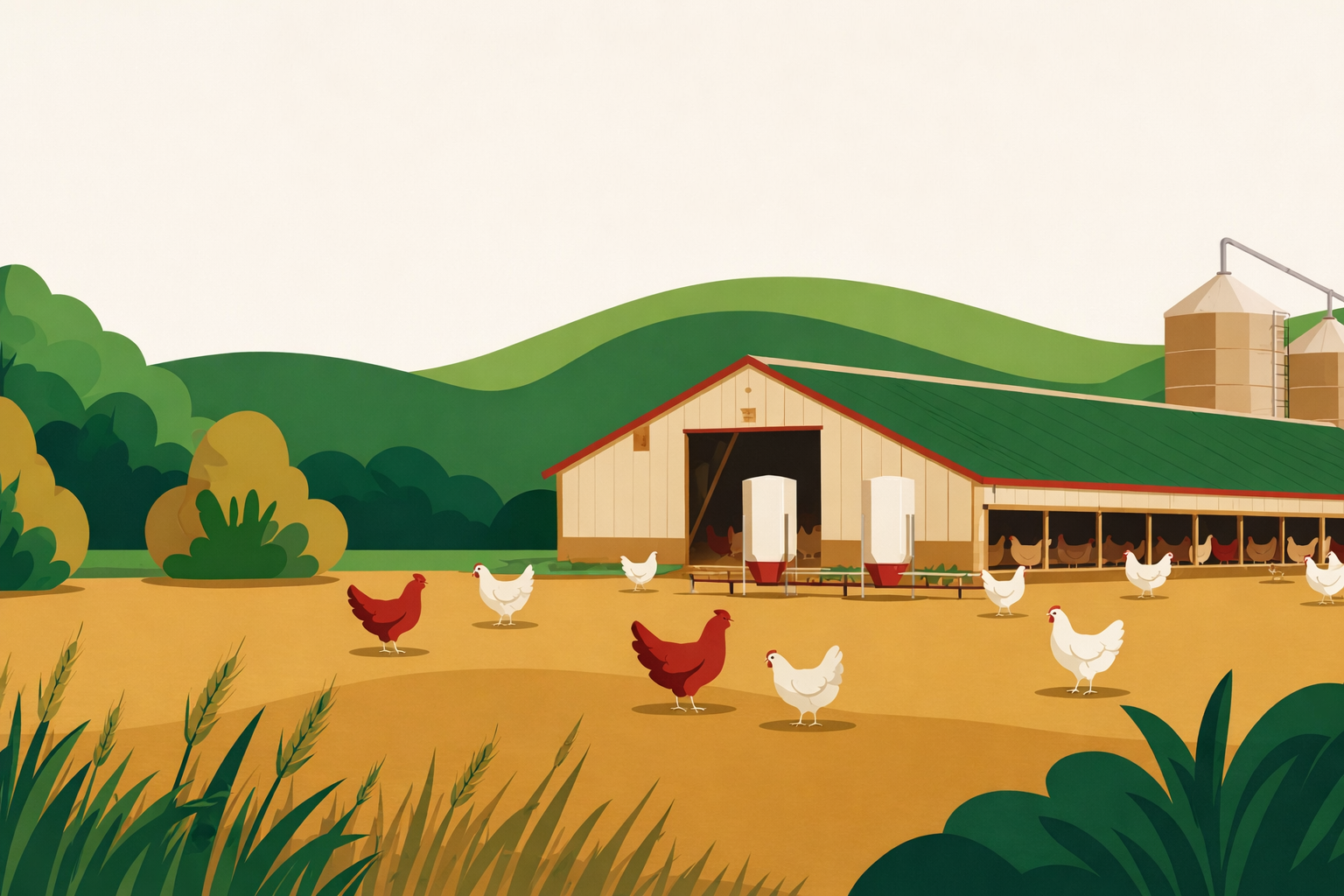
Model first — what you want to earn from
Before you place your first chicks, decide what you actually sell. The three most common models are egg production (laying hens), meat live-bird production and contract fattening within an integration, where a company supplies the chicks and feed and you settle for the gain. Each model has a different entry threshold, cash-flow rhythm and risk. If you are just starting, begin with the guide on keeping poultry for your own needs, then move to the market side deliberately — that is a business, not a hobby.
Where you sell — sales channels
The second pillar is sales. Eggs and live birds can be sold through direct on-farm sales, on-farm retail (RHD), at markets, to shops and catering, or wholesale to a buyer or slaughterhouse. The further from your own fence, the more sanitary and formal requirements apply. Many producers combine channels — some direct, some to a buyer — to stabilise income. We cover legal on-farm sales in the guide on selling poultry from the farm (RHD).
On-farm retail or an approved establishment — the legal frame
This is a key crossroads. Small-scale keeping for your own needs and direct sales run under simplified rules, but as you grow, RHD quantity limits and the duties of an establishment approved by the Veterinary Inspection come in. Every farm must also have a register number and flock records. Start with registering a poultry farm and a farm veterinary number, and learn the keeping standards in the legal standards for keeping laying hens.
Scale and profitability — count before you start
Production for sale lives or dies on margin. You need to know the feed cost per unit of product, mortality, buyer prices and the outlays for energy and labour. Small scale gives a higher unit price in direct sales, large scale a lower production cost but lower margin and dependence on the buyer. Before you decide, review how much you can earn from poultry farming and the profitability of keeping laying hens.
Everything in one place with DlaFerm.pl
Production for sale means records, costs, drug withdrawal periods and inspection readiness. DlaFerm.pl brings this together in one poultry farm management software: you keep a digital Flock Card, have flock records in IRZplus, and if you wish, DlaFerm.pl will file the flock-change reports to IRZplus for you, without retyping data in the cumbersome ARiMR portal. You also issue sales documents — all ready for settlements and inspection access.
How to launch production for sale — step by step
Six stages from a revenue idea to the first legal sale. Each one closes a single element: model, law, sales and money.
1. Choose a production model
Decide what you sell: eggs, meat live birds or fattening within an integration. Check your conditions — building, land, time, capital — and match the species. The guides on keeping laying hens and broiler farming help you compare eggs and live birds.
2. Work out profitability
Build a simple model: the cost of feed, chicks, energy and labour against the expected price and quantity of product. Do not start on a hunch. Use the analysis in how much you can earn from poultry farming and work out feed cost in feed cost per kg of live weight.
3. Choose the legal frame for sales
Decide whether you start with direct sales and on-farm retail (RHD) or aim straight for an approved establishment and a wholesale buyer. Limits and requirements are described in selling poultry from the farm (RHD). This choice sets the whole later level of formalities.
4. Register the farm and get a number
Report the activity, register the flock and obtain a veterinary number. Without this, selling is illegal. Go through registering a poultry farm and the farm veterinary number, and report the flock in IRZplus.
5. Organise sales and logistics
Before you place the flock, have your sales channels roughly lined up: direct buyers, shops, catering, or a contract with a buyer or integration. For live birds, plan collection and transport — see live-bird collection and poultry transport rules.
6. Start production and records
Place the flock, keep daily records, watch drug withdrawal periods and document every sale. From day one use the digital Flock Card and treatment and withdrawal records to stay ready for settlements and inspection.
Formalities, sales and profitability — what not to miss
Six areas that most often decide whether production for sale brings a profit and keeps you clear of penalties.
Formalities and registration
All market production requires a notification, a veterinary number and flock records. No registration means illegal sales and the risk of a penalty. Handle the basics through registering a poultry farm, and learn the keeping duties in the legal standards for keeping.
RHD and MLO — quantity limits
On-farm retail (RHD) and direct supply, as well as marginal, local and restricted (MLO) activity, allow sales under simplified rules but only up to set quantity and territorial limits. Once exceeded, an approved establishment is needed. Always check the thresholds at the source and in the RHD guide.
Sales channels and prices
Direct sales give a higher unit price but require time and a customer base; a buyer and integration give steady offtake but a lower margin. The safest route is to diversify channels. Do not plan production without sales lined up in advance — unsold live birds and eggs are a pure loss.
Taxes and the form of activity
Selling products from your own farm may benefit from exemptions (for example within RHD up to a revenue limit), but once thresholds are exceeded or an establishment operates, tax settlements and possibly a registered business come in. Settle the form and tax duties with an accountant or adviser — this is individual and changeable.
The profitability model
The financial result is price minus unit cost times quantity, minus fixed costs. The biggest costs are feed and chicks, and the result is eroded by mortality and empty house runs. Count it before you start — we show the tools and logic in how much you can earn from poultry farming and the profitability of keeping laying hens.
Records and withdrawal periods
Selling requires full documentation: flock records, treatment, drug withdrawal periods and sales documents. Product from a withdrawal period must not reach the market. Keep treatment and withdrawal records and watch drug withdrawal in poultry to avoid batch recalls and penalties.
Frequently asked questions about poultry farming for sale
Where do I start with poultry farming for sale?add
Start by choosing a revenue model — eggs, live birds or contract fattening — and working out profitability. Then set the legal frame for sales (direct sales, RHD or an approved establishment), register the farm and obtain a veterinary number. Only then place the flock and start your records.
How does on-farm retail differ from an approved establishment?add
On-farm retail (RHD) and direct supply allow you to sell products from your own farm under simplified rules, but only up to set quantity and territorial limits. Once the limits are exceeded or you sell wholesale, an establishment approved by the Veterinary Inspection is needed, with full sanitary requirements. Always check the current thresholds at the source.
Which model is most profitable — eggs, live birds or contract fattening?add
It depends on scale, capital and access to sales. Eggs give steady, repeatable income and work well in direct sales. Live birds mean a faster cycle but greater dependence on the buyer price. Contract fattening within an integration lowers price and capital risk, because the company supplies chicks and feed, but the margin is fixed in advance. Each model must be costed for your own conditions.
Do I have to register the farm to sell poultry or eggs?add
Yes. All market production requires a notification, a veterinary number and the keeping of flock records. Selling without registration is illegal and risks a penalty. Even small-scale direct sales are subject to registration and sanitary duties.
How do I work out whether farming for sale pays?add
Build a simple model: from the expected revenue (price times quantity of product) subtract the costs of feed, chicks, energy, labour and losses from mortality and downtime. The biggest costs are usually feed and chicks. Do this calculation before you start, not after the first batch.
What taxes apply to selling poultry from a farm?add
Selling products from your own farm may benefit from tax exemptions up to set revenue limits, for example within on-farm retail. Once the thresholds are exceeded or an establishment operates, standard tax settlements come in. The form and duties are best settled with an accountant, because the rules are individual and subject to change.
Run production for sale in one place with DlaFerm.pl
Want your records, costs and sales documents under control from day one? We will show you how DlaFerm.pl simplifies settlements and inspection readiness. Write to us.
Phone
+48 796 258 151