Keeping poultry on a working farm
Poultry fits a farm beautifully — birds eat leftovers and screenings, leave manure for the crops, give eggs and meat for your own table, and any surplus you can sell to the neighbours. We show how to fit hens, ducks or geese into the rest of the holding: from the first decision of “how many and what for", through using the droppings as fertiliser, to the formalities of selling and being a good neighbour.
verifiedFrom the team that has organised work on poultry farms for years.
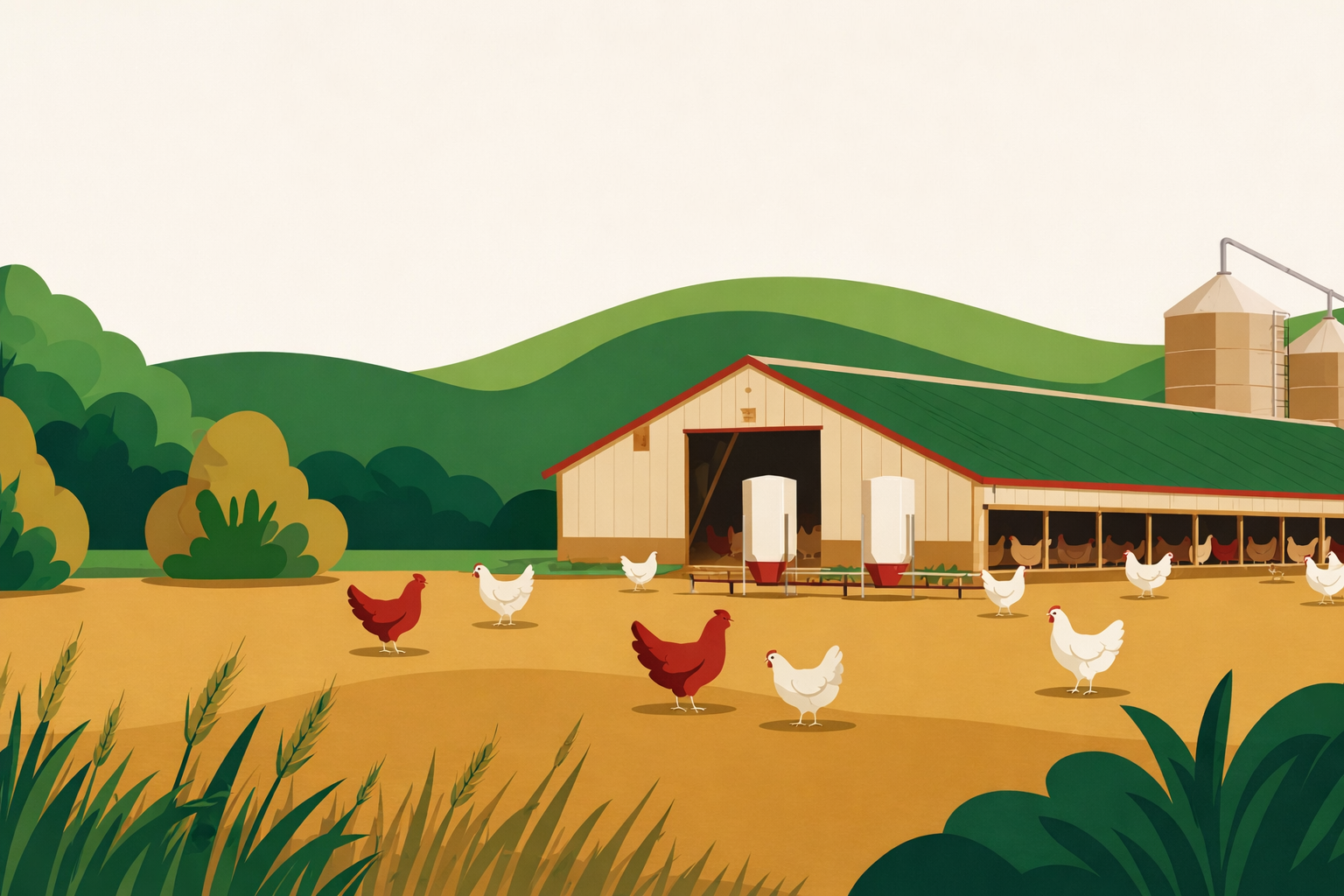
Poultry as part of the farm, not a separate world
On a working farm poultry is rarely an end in itself — most often it is added to what is already there: the fields, the orchard, the vegetable patch, sometimes other animals. Hens and ducks eat grain screenings, leftovers from the garden and kitchen, and in return give eggs, meat and manure for the crops. It is a small-scale closed-loop holding: feed partly from your own field, fertiliser back onto the field. If you are just starting, begin with the basics in the guide on poultry farming for beginners.
For your own use or for sale?
This is the first and most important decision, because it changes everything — the scale, the formalities and the costs. Keeping for your own table (a handful or a dozen hens) means almost no bureaucracy: only bird welfare and getting on with the neighbours matter. Once you want to sell eggs, meat or live birds, you enter the rules — flock registration and often small-scale farm retail (RHD). We separate these two models in the guides on poultry farming for your own use and poultry farming for sale.
Chicken manure — free fertiliser, but with rules
Poultry droppings are one of the best organic fertilisers — rich in nitrogen, phosphorus and potassium. On a farm with land you have somewhere to use it, so it is not a problem to dispose of but a value. It must, however, be used sensibly: excess nitrogen pollutes water, so the nitrate programme and rules on storage and spreading dates apply. We cover safe use in managing chicken manure and the nitrate programme.
Neighbours and distances — before you bring in the birds
A coop means smell, noise and flies — among open fields that is less of a problem than on a plot in a built-up area. It is still worth checking in advance the distances from the plot boundary, the neighbour’s windows and water intakes, and whether you clash with the local zoning plan. Good relations with the neighbours are worth more here than any regulation — a few fresh eggs can solve more than a letter to the council. We gathered the rules in poultry farming and neighbours — the rules.
Order in the flock with DlaFerm.pl
Even a small flock is worth running properly — knowing how many birds you have, when they were treated and what the withdrawal period is before selling eggs or meat. DlaFerm.pl gives you a free farm account with a digital Flock Card and treatment and withdrawal records, and it can file your flock records in IRZplus for you — automatically, if you want. The same tool the big farms use — here at the scale of your holding.
How to fit poultry into your farm
From the decision on scale to your first sale of surplus — six steps that fit poultry into the rest of the holding.
1. Set the goal and the scale
First answer: poultry for your own table or also for sale? That decides the number of birds, the species and the formalities. A few hens for eggs is a different decision from a few hundred birds for slaughter. The guide on how much you can earn from poultry farming and the overview poultry farming step by step will help.
3. Prepare the housing and run
Poultry needs a dry, airy coop and — ideally — an outdoor run. On a farm you can often adapt part of a barn or outbuilding. See to litter, perches, nests and protection from predators. A starting point is backyard poultry keeping.
4. Handle the formalities for your scale
A flock for sale must be reported — registration with the district veterinary officer and an entry in the records. A small flock for your own use has the minimum of duties. Check the registration of a poultry holding and the line of poultry farming without a permit.
5. Build manure into your fertilising
Plan where and when you will spread the droppings — it is free fertiliser for grain, maize or vegetables. Stick to the dates and storage rules of the nitrate programme. Details in managing droppings and the fertilising plan.
6. Start selling the surplus
When there are more eggs and more meat than you need, selling from the farm begins. The simplest route for small quantities is small-scale farm retail (RHD). How to do it legally is described in selling poultry from a farm (RHD).
Rules, costs and risks
Poultry on a farm means less bureaucracy than a commercial farm, but a few things you must not miss. Here are six areas to check.
Registration depends on the purpose
Keeping for your own use means a minimum of formalities, but selling eggs, meat or live birds requires reporting the flock and often an RHD entry. Thresholds and duties can be confusing — when in doubt, ask the district veterinary officer. Start with the registration of a poultry holding and the veterinary number.
Distances and the zoning plan
Before you put up the coop, check the distances from the boundary, the neighbour’s buildings and water intakes, and the provisions of the local zoning plan. A bad location means complaints and, in the extreme, an order to demolish. We gathered the rules in poultry farming and neighbours and farming without a permit.
RHD has its limits
Small-scale farm retail lets you sell food from your own holding, but with quantity limits and hygiene rules. Poultry meat has extra requirements for slaughter and sale. Do not assume “by eye" — read selling poultry from a farm (RHD) and ask at the council and the veterinary office.
Records and the withdrawal period
Every medicine given to the birds means a withdrawal period — a time during which you must not sell eggs or meat. Without records it is easy to make a mistake that endangers the buyer and you. Keep treatment and withdrawal records and watch the medicine withdrawal in poultry.
Manure sensibly — the nitrate programme
Droppings are a fertiliser, but their use is governed by the nitrate programme: spreading dates, nitrogen rates and storage rules. Dumping manure “onto the field for the winter" without protection risks a penalty and water pollution. Plan it according to the nitrate programme and managing droppings.
Costs: low to start, rising with scale
A few hens cost pennies — adapting a space, chicks and feed partly from your own field. The larger the scale and the more you sell, the more costs: biosecurity, testing, slaughter. Work it out realistically in how much you can earn from poultry farming and check the mistakes of a beginner poultry keeper.
Frequently asked questions about poultry on a farm
How many hens can I keep on a farm without formalities?add
Poultry for your own use — a handful or a dozen hens for eggs and meat for the family — involves a minimum of duties; mainly welfare and getting on with the neighbours matter. Registration duties appear at a larger scale and when selling. Thresholds vary, so when in doubt ask the district veterinary officer — details in the guide on registering a poultry holding.
Can I sell eggs and meat from my own farm?add
Yes — the simplest route for small quantities is small-scale farm retail (RHD), which lets you sell food from your own holding directly to consumers. There are quantity limits and hygiene rules, however, and poultry meat has extra requirements for slaughter. Before you start, read our guide on selling poultry from a farm (RHD) and confirm the details at the council and the veterinary office.
What do I do with the poultry manure?add
Poultry droppings are a very good organic fertiliser, rich in nitrogen, phosphorus and potassium — on a farm with land it is best used on the crops. You must, however, follow the nitrate programme: spreading dates, nitrogen rates and storage rules. We cover safe management and the fertilising plan separately.
How far from the neighbour must the coop stand?add
Distances depend on the scale of keeping, the type of building and the provisions of the local zoning plan, so there is no single figure for everyone. Check the distance from the plot boundary, the neighbour’s windows and doors and water intakes, and when in doubt ask at the council. We gathered the rules and tips in the guide on poultry farming and neighbours.
Is poultry worth it on a small farm?add
For your own use poultry almost always pays off — costs are low, part of the feed comes from your own field, and in return you have fresh eggs, meat and free fertiliser. When selling, profitability depends on scale, feed prices and labour. The realistic sum is best done with our guide on earnings from poultry farming.
Which poultry species suits a farm best?add
It depends on what you have: laying hens give eggs all year, broilers and ducks grow quickly for meat, and geese make excellent use of grass and pasture, so they fit where there is a meadow. Many farms combine several species. You will find the comparison in our beginner guides for hens, ducks and geese.
Run farm poultry in good order — with DlaFerm.pl
Want to know how many birds you have, when they were treated and what the withdrawal period is before selling? Create a free farm account with a Flock Card and records — the same tool the big farms use, at the scale of your holding. Write to us.
Phone
+48 796 258 151