Backyard poultry keeping — birds at home step by step
A few hens for fresh eggs, some ducks or a pair of geese by the house is the simplest way to have your own poultry. We show how to start sensibly: where to put the coop, how many birds to keep, how to stay on good terms with neighbours, and what the law and veterinary services require — even of a small home flock.
verifiedFrom the team that has organised work on poultry farms for years.
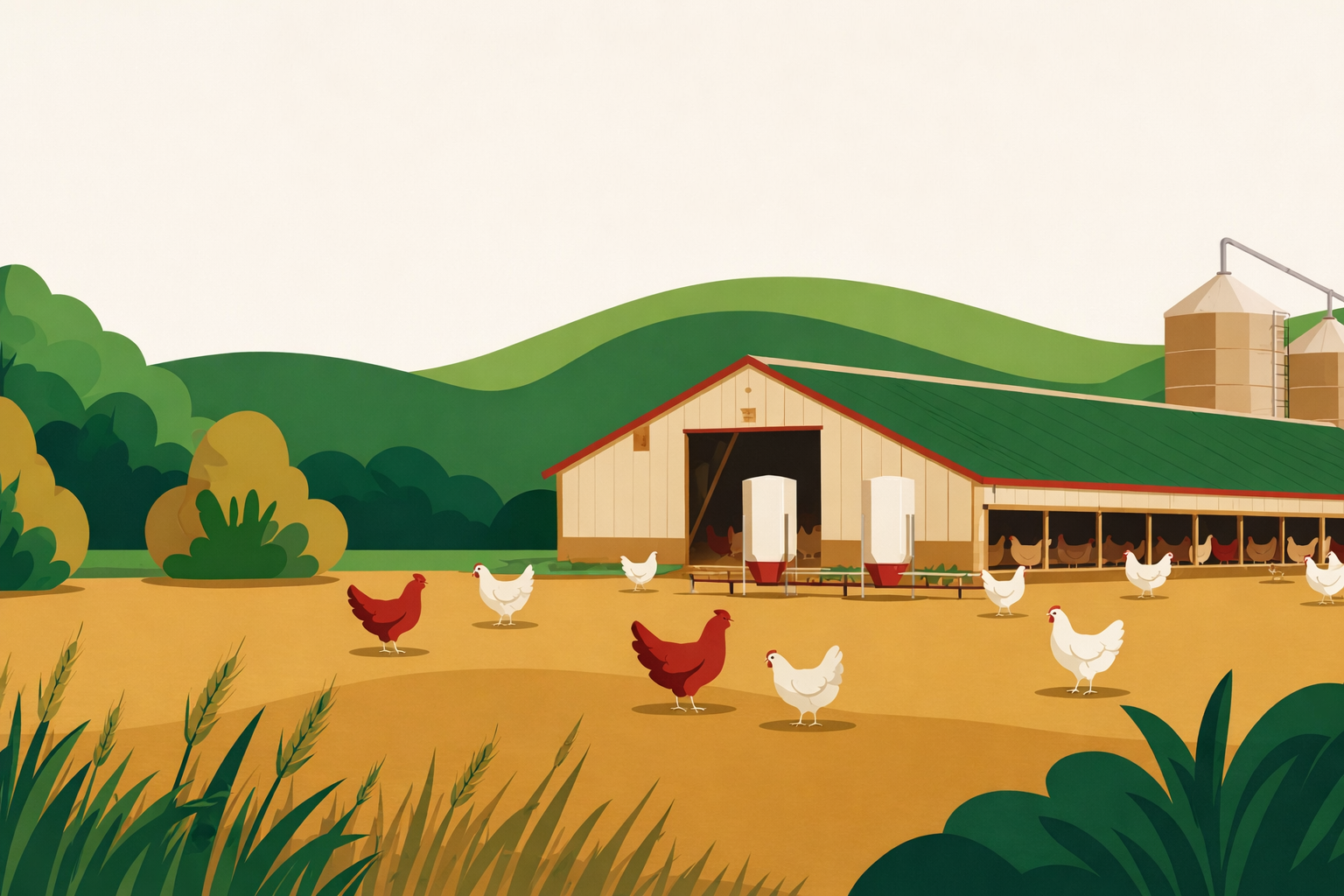
Poultry at home — how it differs
Backyard poultry keeping means keeping a few or a dozen birds on your own plot or holding — mainly for the family: eggs, meat, sometimes feathers. This is a completely different scale from a commercial farm: fewer birds, simpler equipment, but the same basic rules of health and welfare. If you are just starting out, it is worth going through our guides on poultry keeping for beginners and poultry keeping step by step, where we explain the basics from scratch. Here we focus on what is specific about keeping birds at home, on a plot and among neighbours.
Hens, ducks or geese — what to choose to begin
The easiest start is with hens — they are undemanding, lay eggs all year round and do not need water to swim in. Ducks and geese mean more mess and more moisture, but they are hardy and do well on a grassy run. For beginners we recommend keeping hens for beginners; if you are drawn to waterfowl, look into keeping ducks for beginners or keeping geese for beginners. On a small plot a few hens are usually enough — geese and ducks work better where there is more space and access to greenery.
Coop and run — the heart of backyard keeping
Even a few birds need dry, airy shelter and a piece of run. The coop must have a perch, a nest for laying, dry litter and protection from wind and predators (fox, marten, hawk). Fence the run so the birds do not get into the neighbours’ garden and wild birds do not contact your flock. We describe exactly what the building should meet in the guide on coop requirements for laying hens, and we cover keeping the floor clean and dry in litter management in the coop.
Neighbours and the law — before the first birds
Poultry at home is not only your business — it is also smell, noise (especially a rooster and geese) and flies that may bother the neighbours. The rules on so-called nuisances (immissions) say you must not disturb the use of neighbouring properties beyond an average measure. On top of that come veterinary duties: flock registration and biosecurity, especially during avian influenza. We cover relations with the surroundings in poultry keeping and neighbours — the rules, and the limit below which no permits are needed in poultry keeping without a permit.
Order in the flock with DlaFerm.pl
Even with a few birds it is worth knowing when you last dewormed the flock, how many eggs you collect and when you vaccinated. DlaFerm.pl lets you keep a digital Flock Card and records of treatment and medicine withdrawal on your phone instead of in a notebook. You can file your reports to the flock register in IRZplus yourself or let DlaFerm.pl do it for you — automatically, if you want — so it is easier to stay in order with the veterinary services. A free farm account is enough to start — no commitments and no paperwork.
How to set up backyard poultry keeping
From deciding “what and how many” to the first eggs — six steps that take you through setting up a home flock without mess or surprises.
1. Choose the species and scale
Start with a question: eggs, meat or both — and for how many people. On a small plot 3–6 laying hens are usually enough. Ducks and geese need more space and tolerance for moisture. The guide on poultry keeping for your own needs will help you decide.
2. Check the law and the neighbours
Before you buy anything, find out whether you are allowed to keep poultry on your plot (local plan, estate or allotment rules) and how far from the boundary and the neighbour’s windows to put the coop. Read the rules on neighbours and the limits of keeping without a permit.
3. Set up the coop and run
Prepare a dry, airy building with a perch, nests and litter, plus a fenced run that protects against predators and contact with wild birds. We gathered the requirements in coop requirements for laying hens.
4. Report the flock and set up biosecurity
Register the keeping of poultry in line with the current veterinary rules and introduce simple biosecurity: separate footwear, a disinfection mat, no contact with wild birds. The basics are described in poultry farm biosecurity and poultry keeping registration.
5. Bring in the birds and look after the start
Buy healthy birds from a reliable source — chicks to rear, or pullets/adult layers for a faster result. Provide warmth at the start, constant access to feed and clean water. We gathered the most common slip-ups in beginner keeper’s mistakes.
6. Run the flock and keep notes
Check water, feed and the birds’ condition every day, deworm now and then and watch for disease. Note treatments and harvests — conveniently in a digital Flock Card. A steady rhythm of care is made easier by the poultry keeper’s calendar.
Formalities, costs and risks of backyard keeping
Poultry at home is simple but has its traps — from distances and smells to avian influenza. Here are six things not worth skipping.
Law and distances
The coop must stand a reasonable distance from the plot boundary, the neighbour’s windows and the well — the details depend on the local plan and building rules. In single-family housing and on allotments there are sometimes separate limits. Check this before building, using the rules on neighbours; the limits of keeping without formalities are described in keeping without a permit.
Nuisances — smell, noise, flies
A neighbour may have a fair complaint if smell, a crowing rooster or flies exceed the “average measure”. The most common sources of conflict are damp, smelly litter and a loud rooster. We describe frequent changing and drying of the floor in litter management, and the effects of wet litter in wet litter — causes and effects.
Registration and number
Even a backyard flock is, as a rule, subject to reporting to the veterinary services, and a larger one to entry in the register and the assignment of a number. The requirements are tightened, especially during an avian influenza threat, so confirm the current state with the district veterinary officer. Reporting also makes contact with the services easier when disease is suspected. The starting point is poultry keeping registration and getting a veterinary number.
Avian influenza and biosecurity
Avian influenza (HPAI) is a real threat for small flocks too — during outbreaks an order to keep birds under cover and bans are introduced. Apply simple rules: no contact with wild birds, clean footwear, a mat at the entrance. The symptoms and duties are described in avian influenza — symptoms, and what to do on suspicion in reporting a suspicion.
Costs — start-up and upkeep
At the start what counts is the birds, the coop and the equipment (drinkers, feeders, nests), and then mainly feed and litter month after month. Backyard poultry rarely “pays for itself” in money — the value is fresh eggs and your own meat without chemicals. A realistic look at the figures is given in how much you can earn from poultry keeping.
Welfare and health
Birds need space, a dry floor, access to daylight and calm. An overcrowded, dirty coop quickly leads to disease — parasites, coccidiosis, feather problems. We gathered the rules of good keeping in laying-hen welfare, and a picture of the most common diseases is given by the poultry disease symptom table.
Frequently asked questions about backyard poultry keeping
How many hens to keep at home for your own needs?add
For a typical family 3–6 laying hens are usually enough — with good laying that gives several eggs a day. On a small plot it is not worth overdoing the number of birds, because smell, moisture and the risk of conflict with neighbours grow. It is better to keep fewer birds in good conditions than more in cramped space.
Do you need a permit to keep a few hens?add
For a small backyard flock you usually do not build the coop on a building permit, and keeping poultry itself does not require a separate “consent” — but it is subject to reporting to the veterinary services and to rules on distances and nuisances. The limits depend on the size of the structure, the local plan and building rules. The safest thing is to check this at the commune and with the district veterinary officer before you start.
How far from the plot boundary should the coop be?add
The exact distance depends on the local development plan, building rules and the size of the building, so there is no single figure for the whole country. In practice the coop is placed away from the boundary, the neighbour’s windows and the well, to limit smell and conflicts. Before building, establish the requirements at the commune office and look into our guide on neighbour rules.
Does a backyard flock have to be registered?add
As a rule, keeping poultry is reported to the veterinary services, and larger flocks are entered in the register with a number assigned. The requirements are sometimes tightened during an avian influenza threat, so the current state is best confirmed with the district veterinary officer. Reporting also makes contact with the services easier when disease is suspected.
Does avian influenza affect small home flocks?add
Yes — avian influenza threatens even a few hens at home, and during outbreaks orders are introduced, such as keeping birds under cover and limiting the run. The most important thing is biosecurity: no contact with wild birds, clean footwear and a disinfection mat at the entrance. With sudden deaths or neurological signs, contact the veterinary services.
Are ducks and geese suitable for a small plot?add
Ducks and geese are hardy and like a grassy run, but they make a lot of moisture and mess, so on a cramped plot they can be a nuisance — especially for neighbours. If you have more space and access to greenery, they will do well; in a small space hens are the more sensible choice. Our guides on keeping ducks and geese for beginners will help you decide.
Keep your backyard flock in order with DlaFerm.pl
Want records of treatment, vaccinations and harvests at hand, even with a few birds? We will show you how the Flock Card in DlaFerm.pl tidies up home keeping. Write to us.
Phone
+48 796 258 151