Worms in geese: internal parasites, symptoms and prevention
Geese are pasture birds, so parasite pressure is high. The most dangerous is the gizzard worm Amidostomum anseris, which damages the goslings’ muscular stomach. Learn how to recognise worm infection, how to prevent it, and how to keep treatment records.
verifiedFrom the team that has organised work on poultry farms for years.
What are worm infections in geese?
Worm infections (helminthiasis) are parasitic diseases caused by worms living in the bird’s digestive tract. In geese the most important is the gizzard worm Amidostomum anseris, a nematode that settles in the muscular stomach. Besides it, you may find Capillaria (hairworms), the nematode Echinuria and tapeworms. The parasites weaken the bird by taking its nutrients and damaging the wall of the digestive tract. Young geese — goslings — suffer most, because their bodies are still weak.
Why is Amidostomum anseris so dangerous?
Amidostomum anseris is a nematode that lodges under the lining of the muscular stomach — the strong, muscular part of the stomach where the goose grinds its food. The parasite damages this lining, so the stomach works worse and the bird digests poorly. In goslings this leads to weakness, reduced growth, apathy (the bird is sluggish and listless) and, in heavy infection, even deaths of young birds. This is the parasite that most often causes losses in goose flocks kept on a run.
Why are geese especially at risk?
Geese are pasture birds — they spend most of their time outdoors grazing grass. That is natural for the species, but it is exactly why worm pressure is higher in them than in poultry kept indoors. Eggs and larvae of the parasites reach the pasture in the droppings of infected birds and are eaten with the grass or swallowed with water. Some parasites (e.g. tapeworms, Echinuria) also need an intermediate host — a small invertebrate such as a water crustacean that the goose eats. Standing water and wet, trampled runs favour infection. More on managing the flock: Goose farming.
What are the symptoms of worms in geese?
Symptoms are often subtle, especially at the start. Most often the farmer sees reduced growth and poorer condition — the birds grow more slowly and are less even. In goslings there is weakness, apathy and reluctance to move. Diarrhoea and pallor may appear — pale beaks and legs point to anaemia caused by parasites taking blood or nutrients. In heavy infection of young birds, mortality rises. Overview of other disease symptoms: Poultry diseases — symptom table.
How is worm infection diagnosed?
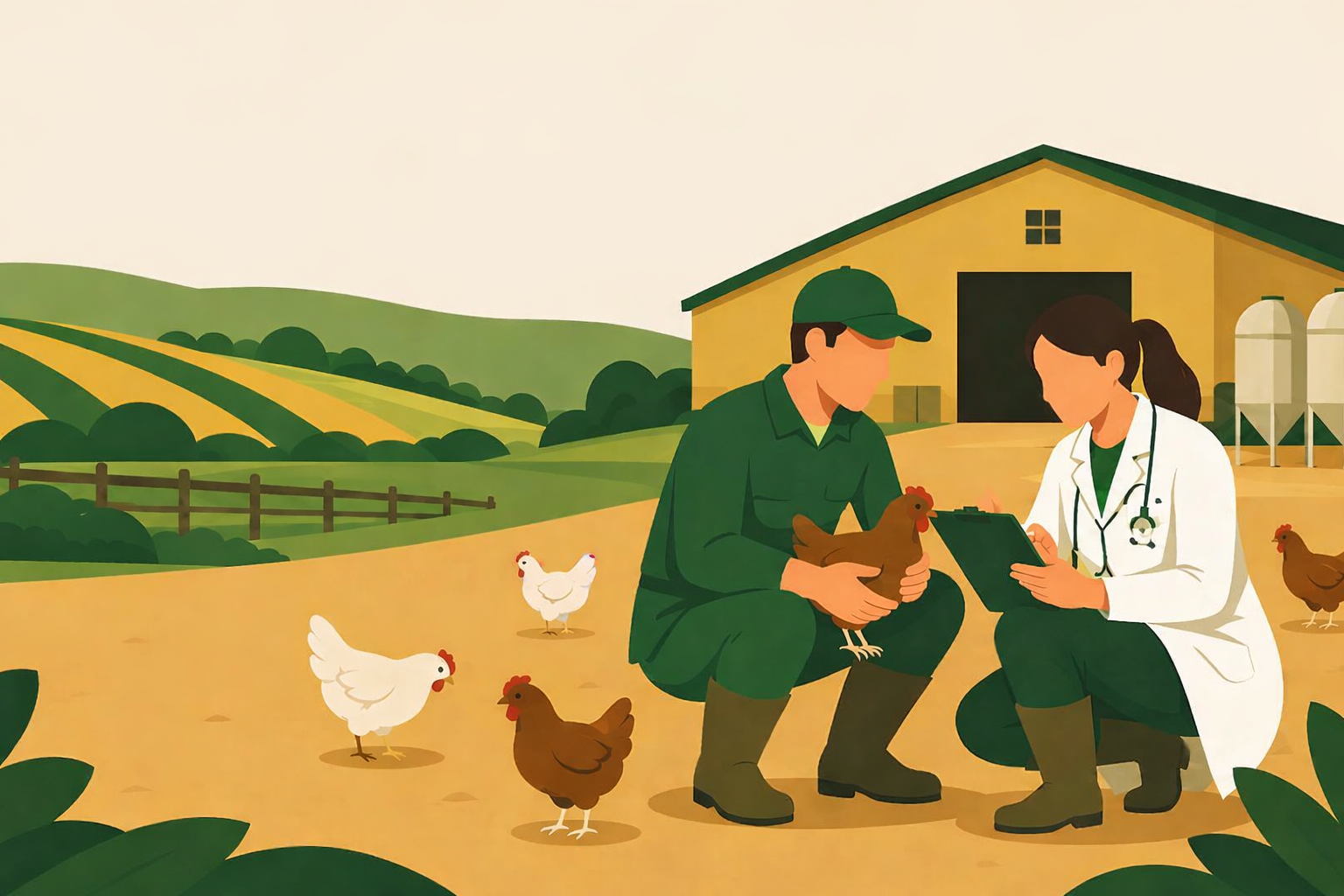
Symptoms alone cannot be assigned to worms with certainty, because reduced growth occurs in other diseases too. Certainty comes from faecal testing — the laboratory counts how many parasite eggs there are per gram of faeces, which shows the strength of infection. The second method is a post-mortem examination of a dead bird by a veterinarian, who inspects the muscular stomach and intestines and finds adult parasites. On this basis the vet selects the drug and decides whether and when to deworm the flock. On the vet’s role: Farm veterinarian.
How worms hit geese and their results
Each of these signals should prompt the farmer to run a faecal test and consult a veterinarian.
Reduced growth and condition
Parasites take the bird’s nutrients, so geese grow more slowly and are less even despite correct feeding. This is often the first and only signal of subclinical worm infection.
Weakness in goslings
Young geese are the most vulnerable. Amidostomum anseris damages their muscular stomach, so goslings weaken, digest poorly and lose strength faster than adult birds.
Apathy and reluctance to move
Infected birds are sluggish, less active on the run and reluctant to come to feed. Watching flock behaviour allows the problem to be caught early.
Diarrhoea
Damage to the wall of the digestive tract by parasites can cause diarrhoea and poorer faecal quality. Wet litter and dirty feathers around the cloaca are a warning sign.
Pallor and anaemia
Pale beaks, legs and mucous membranes point to anaemia. Parasites taking blood or impairing digestion lead to weakness and a poorer appearance of the bird.
Deaths of young birds
In heavy infection, especially Amidostomum anseris in goslings, the number of deaths rises. A sudden increase in mortality in a flock on a run requires urgent veterinary examination.
How to prevent worms and how to act when infection occurs
Effective prevention is above all managing the run, water and treatment records — deworming always on the veterinarian’s advice.
Pasture and run rotation
Regularly changing the run breaks the parasite’s cycle — eggs and larvae in the soil die off over time when birds do not keep reinfecting the same patch of ground. Avoiding overcrowding on the run reduces the number of parasites on the grass. More: Goose stocking density.
Clean water
Geese love water, but standing puddles and dirty drinkers are a route of infection — also via intermediate hosts the goose swallows with water. Clean, regularly changed water and drinkers that keep it free of droppings limit parasite pressure.
Dry litter indoors
In the house or shelter, dry and friable litter limits the development of parasite eggs and keeps birds in better condition. Wet litter favours infection and other diseases. Details: Poultry house litter — management.
Quarantine of new birds
Newly introduced geese can bring parasites into the flock. Isolating new birds, testing their faeces and, if needed, deworming them before they join the flock is the basis of biosecurity. More: Poultry farm biosecurity.
Deworming on the vet’s advice
Deworming should follow a faecal test and the veterinarian’s advice — the choice of drug, dose and timing. Blind deworming is often ineffective and promotes parasite resistance. The decision rests with the farm veterinarian.
Treatment records and withdrawal
Every administration of an antiparasitic drug must be recorded: date, drug, dose, route of administration and the withdrawal period before slaughter. DlaFerm.pl lets these records be kept digitally. More: Treatment records and drug withdrawal.
Frequently asked questions about worms in geese
What is the gizzard worm in geese?add
The gizzard worm is the common name for the nematode Amidostomum anseris. The parasite lodges under the lining of the goose’s muscular stomach and damages it, so the bird digests worse. Goslings suffer most — they weaken, grow poorly and, in heavy infection, die.
Why do geese get worms more often than other poultry?add
Because geese are pasture birds and spend most of their time outdoors grazing grass and drinking water. Parasite eggs and larvae reach the pasture in droppings, and the goose picks up some parasites via intermediate hosts in the water. Constant contact with the ground and water raises the risk of infection.
How is worm infection in geese recognised?add
Signs such as reduced growth, weakness in goslings, apathy, diarrhoea and pallor may suggest worms, but they are not conclusive. Certainty comes from a faecal test, in which the laboratory counts parasite eggs per gram of faeces, and from a post-mortem of a dead bird by a vet. Only the test result allows treatment to be chosen.
How can worm infections in geese be prevented?add
The most important measures are pasture and run rotation with no overcrowding, clean water, dry litter indoors and quarantine of new birds. Deworming is carried out on the veterinarian’s advice, based on a faecal test. Together these measures break the parasite’s cycle.
When and with what should geese be dewormed?add
The timing and drug are chosen by the veterinarian on the basis of a faecal test and the situation in the flock. Geese should not be dewormed blindly, as this is often ineffective and promotes parasite resistance. After dosing, the withdrawal period before slaughter must be observed and the treatment recorded.
How does DlaFerm.pl help with worms in geese?add
DlaFerm.pl enables digital treatment and withdrawal records — legally required documentation for every administration of a product. The Flock Card lets you track growth and condition, making it easier to detect a drop in form early. The data are always available during a veterinary inspection.
Sources & resources
- linkMSD Veterinary Manual — parasitic diseases of poultry (Amidostomum)
- linkNational Veterinary Research Institute — PIWet (Puławy)
- linkChief Veterinary Inspectorate Poland — information for poultry farmers
- linkWOAH — World Organisation for Animal Health
- linkKRD-IG — Polish Poultry Council Industry Chamber
Keep treatment records with DlaFerm.pl
Want to see how the Flock Card and withdrawal records work for geese? Write to us or create an account.
Phone
+48 796 258 151