Worm infections in quail: symptoms, prevention and treatment records
Worm infections are diseases caused by internal parasites — in quail most often by gastrointestinal nematodes (including capillary worms, Capillaria), and in birds with outdoor access also by the windpipe worm (gapeworm). Learn how to recognise them, how to prevent them, and how to keep treatment records.
verifiedFrom the team that has organised work on poultry farms for years.
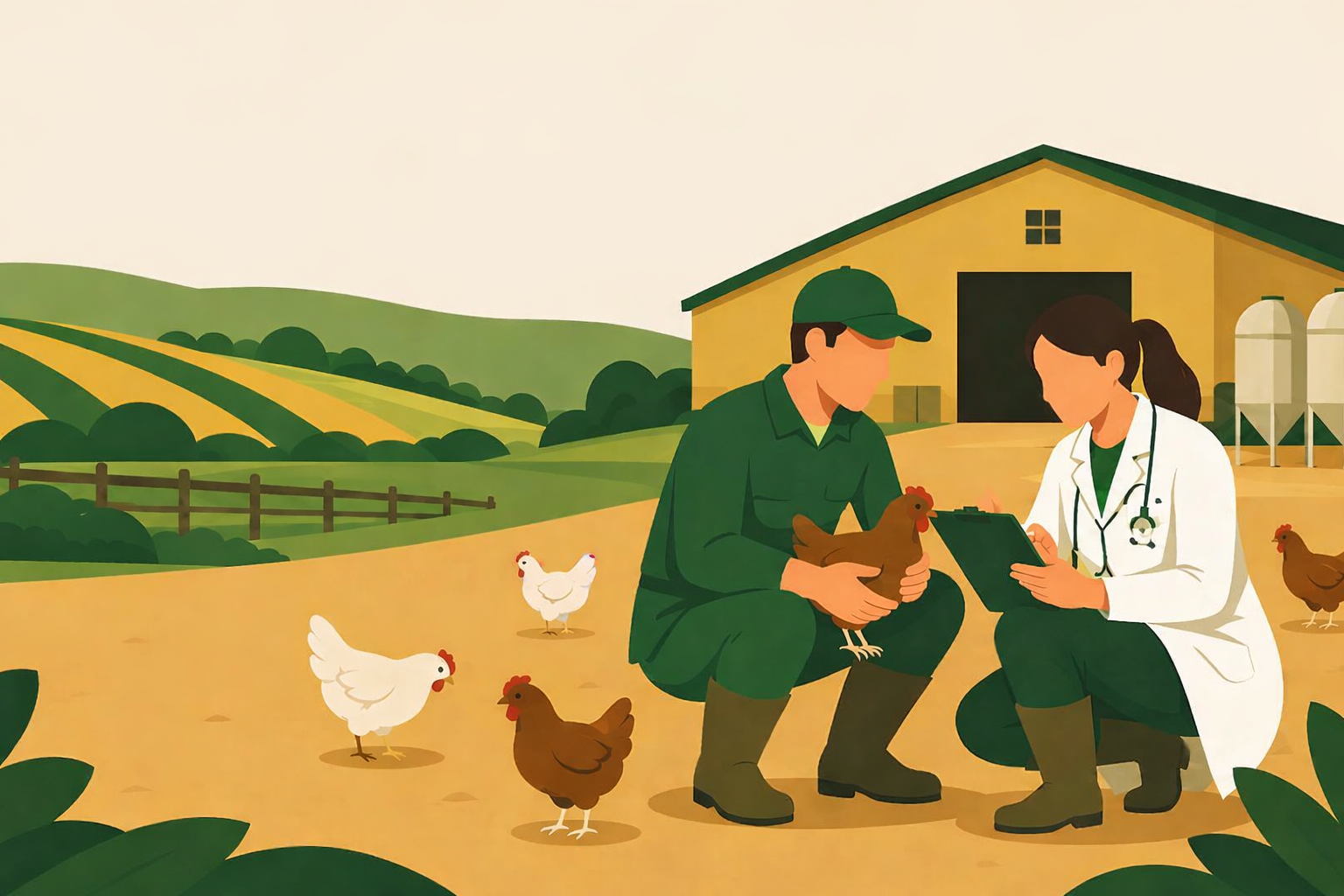
What are worm infections in quail?
Worm infections are parasitic diseases caused by worms — in poultry most often by nematodes (roundworms) living in the digestive tract. In quail, capillary worms of the genus Capillaria are particularly important — thin, hair-like nematodes that damage the mucosa of the crop, oesophagus and intestine. Other gastrointestinal nematodes may also occur in the gut. The parasites impair nutrient absorption and irritate the wall of the digestive tract, which in a bird as small as a quail quickly affects condition. More about keeping them: Quail farming.
How does a quail get infected with parasites?
Most worm infections spread through the feeding route: the bird swallows parasite eggs or larvae together with contaminated feed, water or litter that became contaminated from the droppings of infected birds. Some parasites (e.g. certain capillary worms) use an intermediate host such as the earthworm — which is why birds in contact with soil are more exposed. Wild birds flying over the farm can contaminate the run with parasite eggs. The more contact with fresh droppings and soil, the higher the risk of infection.
Why does cage rearing reduce the risk of worms?
This is an important feature that distinguishes quail from outdoor birds. In cage or slatted-floor rearing the droppings fall away beneath the birds and are not re-ingested, and the birds have no contact with soil or with the earthworms that act as intermediate hosts. This breaks the life cycle of many parasites and the risk of worm infections is clearly lower than in birds with outdoor access. It does not mean the risk disappears — introduced birds, contaminated feed or rodents can still bring parasites into the flock. Consistent poultry farm biosecurity helps here.
Gapeworm — the windpipe worm in birds with outdoor access
Quail with access to a run or to soil can develop gapeworm, an infection with the nematode Syngamus trachea that lives in the windpipe. The parasite obstructs breathing, so the symptoms differ from intestinal worms: the bird gapes, stretches its neck, shakes its head and struggles to catch its breath, sometimes making wheezing sounds. Gapeworm often uses intermediate hosts (earthworms, snails, insects), so it mainly affects birds in contact with soil. Any breathing difficulty in the flock requires an urgent vet consultation, because the causes of respiratory problems are many.
Worm infections and other quail diseases
The symptoms of worm infections — poorer growth, diarrhoea, weakness, a drop in egg laying — are often non-specific and may accompany other diseases or be confused with them. That is why you should not deworm blindly, but base the diagnosis on faecal testing and the vet’s assessment. An overview of diseases of this species is here: Quail diseases, and a quick symptom reference for poultry: Poultry diseases — symptom table.
How worm infections hit quail and production
Each of these signals should prompt the farmer to consult a veterinarian and test the droppings.
Poorer growth and weakness
The parasites consume part of the nutrients and irritate the gut, so the birds grow more slowly, become apathetic and lose condition. In a bird as small as a quail, the decline happens faster than in larger poultry.
Diarrhoea and soiled vent feathers
Nematode irritation of the intestinal mucosa often produces loose, sometimes mucoid droppings. Dirty, matted feathers around the vent are a common warning sign in the flock.
Drop in egg laying
In laying quail, worm infection lowers and destabilises egg production and worsens the birds’ overall condition. An unexplained fall in egg numbers is always worth diagnosing.
Pallor and poorer plumage
Chronic worm infection leads to malnutrition and anaemia — you can see paleness of the skin and mucous membranes and dull, ruffled feathers. The birds cope less well with stress and concurrent diseases.
Breathing difficulty and gaping (gapeworm)
If the quail have a run, the windpipe worm can cause gaping, neck stretching, head shaking and difficulty breathing. This symptom differs from intestinal worms and needs an urgent vet assessment.
Non-uniformity and deaths
Heavy infection produces large weight differences between birds, and in the weakest ones — exhaustion leading to deaths. The severity of symptoms depends on the parasite burden and the flock’s condition.
How to prevent worm infections and how to act when they are suspected
Effective prevention combines environmental hygiene, reduced contact with droppings, and deworming carried out only on veterinary advice.
Clean and dry litter or slats
Dry, regularly changed litter and clean slats limit the survival of parasite eggs and larvae and reduce the birds’ contact with droppings. How to manage it: Poultry house litter — management.
Reduce contact with droppings and soil
Slatted or cage rearing, where droppings fall away beneath the birds, breaks the life cycle of many parasites. Where there is a run, rotate and dry the ground and avoid overcrowding — see quail stocking density.
Protection from wild birds and rodents
Screening windows and openings with mesh, covering feed and water, and rodent control limit the introduction of parasite eggs from outside. This is part of broader poultry farm biosecurity.
Quarantine for new birds
Newly introduced quail should be kept separately for several weeks and — if needed — have their droppings tested before they join the flock. This prevents you from bringing in parasites along with new birds.
Faecal testing and vet diagnosis
Diagnosis is based on faecal testing (counting the number of parasite eggs per gram of droppings) and post-mortem examination of dead birds. The choice of drug, dose and deworming schedule is set exclusively by a veterinarian — do not deworm blindly.
Deworming with records and withdrawal
Record every administration of an antiparasitic drug: date, drug, dose, route of administration and the withdrawal period before selling eggs or meat. DlaFerm.pl keeps this documentation digitally — see treatment records and drug withdrawal.
Frequently asked questions about worm infections in quail
Which internal parasites most often attack quail?add
Most often these are gastrointestinal nematodes, including capillary worms of the genus Capillaria, which damage the mucosa of the crop, oesophagus and intestine. In birds with access to a run or soil, gapeworm — infection with the windpipe worm — is also possible. The exact parasite species is determined by faecal testing and post-mortem examination.
Do caged quail also get worm infections?add
The risk is lower than in outdoor birds, because in cage or slatted-floor rearing the birds have no contact with droppings or with soil, which breaks the life cycle of many parasites. The risk does not disappear, though — parasites can reach the flock with new birds, contaminated feed or via rodents. That is why hygiene and quarantine matter even in cages.
How do you recognise worm infections in quail?add
Typical signals are poorer growth, diarrhoea, weakness and a drop in egg laying, and with gapeworm — breathing difficulty, gaping and neck stretching. The symptoms are non-specific and may accompany other diseases, so the diagnosis is confirmed by faecal testing rather than observation alone.
Can I deworm the flock without a vet?add
It is not advised. The choice of drug, dose and timing depends on the parasite species and the birds’ condition, and many products require a withdrawal period before selling eggs or meat. Deworming is set by a veterinarian based on faecal testing — deworming blindly is often ineffective and may expose the farmer to penalties.
How can I reduce the risk of worms on a quail farm?add
Keep litter or slats clean and dry, reduce the birds’ contact with droppings and soil, protect the farm from wild birds and rodents, and quarantine new birds. Regular faecal testing allows early detection of a problem. These are elements of broader farm biosecurity.
How does DlaFerm.pl help with worm infections?add
DlaFerm.pl enables digital treatment and withdrawal records — required documentation for every deworming. The Flock Card lets you track growth and egg laying, making early detection of a decline in condition easier. Data are always available for veterinary or inspection visits.
Sources & resources
- linkMSD Veterinary Manual — internal parasites of poultry (helminthiasis)
- linkNational Veterinary Research Institute — PIWet (Puławy)
- linkChief Veterinary Inspectorate Poland — information for poultry farmers
- linkWOAH — World Organisation for Animal Health
- linkKRD-IG — Polish Poultry Council Industry Chamber
Keep treatment records with DlaFerm.pl
Want to see how the Flock Card and withdrawal records work for deworming? Write to us or create an account.
Phone
+48 796 258 151