Worm infections in laying hens: symptoms, prevention and deworming
Worm infections — internal parasites — are a common, chronic problem in laying hens, especially in free-range and floor systems. Learn how to spot them from a drop in lay and a pale comb, how to test faeces, and how to deworm while observing the egg withdrawal period.
verifiedFrom the team that has organised work on poultry farms for years.
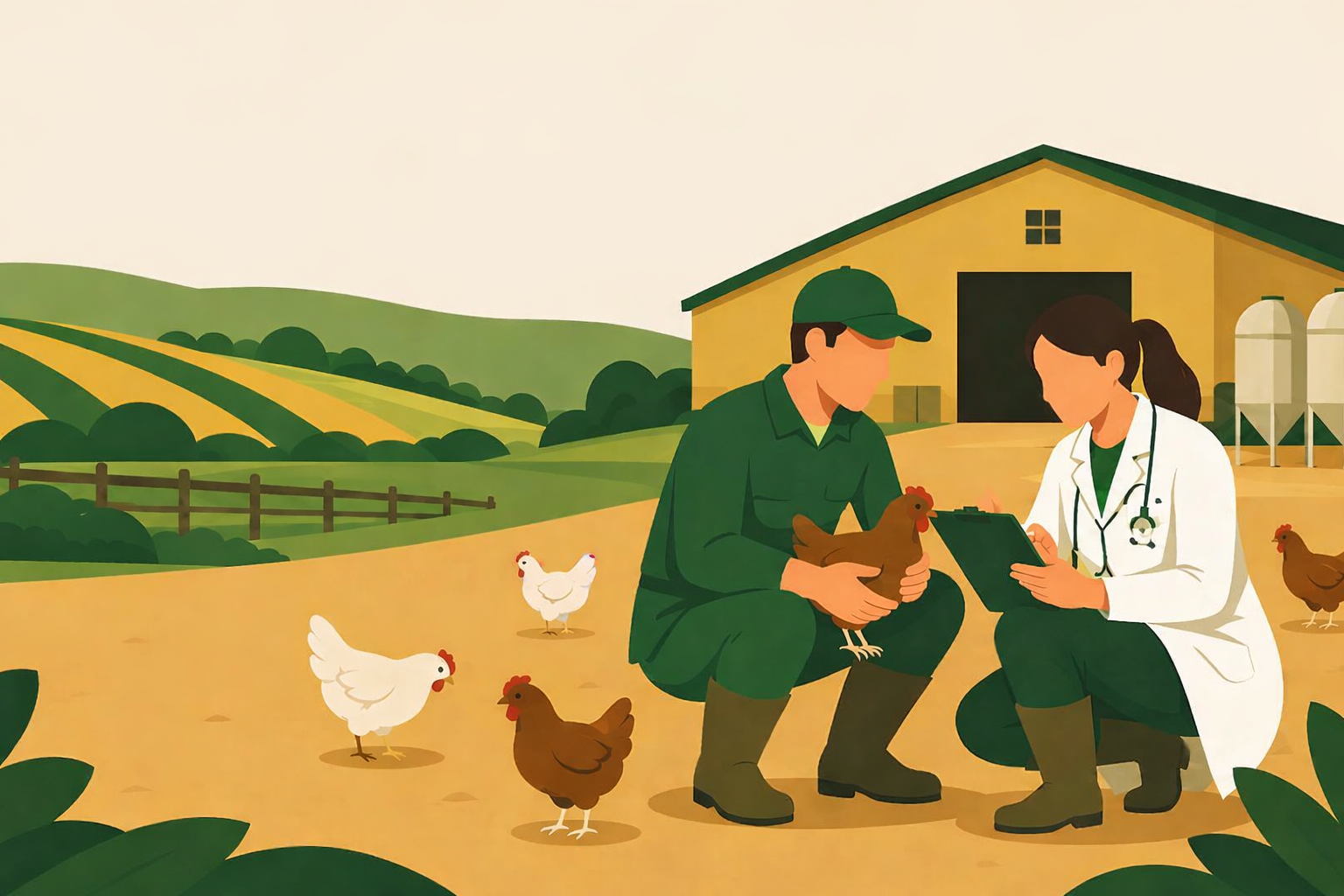
What are worm infections in laying hens?
Worm infections are parasitic diseases caused by worms living in the bird’s digestive tract. In laying hens the most important are roundworms (nematodes): the large roundworm (Ascaridia galli), which lives in the small intestine, the caecal worm (Heterakis gallinarum) in the caeca, and hairworms (Capillaria) — very small but particularly dangerous parasites. In birds with outdoor access, tapeworms (Raillietina) are added. The parasites irritate and damage the intestinal lining, steal nutrients and weaken the bird, which directly translates into poorer egg laying and flock condition.
What are the symptoms of worms in hens?
Worm infections in hens are usually chronic and insidious — often without acute signs, but with a clear drop in performance. The most common signals are: a gradual drop in lay and poorer egg quality (thinner shell, paler yolk), a pale comb and wattles indicating anaemia, general weakness and ruffled feathers, diarrhoea and lower body weight despite proper feeding. Sometimes adult worms are visible in the droppings — a clear sign of a heavy infection. In mild cases the only symptom may simply be poorer laying with no other obvious cause.
Why do worms lower egg production?
Intestinal parasites steal the protein, energy and vitamins that the bird needs above all for egg production. A damaged intestinal lining absorbs nutrients less efficiently — even on a full, well-balanced diet a hen produces fewer and weaker eggs. Hairworms, despite their small size, can cause serious intestinal damage and marked anaemia. In addition, the caecal worm (Heterakis) can carry the protozoan Histomonas, which is especially dangerous for turkeys kept together with hens. Every chronic infection means a measurable loss in egg output and higher feed consumption.
Why does free-range farming increase the risk?
Hens with outdoor access have a much higher worm risk than birds kept solely indoors. The reason is simple: earthworms, snails and insects living on the range are intermediate hosts for many parasites — a hen becomes infected by eating an infected invertebrate or parasite eggs from the soil. A range is also hard to fully clean, and parasite eggs survive in the soil for months. That is why in free-range and organic systems faecal monitoring and range rotation are especially important. More on flock management: Raising laying hens.
Worms and other diseases of layers
Worm infections rarely occur in isolation — a weakened, parasite-burdened bird is more prone to other diseases, and a damaged gut opens the door to bacterial infections and coccidiosis. A pale comb or a drop in lay can also have other causes, so a diagnosis should always be confirmed by faecal testing and veterinary consultation. You will find an overview of symptoms of other diseases in the table: Poultry diseases — symptom table.
How worms hit hens and production results
Each of these signals should prompt the farmer to test the faeces and consult a veterinarian.
Drop in lay and poorer eggs
A gradual, unexplained drop in egg numbers and poorer quality (thinner shell, paler yolk) is the most common and earliest signal of worms in hens.
Pale comb and wattles
A pale, anaemic comb points to anaemia — parasites (especially hairworms) damage the gut and deprive the bird of the components it needs to produce blood.
Weakness and ruffled feathers
Infected birds are apathetic, ruffled and develop poorly. Parasites steal energy and protein, so a hen weakens despite proper feeding.
Diarrhoea and soiled feathers
Gut irritation by worms causes diarrhoea and soiling of feathers around the vent. Wet droppings also worsen the litter condition in the house.
Visible worms in droppings
Adult roundworms may be visible to the naked eye in droppings or at post-mortem. This signals a heavy, advanced infection requiring a quick response.
Lower body weight and feed use
Despite unchanged feeding, birds lose or fail to gain weight and feed use per egg rises — the parasites take part of the nutritional value of the feed.
How to prevent worms and how to deworm hens
Effective protection combines regular faecal monitoring, targeted deworming on veterinary advice, range and litter hygiene, and reliable treatment records.
Regular faecal testing (McMaster)
Monitoring is the foundation: testing faecal samples by the McMaster method counts the number of parasite eggs per gram of faeces and gauges the level of infection. Regular testing shows when deworming is genuinely needed, instead of dosing blindly.
Deworming on veterinary advice
Antiparasitic drugs are selected, dosed and recommended by a veterinarian based on the faecal result and the parasite species. In layers the withdrawal period is crucial: some drugs require eggs to be held off sale for a set time. Never deworm on your own without consultation.
Egg withdrawal and records
Every drug administration must be recorded: date, drug, dose, route and the withdrawal period during which eggs must not enter the market. DlaFerm.pl lets you keep these records digitally. More: Treatment records and drug withdrawal.
Range rotation and soil hygiene
Alternating between several ranges and letting them rest periodically lowers the number of parasite eggs in the soil. Avoiding permanently soggy, muddy spots limits the birds’ access to intermediate hosts (earthworms, snails).
Dry litter and biosecurity
Dry, regularly replaced litter makes it harder for parasite eggs to survive, and rodent control limits pests that spread pathogens. Quarantining new birds prevents parasites being brought into the flock. Details: Poultry house litter and farm biosecurity.
Production monitoring in the Flock Card
Tracking lay and flock condition in the Flock Card helps catch the slow drop in production typical of worms before it becomes severe. An early response and faecal testing limit losses.
Frequently asked questions about worms in laying hens
What are worm infections in laying hens?add
They are infections with internal parasites, mainly roundworms: the large roundworm, the caecal worm and hairworms, plus tapeworms in birds with range access. The parasites live in the intestines, steal nutrients and damage the gut lining, which lowers lay and worsens the hens’ condition.
How can I tell if my hens have worms?add
The most common signals are a gradual drop in lay, a pale comb (anaemia), weakness, diarrhoea and lower body weight despite proper feeding. Sometimes adult worms are visible in the droppings. Certainty comes only from faecal testing — many infections run without obvious symptoms.
Does free-range farming increase the worm risk?add
Yes. Earthworms, snails and insects on the range are intermediate hosts for many parasites, and parasite eggs survive in the soil for months. That is why in free-range and organic systems regular faecal testing and range rotation are especially important.
How often should I deworm laying hens?add
There is no single fixed schedule that suits every farm. The best approach is targeted deworming: regular faecal testing by the McMaster method and dosing only when the infection level requires it. The schedule and product are set by a veterinarian.
Can I sell eggs after deworming the hens?add
Only after the withdrawal period for the given drug has passed. Many products require eggs to be held off sale for a set time after dosing. The withdrawal period must always be recorded in the treatment records and strictly observed so the eggs are safe for the consumer.
How does DlaFerm.pl help with worm infections?add
DlaFerm.pl enables digital treatment and withdrawal records — legally required documentation for every deworming. The Flock Card lets you track lay and flock condition, making it easier to spot the drop in production typical of worms early. Data are always available for a veterinary inspection.
Sources & resources
Keep deworming records with DlaFerm.pl
Want to see how the Flock Card and egg withdrawal records work? Write to us or create an account.
Phone
+48 796 258 151