Worms in ducks: internal parasites, symptoms and prevention
As waterfowl, ducks are particularly exposed to internal parasites linked to water and the range. Learn how to recognise worm infections, how to reduce the risk, and how to keep compliant treatment and withdrawal records.
verifiedFrom the team that has organised work on poultry farms for years.
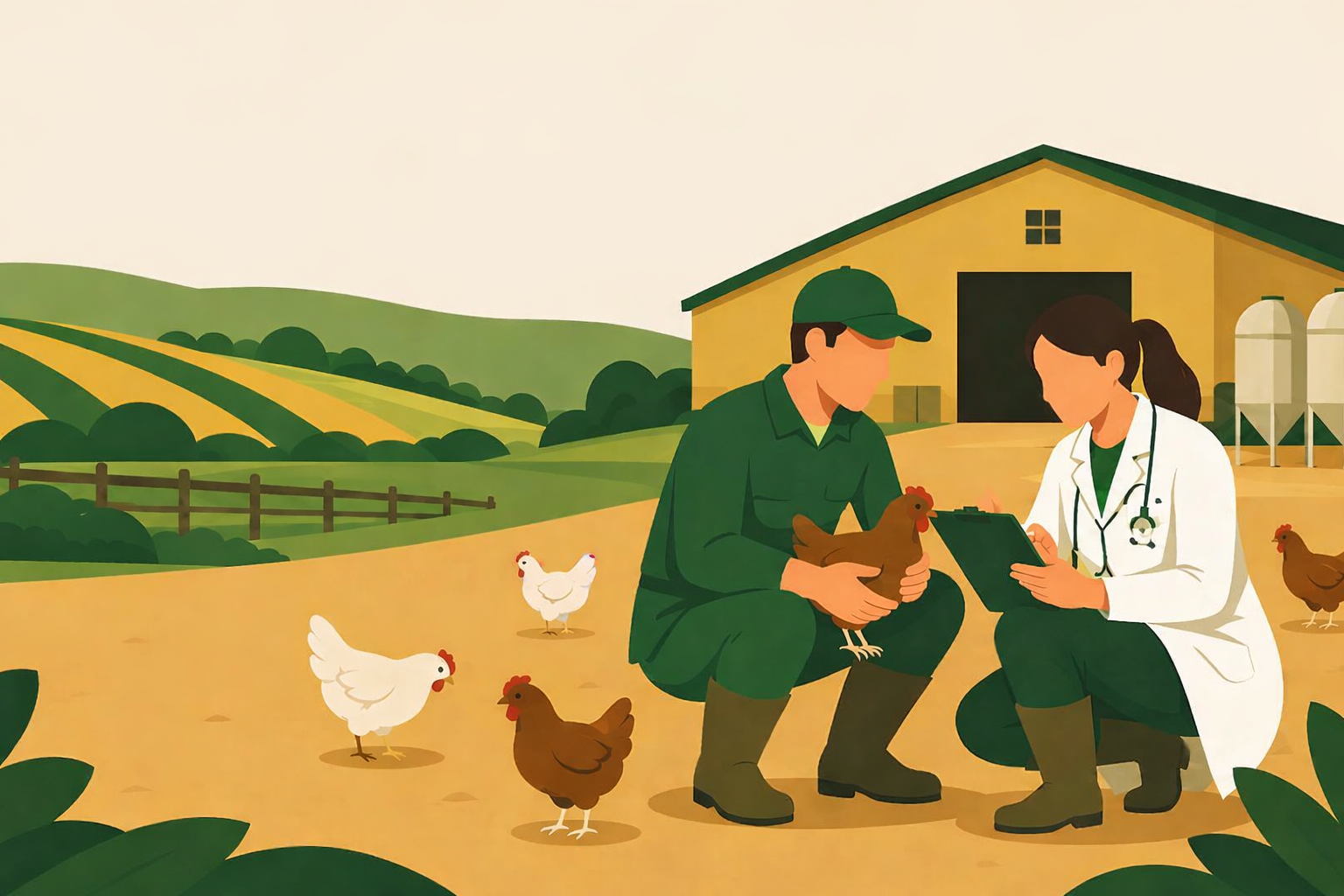
What are worm infections in ducks?
Worm infections are parasitic diseases caused by worms living inside the bird, mostly in the digestive tract. In ducks the most common are Capillaria threadworms (thin nematodes in the gut and gullet), the nematode Echinuria uncinata living in the proventriculus (glandular stomach), and tapeworms. These parasites weaken the bird, damage the mucous membrane and impair nutrient absorption. As waterfowl, ducks are more exposed than poultry kept strictly indoors, because many of these parasites use intermediate hosts that live in water.
Why do water and the range increase the risk?
Some duck parasites only develop when the bird eats a so-called intermediate host. For Echinuria uncinata these are small aquatic crustaceans — water fleas (Daphnia). The duck swallows them along with water from a pond or puddle, and with them the parasite larvae. Certain duck tapeworms also reach the bird through intermediate hosts present in water bodies. That is why open water, a wet range and overcrowding birds on a small area significantly raise the risk of worm infections. More on sensible stocking: Duck stocking density.
What are the symptoms of worms in ducks?
Worm infections are often hidden — the first sign is poorer weight gain and a general decline in flock condition with no clear single cause. With a stronger infestation you see: weakness, ruffled feathers, diarrhoea (sometimes with mucus), reduced appetite and flock non-uniformity. In severe cases, especially with Echinuria uncinata, nodules and inflammation form in the wall of the glandular stomach. Sometimes worms or their fragments are visible to the naked eye in the droppings. Overview of other disease signs: Poultry diseases — symptom table.
How do litter and cleanliness affect the risk?
Although many duck parasites are linked to water on the range, indoor conditions also matter. The eggs of some nematodes, including Capillaria, are shed in the droppings and can survive in wet, soiled litter, from where the birds ingest them again. Dry, regularly refreshed litter limits this cycle of reinfection. Wet, caked litter favours parasite egg survival and other health problems. More on litter management: Poultry house litter — management.
Worms and other duck diseases
Internal parasites weaken the bird and lower its immunity, so ducks more easily fall ill with other diseases. Worm infection is rarely the only problem — more often it goes together with poor housing, nutritional deficiencies or bacterial infections. When flock results worsen, it is worth looking at bird health and welfare as a whole and consulting a veterinarian. More on diseases of this species: Duck diseases. The basics of rearing are covered in our guide Duck farming.
How worm infections hit ducks and production results
Each of these signals should prompt the farmer to consult a veterinarian and arrange a faecal test.
Poorer growth and condition
Parasites take part of the bird’s nutrients and damage the gut, so ducks grow more slowly and are in worse condition despite correct feeding. This is often the first, mildest sign of infestation.
Weakness and ruffled feathers
Wormy birds are apathetic, less active and stand with ruffled feathers. Observing flock behaviour allows early detection before more severe signs appear.
Diarrhoea
Damage to the gut mucosa by nematodes or tapeworms leads to diarrhoea, sometimes with mucus. Wet, dirty droppings further soil the litter and the range.
Visible worms in droppings
With heavy infestation, worms or their fragments may be visible to the naked eye in the droppings. This is a clear signal to order a faecal test and arrange treatment with a vet.
Changes in the glandular stomach
The nematode Echinuria uncinata lives in the proventriculus and can cause nodules and inflammation of its wall. This is often only detected at post-mortem by a veterinarian.
Flock non-uniformity
Differences in weight and condition between birds in one flock may indicate an ongoing parasitic infestation that burdens individual ducks unevenly.
How to limit worms in ducks and how to act when infection is suspected
Effective prevention combines water and range management, indoor hygiene, and deworming and diagnostics carried out together with a vet.
Range rotation and water control
Breaking the parasite cycle is fundamental: rotate ranges so birds do not use the same contaminated ground continuously, and manage water bodies. Limiting access to standing, dirty water reduces the risk of ingesting intermediate hosts such as water fleas.
Clean drinking water
Provide ducks with clean drinking water from drinkers and replace it regularly. Clean water limits not only worms but also many other health problems typical of waterfowl.
Sensible stocking and dry litter
Overcrowding speeds up parasite circulation. Keep a sensible stocking density and maintain dry, regularly refreshed indoor litter — this limits nematode egg survival. Details: Poultry house litter and Duck welfare.
Quarantine of new birds
Newly introduced ducks can bring parasites into a healthy flock. Isolate them for observation and, if needed, faecal testing before they join the rest. This is part of wider biosecurity: Poultry farm biosecurity.
Deworming on veterinary advice
The antiparasitic drug, dose and timing are chosen solely by a veterinarian, ideally after a faecal test. Deworming on your own “just in case” can be ineffective and promote parasite resistance. Find a specialist: Veterinarian.
Treatment records and withdrawal
Every administration of an antiparasitic drug must be recorded: date, drug, dose, route and withdrawal period before slaughter or egg sale. DlaFerm.pl allows these records to be kept digitally. More: Treatment records and drug withdrawal.
Frequently asked questions about worms in ducks
What are worm infections in ducks?add
These are diseases caused by internal parasites — mainly nematodes and tapeworms living in the digestive tract. In ducks the most common are Capillaria threadworms, the nematode Echinuria uncinata in the glandular stomach, and tapeworms. The parasites weaken the bird and impair growth.
Why are ducks more exposed than other poultry?add
Ducks are waterfowl, and many of their parasites use intermediate hosts living in water. Echinuria uncinata reaches the duck when it eats small aquatic crustaceans, for example water fleas (Daphnia). That is why open water and a wet range increase the risk of infestation.
How can worm infections be diagnosed in a flock?add
The basis is a faecal test, in which the number of parasite eggs per gram of droppings is assessed, plus post-mortem of dead birds by a veterinarian. Signs such as poorer growth, diarrhoea or visible worms in the droppings are a clue, but only testing confirms the diagnosis and allows treatment to be selected.
Can I deworm my ducks myself?add
Deworming “just in case” without consultation is not recommended. The choice of drug, dose and timing should be set by a veterinarian, ideally after a faecal test. Many drugs have a withdrawal period before slaughter or egg sale, and incorrect use promotes parasite resistance.
How can I reduce the risk of worms on the range?add
The most important measures are range rotation, controlling and cleaning water bodies, clean drinking water, sensible stocking density and dry indoor litter. Quarantine of new birds and general biosecurity further reduce the introduction of parasites into the flock.
How does DlaFerm.pl help with worm infections?add
DlaFerm.pl enables digital treatment and withdrawal records — documentation required for every administration of an antiparasitic product. The Flock Card lets you track growth and condition, making early detection of the problem easier. Data are always available during a veterinary inspection.
Sources & resources
Keep treatment records with DlaFerm.pl
Want to see how the Flock Card and withdrawal records work? Write to us or create an account.
Phone
+48 796 258 151