Worm infections in guinea fowl: internal parasites, gapeworm and prevention
Guinea fowl spend a lot of time on the range, so the pressure from internal parasites (worms) is high. Learn the symptoms, how to recognise the dangerous tracheal gapeworm, and how to run deworming and keep treatment records.
verifiedFrom the team that has organised work on poultry farms for years.
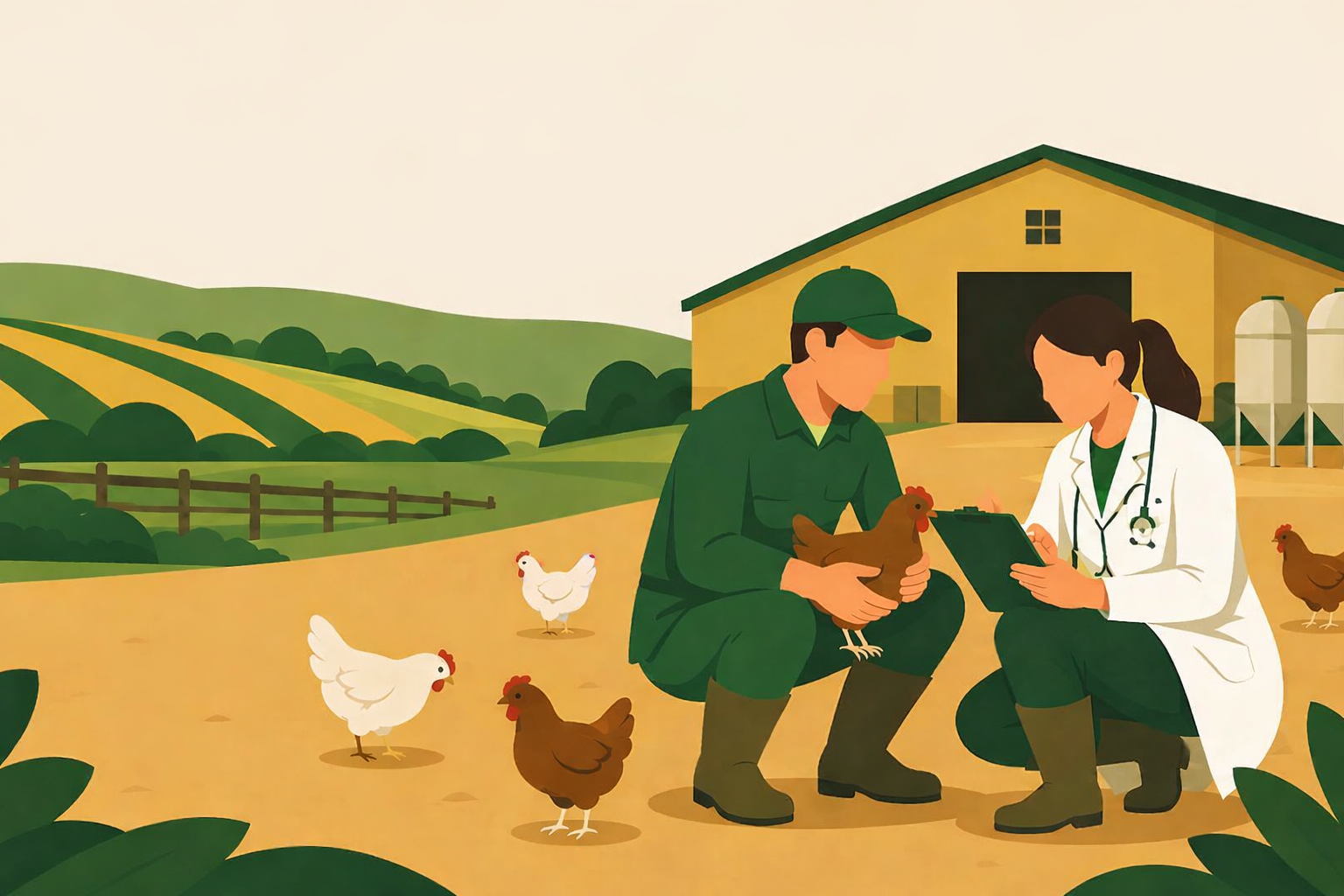
What are worm infections in guinea fowl?
Worm infections are parasitic diseases caused by worms living inside the bird — most often nematodes. In guinea fowl the most important are: the roundworm (Ascaridia), the caecal worm (Heterakis gallinarum) and hairworms (Capillaria). These parasites live in the digestive tract, take nutrients from the bird and damage the intestinal lining. Guinea fowl spend a lot of time on the range and scratch in the soil, so they easily swallow parasite eggs present in the ground and droppings, which keeps infection pressure high.
Gapeworm — the standout worm of range birds
In ground-scratching birds that use a range, including guinea fowl, the gapeworm is a particular threat. It is caused by the tracheal worm Syngamus trachea (the gapeworm), which does not live in the intestines but in the bird’s windpipe. The parasite irritates and narrows the airways, causing breathing difficulty, frequent gaping (yawning), the characteristic neck-stretching and rattling. In heavy infestations the worms can literally suffocate the bird, so gapeworm must never be taken lightly.
How worm infections hit a guinea fowl flock
Even when birds do not die, worm infections cause measurable production losses. Most often you see poorer body-weight gain, diarrhoea, general weakness and a drop in egg laying. The parasites compete with the bird for food and weaken its immunity, opening the door to bacterial and viral infections. Some infestations run hidden: the only signal is deteriorating condition and flock results without clear symptoms. See the symptom overview for other diseases: Poultry diseases — symptom table.
How to diagnose worms in guinea fowl
Diagnosis is based on a faecal examination, in which the veterinarian counts the number of parasite eggs per gram of droppings (the McMaster method). This shows the severity of the infestation and guides treatment. In severe cases, especially with suspected gapeworm, a post-mortem of a dead bird confirms the diagnosis, with worms found in the windpipe or intestines. Diagnosis and treatment are always led by a veterinarian.
The range as a source of infection
The range is the guinea fowl’s natural environment but also the main source of parasites. Worm eggs survive in moist soil for many months, and wild birds can be a reservoir of the tracheal worm Syngamus. That is why rotation and hygiene of the range, plus limiting contact with wild birds, are key. More on keeping this species: Guinea fowl farming and a disease overview: Guinea fowl diseases.
How worm infections and gapeworm affect guinea fowl
Each of these signals should prompt the farmer to test droppings and consult a veterinarian.
Breathing difficulty and gaping (gapeworm)
Frequent gaping, neck-stretching, rattling and visible breathing effort are classic signs of gapeworm. The tracheal worm narrows the airways and, in heavy infestation, can suffocate the bird.
Poorer body-weight gain
Intestinal parasites take nutrients from the bird and damage the gut lining. Slower growth and flock non-uniformity are common signs of chronic worm infection.
Diarrhoea and altered droppings
Roundworm, caecal worm or hairworm infestation often causes diarrhoea and abnormal droppings consistency. Sometimes worm fragments or mucus are visible in the droppings.
Weakness and lethargy
Heavily infested birds are dull, fluffed up, less active and eat less. Weakened immunity opens the door to bacterial infections.
Drop in egg laying
Worm infection burdens the body and affects egg production. A drop in laying with no other clear cause may point to an internal parasite infestation.
Deaths in heavy infestation
Neglected gapeworm or a massive intestinal worm burden can lead to deaths, especially in young birds with weaker immunity.
How to prevent worm infections and how to act when infestation is suspected
Effective protection combines range hygiene, biosecurity, faecal testing and deworming carried out only on the vet’s advice.
Range rotation and hygiene
Alternating ranges (rotation) and resting the turf break the parasite life cycle. Removing droppings, mowing and drying the ground reduce the number of worm eggs in the soil. More on range stocking: Guinea fowl stocking density.
Dry litter indoors
Dry, friable litter limits the survival of parasite eggs and their intermediate hosts. Moisture control and regular litter replacement are the basis of prevention. Details: Poultry house litter — management.
Limit contact with wild birds
Wild birds can be a reservoir of the tracheal worm Syngamus and other parasites. Netting, screens and farm tidiness limit the introduction of infestation. The rules are described in: Poultry farm biosecurity.
Quarantine of new birds
Every newly introduced guinea fowl should be kept separately for a time and have its droppings tested before joining the flock. Quarantine prevents parasites from being carried onto the whole farm.
Deworming on the vet’s advice
Antiparasitic drugs, their choice, dose and frequency are set by the veterinarian based on a faecal test. Blind deworming is often ineffective and promotes parasite resistance. Diagnosis is led by the veterinarian.
Treatment records and withdrawal
Every administration of an antiparasitic drug must be recorded: date, drug, dose, route of administration and the withdrawal period before collecting eggs or meat. DlaFerm.pl allows these records to be kept digitally. More: Treatment records and drug withdrawal.
Frequently asked questions about worms in guinea fowl
What are worm infections in guinea fowl?add
They are parasitic diseases caused by worms living inside the bird — mainly nematodes: the roundworm, caecal worm and hairworms. The parasites take nutrients from the bird, damage the gut and weaken immunity. Guinea fowl, which spend a lot of time on the range, are especially exposed.
What is gapeworm and why is it dangerous?add
Gapeworm is a worm infection caused by the tracheal worm Syngamus trachea. Unlike typical worm infections, the parasite lives in the windpipe, not the intestines. It causes breathing difficulty, gaping, neck-stretching and rattling, and in heavy infestation it can suffocate the bird.
How do I diagnose worms in guinea fowl?add
The basis is a faecal examination, in which the vet counts the number of parasite eggs per gram of droppings. In severe cases, especially with suspected gapeworm, a post-mortem of a dead bird confirms the diagnosis. Diagnosis and treatment are led only by a veterinarian.
How can I reduce the risk of worms on the range?add
The most important measures are range rotation and hygiene, dry litter indoors, and limiting contact with wild birds, which can be a reservoir of the tracheal worm. Quarantine of new birds with faecal testing before joining the flock also helps.
Can I deworm guinea fowl myself?add
Deworming should always be advised by a veterinarian based on a faecal test — they choose the drug, dose and interval between treatments. Deworming without a diagnosis is often ineffective, promotes parasite resistance and risks breaching the withdrawal period before collecting eggs or meat.
How does DlaFerm.pl help with worm infections?add
DlaFerm.pl enables digital treatment and withdrawal records — legally required documentation for every administration of an antiparasitic product. The Flock Card lets you track gain, laying and flock condition, making early detection of infestation easier. Data are always available for veterinary inspections.
Sources & resources
- linkMSD Veterinary Manual — helminthiasis in poultry (internal parasites)
- linkNational Veterinary Research Institute — PIWet (Puławy)
- linkChief Veterinary Inspectorate Poland — information for poultry farmers
- linkWOAH — World Organisation for Animal Health
- linkKRD-IG — Polish Poultry Council Industry Chamber
Keep treatment records with DlaFerm.pl
Want to see how the Flock Card and withdrawal records work for deworming? Write to us or create an account.
Phone
+48 796 258 151