Guinea fowl welfare — how to respect a skittish nature
The guinea fowl is wild at heart: skittish, flighty, alert and loud. Guinea fowl welfare is about giving it what it really needs — space, perches for roosting high, access to a range for foraging, calm without crowding, and protection from predators. We explain in plain language how to match this nature to farm conditions (under the general Directive 98/58/EC) and how to limit stress and panic day to day.
verifiedFrom the team that has organised work on poultry farms for years.
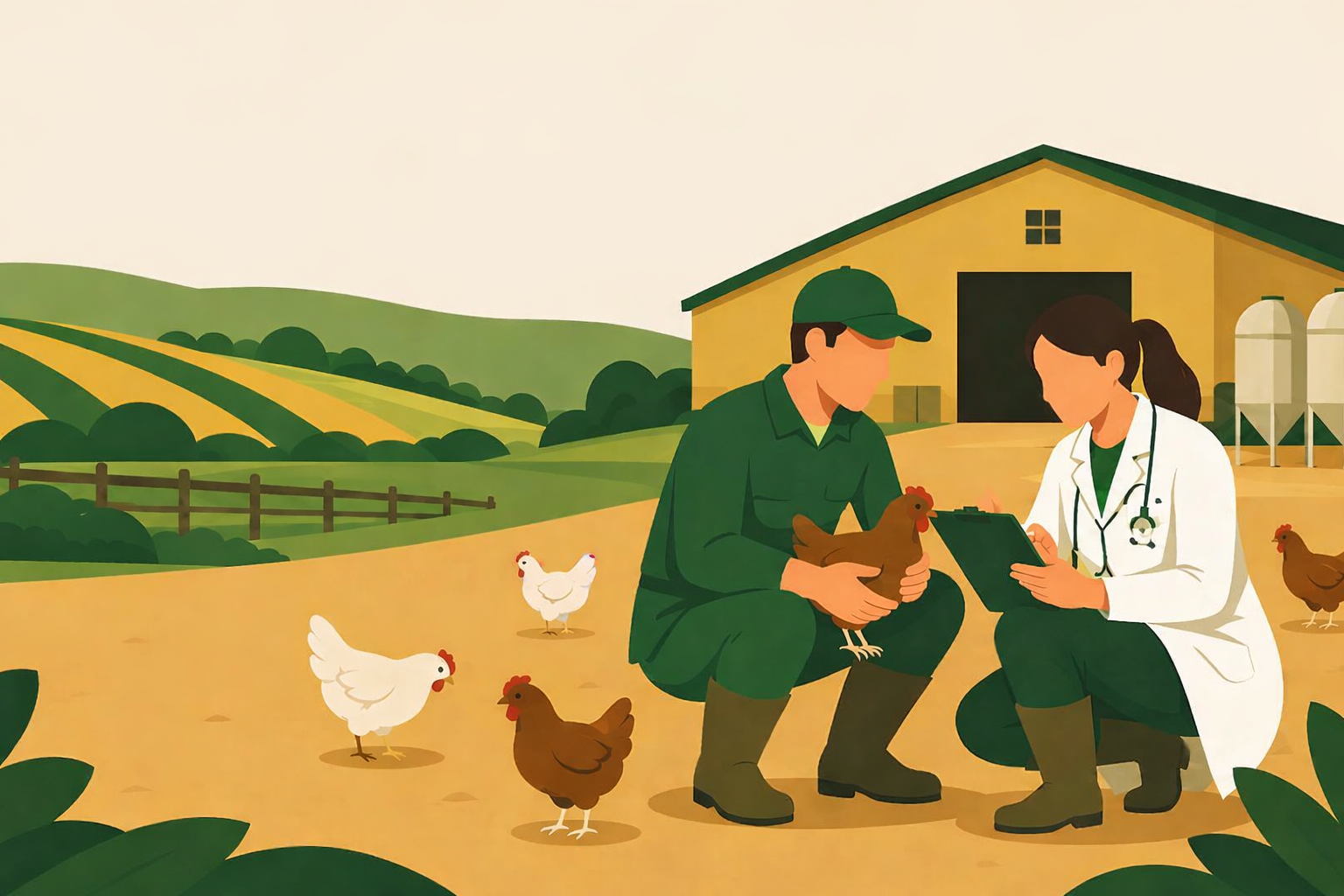
Guinea fowl welfare is the conditions in which a bird can live, eat, drink, move and rest in line with its nature, without pain or excessive stress. In the guinea fowl that nature is unusually strong: it is only partly domesticated and keeps its wild instincts — it is skittish, flighty, gregarious and very alert. Welfare pays off, because a calm, unstressed guinea fowl grows better, panics less and injures itself less often. The whole production cycle is covered in the guide on guinea fowl farming, and general measures of a bird’s state in the guide on poultry welfare indicators.
Are there separate rules on guinea fowl welfare?
There is no EU directive devoted to guinea fowl alone, as there is for meat chickens (2007/43/EC) or laying hens. Guinea fowl are covered by the general Council Directive 98/58/EC on the protection of farm animals and by Polish rules on minimum conditions for keeping poultry. That means a lot depends on the keeper’s knowledge and good practice rather than a fixed table. So we give figures for stocking, floor area or perch length as indicative (*) — check the exact requirements in the guide on legal rules for guinea fowl keeping.
Why does the skittish, flighty nature change everything?
A guinea fowl does not behave like a hen. It is light and flies well, so it instinctively looks for high places to roost — in the wild it would sleep on tree branches. It is also exceptionally alert and loud: at any unfamiliar movement or sound it answers with a loud, ringing alarm call and the whole flock can take off in panic. This skittishness is an asset (a great “alarm” against predators), but in a cramped, badly planned house it becomes a source of stress, injuries when birds take flight, and crowding in corners. Guinea fowl welfare is, above all, respecting this nature: give space, perches and calm instead of fighting the bird’s instincts.
How to manage guinea fowl welfare in practice
- 1
Give space — guinea fowl cannot stand crowding
The most important need of a guinea fowl is space. A flighty, skittish bird that is too dense on a small area panics more easily, crowds into corners and injures itself when taking off. Keep stocking looser than for hens and provide free passage, without bottlenecks or dead ends where birds can be trampled. How to convert floor area into a bird count is shown in the guide on guinea fowl stocking, and the requirements for the house itself in the guide on guinea fowl house requirements.
- 2
Install perches for roosting high
A guinea fowl instinctively wants to sleep high — a feeling of safety inherited from ancestors that roosted in trees. The lack of perches is a real welfare loss: birds are stressed, huddle together and panic more at night. Provide stable perches at a suitable height, with room for all birds at once, so they do not have to fight for the best spots. Perches are one of the simplest and cheapest ways to raise guinea fowl welfare.
- 3
Provide access to a range and foraging
The guinea fowl is a born forager — in the wild it walks, scratches and hunts insects all day. Access to a range lets it carry out these natural behaviours: movement, scratching, pecking, dust bathing. This improves condition, burns off energy and limits the stress and boredom that, in confinement, lead to feather pecking. If a full range is not possible, provide enrichment indoors (material to scratch and peck, a place to dust bathe). The full picture of rearing young guinea fowl is in the guide on guinea fowl rearing.
- 4
Limit stress, noise and sudden stimuli
A guinea fowl reacts to everything — a sudden movement, a stranger, a dog, a predator — with a loud alarm call and by taking flight. Your job is to limit unexpected stimuli: move around the flock calmly and predictably, avoid abrupt entries, noise and harsh, flickering light. Fixed handling times and gentle, even lighting with a dark night help the birds settle. Remember that the noise itself (loud alarm calling) is the guinea fowl’s nature — you will not silence it completely, but a calm environment greatly reduces it.
- 5
Protect the flock from predators
The guinea fowl’s alertness comes from being prey in the wild. A fox, hawk, marten or stray dog is a real threat to it, and the mere presence of a predator near the range triggers panic and chronic stress across the flock. Secure the range with fencing and overhead cover where possible, close the house at night and react to signs of predators. A calm, well-protected flock is quieter, healthier and grows better — and dry, clean litter in the house is a separate pillar of welfare, covered in the guide on litter management in the house.
Guinea fowl welfare indicators worth watching
Four areas that tell you whether guinea fowl are doing well. Indicative values* — there is no separate directive for guinea fowl; the general 98/58/EC and good practice apply.
Flock calm and level of panic
The best welfare indicator for guinea fowl is their behaviour. A calm flock walks, scratches and forages, and alarms only at a real stimulus. A stressed flock is constantly alert, huddles, crowds into corners and takes off at the slightest movement. Watch whether birds spread evenly across the area and whether they use the perches and range — this tells you more than any table. General measures of a bird’s state are in the guide on poultry welfare indicators.
Injuries and plumage condition
A skittish, flighty bird in poor conditions injures itself when taking off (hitting walls, ceiling, equipment) and when crowded. Check for abrasions, wing and head wounds and pecked feathers. Feather pecking and cannibalism are a classic sign of boredom and stress — usually from a lack of range, enrichment or too dense a stocking. Clean, complete plumage and no injuries are a sign that space and calm are sufficient.
Use of perches and range
If you provide perches and a range, watch whether the birds actually use them. In the evening, guinea fowl should readily jump onto perches and roost high; by day, with range access, they should use it to scratch and forage. Empty perches or birds afraid to go out onto the range are a signal that something is scaring them — usually too high a threshold, an unwelcoming entrance, a predator nearby or badly set light.
Environment: stocking, light, litter
Bird behaviour goes hand in hand with the conditions of the house. Stocking: looser than for hens, because the guinea fowl needs space — check indicative values in the stocking guide. Light: gentle, even, with a clear dark night for rest; avoid flickering and harsh contrasts that startle. Litter: dry, friable, across the whole area, with room to scratch and dust bathe. These three things decide whether the flock is calm or panicked.
Mistakes that lower guinea fowl welfare
A few errors come up regularly with keepers who treat the guinea fowl like a hen — but it is a different bird, with its own needs.
Treating the guinea fowl like a hen
The most common mistake is carrying hen-house conditions over to guinea fowl: the same dense stocking, no high perches, no range. The guinea fowl is skittish and flighty, so in such conditions it panics, injures itself and pecks feathers. Plan the system around its nature from the start — space, perches, range — not around a “same as for hens” template. The specifics of the house are in the guide on guinea fowl house requirements.
Too dense a stocking and tight, blind corners
Crowding is a direct route to panic and trampling in guinea fowl. When birds take off as a whole flock in a cramped house with corners and narrow passages, the weakest die crushed. Keep stocking looser than for hens and design the interior without traps where birds can pile up. Conversions are in the guide on guinea fowl stocking.
No perches or place to roost high
Depriving a guinea fowl of perches removes its basic instinct — roosting high. Birds without perches are stressed, huddle on the floor and panic more at night. This is one of the cheapest mistakes to fix: just install stable perches with room for the whole flock.
Sudden stimuli, noisy handling and predators
Abrupt entries, loud work, flickering light and an unsecured range keep the flock in constant fear. The guinea fowl is alert anyway — do not add reasons to panic. Move calmly, keep fixed handling times, protect the flock from predators and provide gentle light. Chronic stress shows in the health, plumage and results of the whole flock.
Frequently asked questions about guinea fowl welfare
Are there separate rules on guinea fowl welfare?add
There is no EU directive for guinea fowl alone, as there is for meat chickens. Guinea fowl are covered by the general Council Directive 98/58/EC on the protection of farm animals and by Polish rules on minimum conditions for keeping poultry. In practice much depends on the keeper’s knowledge and good practice, so treat figures for stocking or floor area as indicative. Details are in the guide on legal rules for guinea fowl keeping.
Why do guinea fowl need perches?add
Because they instinctively want to roost high — an instinct inherited from ancestors that slept in trees. A high spot gives a guinea fowl a sense of safety. The lack of perches is stressful: birds huddle on the floor and panic more at night. Stable perches with room for the whole flock are one of the simplest and cheapest ways to raise guinea fowl welfare.
Why are guinea fowl so loud, and is that a welfare problem?add
The loud, ringing alarm call is natural guinea fowl behaviour — in the flock it acts as an “alarm” against predators and is a sign of alertness, not illness. You cannot fully silence it and should not treat it as a fault. It only becomes a welfare problem when the calling is constant and anxious due to stress: sudden stimuli, predators nearby, crowding or a lack of calm. A calm, well-protected and spacious flock alarms less often.
Do guinea fowl need access to a range?add
A range is not formally required in every system, but it greatly improves welfare, because the guinea fowl is a born forager. On a range it walks, scratches, pecks and dust bathes, which burns off energy and limits stress and feather pecking. If a full range is not possible, provide indoor enrichment: material to scratch and peck and a place to dust bathe. The range itself must be secured against predators.
How do I limit panic and stress in a guinea fowl flock?add
Give space (looser stocking than for hens, no tight blind corners), install perches for roosting high and provide access to a range or enrichment. Move around the flock calmly and predictably, keep fixed handling times, avoid sudden noise and flickering light, and provide a dark night. Protect the flock from predators. Together these make a skittish bird panic less often and injure itself less.
What stocking density is right for guinea fowl welfare?add
Guinea fowl are kept looser than hens, because they are flighty, skittish birds that need space and panic when crowded. The exact figures depend on the system, the birds’ age and national rules, so we give them as indicative. You will find detailed area-to-bird conversions in the guide on guinea fowl stocking, and how profitability depends on conditions in the guide on guinea fowl farming profitability.
Keep a guinea fowl flock record in DlaFerm.pl
Want a digital flock record, a mortality log and guinea fowl welfare observations in one place? Create a free farm account or write to us.
Phone
+48 796 258 151