Housing and run requirements for guinea fowl
A guinea fowl is a flighty, wary, restless forager — unlike a broiler it needs not so much a sealed climate-controlled house as a well-fenced, secure run, high roosts to perch at night and a shelter it returns to on its own. We have gathered everything the housing and run must provide in one place, with links to detailed guides for the specifics.
verifiedFrom the team that has organised work on poultry farms for years.
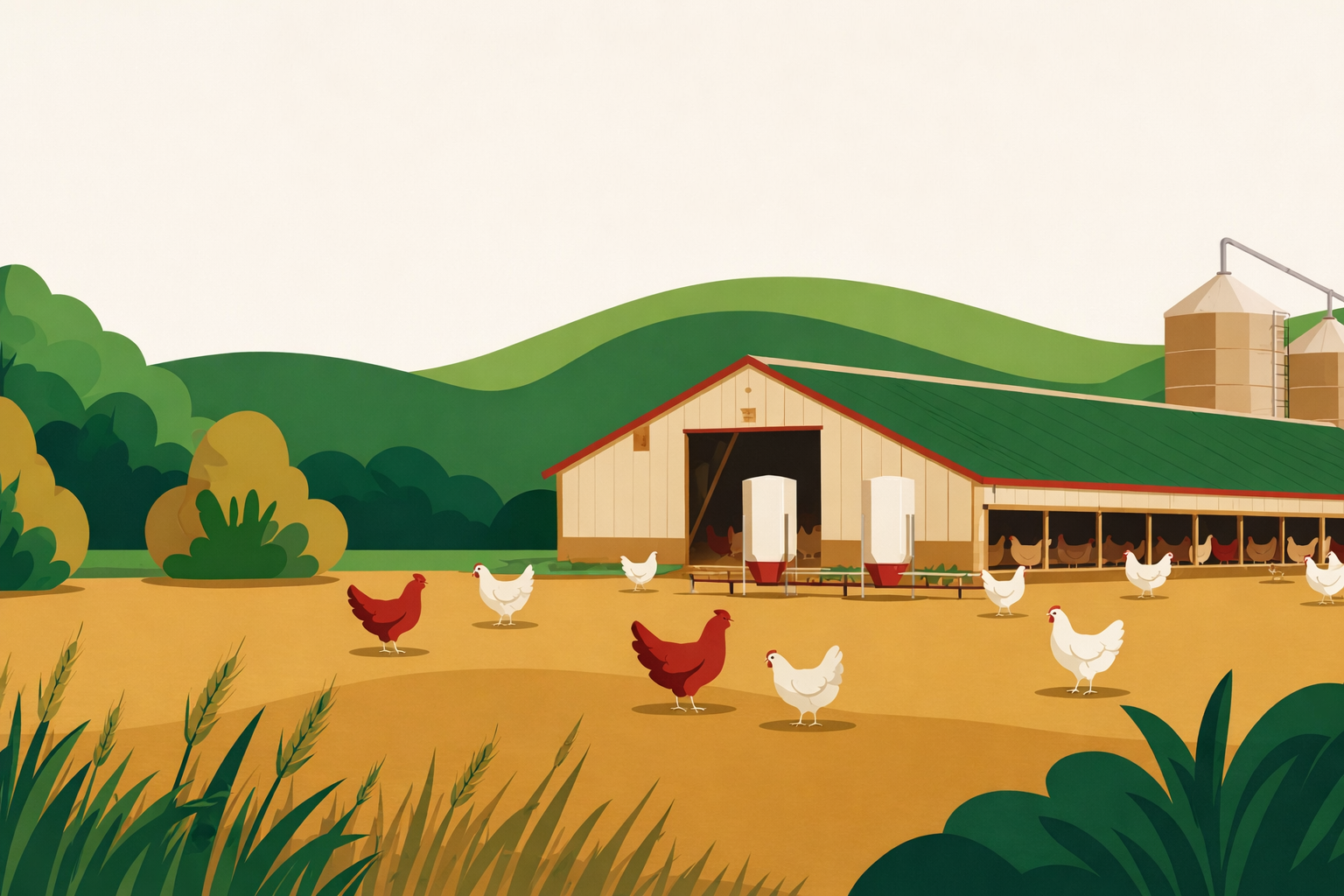
A guinea fowl behaves more like a wild bird than a hen or a broiler. It flies well, is alert and wary, likes to stay in a group and roost high. Free-range rearing suits it best — but for that very reason the housing and run must be set up differently from a classic poultry house. The whole rearing process is covered in the guide on guinea fowl farming.
How do guinea fowl needs differ from a broiler house?
A broiler sits in a house where a climate controller manages everything. A guinea fowl spends most of the day on the run, foraging on its own and returning to shelter. So three things become key: a well-fenced run (guinea fowl fly, so the fence must be high or covered), high roosts for night perching and a shelter protecting against rain, wind and predators. The climate of a sealed house matters less here than safety and freedom of movement.
Where do the numbers in this guide come from?
The indicative values (run area per bird, roost and fence height, keet starting temperature) follow general poultry guides and materials from the National Research Institute of Animal Production (IZ-PIB). These are starting figures* — not a fixed norm. Actual needs depend on flock size, climate and terrain. This page is an overview of the whole; the details of each area are in separate guides linked in the text.
What to prepare when planning housing and a run for guinea fowl
- 1
High roosts for night perching
Guinea fowl instinctively roost high — in the wild, in trees. In the shelter you must give them high, sturdy roosts (bars) where they feel safe. Without roosts the birds choose to perch on the fence, roof or trees outside the run, where they are easy prey for predators. Roosts are spaced so every bird has a place, with easy-to-clean space left beneath them. More on the flock and its needs: guinea fowl welfare.
- 2
A well-fenced and secured run
This is the biggest difference from a hen house. Guinea fowl fly well, so an ordinary fence is not enough — a high fence, a covering net over the top, or wing-clipping is used if the birds are to stay within the run. The fence also keeps out predators. The run area is matched to the number of birds so they have room to forage and do not destroy the turf. The recommended area per bird is in the guide on guinea fowl stocking.
- 3
A shelter (building) with run access
Guinea fowl need a shelter they return to at night on their own and where they take cover from rain, wind and heat. It need not be a sealed house like for a broiler — a dry, airy, predator-proof space with an exit to the run is enough. It matters to get the birds used from the start to coming back inside at night. The shelter keeps litter dry and provides room for roosts, feeders and drinkers during bad weather.
- 4
Feeders and drinkers — number and layout
Even though guinea fowl forage a lot on the run, they must have constant access to feed and clean water — especially in winter and the laying period. Feeders and drinkers are laid out so every bird has easy access and there is no crowding, which in wary guinea fowl quickly leads to chasing off the weaker ones. Some points are best kept in the shelter (for bad weather), some on the run. On drinking lines and their setting: drinking lines in the house. Feed composition is covered in guinea fowl feeding.
- 5
Dry litter and starter heating for keets
In the shelter you keep dry, friable litter (shavings, chopped straw) — wet litter means ammonia and disease. Young guinea fowl (keets) are very sensitive to cold and damp in the first weeks, so rearing starts in a heated brooder at a starting temperature of about 35–37°C*, lowered gradually. The whole start is covered in the guide on rearing guinea fowl, and litter management in litter in the house.
- 6
Predator protection and biosecurity
Guinea fowl on the run are exposed to foxes, martens, hawks and stray dogs, and contact with wild birds risks avian influenza (HPAI). The run is secured with a fence and cover, and the shelter is closed tightly at night. Add biosecurity: limiting contact with wild birds, clean water, a disinfection mat, order around the building. More: poultry farm biosecurity and pest and wild bird control.
Indicative parameters for guinea fowl housing and run
Four groups of values worth starting the planning from. Indicative figures* from poultry guides and IZ-PIB.
Night roosts
High, sturdy bars set high enough for the birds to feel safe, with a place for every guinea fowl in the flock. Guinea fowl roost together and high — without roosts they seek to perch outside the shelter. Leave easy-to-clean space beneath the roosts. Related: guinea fowl welfare.
Run area per bird
A guinea fowl is a forager that needs plenty of room to run and search for food — roughly several m² of run per bird*, more than for a hen. Too small a run loses its turf fast and turns muddy. Exact values and stocking are in a separate guide on guinea fowl stocking.
Run fence and cover
A high fence, because guinea fowl fly — or a net cover over the top if the birds are to stay within the run. The fence must also keep predators out; it is worth burying the bottom edge of the netting so a fox or marten cannot dig under it.
Keet starting temperature
Keet rearing starts in a heated brooder — start about 35–37°C*, lowered by about 3°C per week until the birds feather up and tolerate lower temperatures. Keet behaviour matters more than the thermometer: huddled under the heater = too cold; spread to the walls = too warm. Details: rearing guinea fowl.
The most common mistakes in guinea fowl housing and run
These mistakes regularly end in escapes, predator losses and flock stress — worth ruling out at the planning stage.
A fence too low or uncovered
Guinea fowl fly — they simply fly over an ordinary low fence. The result: birds roost in trees and on roofs outside the run, get lost and fall to predators. Put up a high fence, a net cover, or decide on wing-clipping. Run safety is covered in guinea fowl welfare.
No high roosts in the shelter
Without roosts guinea fowl refuse to return to the shelter at night and choose to perch outside, where they are easy prey. This is one of the main causes of losses. Give them high, stable roosts and get them used from the start to perching inside.
Placing keets into a cold, damp room
Young guinea fowl are very sensitive to cold and damp — a start in an unheated, damp brooder ends in disease and high mortality. Warm the brooder and prepare dry litter before placement. Procedure: rearing guinea fowl; on litter: litter in the house.
Open contact with wild birds and predators
An unsecured run and a shelter left open at night lead to losses from foxes and martens and to bringing in avian influenza via wild birds. Close the shelter at night, limit contact with wild birds and keep up biosecurity. More: poultry farm biosecurity and pest and wild bird control.
Frequently asked questions about guinea fowl housing and run
What run fence do guinea fowl need?add
Guinea fowl fly well, so an ordinary low fence is not enough. A high fence, a net cover over the run, or wing-clipping is used if the birds are to stay within the run. The fence also protects against predators — it is worth burying the bottom edge of the netting. Run safety is covered in the guide on guinea fowl welfare, and the recommended area in guinea fowl stocking.
Do guinea fowl need roosts?add
Yes. Guinea fowl instinctively roost high, in the wild in trees. In the shelter you must give them high, sturdy roosts where they feel safe. Without roosts the birds perch on the fence, roof or trees outside the run and are easy prey for predators. More on flock needs: guinea fowl welfare.
Is a simple shed enough for guinea fowl, or do they need a poultry house?add
Guinea fowl do not need a sealed climate-controlled house like a broiler. A dry, airy, predator-proof shelter with roosts and an exit to the run, which the birds return to at night, is enough. It matters that it is dry (dry litter), safe and well closed at night. On litter management: litter in the house.
What temperature at the start of keet rearing?add
Keet rearing starts in a heated brooder at a starting temperature of about 35–37°C*, lowered by about 3°C per week until the birds feather up. These are indicative values — bird behaviour matters more than the thermometer: keets huddled under the heater mean it is too cold. The whole start is covered in the guide on rearing guinea fowl.
How to protect guinea fowl from predators?add
Guinea fowl on the run are exposed to foxes, martens, hawks and stray dogs. A high, covered fence with a buried bottom edge, high roosts in the shelter and tightly closing the building at night all help. On top of that, contact with wild birds is limited because of avian influenza. More: pest and wild bird control and poultry farm biosecurity.
How much run space does a guinea fowl need?add
A guinea fowl is a restless forager that needs a lot of room to run and search for food — roughly several m² of run per bird*, more than for a hen. Too small a run loses its turf fast and turns muddy, which favours disease. Exact values and stocking are covered in the guide on guinea fowl stocking, and formal requirements in legal rules for keeping guinea fowl.
Run your guinea fowl flock in DlaFerm.pl
Want your guinea fowl flock’s health, rearing and results in one place? DlaFerm.pl helps you keep flock records, log events and track deadlines. Create a free farm account or write to us.
Phone
+48 796 258 151