Guinea fowl rearing — from keets to market
Rearing guinea fowl is a longer, calmer cycle than a broiler — most often around 12–14 weeks from placing the keets to slaughter. We walk you through the whole period stage by stage: start heat and brooding of very fragile keets, high-protein feed, managing a flighty, alarm-prone flock, feathering, moving to range and foraging, then maturing and taking birds for meat with a game-like flavour.
verifiedFrom the team that has organised work on poultry farms for years.
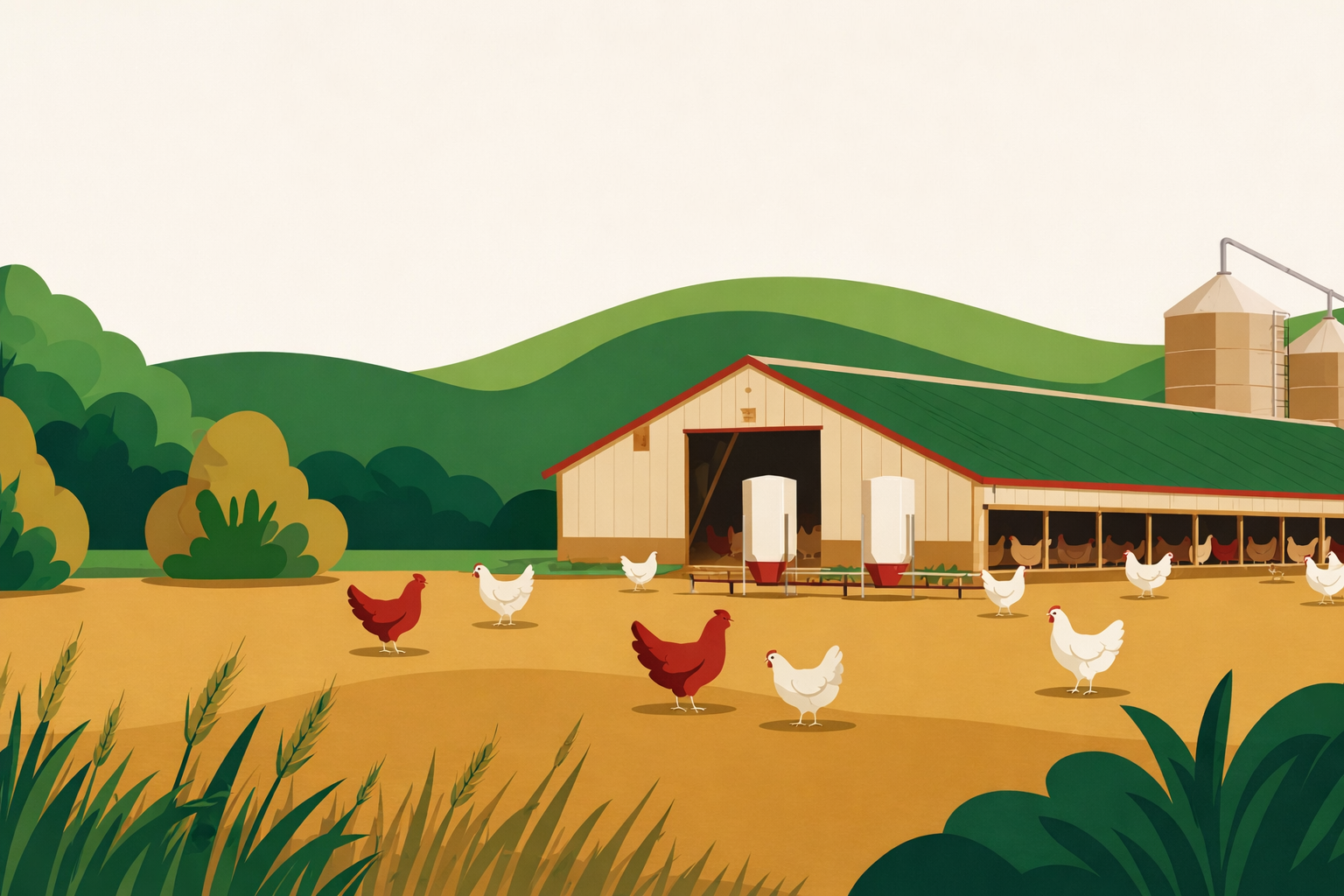
A guinea fowl is a different bird from a chicken or broiler — by nature skittish, alert, loud and a strong flyer. Its rearing is longer and less intensive than a meat chicken’s, but it needs care in two critical places: at the very start, when keets are exceptionally sensitive to cold and damp, and in managing the growing, restless flock. This guide brings the whole rearing cycle into one place, from an empty house to taking the birds. The broader picture is in the hub on guinea fowl farming, and individual topics are developed in separate guides we link to along the way.
How does a guinea fowl differ from a chicken and a broiler?
A guinea fowl grows more slowly than a broiler and reaches slaughter weight only after a dozen or so weeks, not in a month. It is also far more skittish and flighty — it can fly up into a tree or onto a roof, and under stress the whole group takes off at once. It is very gregarious and noisy, which can be an asset (it warns of an intruder) but calls for calm handling. Guinea fowl meat is darker, leaner and has a distinctive flavour close to game — a premium product, not a mass-market chicken.
Where do the numbers in this guide come from?
Start temperatures, feed protein levels, cycle length and weights are given as indicative figures* based on general guinea fowl management resources and industry advice. Exact values depend on the line, feed, season and house equipment, and keets are more heat-demanding than chicks. Treat the numbers as a starting point and always check the birds’ response and the chick supplier’s recommendations — it is the birds, not the table, that show whether the microclimate is right.
Guinea fowl rearing step by step — the whole cycle
- 1
1. House preparation and start heat
Before the keets arrive, the house must be clean, disinfected, bedded with dry litter and warmed up in advance. Keets are more sensitive to cold than chicks, so the zone under the heat source (brooding, i.e. preheating under the keets) starts higher — around ~35–37°C*. Warm not only the air but also the litter, because the keet lies on it with its whole body. Set feeders and drinkers close, and make the water safe against drowning, as small keets drown easily. Details are in the guides on preparing the house before placement and litter management in the house.
- 2
2. The first hours and first days
After placement the keets must find water and feed as fast as possible and reach a warm zone. This is the most sensitive period of the whole rearing: tiny keets chill quickly, get damp easily and are less quick to find water than chicks. It helps to gently wet the beak or add coloured marbles or markers to the drinker to encourage drinking. Bird behaviour tells you whether it is right: evenly spread under the heater = fine; huddled in piles and cheeping = too cold; scattered to the walls and panting = too warm. The start microclimate is covered in the guide on temperature and humidity in the house.
- 3
3. Weeks 1–4 — high-protein feed and lowering the temperature
Keets have a high protein requirement — they start on feed with higher protein than chicks (around ~24–28%* at the beginning), because they build feathers and skeleton fast. You lower the temperature gradually, by around ~3°C per week, down to ambient as they feather up. Constant, easy access to fresh water and feed and dry, warm bedding are key. Feeding rules at each stage are developed in the guide on guinea fowl feeding.
- 4
4. Feathering and moving to range with foraging
Once the keets have feathered and hardened off (around 6–8 weeks, depending on weather and hardening*), they can be let out onto range gradually. Guinea fowl are excellent foragers — they readily catch insects, slugs and seeds, which lowers feed cost and gives the meat its character. This is where their flightiness shows: the range must be fenced high or the wing feathers clipped, and the return to the house at night is built with routine (fixed evening feeding, calm herding). Range space and conditions are covered in guinea fowl welfare, and the building requirements in guinea fowl house requirements.
- 5
5. Managing a flighty, skittish flock
Guinea fowl are alert, loud and panic at sudden movement, noise or strangers. Rearing is run calmly: quiet entry, fixed handling times, no abrupt changes, good flicker-free lighting. A startled flock takes off at once, may crowd into a corner and smother, and in panic the birds injure themselves or escape. A steady routine and the right stocking reduce stress. How to work out density is covered in guinea fowl stocking density, and good keeping practice in guinea fowl welfare.
- 6
6. Maturing and taking the birds for meat
Guinea fowl mature more slowly than broilers — for meat they are most often taken at around week 12–14, once they reach the desired weight and carcass quality*. The meat is darker, leaner and tastes close to game, prized in catering. In the last phase you watch the final weight, flock uniformity and bird condition, and before slaughter you observe withdrawal periods for any treatment. The economics of the whole cycle and feed cost against meat revenue are broken down in profitability of guinea fowl farming. For comparison, a longer rearing cycle in turkeys is covered by turkey farming.
Guinea fowl rearing parameters — heat, feed, range, behaviour
Indicative values* for the whole cycle — always adjust to the birds’ response and the chick supplier’s recommendations.
Start heat
Keets are more cold-sensitive than chicks. Start under the heat source at around ~35–37°C*, then lower by ~3°C per week to ambient as they feather up. Warm, dry litter and the temperature at bird level matter more than the reading under the ceiling. The best sensor is the keets themselves.
High-protein feed
At the start, feed with higher protein than for chicks (around ~24–28%* at the beginning), because keets build feathers and skeleton fast. You lower the protein gradually with age, and once on range foraging covers part of the need. Constant access to fresh water and feed throughout the cycle.
Range and foraging
After feathering and hardening, guinea fowl make great use of range — catching insects, slugs and seeds, which lowers feed cost. The range must be fenced high or the wing feathers clipped, because guinea fowl fly. The return to the house at night is built with a steady routine of evening feeding.
Flightiness and calm
Guinea fowl are alert, loud and panic at sudden stimuli. Calm, predictable handling, fixed times, good flicker-free light and the right stocking limit stress and corner-crowding. A steady routine is one of the most important parts of a successful rearing.
The most common guinea fowl rearing mistakes
These mistakes come up repeatedly with guinea fowl — worth knowing before you place the keets.
Too low a start temperature
Keets are more cold-sensitive than chicks, so a temperature right for a broiler is often too low for them. A cold start means birds huddled in piles, cheeping, drinking and eating worse, slower development and higher mortality. Warm the house and litter in advance, start higher (around ~35–37°C*) and read bird behaviour. The microclimate is developed in temperature and humidity in the house.
Too little protein in starter feed
Feeding keets ordinary lower-protein chick feed slows feather and skeleton development. Keets need high-protein feed at the start (around ~24–28%*). A protein shortfall means poorer feathering and worse flock uniformity. Choosing feed at each stage is covered in guinea fowl feeding.
Underrating flightiness and flock escape
Guinea fowl fly better than most expect — a low fence or open house ends with birds in a tree, on a roof or off the farm. The range is fenced high or the wing feathers clipped, and the flock is trained to return at night with a routine of evening feeding. Range keeping conditions are covered in guinea fowl welfare.
Abrupt, noisy handling of a skittish flock
Sudden entries, noise, strangers and dogs trigger panic — guinea fowl take off at once, crowd into corners and may smother or injure themselves. Handling is done calmly, at fixed times, without abrupt movements. The right stocking and a predictable routine limit stress — see guinea fowl stocking density.
Frequently asked questions about guinea fowl rearing
How long does guinea fowl rearing for meat take?add
Most often around 12–14 weeks from placing the keets to slaughter* — much longer than a broiler (~35–42 days). Guinea fowl grow more slowly, mature more calmly and give leaner, darker meat with a game-like flavour. The exact timing depends on the line, feed and the wanted weight and carcass quality.
What temperature at the start of keet rearing?add
Indicatively* under the heat source around ~35–37°C, higher than for chicks, because keets are more cold-sensitive. Then you lower it by ~3°C per week to ambient as they feather up. What matters most is warm litter and the temperature at bird level, not the reading under the ceiling. The best sensor is the keets themselves: evenly spread = comfort, huddled in piles = too cold, scattered to the walls = too warm. More in the guide on temperature and humidity in the house.
What to feed keets at the start?add
Keets have a high protein requirement, so they start on high-protein feed (around ~24–28%*), higher than typical chick feed, because they build feathers and skeleton fast. You lower the protein gradually with age, and once on range foraging for insects and seeds covers part of the need. Feeding rules at each stage are developed in the guide on guinea fowl feeding.
Do guinea fowl fly, and how do you stop them escaping?add
Yes, guinea fowl fly very well and can rise into a tree or onto a roof. To stop them escaping, the range is fenced high (or roofed), or the wing feathers are clipped, and the return to the house at night is built with a routine — fixed evening feeding and calm herding. Flightiness is one of the main differences between a guinea fowl and a chicken. Range conditions are covered in guinea fowl welfare.
Why are guinea fowl so skittish and loud?add
A guinea fowl keeps many traits of a wild bird: it is alert, gregarious and gives a loud alarm to any unusual stimulus. That can be an asset (it warns of an intruder or predator) but calls for calm, predictable handling. A startled flock takes off at once and may crowd into corners. Fixed handling times, no abrupt movements and the right stocking limit stress — see guinea fowl welfare and guinea fowl stocking density.
How does guinea fowl meat differ from chicken?add
Guinea fowl meat is darker, leaner and firmer, with a distinctive flavour close to game — a prized, premium product in catering. It results from slower growth, an active lifestyle and foraging on range. That is why guinea fowl do not compete with mass-market chicken but reach the premium meat market. The economics of such farming are broken down in profitability of guinea fowl farming.
Run guinea fowl rearing in DlaFerm.pl
Want weight control, feed-use tracking and a digital guinea fowl flock record in one place? Create a free farm account or write to us.
Phone
+48 796 258 151