Guinea fowl diseases — overview of the key conditions
Guinea fowl are famous for being hardy — tougher and less prone to disease than chickens or turkeys. Yet ’hardy’ does not mean ’immune’: a few conditions can hit a flock hard, and to one of them — histomoniasis (blackhead) — guinea fowl are susceptible much like turkeys. This page is a map: it gathers the key guinea fowl conditions in one place, briefly describes symptoms and prevention, and links to separate guides for detail. Diagnosis and treatment are always set by a veterinarian.
verifiedFrom the team that has organised work on poultry farms for years.
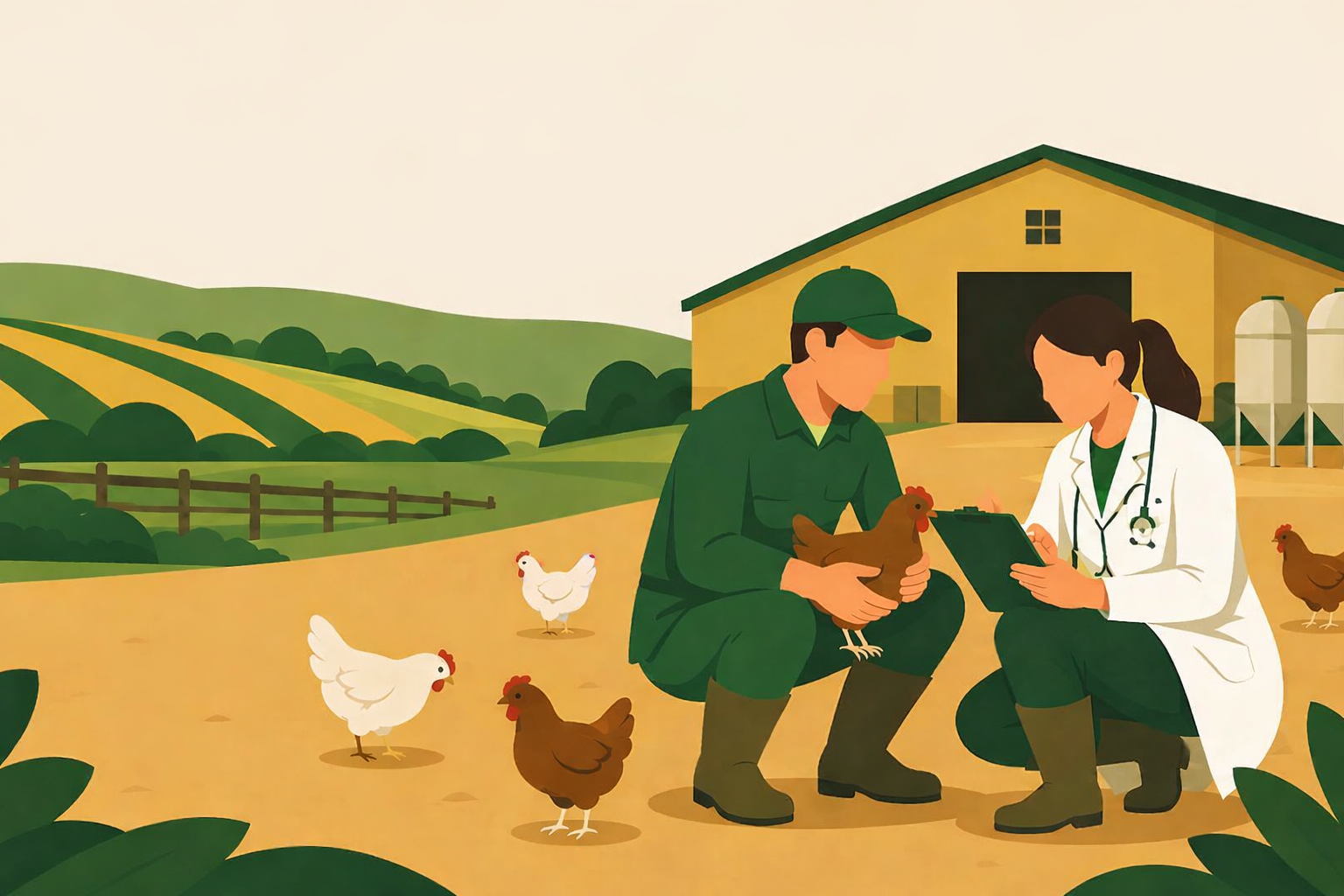
Guinea fowl are ground-foraging birds, tough and resilient, so they get sick less often than broilers or turkeys. That is no reason to neglect flock health — several conditions can still cause losses, especially when the birds use a range and come into contact with soil, earthworms and other birds’ droppings. This page is a hub: it gathers the key guinea fowl diseases and points to the detail. The whole production is covered in the guinea fowl farming hub, and a symptom-by-symptom table is in poultry diseases — symptom table.
Why are guinea fowl hardy yet still worth careful prevention?
Guinea fowl have a strong immune system and cope well with harsh conditions, but their lifestyle — lots of movement, scratching, using the range — exposes them to parasites and soil-borne germs. The most dangerous is histomoniasis, or ’blackhead’: guinea fowl are susceptible to it much like turkeys, and the parasite is carried by the eggs of intestinal worms (roundworms). That is why dry litter, range rotation and good farm biosecurity do more for guinea fowl than any drug after the fact. The rules of free-range keeping are covered in guinea fowl welfare.
Where does this information come from?
The symptom and condition descriptions are based on textbook and public knowledge: the MSD Veterinary Manual (Poultry section), materials from the World Organisation for Animal Health (WOAH), EFSA assessments and studies by the National Research Institute of Animal Production (IZ-PIB). Specific drug doses, diagnosis and treatment are always set by a veterinarian — this page does not replace a visit. Each disease is treated briefly; the point here is a quick orientation of what may threaten guinea fowl and when.
How to spot a disease in a guinea fowl flock and respond correctly
- 1
Observe the flock daily and count dead birds
Guinea fowl are skittish and noisy, so silence and apathy are already an alarm. Watch for: listless, ruffled birds huddling in groups, drinking and eating less, a change in the colour and consistency of droppings (sulphur-yellow in histomoniasis, bloody in coccidiosis), wheezing, lameness and a sudden rise in the number of dead birds. Record the daily mortality — a sudden spike is one of the most important alarms.
- 2
Separate sick birds and limit access to contaminated ground
Where possible, separate suspect and clearly sick birds from the rest, and remove dead birds promptly into a closed container. If blackhead or a worm infestation is suspected, limit access to damp, ’used-up’ range — that is where parasite eggs most often hide. Handle healthy flocks before sick ones, change clothing and disinfect footwear — these are elements of farm biosecurity.
- 3
Call a veterinarian and ask for testing
Diagnosis and treatment are set solely by a veterinarian; giving drugs ’by guesswork’ makes things worse and complicates the withdrawal period. The signs of histomoniasis, coccidiosis and salmonellosis can be similar (listlessness, diarrhoea, poorer feeding), so without testing — including a faecal exam for parasites — it is easy to target the wrong cause. How and when to use veterinary care is explained in the vet on the farm.
- 4
Give drugs exactly as prescribed and watch the withdrawal period
Give drugs only as the vet has written: the right product, dose, route and duration. An unfinished course encourages relapses and microbial resistance. Every drug has a withdrawal period — the time during which neither meat nor eggs may go for consumption until residues drop to a safe level. The withdrawal is counted from the last administration and must be recorded.
- 5
Record everything and draw conclusions for the next cycle
Note every drug administration: date, product, dose, number of birds treated and the end of the withdrawal period. This is a legal requirement and the basis for safe slaughter. After treatment, plan range rotation and litter disinfection so the problem does not recur. The legal requirements are covered in legal rules for keeping guinea fowl.
The key guinea fowl conditions
Five disease groups to watch in guinea fowl. Each is outlined — symptoms, prevention and when to call the vet.
Histomoniasis — blackhead
The most dangerous for guinea fowl: they are susceptible to it much like turkeys. It is caused by a protozoan carried by the eggs of intestinal worms (roundworms), favoured by a damp range and contact with other birds’ droppings. Symptoms: apathy, sulphur-yellow droppings, weight loss, sometimes bluish head skin. Prevention: dry litter, range rotation, deworming and not mixing guinea fowl with chickens/turkeys on the same ground. The mechanism and symptoms are covered in histomoniasis (blackhead) in turkeys.
Coccidiosis
An intestinal parasite (coccidia), dangerous especially in young guinea fowl in the first weeks of life. Symptoms: bloody or watery droppings, listlessness, ruffled feathers, poorer growth, sometimes sudden deaths. It is favoured by damp, caked litter and overcrowding. Prevention: dry litter, correct stocking density, sometimes a coccidiostat programme agreed with the vet. The rules of rearing young birds are in guinea fowl rearing, and the right density in guinea fowl stocking density.
Salmonellosis
Infection with Salmonella bacteria — important not only for flock health but for food safety (meat, eggs). In guinea fowl it can be low-symptom, but in young birds it causes diarrhoea, listlessness and raised mortality. It is a disease controlled under national monitoring programmes, with mandatory testing and reporting. Prevention relies on biosecurity, feed control and protection from rodents. More: salmonella on a poultry farm.
Mycoplasmosis (respiratory disease)
A chronic infection with Mycoplasma bacteria attacking the airways. Symptoms: wheezing, nasal discharge, sneezing, inflammation of the sinuses and conjunctiva, poorer condition. It develops slowly and often overlaps secondarily with other infections. It is favoured by poor ventilation, dust and damp. Prevention: a clean, well-ventilated house, correct stocking and biosecurity. The house requirements are in house requirements for guinea fowl.
Worm infestations — parasites from scratching on the range
Guinea fowl scratch a lot and eat invertebrates, so they easily pick up internal parasites: roundworms, whipworms, tapeworms. Symptoms: weight loss despite appetite, poorer condition, dull plumage, sometimes diarrhoea. Worm infestation is additionally dangerous indirectly — roundworms carry histomoniasis. Prevention: rotation and drying of the range, faecal testing and deworming on the vet’s advice. A well-managed range is covered in guinea fowl welfare.
The most common mistakes in guinea fowl disease prevention
A few mistakes recur in guinea fowl flocks — worth knowing before you place the next birds.
Keeping guinea fowl together with chickens and turkeys
A shared range with chickens and turkeys is a direct route to histomoniasis: chickens can be symptom-free carriers of the worms that spread blackhead, while guinea fowl and turkeys fall ill with it. Mixing species on the same ’used-up’ ground is one of the most common mistakes. Keep guinea fowl separate and rotate the range.
Ignoring a damp, ’used-up’ range
Wet, trampled ground is a reservoir of parasite eggs and coccidia. No range rotation and letting guinea fowl scratch for years in the same mud is asking for worm infestations and blackhead. Dry it out, change paddocks and let the ground rest — that is cheap prevention.
Treating ’by guesswork’ without a faecal exam
The signs of histomoniasis, coccidiosis and worm infestation can be similar. Giving products without a diagnosis does not help, wastes money and complicates the withdrawal period. With diarrhoea and weight loss, ask the vet for a faecal exam — only the result will point to the right cause and drug.
Weak biosecurity and no protection from rodents
Rodents and wild birds bring in salmonella and other germs, and a lack of disinfection mats and shared clothing spread them around the farm. Skipping cleaning between cycles is asking for trouble. The basics are in the farm biosecurity guide.
Frequently asked questions about guinea fowl diseases
Do guinea fowl get sick a lot?add
No — guinea fowl are famous for being hardy and get sick less often than broilers or turkeys. They are tough, cope well with harsh conditions and have a strong immune system. But ’hardy’ does not mean ’immune’: a few conditions can hit a flock hard, especially in free-range keeping. The key ones are histomoniasis (blackhead), coccidiosis, salmonellosis, mycoplasmosis and worm infestations. This page gives an overview, and the symptom table is in poultry diseases — symptom table.
Do guinea fowl get blackhead like turkeys?add
Yes — guinea fowl are susceptible to histomoniasis (blackhead) much like turkeys, which is why it is one of the most dangerous diseases in their keeping. It is caused by a protozoan carried by the eggs of intestinal worms, favoured by a damp range and contact with other birds’ droppings, especially chickens. The symptoms are apathy, sulphur-yellow droppings and weight loss. The mechanism is covered in histomoniasis (blackhead) in turkeys.
Why should guinea fowl not be kept together with chickens?add
Because chickens can be symptom-free carriers of the intestinal worms that spread histomoniasis — a disease to which guinea fowl are susceptible. A shared, ’used-up’ range with chickens and turkeys is one of the most common reasons for a blackhead outbreak in a guinea fowl flock. It is safest to keep guinea fowl separately, on a rotated, dried-out range. The rules of free-range keeping are in guinea fowl welfare.
How can I reduce disease risk in guinea fowl?add
Prevention gives the most: dry litter and good ventilation, correct stocking density, rotation and drying of the range, faecal testing and deworming on the vet’s advice, and tight biosecurity (disinfection mats, protection from rodents and wild birds, not mixing species). The basics are in farm biosecurity, and the right density in guinea fowl stocking density.
Where do worm infestations in guinea fowl come from?add
Guinea fowl scratch a lot and eat invertebrates — earthworms, insects, snails — which can be hosts for internal parasites: roundworms, whipworms and tapeworms. That is why worm infestations affect range birds more than housed ones. They are also dangerous indirectly, because roundworms carry histomoniasis. Prevention is range rotation and drying, plus deworming after a faecal exam. Feeding that affects condition is covered in guinea fowl feeding.
Do guinea fowl diseases affect the profitability of farming?add
Yes — even in hardy guinea fowl, a disease outbreak means deaths, poorer growth, drug costs and a withdrawal period during which you cannot sell meat or eggs. That is why prevention (dry litter, range rotation, biosecurity) usually pays off faster than treatment after the fact. How diseases and prevention affect the bottom line is shown in profitability of guinea fowl farming.
Manage guinea fowl flock health in DlaFerm.pl
Want a treatment log, withdrawal periods and a digital flock record in one place, plus notes on range rotation and deworming? Create a free farm account or write to us.
Phone
+48 796 258 151