Duck welfare — what it means on the farm
Duck welfare is a set of things you can measure and improve: constant access to clean water for drinking and plumage care, dry litter despite spilled water, healthy legs and footpads, the right stocking density and good air. Ducks have no dedicated EU directive — the general Directive 98/58/EC and Council of Europe recommendations apply. We explain it in plain language.
verifiedFrom the team that has organised work on poultry farms for years.
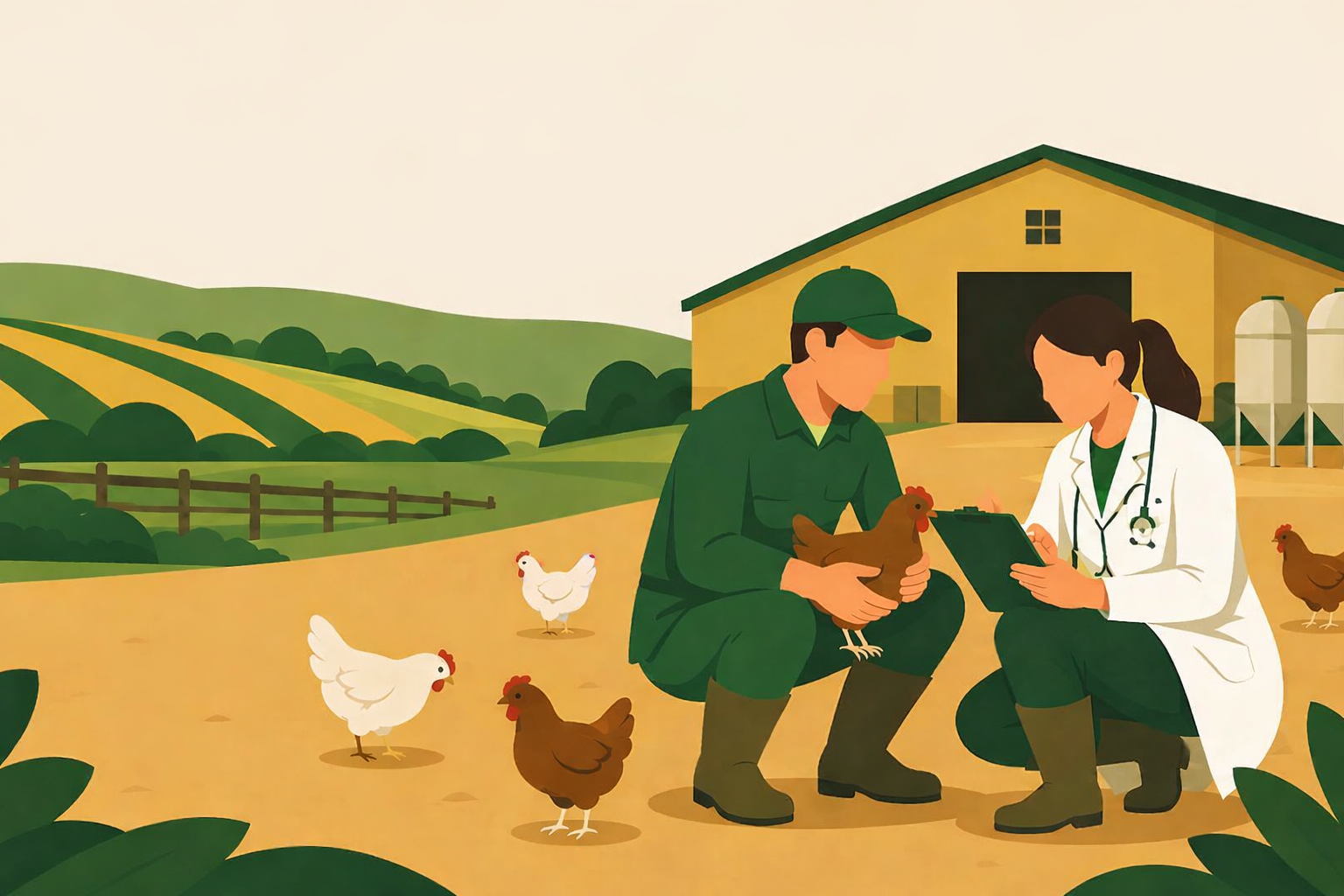
Duck welfare is simply the conditions in which a bird can live, eat, drink, preen, move and rest normally, without pain or excessive stress. Put plainly, it is the classic “five freedoms” translated to the duck: freedom from hunger and thirst, from discomfort (dry litter, good temperature), from pain and disease, from fear, and freedom to behave normally (dipping the bill in water, cleaning the feathers, resting). With ducks two themes recur most: water and wet litter — because a duck drinks a lot, spills water and needs it to care for its plumage. The whole production cycle is covered in the guide on duck farming.
Where do duck welfare rules come from?
Unlike the meat chicken or the laying hen, the duck has no dedicated, species-specific EU directive. The basis is the general Council Directive 98/58/EC on the protection of animals kept for farming, implemented in Poland by the ministerial regulation on minimum conditions for keeping poultry. The detail — including water access and plumage care — is organised by the Council of Europe recommendations on domestic ducks and by EFSA scientific opinions. This is why specific thresholds are often indicative and depend on the buyer’s programme and national rules. General indicators for all poultry are in the guide on poultry welfare indicators.
Why does the duck have its own challenges?
The duck is a waterbird. In the wild it drinks, feeds and cleans its feathers at water, dipping the bill and even the whole head. On the farm it is not always possible to give a duck open water (a trough, a small pool), because that means more moisture in the litter and a microbiological risk. Hence the ongoing debate: how to reconcile the duck’s natural needs (water for plumage care) with dry litter and hygiene. On top of that a duck drinks a lot and spills water, so the litter gets wet faster than with hens — and wet litter means worse legs, dirty feathers and worse air. That is why duck welfare shows up most in water, litter and legs.
How to manage duck welfare in practice
- 1
Provide water for drinking and plumage care
A duck must have constant access to clean water — not only to drink, but also to dip the bill and head and clean its feathers. Nipple drinkers alone are not enough: the Council of Europe recommendations call for watering that lets a duck immerse at least its head. In practice bell drinkers, open trough drinkers or shallow basins are used. Open water improves welfare but wets the litter faster and demands hygiene — the classic trade-off. Drinker lines and types are covered in the guide on drinker lines in the house.
- 2
Keep the litter dry despite spilled water
A duck spills water and excretes a lot of moisture, so the litter gets wet faster than with hens. Dry, friable litter is the foundation of healthy legs and clean feathers. Check the litter by hand every day, top up fresh material in the trouble spots — usually under the drinkers — and make sure water does not pool. Details in the guides on litter management in the house and wet litter — causes and effects.
- 3
Watch leg and footpad health
Ducks have short legs and webbed feet — wet, capped litter quickly damages the footpad skin and causes leg inflammation (footpad dermatitis). Watch how the ducks walk each day: a bird that moves reluctantly, limps or sits on dirty legs signals a litter or stocking problem. Dry flooring and the right density are the simplest prevention. Leg disorders and more are covered in the guide on duck diseases.
- 4
Keep stocking and air quality right
Overstocking means more moisture and manure on the same floor area, faster wet litter, more ammonia and less room to move. Good air (low ammonia, no stuffiness or moisture condensing on the walls) is key with ducks, because a lot of water in the litter means a lot of vapour. Convert stocking for your house in the guide on duck stocking density, and the housing requirements in the guide on duck house requirements.
- 5
Observe, record and act on deterioration
Welfare is not judged by eye — it is worth recording mortality, litter condition, feather cleanliness and how the ducks walk. A worsening is a signal, not a verdict: rising losses, dirty feathers, limping birds or wet litter mean something is failing — usually the drinkers, ventilation or stocking. Find the moisture source, ventilate the house, fix the drinkers and, if needed, lower the density. Legal requirements and inspections are in the guide on legal rules for duck keeping.
Duck welfare indicators and their areas
Four groups of issues used to measure duck welfare. Indicative values* — exact thresholds depend on the programme, the buyer and national rules, because the duck has no dedicated EU directive.
Water and plumage care
This is the duck’s key specificity. The bird needs water not only to drink but to immerse the bill and head and clean its feathers. Without it, plumage becomes matted and dirty and the nostrils and eyes get clogged. Open water (basin, bell, trough) improves welfare but wets the litter — so it must be balanced with hygiene and ventilation. The Council of Europe recommendations place clear emphasis on water access.
Litter and moisture
A duck spills water and excretes a lot of moisture, so the litter gets wet faster than with hens. Dry, friable litter protects legs and feathers; wet, capped litter damages footpads and soils plumage. The practical goal is litter that crumbles in the hand rather than clumping. The hardest spots are under the drinkers — that is where you top up most. Wet litter also means more ammonia in the air.
Legs, footpads and mobility
The duck’s short legs and webbed feet are sensitive to wet, capped flooring. You watch footpad condition (footpad dermatitis), cleanliness and walking ability. The practical goal is as many birds as possible moving freely and as few ducks as possible that limp, sit on dirty legs or rise reluctantly. This is the most sensitive indicator of whether the litter and density were right.
Stocking and air quality
Stocking decides how fast the litter gets wet and how much ammonia is in the house. Too dense — wetter sooner, more stuffiness, less room to move and preen. Good air shows as no pungent ammonia smell, dry walls (no condensation) and calm, active birds. Stocking thresholds are indicative and depend on the programme — conversions in the duck stocking density guide.
Mistakes that lower duck welfare
A few errors come up repeatedly at inspections — worth knowing before they show in legs, feathers and results.
Nipples only, no water for preening
Nipple drinkers quench thirst but do not let a duck dip its bill and head or clean its feathers. The result is matted plumage, clogged nostrils and eyes and poorer welfare. The Council of Europe recommendations call for watering that lets a duck immerse at least its head. Choose the drinker type in the guide on drinker lines in the house.
Ignoring wet litter
With ducks wet litter is not the exception but a daily risk — the bird spills water and excretes a lot of moisture. Ignored wet litter means sore footpads, dirty feathers and more ammonia. React early: look for the water source (leaking drinkers), top up dry litter and ventilate. The diagnosis of causes is in wet litter — causes and effects.
Overstocking “just in case”
The temptation to put in more ducks ends in faster wet litter, higher ammonia and worse legs. Less room also means less movement and preening. Keep stocking within the programme and the ventilation’s capacity — convert it in the guide on duck stocking density, and the house requirements in the guide on duck house requirements.
Weak ventilation against high moisture
A duck brings a lot of water into the house, so ventilation must carry that moisture away. A weak extract means condensation on the walls, pungent ammonia and wet litter despite topping up. Air is judged simply: if it stings your nose and eyes at the entrance, there is too much ammonia. Tie ventilation to stocking and the drinkers — together they decide the moisture.
Frequently asked questions about duck welfare
Must ducks have access to open water?add
Ducks must have constant access to clean drinking water and, given their nature as waterbirds, also to watering that lets them immerse at least the bill and head and clean their feathers — as the Council of Europe recommendations on ducks state. A full pool is not a requirement on every farm, but nipple drinking alone is often considered insufficient for welfare. In practice bell drinkers, open trough drinkers or shallow basins are used — though open water wets the litter faster and demands hygiene.
Why is dry litter so important for ducks?add
Because a duck drinks a lot of water, spills it and excretes plenty of moisture, so the litter gets wet faster than with hens. Wet, capped litter damages the footpad skin (footpad dermatitis), soils the feathers and raises the ammonia level in the air. Dry, friable litter is the simplest route to healthy legs and clean plumage. The hardest spots are under the drinkers — that is where fresh litter is topped up most often.
Do ducks have their own EU welfare directive?add
No. Unlike meat chickens (Directive 2007/43/EC) or laying hens, ducks have no dedicated, species-specific EU directive. They are covered by the general Council Directive 98/58/EC on the protection of farmed animals, implemented in Poland by a ministerial regulation, plus Council of Europe recommendations on domestic ducks and EFSA scientific opinions. That is why specific thresholds (e.g. stocking) are often indicative and depend on the buyer’s programme and national rules.
How do you tell duck welfare is deteriorating?add
First by the legs and feathers: ducks that limp, rise reluctantly, have dirty legs or matted, soiled feathers signal a litter, drinker or stocking problem. Then by the litter (wet, capped) and the air (pungent ammonia, condensation on the walls). Mortality is also a hard indicator — a sudden rise means something in the environment is failing. Record these observations daily, as they show the trend earlier than a single day does.
How do you reconcile water for preening with dry litter?add
This is the classic trade-off in duck keeping. Open water improves welfare (plumage care, natural behaviour) but wets the litter. What helps: placing the drinkers over a slatted area or a hard, easily dried zone, good ventilation to carry off the moisture, more frequent litter top-ups under the drinkers and the right stocking so the vapour from the birds does not overload the house. The key is to balance the natural need for water with hygiene and dry flooring, not to drop one for the other.
How is this page different from the page on legal rules for duck keeping?add
This page explains what duck welfare is and what to watch day to day: water, litter, legs, stocking and air. The legal side — which rules apply (Directive 98/58/EC, the ministerial regulation), what documentation and inspections are required — is covered in a separate guide on legal rules for duck keeping. The economics (whether it pays) are in the guide on the profitability of duck farming.
Sources & resources
- linkCouncil Directive 98/58/EC concerning the protection of animals kept for farming purposes (eur-lex.europa.eu)
- linkCouncil of Europe — recommendation concerning domestic ducks (Anas platyrhynchos) under the Convention for the Protection of Animals kept for Farming Purposes (coe.int)
- linkEFSA — animal welfare, scientific opinions on poultry (efsa.europa.eu)
- linkPolish ministerial regulation on minimum conditions for keeping farm animal species — poultry (isap.sejm.gov.pl)
Keep welfare records in DlaFerm.pl
Want a digital duck flock record, a mortality log and welfare observations (litter, water, legs) in one place — ready for inspection? Create a free farm account or write to us.
Phone
+48 796 258 151