Duck diseases — overview of the key conditions
Ducks get sick differently from meat chickens: they more often face water- and moisture-related diseases, their own viruses (riemerellosis, duck viral hepatitis, duck plague, parvovirus) and moulds from wet litter and feed. This page is a map: each condition is only outlined — briefly the symptoms, prevention and when to call the vet — with links to dedicated guides. Diagnosis and treatment are always set by a veterinarian.
verifiedFrom the team that has organised work on poultry farms for years.
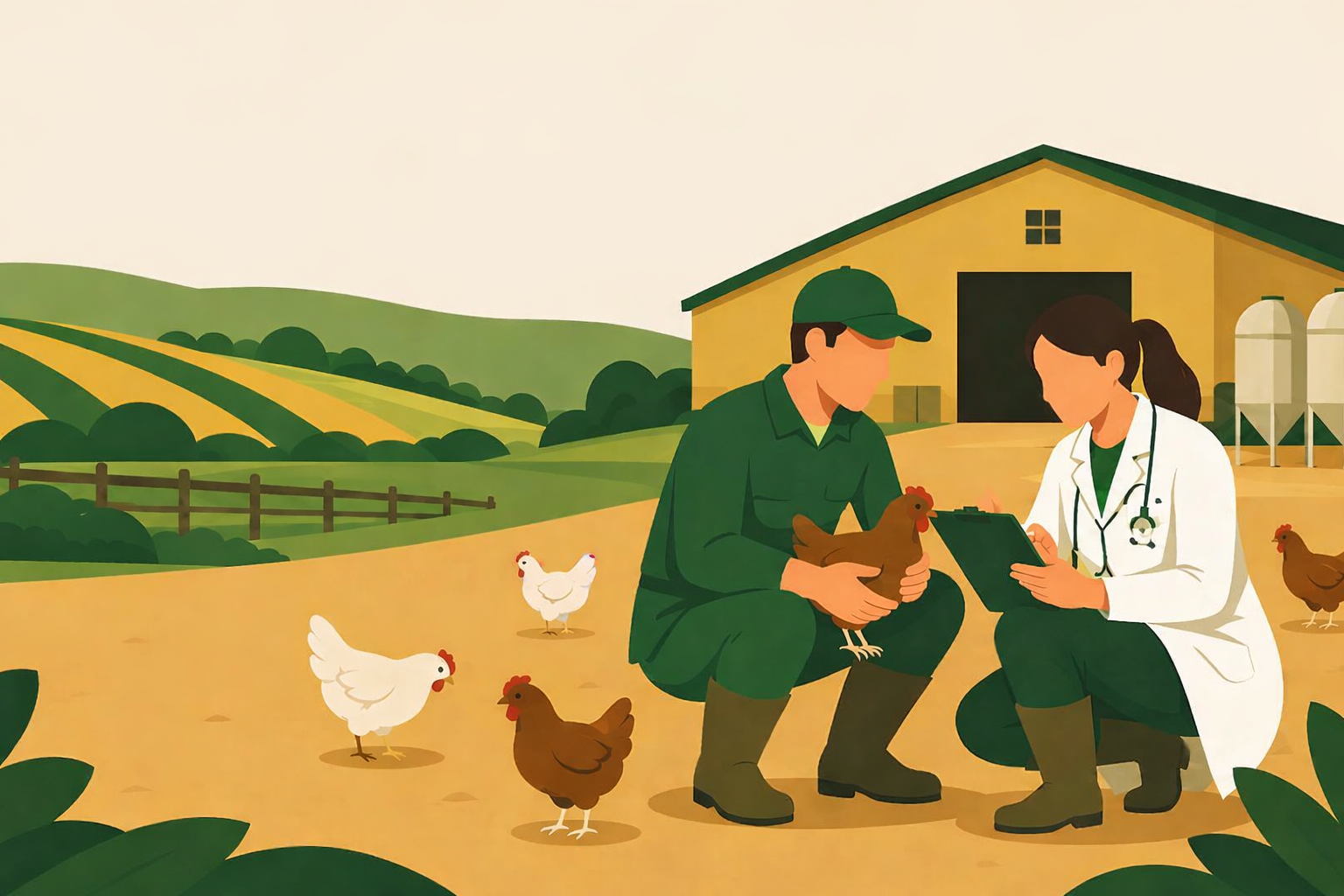
A duck is not a ‘big chicken’ — it has its own typical diseases and a different sensitivity. Ducks have more contact with water and moisture, carry their own viruses absent in chickens, and are more exposed to moulds from wet litter and feed. This page is a hub: it gathers the key duck conditions in one place and points to detailed guides. The whole production is covered in the duck farming hub, and a symptom-by-symptom table is in poultry diseases — symptom table.
Why does a duck get sick differently from a hen?
Ducks are waterfowl — they readily foul drinkers, spill water and keep litter wetter. That favours the ducks’ own diseases: riemerellosis (infectious serositis), duck viral hepatitis, duck plague and parvovirus, while the damp environment helps moulds and bacteria spread. So for ducks an unusual amount depends on dry litter, clean water and tight biosecurity. The basics of environmental hygiene are in litter management in the house, and what spoils it fastest in wet litter — causes and effects.
Where does this information come from?
The symptom and prevention descriptions are based on textbook and public knowledge: the MSD Veterinary Manual (Poultry section), the WOAH Terrestrial Animal Health Code, EFSA assessments and materials from the Polish National Research Institute of Animal Production (IZ-PIB). Specific drug and vaccine doses, diagnosis and treatment are always set by a veterinarian — this page does not replace a visit. Figures (age, mortality) are given cautiously and only as a guide, as they depend on the strain and conditions. Each disease is treated briefly with a link to a separate guide.
How to respond to a suspected disease in a duck flock
- 1
Observe the flock daily and count dead birds
The earliest signs in ducks: listless or lame birds, wheezing or rapid breathing, nasal and eye discharge, nervous signs (twisted neck, convulsions, falling on the back), diarrhoea, a sudden rise in dead birds and a drop in water and feed intake. Record the daily mortality — a sudden spike is one of the most important alarms. Early disease detection based on a drop in water and feed intake also helps, before symptoms are visible to the naked eye.
- 2
Separate sick birds and limit spread
Where possible, separate clearly sick and suspect birds, and remove dead birds promptly into a closed container. Handle healthy flocks before sick ones, change clothing and disinfect footwear between rooms — these are elements of farm biosecurity. In ducks, watch drinker cleanliness and dry litter especially, because moisture spreads infection. On suspicion of a notifiable disease, do not delay the next step.
- 3
Call a veterinarian and submit material for testing
Diagnosis and treatment are set solely by a veterinarian — many duck diseases (riemerellosis, colibacillosis, duck plague) share similar signs and are only told apart by post-mortem and laboratory testing. Giving drugs ‘by guesswork’ makes things worse and complicates the withdrawal period. On suspicion of a disease controlled by the authorities (e.g. highly pathogenic avian influenza) you are legally obliged to notify the official veterinarian without delay. What this looks like on a farm is covered in veterinary care for the flock.
- 4
Give drugs and vaccines exactly as prescribed
Give drugs and vaccines only as the vet has written: the right product, dose, route and duration. An unfinished course encourages relapses and microbial resistance, and a poorly given vaccine does not protect. Every drug has a withdrawal period — the time during which the meat must not go to slaughter. The rules are explained in drug withdrawal periods in poultry.
- 5
Record everything in the treatment log
Every drug and vaccine administration must be noted: date, product, dose, number of birds and the end of the withdrawal period. This is a legal requirement and the basis for safe slaughter. Instead of loose notes, keep a treatment and withdrawal-period log in one place — then the withdrawal end date calculates itself and inspections go smoothly.
The key duck conditions
Six diseases that most often affect ducks. Each has a short outline: briefly symptoms and prevention — leave the details and diagnosis to the vet.
Riemerellosis (infectious serositis)
Caused by the bacterium Riemerella anatipestifer. It most often affects young ducks during rearing. Symptoms: eye and nasal discharge, sneezing, twisted neck and nervous signs, lameness, listlessness, diarrhoea; at post-mortem fibrinous deposits on serous membranes (pericardium, liver, air sacs). Prevention: dry litter, good ventilation, low stocking density, tight biosecurity; vaccines are available — the programme is set by the vet. Treatment with a targeted antibiotic only after diagnosis. Stocking is covered in duck stocking density, and the environment in house requirements for ducks.
Duck viral hepatitis (DVH)
An acute, contagious viral disease of the youngest ducklings (most often in the first days and weeks of life), with high mortality at the susceptible age. Symptoms: sudden deaths, ducklings falling on their side or back with the neck arched back and legs stretched out (a characteristic posture), convulsions. Prevention relies mainly on vaccinating parent flocks (maternal immunity protects the chicks) and on hatchery and brooder biosecurity. There is no causal treatment — prevention is what counts. The vaccination programme is set by the vet.
Duck plague (herpesvirus infection, duck enteritis)
A contagious disease of ducks, geese and swans caused by a herpesvirus (duck enteritis virus). It can be violent and end in heavy losses. Symptoms: sudden deaths, apathy, eye and nasal discharge, diarrhoea, sometimes haemorrhages; at post-mortem haemorrhagic lesions in the digestive tract. The source is often contact with wild waterfowl and contaminated water. Prevention: biosecurity, limiting contact with wild birds, and vaccination in risk areas as agreed with the vet. Protecting the flock from wild birds is supported by farm biosecurity.
Parvovirus (Derzsy’s disease)
A viral disease of young ducklings and goslings (the same parvovirus also affects geese). Most dangerous in the first weeks of life. Symptoms: listlessness, diarrhoea, poorer growth and stunting, eye and nasal discharge, sometimes nervous signs; in surviving birds delayed feathering. Prevention relies above all on vaccinating parent flocks (maternal immunity) and biosecurity. There is no causal treatment. The vaccination programme and its timing are set by the veterinarian for the specific flock.
Aspergillosis
A fungal disease caused by the mould Aspergillus, whose spores develop in damp, rotten litter and mouldy feed. The bird inhales the spores — the disease attacks mainly the respiratory system. Symptoms: rapid, wheezing breathing, open-beak gasping, listlessness, poorer growth. It is not transmitted bird to bird — the source is the environment. Prevention: dry, regularly replaced litter, good ventilation, no damp or mouldy feed. Key are litter management and avoiding wet litter.
Salmonellosis
Infection with Salmonella bacteria — dangerous for the birds (especially the young: listlessness, diarrhoea, poorer growth, deaths) and important for human health (a zoonosis, with the risk of transmission via eggs and meat). The source is often contaminated feed and water, rodents and poor hygiene. Prevention: clean feed and water, rodent control, biosecurity, monitoring and — where indicated — vaccination agreed with the vet. The topic for all poultry is developed in salmonella on a poultry farm.
The most common mistakes in duck disease prevention
A few mistakes recur on many duck farms — worth knowing before you place the next flock.
Tolerating wet litter and spilled water
In ducks this is mistake number one. Damp, caked litter directly raises the risk of riemerellosis, colibacillosis, aspergillosis (from mould) and foot lesions. Ducks spill water, so the drinkers and their surroundings need special attention. The causes and effects are in wet litter — causes and effects, and day-to-day handling in litter management in the house.
Skipping parent-flock vaccination
For duck viral hepatitis (DVH) and parvovirus (Derzsy’s disease) there is no effective treatment — chicks are protected above all by maternal immunity from vaccinated parent flocks. Skipping that programme leaves the youngest ducklings defenceless. The programme and timing of vaccinations are set by the veterinarian.
Contact with wild waterfowl
Wild ducks and other waterfowl, and contaminated water, are an entry route for duck plague and avian influenza, among others. Open ponds, unprotected ranges and shared water sources raise the risk. Limiting this contact is fundamental — the basics are in farm biosecurity.
Treating ‘by guesswork’ without a diagnosis
Riemerellosis, colibacillosis and duck plague share similar signs but need different handling. Giving an antibiotic without testing does not help, wastes money, encourages bacterial resistance and complicates the withdrawal period — and for a viral disease the antibiotic will not act on the cause anyway. Leave diagnosis (including post-mortem) and drug choice to the veterinarian.
Frequently asked questions about duck diseases
What diseases do ducks most often suffer from?add
Ducks have their own important conditions: riemerellosis (infectious serositis, Riemerella anatipestifer), duck viral hepatitis (DVH), duck plague (a herpesvirus infection), parvovirus (Derzsy’s disease, shared with geese), aspergillosis (a mould disease from wet litter and feed) and salmonellosis. Added to that are diseases common to all poultry, such as colibacillosis. Each is only outlined — see poultry diseases — symptom table.
What is riemerellosis in ducks?add
Riemerellosis is an infectious serositis caused by the bacterium Riemerella anatipestifer, most often in young ducks during rearing. Symptoms are eye and nasal discharge, sneezing, twisted neck and nervous signs, lameness and listlessness, and at post-mortem fibrinous deposits on the serous membranes. Prevention relies on dry litter, good ventilation, low stocking density and biosecurity; vaccines are available. Treatment with a targeted antibiotic is chosen by the veterinarian after diagnosis.
Which duck diseases do vaccines protect against?add
For duck viral hepatitis (DVH) and parvovirus (Derzsy’s disease) there is no causal treatment, so vaccinating parent flocks is key — the chicks then receive maternal immunity. In risk areas, vaccination against duck plague is also used, and bacterial vaccines are available against riemerellosis. Aspergillosis (a fungal disease from mould) and salmonellosis depend mainly on environmental hygiene — for salmonella, where indicated, vaccination is also used. The specific programme is always set by the veterinarian.
Where does aspergillosis in ducks come from on the farm?add
Aspergillosis is a fungal disease — its source is the environment, not a sick bird. Spores of the mould Aspergillus develop in damp, rotten litter and mouldy, wet feed; the bird inhales them and the respiratory system is mainly affected. So the most important things are dry, regularly replaced litter, good ventilation and no mouldy feed. Litter management in the house and avoiding wet litter help here.
Are duck diseases dangerous to humans?add
Most of the diseases covered (riemerellosis, DVH, duck plague, parvovirus, aspergillosis) are primarily a bird problem, not a direct threat to people. The exception is salmonellosis — a zoonosis, a disease transmitted to humans, including via eggs and meat, which is why it matters for public health. Avian influenza stands apart and is treated as a notifiable disease. Hygiene, biosecurity and salmonella control protect both birds and people — details in salmonella on a poultry farm.
How can I reduce disease risk on a duck farm?add
Prevention gives the most: dry litter and well-working drinkers (ducks spill water), good ventilation, a sensible stocking density, tight biosecurity and limited contact with wild waterfowl, a vaccination programme and clean feed agreed with the vet, and daily flock observation. Early detection of drops in water and feed also helps. The basics are in farm biosecurity, and welfare and conditions in duck welfare.
Manage duck flock health in DlaFerm.pl
Want a treatment log, withdrawal periods and a digital flock record in one place, plus early warning of drops in water and feed? Create a free farm account or write to us.
Phone
+48 796 258 151