Legal rules for duck farming
Before you place the first ducklings, a duck farm must be registered, and you must meet welfare requirements, Salmonella testing and the rules on transport and slaughter. Unlike broilers, ducks have no dedicated EU directive — welfare rests on the general Directive 98/58/EC, Council of Europe recommendations and national rules. We have gathered the whole map of duties in one place, in plain language, with links to detailed pages. This is an informational guide, not binding legal advice: the law changes, so confirm key points with your local veterinary officer and the agricultural agency.
verifiedFrom the team that has organised work on poultry farms for years.
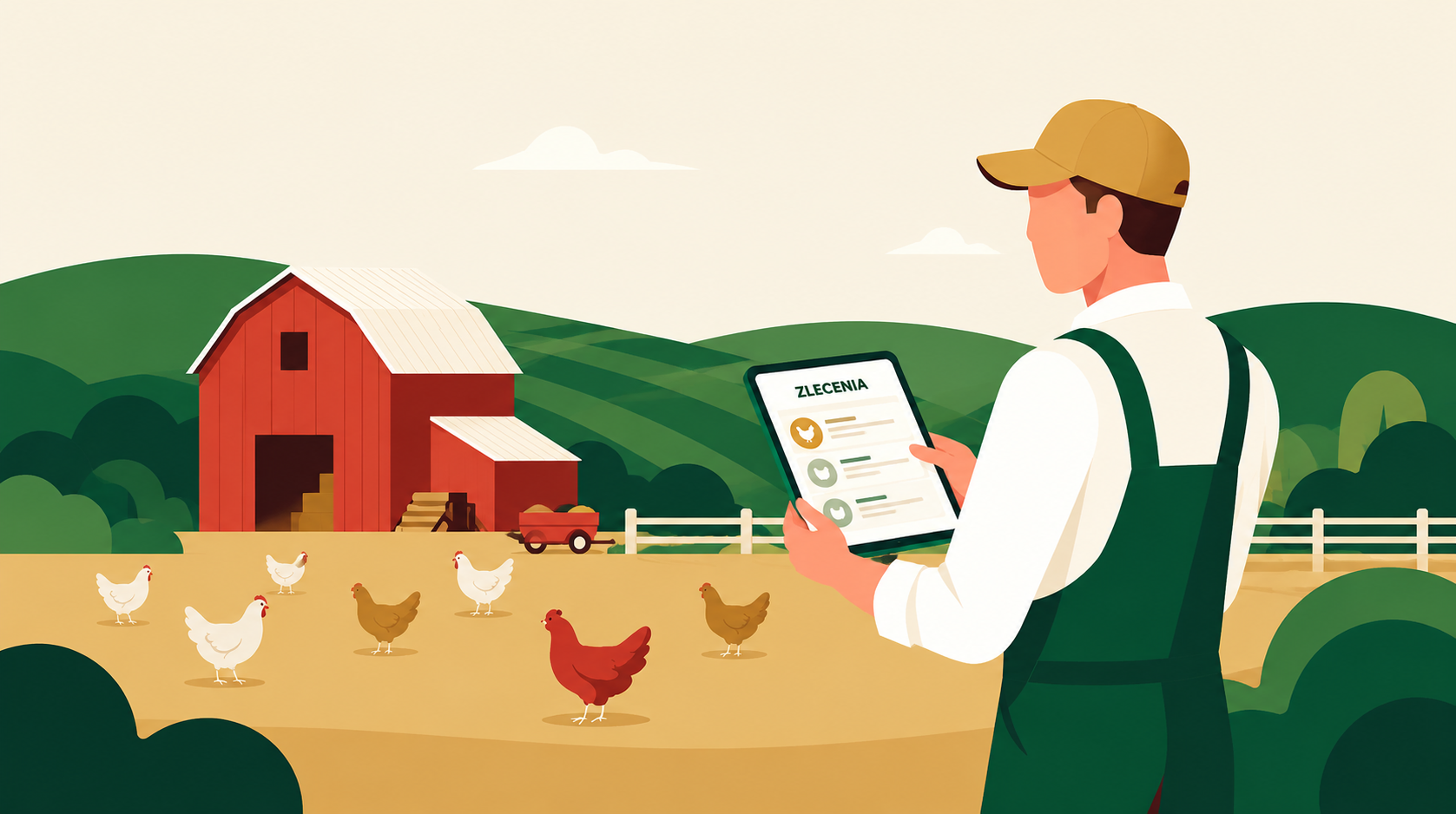
Duck farming in Poland is more than rearing — it is also a set of duties towards the authorities. Before you place the first ducklings the farm must be registered, and you must meet welfare, flock-health and transport and slaughter requirements. This page is an overview — a map of duties showing what to arrange and where, and pointing to separate guides for the details. The whole process is covered in the hub on duck farming.
Where do these rules come from?
There is an important difference from broilers: ducks have no dedicated EU welfare directive. The basis is the general Council Directive 98/58/EC on the protection of farmed animals, supplemented by Council of Europe recommendations for ducks (mallard and Muscovy) and Polish regulations of the Minister of Agriculture on minimum conditions for keeping poultry. Farm oversight rests with the Veterinary Inspection, and registrations are run by the agricultural agency (ARiMR).
Where do you handle all this?
Three main places: ARiMR and the IRZplus system (flock holding registration and animal records), the local veterinary officer (veterinary number, welfare inspections, Salmonella testing) and your own farm records (flock register, treatment log, welfare documentation). The law is updated from time to time — always confirm dates, forms and thresholds with ARiMR and your veterinary officer before each cycle.
From registration to slaughter — what you must arrange
- 1
Register the flock holding in IRZplus (ARiMR)
The first step, even before placing birds: register the flock holding with the agricultural agency (ARiMR) and obtain a holding number in the IRZplus system. This underpins all later records — without it you cannot register placements or mortality. From registration you also keep a flock register (placement date, number of ducks, origin, mortality, slaughter dispatch date). The IRZplus portal can be unintuitive, so the later status-change reports — placements and slaughter dispatches — can be filed in IRZplus for you by DlaFerm.pl, automatically, if you want; you can also do it yourself if you prefer. The step-by-step is in the guide on flock records in IRZplus.
- 2
Obtain a veterinary number and approval for the holding
As an operator in the food chain, a duck farm must be notified to the local veterinary officer and — depending on scale and type of activity — registered or approved, with a veterinary number (establishment identifier). This number identifies the farm in trade and is required by buyers and slaughterhouses. The procedure and required documents are in the guide on farm veterinary number — registration.
- 3
Meet duck welfare requirements
Ducks have no dedicated EU directive with a specific stocking table as broilers do, so you must follow Directive 98/58/EC, Council of Europe recommendations and national rules on minimum conditions for keeping poultry. In practice this means providing adequate floor space, dry and clean litter, access to water that lets a duck immerse its head and preen, and proper microclimate and light. How to calculate density and set up the building is explained in the guides on duck stocking density, duck house requirements and duck welfare, and programmes and subsidies in poultry welfare — subsidies.
- 4
Ensure biosecurity and flock health
A poultry farm must meet biosecurity requirements — disinfection mats, protective clothing and footwear used only on the farm, protection against wild birds, entry control and a register of people and vehicles. With ducks, which often have access to runs and water bodies, limiting contact with wild waterfowl is especially important — they are the natural reservoir of avian-influenza (HPAI) virus. During alerts the requirements may be tightened by orders of the governor or the Chief Veterinary Officer, including a duty to keep birds under cover. Common diseases and prevention are covered in the guide on duck diseases.
- 5
Carry out Salmonella testing
Poultry flocks, including ducks kept for meat production, are covered by the national programme to control Salmonella serotypes (mainly Salmonella Enteritidis and Salmonella Typhimurium). Before dispatch to slaughter the flock must be sampled (usually boot swabs from the litter) and tested — a positive result for the serotypes covered means trade restrictions and mandatory measures. The scope and dates depend on the flock’s purpose, so confirm them with your veterinary officer. How the programme works is described in the guide on Salmonella on a poultry farm.
- 6
Keep treatment records and prepare transport and slaughter
Every medicine given (especially antibiotics) goes into the treatment log, and before slaughter you must observe the withdrawal period — the time after which the bird’s tissues are free of residues. Dispatching birds is also governed by rules on animal transport and food-chain information for the slaughterhouse. If you run direct sales or local retail (in Poland: RHD), on-farm slaughter of small numbers of ducks is subject to separate, limited rules — here too it is worth confirming the scope with your veterinary officer. Details are in the guides on withdrawal periods in poultry and poultry transport rules.
The most important rules for ducks
Four pillars on which legal duck farming rests. Act names are given as a reference — confirm the legal position with your veterinary officer and ARiMR*.
Directive 98/58/EC + Council of Europe recommendations
Ducks have no dedicated EU welfare directive. The basis is the general Council Directive 98/58/EC on the protection of farmed animals, supplemented by Council of Europe recommendations for ducks (mallard and Muscovy) and national regulations on minimum conditions for keeping poultry. Requirements cover floor space, litter, access to water and microclimate.
IRZplus / ARiMR — flock holding registration
The Animal Identification and Registration System (IRZplus) run by ARiMR. Duty to register the flock holding and obtain a number before placing birds, keep a flock register and report events (placements, slaughter). Basis: the act on the animal identification and registration system.
Biosecurity and avian-influenza oversight
A duck farm must meet minimum biosecurity requirements: protection against wild birds, disinfection mats and agents, protective clothing, an entry register, a biosecurity plan. Because ducks are in close contact with water and wild waterfowl, avian-influenza (HPAI) oversight is especially important here. Oversight: the Veterinary Inspection.
National Salmonella control programme
The programme covers mandatory testing of poultry flocks for Salmonella Enteritidis and Salmonella Typhimurium (and related serotypes covered). Samples (boot swabs from the litter) are taken before dispatch to slaughter; a positive result for covered serotypes means trade restrictions and mandatory measures. The scope depends on the flock’s purpose. Basis: EU rules and the national programme.
The most common formal shortcomings
These slip-ups recur at inspections — worth knowing before the veterinary officer visits.
Placing ducklings before registering the flock holding
The ducks are already on the farm, but the IRZplus holding number has not been issued yet. Registration is done before placement, not after — otherwise you cannot register the placement on time and a gap appears in the flock register. How to handle it is in the guide on flock records in IRZplus.
No water that lets a duck preen its plumage
Ducks are waterfowl — welfare recommendations point to a need for water in which the bird can immerse its head and preen. Watering with nipples alone, without the ability to rinse the head, may be treated as a welfare shortcoming. How to set up drinkers and the building is explained in the guide on duck house requirements.
Not observing the withdrawal period before slaughter
The flock received an antibiotic, but dispatch to slaughter started before the withdrawal period ended. This risks medicine residues in the meat and is a serious breach. The withdrawal period is counted from the last dose and recorded in the log — details in the guide on withdrawal periods in poultry.
Underestimating floor space and overcrowding the flock
The lack of a dedicated stocking table for ducks does not mean they can be kept at any density. Overcrowding worsens welfare, litter quality and increases mortality — and an inspection assesses the keeping conditions under Directive 98/58/EC and the recommendations. How to set the density and whether it pays off are covered in the guides on duck stocking density and duck farming profitability.
Frequently asked questions about duck farming rules
Is there a dedicated EU welfare directive for ducks?add
No. Unlike broilers (Directive 2007/43/EC), ducks have no dedicated welfare directive with a stocking table. The general Council Directive 98/58/EC on the protection of farmed animals applies, supplemented by Council of Europe recommendations for ducks and national regulations on minimum conditions for keeping poultry. This is an informational guide — confirm the specific requirements for your farm with your veterinary officer.
Do I have to register a duck flock?add
Yes. The flock holding is registered with ARiMR in the IRZplus system, usually before placing birds, with a holding number issued. You also keep a flock register (placements, mortality, dispatches to slaughter). We cover this step by step in the guide on flock records in IRZplus.
Does a duck farm need a veterinary number?add
Yes — as an operator in the food chain the farm must be notified to the local veterinary officer and, depending on scale and type of activity, registered or approved with a veterinary number. The number identifies the farm in trade and is required by slaughterhouses and buyers. The procedure is in the guide on farm veterinary number — registration.
Do ducks need access to bathing water?add
Council of Europe welfare recommendations for ducks indicate that, as waterfowl, they should have access to water that lets them at least immerse the head and preen. Full bathing is not always mandatory, but watering with nipples alone, without the ability to rinse the head, may be assessed as a welfare shortcoming. How to set up drinkers in practice is covered in the guide on duck house requirements.
Can I slaughter ducks on the farm and sell the meat?add
To a limited extent, yes — under direct sales or local retail (in Poland: RHD), on-farm slaughter of small numbers of poultry and sale to the final consumer is allowed, on the terms and within the limits set in the regulations. This requires registering the activity with the veterinary officer and meeting hygiene conditions. Confirm the scope, limits and duties with your local veterinary officer — this is an informational guide, not binding advice.
Is this binding legal advice?add
No. This page is an informational guide — it organises duties and points to the details, but it does not replace the regulations or an authority decision. The law is updated from time to time (forms, deadlines and thresholds change), so always confirm key points with your local veterinary officer and ARiMR before each cycle.
Sources & resources
- linkChief Veterinary Inspectorate — welfare, biosecurity, disease control programmes (wetgiw.gov.pl)
- linkARiMR — Animal Identification and Registration System (IRZplus) (gov.pl/web/arimr)
- linkCouncil Directive 98/58/EC concerning the protection of animals kept for farming purposes (eur-lex.europa.eu)
- linkInternet System of Legal Acts — national poultry regulations (isap.sejm.gov.pl)
Keep your paperwork in one place
DlaFerm.pl keeps your flock records and IRZplus data in one place, and can file the status-change reports in IRZplus for you — automatically, if you want. Along the way it tracks production indicators, watches mortality and feed, keeps the whole cycle history and a Flock Card, plus a farm entry log and a treatment log — without paper chaos. Create a free farm account or write to us.
Phone
+48 796 258 151