Quail welfare — what it means on the farm
Quail welfare is not a slogan but a set of things you can set up and keep an eye on: a sensible stocking density, a calm environment, a cage ceiling the bird will not hurt itself against, clean air and room for a sand bath. We explain in plain language what really matters for this small, nervous bird — because the quail has no directive of its own and relies on general rules (Directive 98/58/EC) and national law.
verifiedFrom the team that has organised work on poultry farms for years.
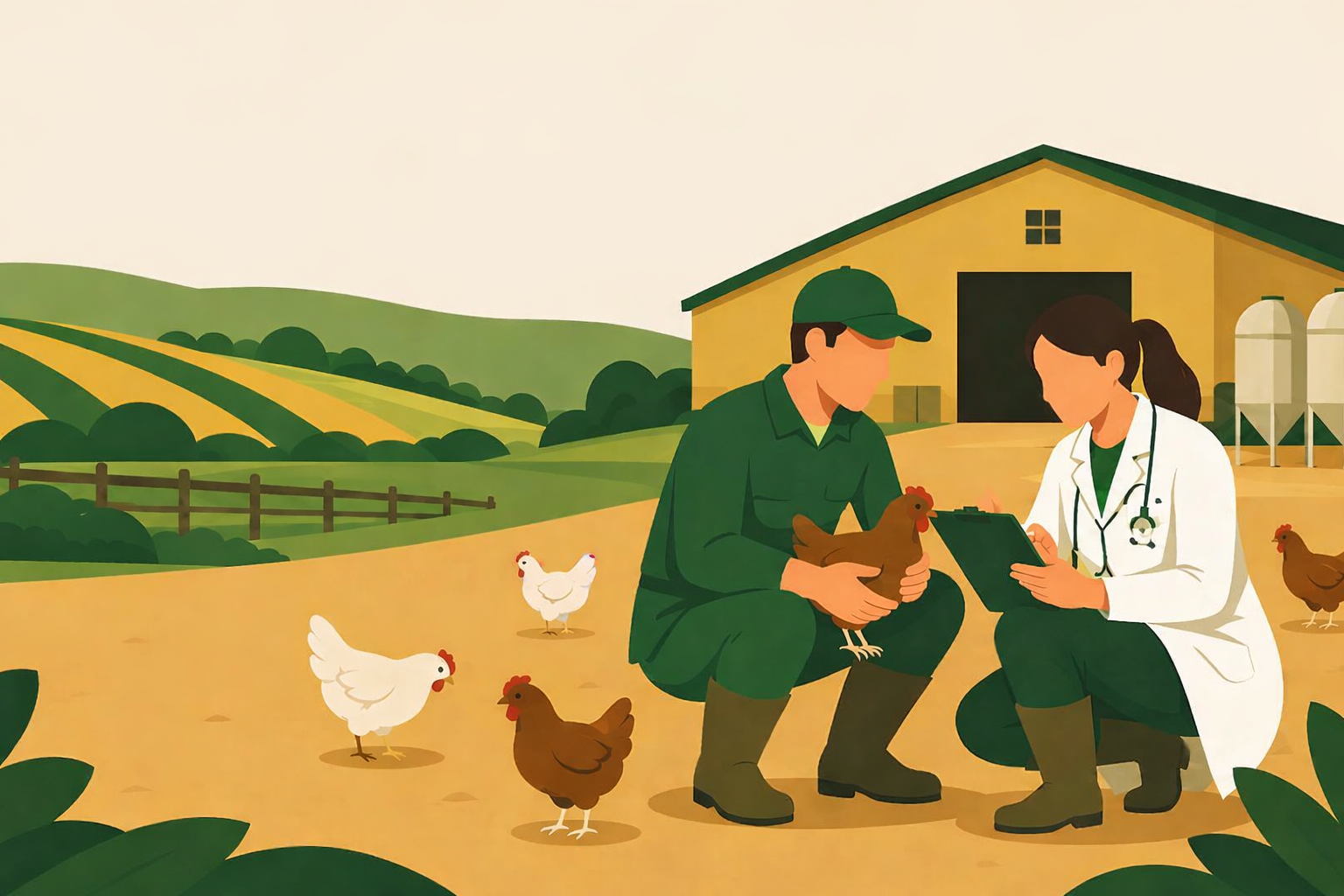
Quail welfare is simply the conditions in which a bird can live, eat, drink, move and rest normally, without pain or excessive stress. With the quail this looks different from a hen or a broiler: it is a very small, light and exceptionally nervous bird. When startled it does not run sideways but jumps abruptly straight up — and if the cage ceiling is hard and high, it hits its head against it. So quail welfare starts with two things: calm in the room and a sensibly designed cage. The whole production cycle is covered in the guide on quail farming.
Where do quail welfare rules come from?
The quail has no directive of its own in the EU — unlike laying hens or broilers. It is covered by the general Council Directive 98/58/EC on the protection of farm animals and by Polish rules on minimum keeping conditions. This means there is no rigid “so many cm² per bird” table in EU law for this species — good practice rests on general principles, recommendations (e.g. of the Council of Europe) and the scientific opinions of the European Food Safety Authority (EFSA). General indicators for all poultry are in the guide on poultry welfare indicators; here we focus narrowly on the quail. The legal side for this species is developed in the guide on legal rules for quail farming.
How does quail welfare differ from hen welfare?
The most important difference is head injuries. A startled quail bursts straight up — this reflex (the “flush”) is very strong in this bird. In a cage with a hard, high ceiling it ends in skull injuries, bleeding and losses. So in the quail, welfare shows up most in cage design: a low ceiling (so the bird cannot gather speed) or a soft, elastic ceiling that cushions the impact. The second difference is sensitivity to stress — a sudden noise, a flash of light or a quick move by staff can trigger panic across the whole flock at once.
How to manage quail welfare in practice
- 1
Start with the cage ceiling — the key to fewer head injuries
In the quail the most common injury is hitting the head against the cage ceiling during an abrupt upward burst. There are two proven solutions: a low ceiling (about 18–25 cm*), where the bird cannot accelerate into flight, or a soft, elastic ceiling (e.g. taut netting or an elastic material) that cushions the impact. Avoid tall cages with a hard, rigid top — the worst combination for this species. Housing requirements are covered in the guide on quail house requirements.
- 2
Keep stocking density within sensible limits
The quail is small, so it is tempting to pack as many birds per square metre as possible — but a high density quickly spoils welfare: humidity and ammonia rise, injuries, pecking and panic become more frequent. Indicatively, for a laying quail about 100–150 cm² per bird is used in a cage*, while aviary systems give far more room. Exact conversions and a comparison of systems are shown in the guide on quail stocking density.
- 3
Provide calm, gentle light and a steady daily rhythm
A quail panics at almost anything: a slamming door, a flash, a quick movement. Enter the room calmly and predictably, ideally giving the birds a signal (e.g. a quiet knock). Keep the light gentle, even and flicker-free, and the lighting programme steady — switching full light off or on abruptly startles the flock. For laying, quail need a long photoperiod (about 14–16 hours*), but growing birds are kept on shorter days — details in the guide on quail rearing.
- 4
Watch air quality — the quail is small and sensitive
On a small bird and at high density, ammonia and dust become a problem faster than in hens. Irritant air harms the eyes and airways, opens the door to disease and lowers laying. Set ventilation so that you do not feel a sharp ammonia smell at cage height, and keep the litter (if any) dry and friable — see litter management in the house. The diseases that start with poor air are covered in the guide on quail diseases.
- 5
Give the birds a sand bath and natural behaviour
A sand bath is an important need for the quail — in dry, loose substrate the bird cleans its feathers, gets rid of external parasites and calms down. In aviary systems or with access to a substrate this is easy to provide; in cages you have to add a sand area or a dust bath on purpose. The more natural behaviour (scratching, pecking, bathing), the less feather pecking and stress. The effect of feeding on condition and feathers is covered in the guide on quail feeding.
Quail welfare indicators and indicative thresholds
Four areas used to measure quail welfare. Indicative thresholds* — there is no species directive in the EU, so exact values depend on the system, the buyer and national rules.
Head injuries and cage design
The most species-specific indicator. You count birds with head bruising, bleeding and losses caused by hitting the ceiling. A low result shows the ceiling is safe (low or soft) and the flock calm. A high one signals that the cage is poorly designed or the birds are often startled. This is the first thing worth counting on a quail farm.
Feather condition and pecking
Feather loss, bare patches and signs of pecking point to stress, too high a density, poor light or boredom. In the quail, feather pecking and cannibalism can spread like an avalanche, especially under harsh, bright light and without a sand bath. Clean, smooth plumage is a sign of good welfare; thinned feathers signal that density, light and enrichment need to improve.
Mortality and condition
Daily losses and total cycle mortality are a hard indicator of flock health. A sudden spike in losses flags a problem (panic and injuries, disease, poor air) faster than the total alone. In the quail, some losses come straight from head injuries and panic — so this indicator is read together with cage design and the level of stress. Record losses daily.
Environment: density, air, bathing
On-bird indicators go hand in hand with the surroundings. Density: loose enough that birds do not crowd and build up moisture (indicatively about 100–150 cm²/bird in a cage*). Air: free of sharp ammonia and excess dust at cage height. A chance to sand-bathe and access to a dry, loose substrate. Gentle, even, flicker-free light and a steady daily rhythm.
Mistakes that lower quail welfare
A few errors come up repeatedly with beginner quail keepers — worth knowing before they show in injuries and losses.
A tall cage with a hard ceiling
The worst combination for the quail: plenty of room to accelerate into flight and a hard top to hit the head against. A startled flock can rack up skull injuries in a second. The fix is simple: a low ceiling (so the bird cannot gather speed) or a soft, elastic ceiling that cushions the impact. Cage construction is covered in the guide on quail house requirements.
Packing birds to the maximum “because they are small”
The temptation to earn more from a small bird by packing it into the cage ends in wet litter, ammonia, pecking and higher mortality. A high density also means more panic and head injuries. Keep a sensible stocking — details and conversions in the guide on quail stocking density, and the effect on the bottom line in quail farming profitability.
Startling the flock and rough handling
A slamming door, sudden full light, a quick hand movement — each of these can launch the whole flock at once, which translates directly into head injuries and stress. Enter calmly and predictably, signal your presence, avoid flickering light. With the quail, calm is not a luxury but the basis of welfare and lower losses.
No sand bath and no dry substrate
A quail deprived of sand bathing and scratching gets bored and pecks its neighbours’ feathers more. The lack of a dry, loose substrate also favours external parasites. Give the birds a sand area or access to a substrate; in cages add a dust bath on purpose. It is a simple enrichment that genuinely lowers stress and pecking.
Frequently asked questions about quail welfare
Why do quail injure their heads and how can it be prevented?add
A startled quail does not run sideways but bursts straight up (a flush reflex). In a cage with a high, hard ceiling it hits its head against it — hence skull injuries, bleeding and losses. It is prevented in two ways: a low ceiling (about 18–25 cm*, where the bird cannot gather speed) or a soft, elastic ceiling that cushions the impact. The second pillar is calm — the less startling, the fewer injuries.
Does the quail have its own EU welfare directive?add
No. Unlike laying hens or broilers, the quail has no directive of its own. It is covered by the general Council Directive 98/58/EC on the protection of farm animals and by Polish rules on minimum keeping conditions. So good practice rests on general principles, recommendations (e.g. of the Council of Europe) and EFSA scientific opinions. The details are gathered in the guide on legal rules for quail farming.
What stocking density is safe for quail welfare?add
There is no rigid EU norm for this species, so indicative values* are quoted. For a laying quail in a cage about 100–150 cm² per bird is typical, while aviary systems give far more room. The looser the density, the drier the litter, the cleaner the air and the less pecking and panic. Exact conversions and a comparison of systems are in the guide on quail stocking density.
Do quail in cages need a sand bath?add
Yes — sand bathing is an important natural need of the quail. In dry, loose substrate the bird cleans its feathers, gets rid of external parasites and calms down. In aviary systems this is easy to provide; in cages you have to add a dust bath or a sand area on purpose. Without it, boredom, feather pecking and parasites are more likely, so this simple enrichment genuinely improves welfare.
Are cages or aviaries better for quail welfare?add
From a welfare point of view, aviaries (litter systems with access to a substrate) give the birds more room, the chance to scratch and sand-bathe and to behave naturally. Cages are more convenient hygienically and easier to manage, but they need a deliberate fix for the ceiling problem (low or soft) and a dust bath added. Both systems can be good if density, air and calm are kept in check.
Why is air quality so important for quail?add
The quail is very small and often kept at a high density, so ammonia and dust become a problem faster than in hens. Irritant air harms the eyes and airways, opens the door to disease and lowers laying. So ventilation is set so that no sharp ammonia is felt at cage height, and litter is kept dry and friable. It is one of the most underrated parts of quail welfare.
Sources & resources
- linkCouncil Directive 98/58/EC concerning the protection of animals kept for farming purposes (eur-lex.europa.eu)
- linkEFSA — scientific opinions on poultry and farm animal welfare (efsa.europa.eu)
- linkNational Research Institute of Animal Production (IZ-PIB) — poultry farming and animal welfare (izoo.krakow.pl)
Keep your quail flock records in DlaFerm.pl
Want a digital flock record, a mortality log and condition records in one place — ready for an inspection? Create a free farm account or write to us.
Phone
+48 796 258 151