Quail diseases — overview of the key conditions
A quail is a very small and delicate bird, usually kept at high stocking density — which means disease can sweep through a flock in no time. This page is a map: it gathers the key quail diseases in one place, briefly describes the symptoms and prevention of each, and points to separate guides for the detail. The farmer’s strongest weapon here is cleanliness and biosecurity.
verifiedFrom the team that has organised work on poultry farms for years.
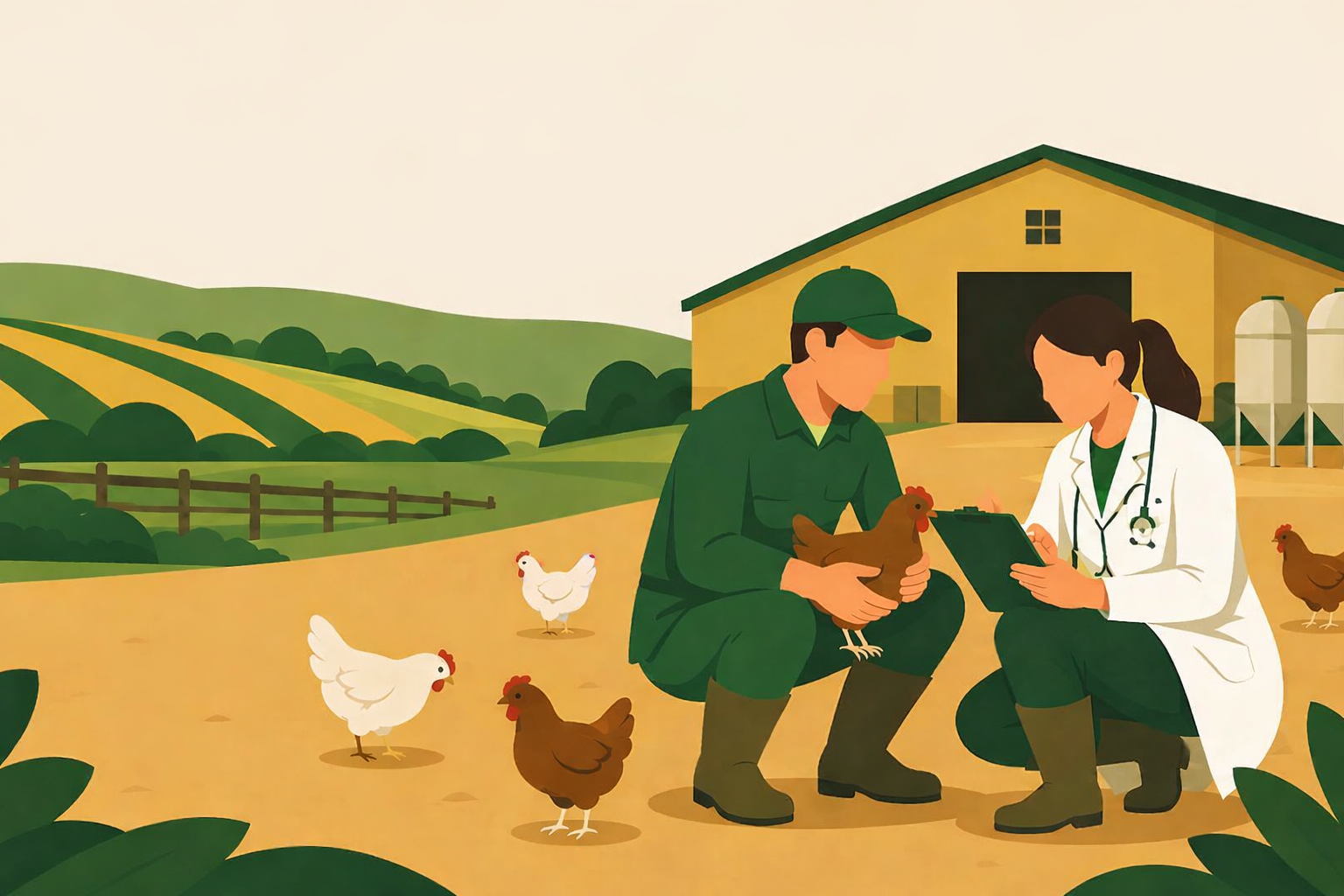
A quail is far smaller and more delicate than a hen, and in commercial production it is kept at high density. That is why infectious diseases spread through a quail flock exceptionally fast, and the key to stopping them is hygiene: dry litter, clean drinkers and feeders and tight biosecurity. This page is a hub — it outlines the key conditions and points to the detail. The whole production is covered in the quail farming hub, and a symptom-by-symptom table is in poultry diseases — symptom table.
Why does hygiene matter so much in quail?
A small bird has smaller reserves: it dehydrates faster, loses heat faster and copes worse with even a short illness. Add high density, shared drinkers and feeders, and warm, humid air, and you have ideal conditions for bacteria and parasites. That is why quail prevention rests above all on cleanliness and dry litter, not on treatment after the fact. Stocking is covered in quail stocking density, and housing conditions in quail house requirements and quail welfare.
Where does this information come from?
The symptom and condition descriptions are based on textbook and public knowledge: the MSD Veterinary Manual (Poultry section), materials from the World Organisation for Animal Health (WOAH) and EFSA assessments. Specific diagnosis, drug doses and treatment are always set by a veterinarian — this page does not replace a visit. Each disease is treated briefly with a link to a sister guide; the point here is a quick orientation of ‘what and how’ may threaten quail.
How to spot a disease in a quail flock and respond correctly
- 1
Observe the flock daily and count dead birds
The earliest signs of disease in quail are: listless, ruffled birds, huddling, drinking and eating less, diarrhoea and a soiled vent, wheezing, and a sudden rise in the number of dead birds. In such a small bird the condition worsens fast, so record the daily mortality — a sudden spike is one of the most important alarms. A daily check is the basics, also covered by quail welfare.
- 2
Separate sick birds and tighten hygiene
Where possible, separate suspect and clearly sick birds from the rest, and remove dead birds promptly into a closed container. Wash and disinfect the drinkers and feeders, swap wet litter for dry, and handle healthy flocks before sick ones — these are elements of farm biosecurity. In quail it is precisely clean equipment and litter that stops a disease spreading fastest.
- 3
Call a veterinarian
Diagnosis and treatment are set solely by a veterinarian; many quail diseases share similar signs (listlessness, diarrhoea, poorer feeding), so without testing it is easy to target the wrong cause. Giving drugs ‘by guesswork’ makes things worse and wastes money. If you have no regular care, start with the veterinarian guide — it shows how to set up cooperation with a clinic.
- 4
Give drugs exactly as prescribed
Give drugs only as the vet has written: the right product, dose, route and duration. In very small birds it is easy to overdose, so stick to the instructions on amount and concentration in the water. An unfinished course encourages relapses and microbial resistance. Every drug may carry a withdrawal period for meat or eggs — always confirm it with the vet.
- 5
Record everything and learn for the future
Note every drug administration: date, product, dose, number of birds treated and the end of the withdrawal period. Once the disease passes, review what failed: litter, ventilation, density or equipment hygiene — and fix it before the next placement. The rearing-conditions review in quail rearing and feeding in quail feeding help here.
The key quail diseases in a nutshell
The most common conditions with a short note on symptoms and prevention. Each is treated briefly — for the detail always go to a veterinarian.
Ulcerative enteritis (‘quail disease’)
The classic ‘quail disease’ caused by the bacterium Clostridium colinum. Symptoms: sudden, high mortality, diarrhoea, listless and ruffled birds, rapid weight loss. The disease can sweep through a flock very fast, especially at high density. Prevention rests above all on hygiene: dry litter, clean drinkers and feeders, low density and consistent biosecurity. Diagnosis and treatment are set by the vet.
Coccidiosis
A parasitic intestinal disease favoured by wet litter and high density — both common in quail production. Symptoms: diarrhoea (sometimes bloody or watery), listlessness, poorer growth and rising mortality, especially in young birds. Prevention: dry litter, cleanliness and a programme agreed with the vet. The right density is covered in quail stocking density, and housing conditions in quail house requirements.
Salmonellosis
Infection with Salmonella — dangerous because symptomless carriers can pass the bacteria on, and some types pose a risk to humans. In quail the signs may be non-specific: listlessness, diarrhoea, poorer lay, higher chick mortality. The basis is biosecurity, protection from rodents and wild birds, and clean feed and water. The topic is covered in more depth in salmonella on a poultry farm.
Mycoplasmosis and chick ‘white diarrhoea’
Mycoplasmosis is a chronic respiratory disease: wheezing, nasal discharge, sneezing, poorer condition and lay. In the youngest quail a separate problem is ‘white diarrhoea’ — chick diarrhoea of various origin (including bacterial infections) and rotavirus infections, which cause watery diarrhoea and dehydration. The common denominator is again hatch and rearing hygiene — covered in quail rearing.
The most common mistakes in quail disease prevention
A few mistakes recur on many quail farms — worth knowing before you place the next flock.
Underrating hygiene because the bird is small
Because ‘they’re only quail’ — yet this is exactly where hygiene matters most. Dirty drinkers and feeders, wet litter and no cleaning between flocks directly raise the risk of quail disease, coccidiosis and salmonellosis. Small birds at high density forgive fewer mistakes than hens. The basics are in farm biosecurity.
Stocking too densely
Quail crowd together readily, and it is easy to overdo the stocking density — which drives disease spread, wet litter and cannibalism. Stick to sensible densities and give the birds space. What is right is explained in quail stocking density, and housing requirements in quail house requirements.
Treating ‘by guesswork’ without a vet
Quail diseases share similar signs (listlessness, diarrhoea, poorer feeding), so without testing it is easy to mistake the cause and give the wrong drug. In such small birds it is also easy to overdose. Leave diagnosis and drug choice to the vet — the veterinarian guide helps here.
Neglecting chick rearing conditions
Quail chicks are tiny and very sensitive to cold, draughts and damp — hence ‘white diarrhoea’ and high early mortality. Stable temperature, dry litter, clean water and constant access to feed are the foundation. How to set up rearing is covered in quail rearing together with quail feeding.
Frequently asked questions about quail diseases
What is ‘quail disease’?add
‘Quail disease’ is the common name for ulcerative enteritis caused by the bacterium Clostridium colinum. It shows as sudden, high mortality, diarrhoea, listlessness and rapid weight loss, and spreads through a flock fast — especially at high density. Prevention rests on hygiene: dry litter, clean drinkers and feeders and biosecurity. Diagnosis and treatment are always set by a veterinarian.
What diseases do quail most often suffer from?add
The key conditions are: ulcerative enteritis (‘quail disease’, Clostridium colinum), coccidiosis, salmonellosis, mycoplasmosis (a chronic respiratory disease) and chick ‘white diarrhoea’ and rotavirus infections. Most are favoured by wet litter, high density and poor equipment hygiene. Each is only outlined — for symptoms one by one see poultry diseases — symptom table, and for diagnosis a veterinarian.
Why do diseases spread so fast in a quail flock?add
Because quail are small, delicate and kept at high density, often with shared drinkers and feeders and in warm, humid air. These are ideal conditions for bacteria and parasites, and a small bird has smaller reserves and dehydrates faster. That is why quail prevention is above all hygiene and sensible stocking — see quail stocking density and quail house requirements.
How can I reduce disease risk on a quail farm?add
Prevention gives the most: dry litter, daily-cleaned drinkers and feeders, sensible density, protection from rodents and wild birds, clean feed and water, and cleaning and disinfection between flocks. Add daily observation and a quick response at the first signs. The basics are in farm biosecurity, and good living conditions in quail welfare.
What is ‘white diarrhoea’ in quail chicks?add
‘White diarrhoea’ is a common term for diarrhoea in the youngest chicks of various origin — including bacterial infections — often combined with rotavirus infections that cause watery diarrhoea and dehydration. In tiny quail this quickly leads to high mortality. Most important is hatch and rearing hygiene: clean water, dry litter, stable temperature. How to set the conditions is covered in quail rearing. Leave diagnosis to the vet.
Does quail farming require registration and following regulations?add
Yes — quail farming, like any poultry production, is subject to regulations: registration, welfare and biosecurity rules, and a duty to report officially controlled diseases to the official veterinarian on suspicion. The formal requirements are gathered in legal rules of quail farming, and the financial side in profitability of quail farming.
Manage quail-flock health in DlaFerm.pl
Want a treatment log, a flock record and condition tracking in one place, plus early warning of drops in water and feed? Create a free farm account or write to us.
Phone
+48 796 258 151