Quail housing requirements — cages and microclimate
A quail is small, light and a strong jumper, so its needs differ from chickens — safe cages, shallow drinkers (chicks drown easily) and a stable microclimate at high stocking are key. We have gathered everything the housing and equipment must provide in one place, with links to detailed guides for the specifics.
verifiedFrom the team that has organised work on poultry farms for years.
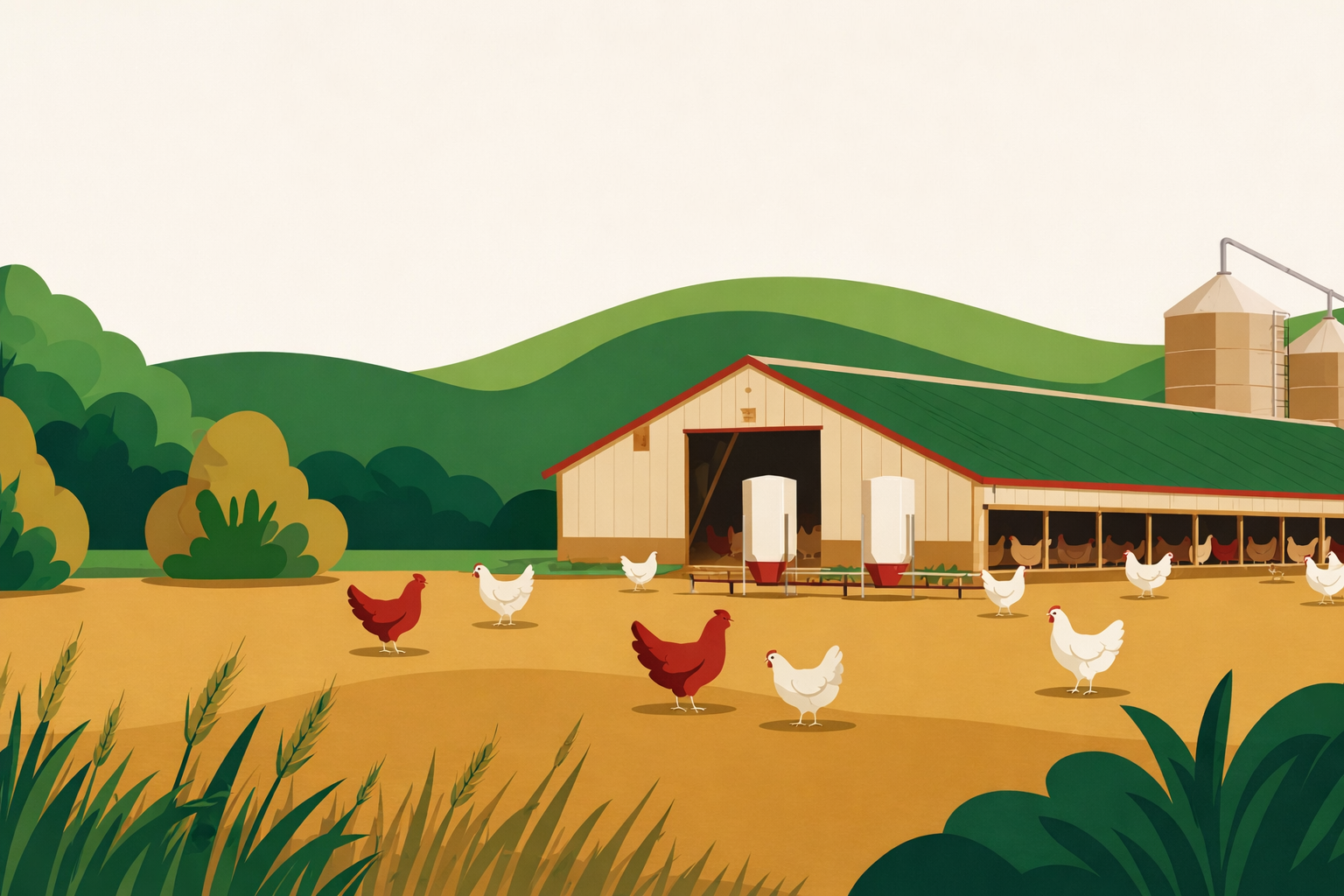
Quail are most often kept in cage (battery) rearing, because they are small and reach high stocking on a small footprint. That changes the requirement list compared with a chicken house: instead of floor litter there are cages with a droppings tray, and for laying — with an egg-collecting insert. The whole rearing process is covered in the guide on quail farming.
Why are quail cages different?
A startled quail shoots straight up and hits its head on the ceiling — with a hard, high ceiling this leads to injuries and even death. That is why quail cages have either a low ceiling (the bird cannot build momentum) or a soft, springy ceiling that cushions the impact. This is one of the most important details absent in a house for hens or broilers. It is also tied to flock welfare: quail welfare.
Where do the numbers in this guide come from?
Parameters (chick start temperature, stocking, laying light) follow breeding guides and material from the industry and institutes (including IZ-PIB). These are indicative values* — a starting point, not a fixed norm. Actual settings depend on the line, the production type (laying or meat) and the specific room. This page is an overview of the whole; the details of each area are in separate guides linked in the text.
What to check when planning quail housing and cages
- 1
Cages with a low or soft ceiling
The most important detail of quail cages is a ceiling protected against head injuries. A startled quail jumps straight up and hits the cage top — so either a low ceiling (the bird cannot build momentum) or a soft, springy one (e.g. plastic mesh or stretched fabric) that cushions the jump is used. The cage floor is usually fine mesh so droppings fall onto a tray beneath. More on stocking itself: quail stocking and quail welfare.
- 2
Drinking: shallow drinkers for chicks, nipples for adults
Quail chicks are tiny and drown easily — for the first days shallow drinkers or drinkers with pebbles/glass marbles in the bowl, which reduce the water surface, are used. Adult birds are most often watered with nipple drinkers laid out so every bird has water within reach. Nipples are fitted at a height matched to the bird. On how drinking lines work (the house analogy): drinking lines in the house. The full water and feed topic: quail feeding.
- 3
Feeding: fine feeders and the right feed
Quail eat finely ground feed, so feeders have narrow slots or a grille so birds do not rake out and scatter the feed (and contaminate it with droppings). Feeders run along the cage so every bird has easy access. For starting chicks, feed is often offered on flat trays before they learn to eat from feeders. Choosing feed by age and production type: quail feeding.
- 4
Droppings tray and — for laying — egg collection
Beneath the mesh cage floor there is a pull-out droppings tray that is cleaned regularly — this is key to hygiene and low ammonia in the room. In laying lines the cage floor is slightly sloped, so the egg rolls out onto an external channel collector and is not trodden on or soiled. The egg-collection principle is similar to the house: egg-collection systems. Droppings hygiene is tied to flock health: quail diseases.
- 5
Chick start-up heating and a stable temperature
Quail chicks need a high, stable temperature at the start — about 35–37°C* in the first days, lowered gradually by a few degrees per week until they reach room temperature. As with broilers, the surest indicator is chick behaviour: evenly spread = good, huddled under the heat source = too cold. Heating and temperature rules (the house analogy): temperature and humidity in the house. The whole start is covered in quail brooding.
- 6
Ventilation and lighting at high stocking
In cage rearing birds are packed densely, so good ventilation is essential — it removes moisture, ammonia and excess heat while not causing draughts. Lighting drives laying: layers need a longer light day (about 14–16 hours of light*), even and not too bright, to limit pecking. Air-exchange rules (the house analogy): house ventilation. Litter/droppings hygiene in the room: litter management.
Parameters quail housing should hold
Four groups of values for cage rearing. Indicative figures* — a starting point, not a fixed norm.
Chick start temperature
About 35–37°C* under the heat source in the first days, then lowered by a few degrees per week to room temperature (about 18–22°C* for adults). More telling than the thermometer is chick behaviour: spread out = good, huddled under the heater = too cold. Details: quail brooding.
Lighting for laying
Layers need about 14–16 hours of light* a day, even and rather dimmed — too bright encourages pecking and stress. For chicks at the start light is longer and brighter so they find water and feed. The light programme is set to the production type.
Ventilation at high stocking
Cage rearing means high stocking, so ventilation must efficiently remove moisture, ammonia and excess heat without a draught on the birds. A sign of poor ventilation is wet droppings on the tray and a noticeable ammonia smell. Related: litter and droppings management.
A safe cage ceiling
A low ceiling (limits jump momentum) or a soft/springy one (cushions impact) — this protects quail from head injuries when jumping. A hard, high ceiling is a common cause of injury. Related: quail welfare and quail stocking.
The most common mistakes in quail cages and microclimate
These mistakes regularly spoil flock results and welfare — worth ruling out at the housing planning stage.
A hard, high cage ceiling
The most dangerous mistake: a cage with a hard, high ceiling. A startled quail jumps straight up and hits its head on the cage top — the result is injury and even death. Use a low or soft ceiling and limit sudden frights. Related: quail welfare.
Drinkers too deep for chicks
Tiny quail chicks drown easily in a deep drinker. At the start use shallow drinkers or add pebbles/marbles that reduce the water surface, and change the water often to keep it clean. Only older birds move to nipple drinkers. More on drinking and feed: quail feeding.
Poor ventilation at high stocking
Packing birds without efficient ventilation quickly leads to moisture, high ammonia and respiratory problems. Wet droppings on the tray and a sharp smell signal that air exchange needs improving and trays cleaning more often. The effect shows in flock health: quail diseases.
Rarely cleaning the droppings trays
A neglected droppings tray is a source of ammonia, flies and disease, plus dirty eggs in laying lines. Set a fixed tray-cleaning rhythm and check egg-collector hygiene. On droppings and litter management: litter management, and on egg collection: egg-collection systems.
Frequently asked questions about quail housing and cages
Why do quail cages have a low or soft ceiling?add
Because a startled quail jumps straight up and hits its head on the ceiling. A low ceiling prevents it building momentum, and a soft, springy one cushions the impact — both protect the birds from head injuries. This is a quail-specific requirement absent in a chicken house. More in the guide on quail welfare.
What drinkers are safe for quail chicks?add
Quail chicks are very small and drown easily, so at the start shallow drinkers or drinkers with pebbles or glass marbles, which reduce the water surface, are used. The water must be changed often to stay clean. Only older birds move to nipple drinkers. The whole water and feed topic is covered in quail feeding.
What temperature do quail chicks need?add
At the start chicks need about 35–37°C* under the heat source in the first days, and the temperature is lowered gradually by a few degrees per week until they reach room temperature. The surest indicator is chick behaviour: evenly spread means a good temperature, huddled under the heater means too cold. The whole start is covered in quail brooding.
How much light do laying quail need?add
Layers need a longer light day — roughly about 14–16 hours of light* a day, even and rather dimmed, because too bright encourages pecking and stress. The light programme is set to the production type and the birds’ age. Microclimate and light affect results — see also quail farming profitability.
Is ventilation needed in cage rearing of quail?add
Yes, and good ventilation at that — cage rearing means high stocking on a small footprint, so ventilation must efficiently remove moisture, ammonia and excess heat while not causing a draught. A sign of poor ventilation is wet droppings on the tray and a noticeable ammonia smell. We describe air-exchange rules (using the house as an example) in the guide on house ventilation.
How are egg collection and droppings removal solved in cages?add
The cage floor is usually fine mesh — droppings fall onto a pull-out tray beneath that is cleaned regularly. In laying lines the floor is slightly sloped, so the egg rolls out onto an external collector and is not trodden on. The egg-collection principle is similar to the house: egg-collection systems, and the legal requirements are covered in legal rules for quail farming.
Keep an eye on climate and your quail flock in DlaFerm.pl
Want temperature, humidity and ventilation status, plus flock records, in one place? DlaFerm.pl integrates with climate sensors and warns you before room conditions run out of control. Create a free farm account or write to us.
Phone
+48 796 258 151